.png)
Non-Surgical Skin Tightening Options That Actually Work
- chevonne stewart
- 20 hours ago
- 15 min read
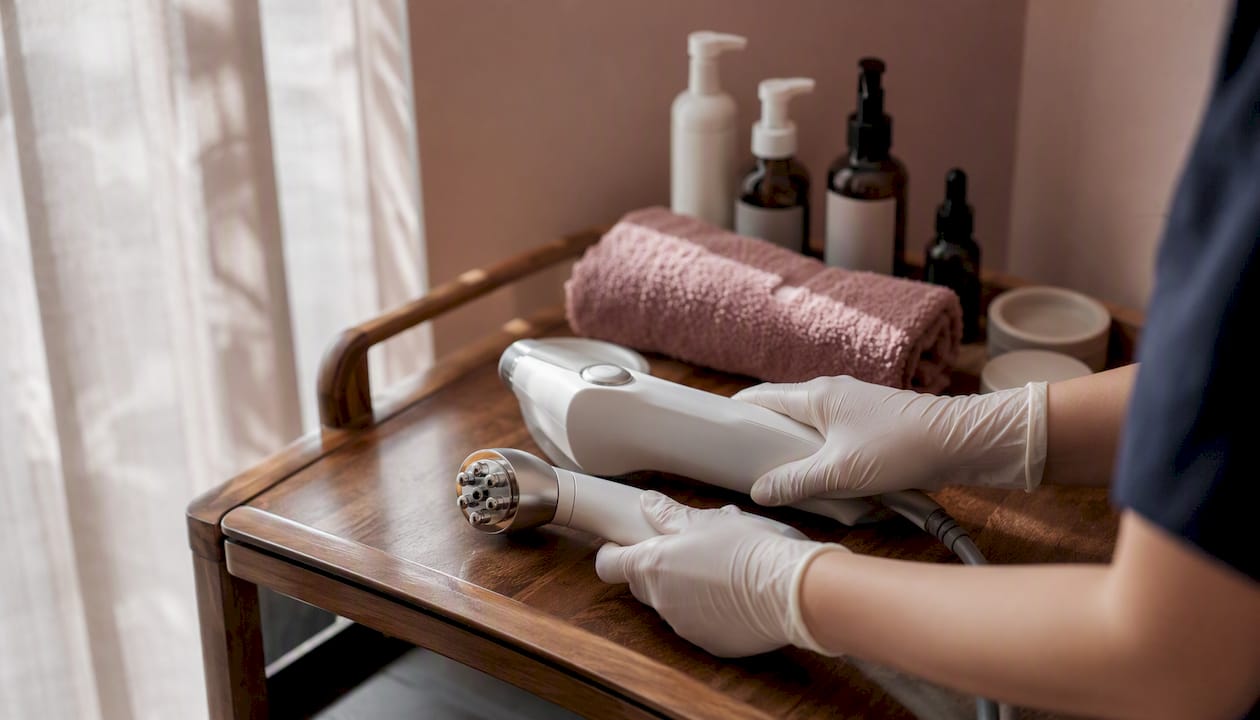
For mild-to-moderate skin laxity, the most consistently effective non-surgical skin tightening options are microfocused ultrasound (MFU), radiofrequency (RF), RF microneedling, and injectable biostimulators like poly-L-lactic acid. Each targets a different tissue depth and suits a different patient profile, which is why a personalized consultation matters more than picking the “strongest” device.
Here’s a quick shortlist to orient you:
Microfocused ultrasound (e.g., Ultherapy): Best for mild-to-moderate facial and neck laxity in adults who want a single-session lift with no downtime. Results build gradually over several months.
Radiofrequency (e.g., Thermage, Exilis): Suits mild laxity on the face, jawline, and body. Multiple sessions are common; results appear over 2–6 months.
RF microneedling (e.g., Morpheus8, Profound RF): Ideal for moderate laxity with textural concerns. Delivers deeper dermal heating with minimal surface disruption, making it a strong option for darker skin tones.
Injectable biostimulators (e.g., Sculptra): Best paired with energy-based treatments for gradual volume restoration and collagen stimulation over several months.
One honest note: if you have significant excess skin or heavy jowling, non-surgical options will improve tone and texture but are unlikely to replicate a surgical result. A surgical consultation is the more realistic path for severe laxity.
Table of Contents
How does non-surgical skin tightening actually work?
The core mechanism is thermal energy delivered to a specific tissue depth. When heat reaches the dermis or subdermal layer at the right temperature, two things happen. First, existing collagen fibers contract immediately, producing a subtle tightening effect you can sometimes see on the day of treatment. Second, and more importantly, the controlled thermal injury activates fibroblasts, which then produce new collagen and elastin over the following weeks and months. This second phase, called neocollagenesis, is responsible for the gradual firming you notice at the 3–6 month mark, according to the American Board of Cosmetic Surgery.
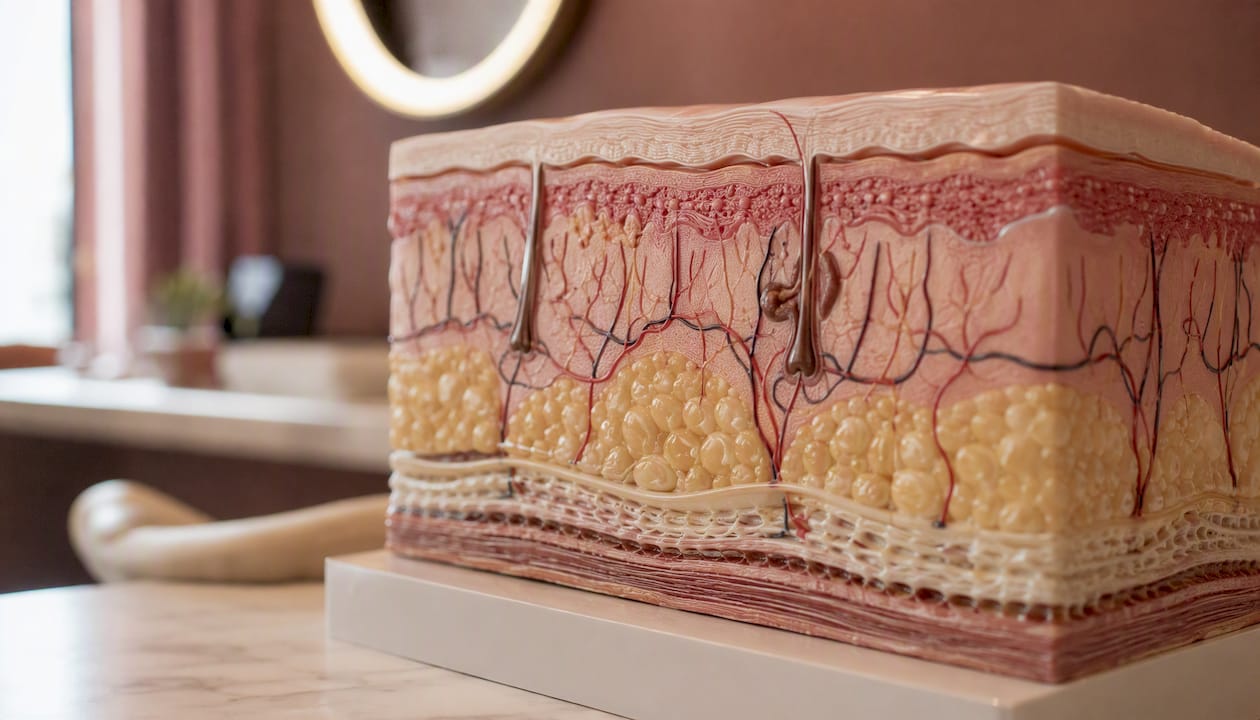
Depth is everything. The epidermis sits at the surface and must be protected. Below it, the superficial dermis handles fine texture. The deep reticular dermis is where most RF and laser energy targets for meaningful collagen remodeling. Deeper still, the subdermal layer and the SMAS (superficial musculoaponeurotic system) are the structural layers that MFU devices can reach with focused ultrasound transducers. Treating the SMAS non-surgically is what gives MFU its reputation for producing a more “lifted” result compared to surface-level devices.
Understanding why skin loses elasticity with age helps clarify why depth targeting matters so much. As collagen and elastin degrade over time, the dermis thins and loses its scaffolding. Treatments that reach the deeper structural layers can address that loss more directly than those that only warm the superficial dermis.
Pain and comfort vary by device and energy level. MFU treatments are often described as producing brief, sharp sensations during energy delivery. RF treatments tend to feel like a warm, deep pressure. RF microneedling involves the sensation of the needles plus heat. Most clinics offer topical anesthesia, and some use nerve blocks for higher-energy MFU protocols. Energy parameters are always customized to your anatomy, skin thickness, and tolerance, which is one reason why operator training has such a direct effect on both safety and outcomes.
What are the main non-surgical treatment categories?
The American Society for Dermatologic Surgery recognizes several distinct device classes for non-invasive skin tightening: radiofrequency, ultrasound, RF microneedling, optical/laser, and fractional resurfacing. Thread lifts and injectable biostimulators round out the category as minimally invasive adjuncts. Here’s how each one works in practice.
Microfocused ultrasound (MFU): Ultherapy
MFU delivers focused ultrasound energy to precise tissue depths using transducers set at approximately 1.5 mm, 3.0 mm, and 4.5 mm. The 4.5 mm depth reaches the SMAS, the same layer a surgeon addresses during a facelift. Platforms with built-in high-resolution ultrasound imaging allow the clinician to visualize tissue planes before delivering energy, improving both accuracy and safety, as detailed in a clinical review published in PMC.
Best for: Mild-to-moderate facial, brow, neck, and décolletage laxity. Particularly effective for brow lifting and jawline definition. Downtime: Minimal. Redness and mild swelling for 24–72 hours. Sessions: Often one session, with touch-ups at 12–18 months. Results timeline: Gradual improvement from one to several months; peak results several months after treatment; longevity typically up to a couple of years. Typical US cost: $1,500–$4,500 per full-face session. Common side effects: Temporary redness, swelling, tingling, or tenderness along treatment lines.
Pros: Reaches the deepest tissue layer non-surgically; imaging guidance adds precision; single-session protocol for many patients. Cons: Can be uncomfortable without adequate anesthesia; results are gradual and subtle; higher cost per session.
Radiofrequency (RF): Thermage, Exilis
Monopolar and multipolar RF devices heat the deep dermis and subcutaneous tissue by passing electrical current through tissue. The Cleveland Clinic notes that RF stimulates collagen and elastin production, with results typically appearing over 2–6 months. Monopolar RF (like Thermage) penetrates more deeply; multipolar and bipolar configurations (like Exilis) allow more controlled, layered heating. Skin tightening procedures have become widely adopted in the United States.
Best for: Mild facial and body laxity, including abdomen, thighs, and arms. Good for patients who want no downtime. Downtime: Essentially none. Mild redness resolves within hours. Sessions: 1–3 sessions depending on device and indication. Results timeline: Several months for visible improvement; longevity up to a couple of years. Typical US cost: Typical session costs vary by device and provider. Common side effects: Warmth, transient redness, mild swelling.
Pros: No downtime; treats face and body; well-established safety record. Cons: Results are generally more modest than MFU for significant laxity; multiple sessions often needed.
RF microneedling: Morpheus8, Profound RF
RF microneedling combines the collagen-stimulating effect of microneedling with the deep dermal heating of radiofrequency. Insulated needles bypass the epidermis and deliver thermal energy directly into the dermis at a controlled depth. This design makes it particularly safer for higher Fitzpatrick skin types, where surface heating can trigger pigment changes. Morpheus8 reaches depths of up to 8 mm in some configurations; Profound RF uses a different needle array optimized for elastin stimulation alongside collagen.
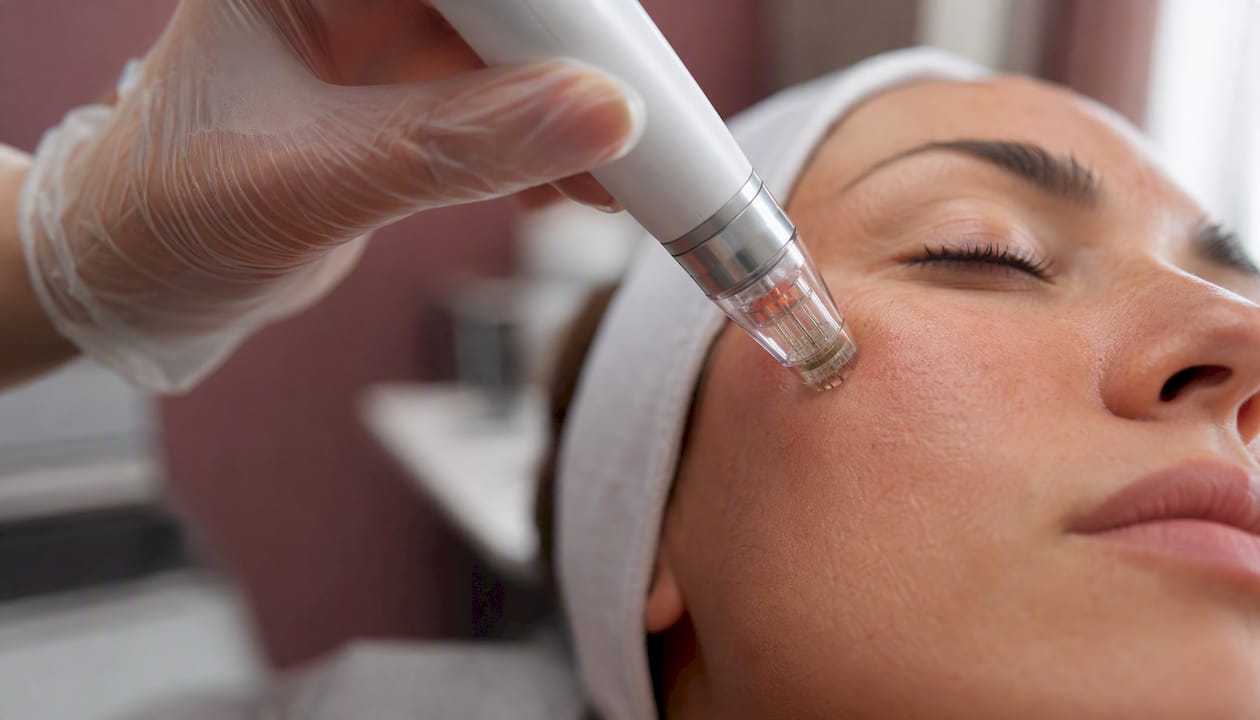
Best for: Moderate laxity with textural concerns (acne scarring, enlarged pores, uneven skin). Effective on the lower face, neck, and body. Downtime: 3–5 days of redness and mild swelling; some pinpoint marks. Sessions: 1–3 sessions, spaced 4–6 weeks apart. Results timeline: Improvement visible from 4–8 weeks; peak at 3–6 months; longevity 1–2 years. Typical US cost: Typical session costs depend on device and provider. Common side effects: Redness, swelling, pinpoint bleeding, temporary skin sensitivity.
Pros: Addresses both laxity and texture simultaneously; safer for darker skin tones than ablative lasers; customizable depth. Cons: More downtime than surface RF; multiple sessions typically required; operator skill significantly affects outcomes.
CO2 laser resurfacing (ablative laser)
Ablative CO2 laser removes the outer skin layers while heating the dermis, triggering significant collagen remodeling. It produces the most dramatic skin tightening and resurfacing results of any non-surgical option, but at the cost of meaningful downtime. Fractional CO2 (where the laser treats a grid of micro-columns rather than the full surface) reduces recovery time while preserving much of the efficacy.
Best for: Moderate skin laxity combined with significant sun damage, fine lines, or textural irregularities. Best on lighter skin tones. Downtime: About one to two weeks for full ablative; a few days to one week for fractional CO2. Sessions: Often 1 session for full ablative; 2–3 for fractional. Results timeline: Visible improvement within weeks; continued improvement for 6 months; longevity 3–5 years with good sun protection. Typical US cost: Typical costs range widely depending on treatment specifics and provider. Common side effects: Redness, crusting, peeling, temporary hyperpigmentation risk (especially in darker skin tones).
Pros: Most significant non-surgical tightening and resurfacing result; long-lasting. Cons: Highest downtime of all non-surgical options; pigment risk in darker skin; requires strict post-care.
IPL (intense pulsed light)
IPL is not a laser but a broad-spectrum light source that targets pigment and vascular lesions in the superficial dermis. Its skin-tightening effect is mild compared to RF or MFU, but it excels at improving skin tone, reducing redness, and addressing sun damage as part of a broader skin rejuvenation program.
Best for: Mild laxity with concurrent pigmentation, redness, or sun damage. Best as part of a combination approach. Downtime: Minimal. Mild redness for 24 hours; pigmented spots may darken briefly before flaking off. Sessions: Multiple sessions spaced several weeks apart. Results timeline: Progressive improvement over the treatment series; longevity 1–2 years with maintenance. Typical US cost: Cost per session varies by provider and treatment specifics. Common side effects: Temporary redness, mild swelling, transient darkening of pigmented spots.
Pros: Addresses multiple skin concerns simultaneously; minimal downtime; cost-effective per session. Cons: Limited tightening effect on its own; not suitable for darker skin tones without careful parameter adjustment.
Thread lifts
Thread lifts use dissolvable sutures (commonly PDO or PLLA threads) inserted under the skin to mechanically lift sagging tissue. The threads also stimulate a mild collagen response around the suture material. The American Society of Plastic Surgeons emphasizes that patient selection is critical: thread lifts suit mild-to-moderate laxity and are not a substitute for surgical lifting in patients with significant tissue descent.
Best for: Mild-to-moderate jowling, brow ptosis, or midface descent in patients not ready for surgery. Downtime: Several days; bruising and swelling common. Sessions: Single procedure; touch-ups possible. Results timeline: Immediate mechanical lift; collagen stimulation adds subtle improvement over 2–3 months; longevity 1–2 years. Typical US cost: Costs depend on thread type and treatment plan. Common side effects: Bruising, swelling, thread visibility or puckering, asymmetry.
Pros: Immediate visible lift; minimally invasive; can be combined with energy-based treatments. Cons: Results less durable than surgery; risk of thread migration or puckering; highly technique-dependent.
Injectable biostimulators: Sculptra (poly-L-lactic acid)
Sculptra is a poly-L-lactic acid (PLLA) injectable that works by stimulating the body’s own collagen production over time rather than providing immediate volume like a traditional filler. A PMC review of injectable biostimulators describes PLLA as primarily used for volumizing and collagen stimulation, making it a complement to energy-based tightening rather than a standalone solution for significant laxity.
Best for: Gradual facial volume restoration and skin quality improvement in patients with mild-to-moderate laxity. Often used alongside MFU or RF. Downtime: Minimal. Injection-site bruising and swelling for 1–3 days. Sessions: Several sessions spaced a few weeks apart. Results timeline: Gradual improvement over several months; longevity typically up to a couple of years. Typical US cost: Costs vary by number of vials and provider. Common side effects: Bruising, swelling, nodule formation if not massaged correctly post-treatment.
Pros: Natural-looking, gradual result; long-lasting; complements energy-based treatments well. Cons: Not a standalone tightening solution; requires correct injection technique and post-care massage; results are slow.
Comparison of non-surgical skin tightening methods
Method | Best for | Mechanism | Downtime | Sessions | Time to results / Longevity | Typical US cost | Common side effects | Treatment areas |
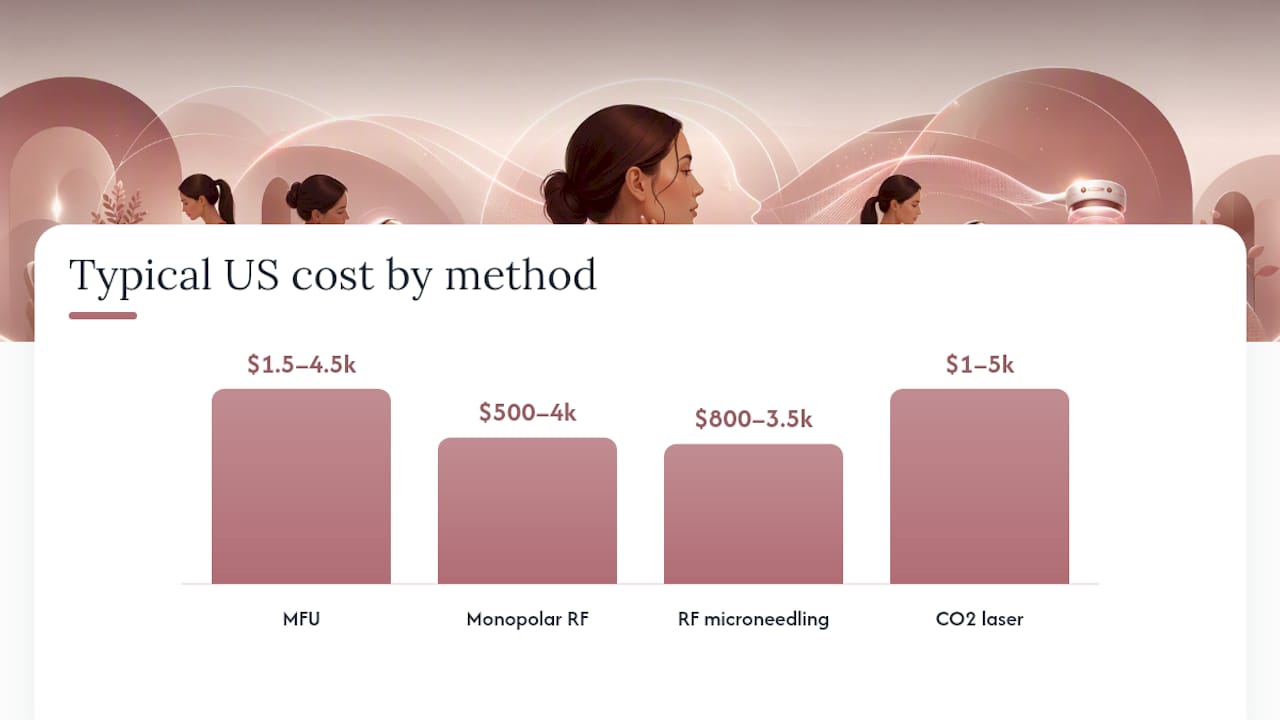
Microfocused ultrasound (MFU) | Mild–moderate facial/neck laxity | Focused ultrasound heat; SMAS depth | Minimal (24–72 hrs) | 1 (touch-up at 12–18 mo) | 3–6 months / 1–2 years | $1,500–$4,500 | Redness, swelling, tingling | Face, brow, neck, décolletage |
Monopolar/multipolar RF | Mild face and body laxity | Deep dermal RF heating | None | 1–3 | 2–6 months / 1–2 years | $500–$4,000 | Redness, warmth | Face, jawline, abdomen, thighs |
RF microneedling | Moderate laxity + texture | Needle-delivered RF to dermis | 3–5 days | 1–3 | Improvement visible from 4–8 weeks, peak at 3–6 months; longevity typically up to a couple of years. | $800–$3,500 | Redness, swelling, pinpoint marks | Lower face, neck, body |
CO2 laser (ablative) | Moderate laxity + sun damage | Ablative resurfacing + dermal heat | 7–14 days | 1–3 | Several weeks to months for results; longevity of multiple years. | $1,000–$5,000 | Crusting, redness, pigment risk | Face, neck |
IPL | Mild laxity + pigmentation/redness | Broad-spectrum light, superficial | Minimal | 3–5 | Progressive over series / 1–2 years | $300–$600 | Redness, spot darkening | Face, chest, hands |
Thread lift | Mild–moderate jowling/brow ptosis | Mechanical lift + collagen stimulus | 3–7 days | 1 | Immediate / 1–2 years | $1,500–$4,500 | Bruising, puckering | Face, brow, neck |
Injectable biostimulators (PLLA) | Mild–moderate laxity + volume loss | Collagen stimulation via PLLA | Minimal | 2–4 | 3–6 months / up to 2 years | $800–$2,000/session | Bruising, nodules | Face, temples, cheeks |
Who is a good candidate, and who should wait?
The American Board of Cosmetic Surgery is clear: non-surgical skin firming treatments work best for healthy adults with mild-to-moderate laxity who have realistic expectations. Here’s how to assess your own suitability.
You’re likely a good candidate if you:
Have mild-to-moderate skin laxity on the face, neck, or body (skin that has loosened but not significantly descended).
Are in good general health with no active skin infections or inflammatory conditions in the treatment area.
Have realistic expectations: you want improvement, not perfection, and you understand results are gradual.
Are willing to commit to maintenance treatments every 1–2 years.
Have skin that retains reasonable elasticity (a quick pinch test: skin that snaps back quickly tends to respond better to tightening treatments).
Are not pregnant or breastfeeding.
You should pause and consult a physician first if you:
Have significant excess skin or heavy jowling that has descended substantially. Surgery is likely to produce a more satisfying result.
Are pregnant or breastfeeding (most energy-based treatments are contraindicated).
Have active skin infections, open wounds, or inflammatory skin conditions in the treatment area.
Have a bleeding disorder or are on anticoagulant therapy (relevant for RF microneedling and thread lifts).
Have implanted electronic devices such as a pacemaker or defibrillator (a contraindication for most RF devices).
Have a history of keloid scarring (relevant for RF microneedling and thread lifts).
Have unrealistic expectations about the degree of change possible without surgery.
Skin type and pigment considerations matter, too. Darker skin tones (Fitzpatrick IV–VI) carry a higher risk of post-inflammatory hyperpigmentation with ablative lasers and IPL. RF microneedling, which bypasses the epidermis, is generally a safer choice for these skin types. Always discuss your Fitzpatrick type with your clinician before committing to any light or laser-based treatment.
What is the safety profile of these treatments?
Non-surgical skin tightening is generally low-risk when performed by a trained clinician using appropriate device settings, but “non-surgical” does not mean risk-free. The Journal of Cosmetic Dermatology notes that most technologies share a dermal heating mechanism and that outcomes are highly operator-dependent, which means the clinician’s training and judgment are your most important safety variables.
Common, expected side effects (typically resolve within days):
Redness and warmth in the treated area
Mild swelling, particularly around the eyes after MFU
Temporary tenderness or sensitivity
Pinpoint marks or mild bruising (RF microneedling, thread lifts)
Transient darkening of pigmented spots (IPL)
Less common but important risks:
Burns or blistering from excessive energy settings or inadequate cooling
Nerve injury or prolonged numbness, most associated with MFU when energy is delivered too close to superficial nerve branches
Persistent hyperpigmentation or hypopigmentation, more common in darker skin tones with ablative or optical treatments
Thread migration, puckering, or visible threads (thread lifts)
Nodule formation from incorrect PLLA injection technique or inadequate post-treatment massage
How reputable clinics reduce these risks:
Patch testing for IPL and laser treatments, especially on darker skin tones
Starting with conservative energy settings and adjusting based on skin response
Using imaging guidance (where available) for MFU to avoid nerve branches
Applying adequate cooling before, during, and after RF treatments
Thorough informed consent and pre-treatment photography
Red flags to take seriously before booking:
No physician oversight or medical director on record
Clinician cannot explain the device’s mechanism or show procedure-specific before-and-after images
Unusually low pricing that suggests consumer-grade devices rather than medical-grade equipment
Pressure to prepay large treatment packages before your first session
No formal consent process or pre-treatment assessment
How do you choose the right treatment and provider?
The single most important criterion: choose a provider who conducts an objective, in-person assessment and can show you before-and-after images from their own patients for the specific procedure you’re considering. Generic stock images are not evidence of clinical skill.
A personalized skin consultation is where the real decision-making happens. The right provider will assess your laxity grade, skin quality, anatomy, and goals before recommending any device. Comparative reviews confirm that patient selection remains the most important factor in outcomes, more so than which specific device is used.
Questions to ask at your consultation:
What is your training on this specific device, and how many procedures have you performed?
Can you show me before-and-after images from your own patients with a similar concern to mine?
What energy settings and transducer depths will you use, and why?
How will you protect my skin surface during treatment?
What is your complication rate, and what is your protocol if something goes wrong?
How many sessions do you recommend for my level of laxity, and what is the realistic outcome?
What is your follow-up policy after treatment?
Red flags in provider selection:
No visible credentials or training documentation
Uses consumer-grade devices marketed as professional
Cannot explain how the device works or why it suits your skin
Pushes you to prepay a package of sessions before assessing your response
No informed consent documentation or pre-treatment photography
Typical US pricing by method
Method | Typical cost per session | Typical sessions needed |
Microfocused ultrasound (MFU) | $1,500–$4,500 | 1 (touch-up at 12–18 months) |
Monopolar RF (e.g., Thermage) | $1,000–$4,000 | 1–2 |
Multipolar RF (e.g., Exilis) | $500–$2,000 | 2–3 |
RF microneedling | $800–$3,500 | 1–3 |
CO2 laser (fractional) | $1,000–$5,000 | 1–3 |
IPL | $300–$600 | 3–5 |
Thread lift | $1,500–$4,500 | 1 |
Injectable biostimulators (PLLA) | $800–$2,000 | 2–4 |
Financing is available at many medical aesthetic practices, and some providers offer package pricing for multi-session protocols. A fair quote includes a detailed breakdown of what is included: device, anesthesia, post-care products, and follow-up appointments. Be cautious of quotes that seem significantly below market rate without a clear explanation.
Clinician tips for better outcomes and safer combinations
The most effective approach pairs the right technology to the right tissue depth, then sequences combination treatments to avoid overlapping inflammatory responses. Here’s what that looks like in practice.
Pre-treatment preparation:
Avoid direct sun exposure for at least 2 weeks before any laser, IPL, or RF microneedling treatment. Tanned skin increases pigment risk.
Discontinue retinoids (tretinoin, retinol) 5–7 days before ablative or RF microneedling treatments to reduce sensitivity.
Stay well-hydrated and support your skin barrier with a gentle moisturizer in the weeks leading up to treatment. Nutrition and skin health also play a role in how well your skin responds and recovers.
Inform your clinician about any injectables (fillers, neurotoxins) placed in the past 2–4 weeks, as heat can affect filler integrity.
Post-treatment care:
Apply SPF 30+ daily without exception for at least 4 weeks after any energy-based treatment.
Avoid heat exposure (saunas, hot yoga, steam rooms) for 48–72 hours post-treatment.
Keep the skin barrier supported with gentle, fragrance-free products during the healing phase.
Follow your clinician’s specific post-care protocol for RF microneedling and ablative laser, which may include prescribed topicals.
Combination treatment rules:
MFU and RF can be performed in the same session or on the same day, as they target different depths and do not overlap inflammatory pathways.
RF microneedling and ablative laser should be staged at least 4–6 weeks apart to avoid compounding epidermal stress.
Injectable biostimulators (PLLA) are best placed after energy-based treatments, not before, to avoid disrupting the injection depot with heat.
IPL is typically sequenced first in a combination program to address surface pigmentation before deeper treatments are applied.
Expert tips for better results:
Commit to the full recommended session series before assessing results. A single RF session rarely shows the full picture.
Photograph your skin in consistent lighting before each session. Subtle improvements are easy to miss without a baseline comparison.
Ask your clinician about imaging-guided MFU targeting if you have anatomical concerns about nerve proximity.
Maintain results with a medical-grade skincare regimen between sessions, particularly retinoids and antioxidants once your skin has fully healed.
Pro Tip: If you’re combining MFU with RF microneedling in a staged program, schedule the MFU first. It targets the deepest structural layer, and doing it first allows the RF microneedling session (4–6 weeks later) to address mid-dermal texture without competing inflammatory responses. This sequence tends to produce a more complete result with less cumulative redness.
Key Takeaways
Non-surgical skin tightening options work best for mild-to-moderate laxity, with results building gradually over 3–6 months and most patients needing maintenance every 18–24 months to sustain improvement.
Point | Details |
Best candidates | Healthy adults with mild-to-moderate laxity, realistic expectations, and no relevant contraindications. |
Results take time | Visible improvement typically peaks at 3–6 months; immediate effects are subtle and partial. |
Maintenance is required | Most technologies require repeat treatment every 18–24 months as the aging process continues. |
Provider skill matters most | Outcomes are operator-dependent; choose a clinician who assesses you in person and shows real patient results. |
Fundamentalskin’s approach | Fundamentalskin offers personalized, non-invasive consultations and treatments tailored to your laxity level and skin goals. |
What the research and clinical experience actually tell us
There’s a gap between what the marketing for these devices promises and what the clinical evidence consistently shows. Comparative trials between devices remain limited, as the Journal of Cosmetic Dermatology acknowledges, and most published studies use manufacturer-funded protocols with selected patient populations. That doesn’t mean the treatments don’t work. It means the “best device” question is largely the wrong question.
What the evidence does support clearly is this: patient selection and operator skill predict outcomes more reliably than device brand. A well-trained clinician using a mid-tier RF platform and a thorough assessment will consistently outperform an undertrained operator using the most advanced MFU system available. The technology is the tool; the clinical judgment is the treatment.
The other thing worth saying plainly: these treatments are not a substitute for surgery in patients who genuinely need it. Recommending a thread lift or a series of RF sessions to someone with significant tissue descent is not conservative care. It’s a disservice. The most ethical consultation is one where the clinician tells you honestly when non-surgical options are unlikely to meet your goals, and when a surgical referral is the more appropriate path.
For the right patient, though, these options are genuinely effective, lower-risk, and increasingly sophisticated. The key is matching the technology to your tissue, not to a trend.
Personalized non-invasive skin care at Fundamentalskin
Fundamentalskin gives you something most clinics don’t: a genuinely personalized assessment from Chevonne, a Dermal Clinician with 15 years of experience, before any treatment is recommended. If you’re exploring non-surgical skin firming options and want clarity on what will actually work for your skin, this is where to start.

For clients who want a low-downtime entry point into skin rejuvenation, the Biomimetic Peel + LED Therapy is a clinically grounded option that improves skin texture, tone, and radiance without the recovery time of energy-based treatments. It works well as a preparatory or maintenance step alongside a broader tightening program. Fundamentalskin also offers RF skin tightening for clients ready to address laxity more directly, with treatment plans built around your specific skin goals, not a one-size-fits-all protocol.
Book a consultation at Fundamentalskin to find out which approach suits your skin, your timeline, and your goals.
Useful sources for further reading
The following resources were used to inform this article and are worth bookmarking for your own research:
Radio Frequency (RF) Skin Tightening: Benefits & Dangers — Cleveland Clinic
Nonsurgical skin tightening — American Board of Cosmetic Surgery
Non-invasive skin tightening treatments — American Society for Dermatologic Surgery (ASDS)
Review of injectable biostimulators and their role in facial rejuvenation — PMC
Thread lift consultation — American Society of Plastic Surgeons
Recommended