.png)
Clinician Supervised Red Light Therapy Safety: Dose Trial Findings

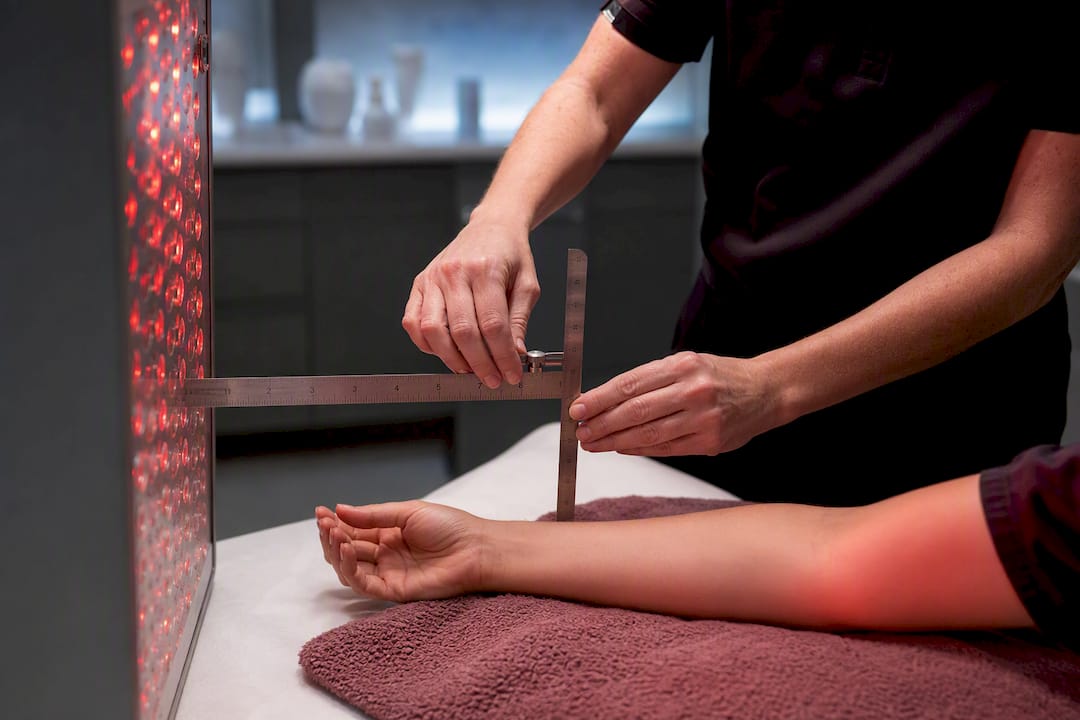
Red light therapy is generally safe for short-term use when you follow manufacturer directions and your clinician’s guidance. The main caveats: protect your eyes, disclose any photosensitive conditions or medications before you start, and confirm your device or clinic session is dosed appropriately for your skin type. The sections below cover the clinical evidence, dosing data, and precautions you need before your next session.
TL;DR:
Red light therapy poses minimal short-term risks when used correctly, but dosages must be tailored to skin type to prevent adverse effects like blistering or prolonged redness.
Eye protection is essential during treatment, especially with high-intensity devices, to avoid retinal damage, and generic sunglasses do not suffice for blocking specific wavelengths.
Individuals with photosensitivity disorders, certain medications, pregnancy, or darker skin tones should consult a clinician before starting therapy to reduce the risk of adverse reactions.
Lower-powered at-home devices have a safer profile but lack extensive safety and efficacy data compared to clinical-grade equipment, which is calibrated and monitored by professionals.
Long-term safety remains uncertain, emphasizing the importance of dose management, proper screening, and professional oversight for sustained or high-frequency use.
Table of Contents
What Is Red Light Therapy Safety Based On?
Red light therapy, also called low-level laser therapy or photobiomodulation, works through a mechanism your skin cells actually respond to at the mitochondrial level. Red and near-infrared wavelengths, typically between 630 and 850 nanometers, get absorbed by a compound in your cells called cytochrome c oxidase. That absorption boosts ATP production, the energy currency your cells used to repair tissue and manage inflammation.
This is the core reason red light therapy carries a different risk profile than tanning beds or sun exposure. Ultraviolet light sits at a much shorter wavelength, and it’s UV radiation that damages DNA and drives skin cancer risk. Red and near-infrared light don’t carry that same ionizing punch. Current evidence has not linked red light therapy to skin cancer, according to a Cleveland Clinic overview of the treatment.
That said, “different safety profile” doesn’t mean “no limits.” A few things matter for how deep and how strong the effect actually goes:
Penetration depth varies by wavelength. Red light works mostly at the skin’s surface layers, while near-infrared reaches somewhat deeper into tissue.
Neither wavelength penetrates deeply enough to justify sweeping claims about systemic or organ-level effects.
Dose (measured in fluence, or energy delivered per square centimeter) matters more than exposure time alone.
Understanding this mechanism is why the safety conversation isn’t about cancer risk. It’s about dose, skin tolerance, and appropriate screening before you start.
What Clinical Studies and Medical Organizations Say About Safety
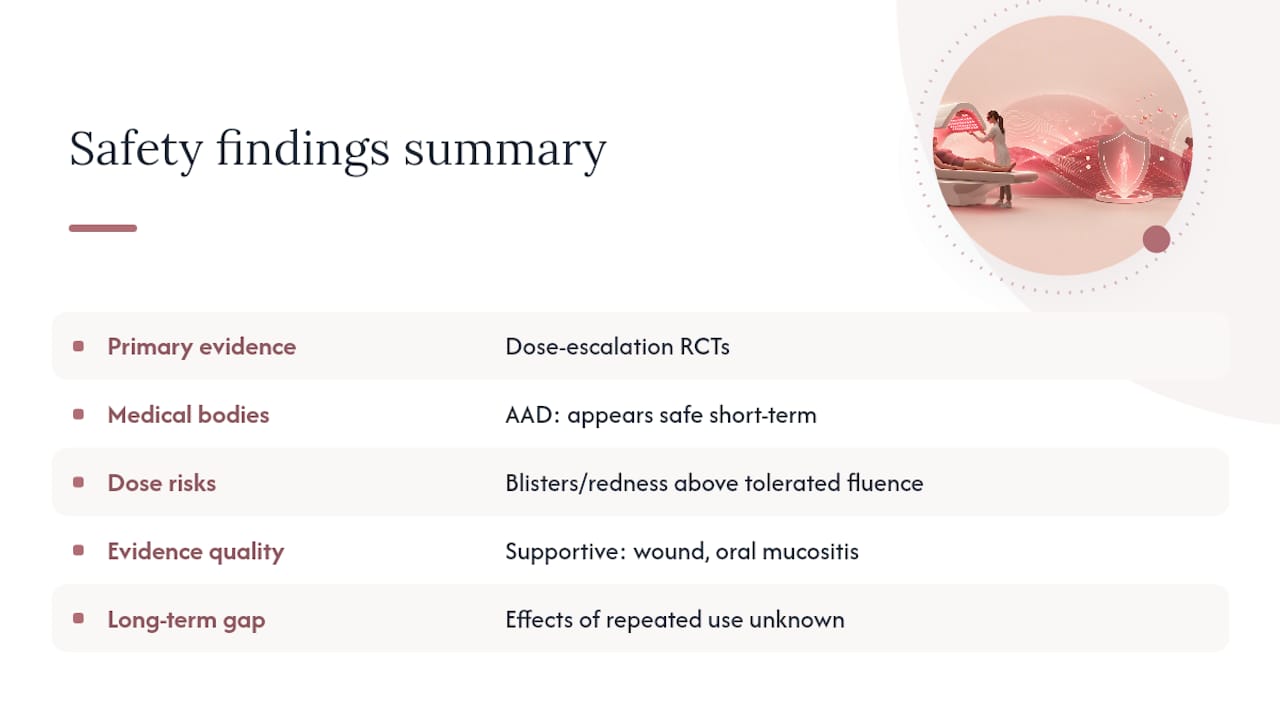
Two sources anchor most of what dermatology currently knows about red light therapy safety: dose-escalation randomized controlled trials and position statements from major medical bodies. Both point in the same direction, with the same caveat attached.
The American Academy of Dermatology confirms that red light therapy appears safe in the short term, while noting that long-term effects from repeated or high-frequency use remain less understood. That’s not evasive hedging. It reflects a genuine gap: most trials track outcomes over weeks or months, not years of cumulative use.
What the trial data actually found: The STARS randomized controlled trials identified maximum tolerated doses for high-fluence LED red light, with dose-limiting adverse events like blistering and prolonged redness appearing only once fluence climbed past those thresholds, according to dose-escalation research published in PMC.
Evidence quality also varies by use case. Wound healing and oral mucositis have reasonably supportive clinical data behind them. Claims about deep-tissue or systemic benefits, like improved sleep or athletic recovery, rest on thinner evidence, according to commentary from Stanford Medicine. That gap between marketing enthusiasm and published proof is exactly why clinician oversight matters for anything beyond basic skin applications.
Side Effects You Might Notice (and Ones That Signal a Problem)
Most people who use red light therapy correctly experience nothing worse than mild, short-lived skin changes. A smaller group experiences something more serious, almost always tied to excessive dose or duration.
Expected, low-concern reactions include:
Transient redness (erythema) that fades within hours to a day
Mild warmth or tightness in the treated area during or right after a session
Temporary hyperpigmentation, which shows up more often in darker skin tones and usually resolves on its own
Rarer, dose-related harms show up mainly in dose-escalation trial data rather than typical consumer use:
Blistering at high fluences, documented in the PMC dose-escalation trials
Prolonged erythema that lasts well beyond a day and doesn’t fade with time
Pronounced or unusually dark hyperpigmentation that doesn’t improve within a few weeks
Pro Tip: Take a photo before your first session and after each of the first few. Subtle changes in pigmentation or redness duration are much easier to spot in side-by-side images than from memory.
If you notice blistering, redness that worsens rather than fades, or pigmentation changes that persist past a few weeks, stop treatment and check in with a dermatologist or your treating clinician.
Protecting Your Eyes During Treatment
Your eyes are more vulnerable to light exposure than the skin around them, and this is one precaution that gets skipped far too often by people using at-home devices unsupervised.
Devices sold for red light therapy usually come with protective goggles for a reason: prolonged or direct exposure to concentrated light carries real risk to the retina, according to Cleveland Clinic’s safety guidance. Skipping that step because the goggles feel unnecessary is a common mistake.
Keep these points in mind every session:
Wear the eye protection that comes with your specific device, not a generic pair from another product
Sunglasses are not a substitute. They’re not designed to block the specific wavelengths and intensities involved
Never point a high-intensity panel or handheld device directly at your eyes or at open mucous membranes
If you experience eye irritation, blurred vision, or discomfort after a session, see an eye care specialist promptly rather than waiting it out
Facial treatments around the eye area deserve extra caution, and a trained clinician will position the device and your protective gear accordingly.
Who Should Avoid Red Light Therapy or Get Clinical Guidance First
Certain medical conditions and medications raise your baseline photosensitivity, which changes how your skin reacts even to light that isn’t ultraviolet. This is where a quick conversation with a clinician saves you from a bad reaction.
Conditions and situations that call for caution or a professional check-in first:
Autoimmune photosensitivity disorders, including lupus, which can flare with light exposure of various kinds
Medications that heighten photosensitivity, including certain antibiotics, retinoids, and some cancer treatment drugs, according to AAD guidance on red light therapy
Pregnancy or active systemic cancer treatment, where caution and a clinician’s advice are appropriate before starting any light-based treatment
Darker skin tones, where dermatologists recommend starting with lower doses and shorter sessions to reduce hyperpigmentation risk
None of this means red light therapy is off the table for these groups automatically. It means the decision belongs in a conversation with someone who knows your history, not a default setting on a home device.
At-Home Devices vs. Clinical-Grade Equipment
The device you use changes both your risk and your realistic expectations, and the two device classes aren’t interchangeable despite similar marketing language.
At-home devices typically run at lower irradiance than professional equipment. That lower power generally means lower immediate risk, but it comes with a tradeoff: these devices haven’t been studied nearly as extensively as clinical equipment, so their long-term safety and their actual effectiveness are both less established, according to Cleveland Clinic.
Clinical-grade devices, by contrast, deliver higher fluence under trained supervision. A clinician calibrates dose to your skin type and monitors your response session to session, which shifts both the safety profile and the plausible ceiling on results.
A few practical points worth knowing before you buy or book:
“FDA cleared” on a device label indicates it met a low-risk safety bar, not that its efficacy claims are proven, per the AAD
If your goal is convenience and mild maintenance, a lower-powered at-home device may fit
If you’re targeting a specific concern like pigmentation, texture, or muscle recovery, supervised sessions with proper mechanism-based dosing tend to offer a more predictable path
How Much Light Is Too Much? Dosing and Skin-Tone Guidance
Fluence, measured in joules per square centimeter (J/cm2), is the number that actually determines your risk, far more than how long you sit under the light.
Dose-escalation findings: High-fluence LED red light was found safe up to certain fluence levels varying by skin type in the STARS randomized controlled trials. Fluences beyond these thresholds triggered dose-limiting adverse events, including blistering and prolonged redness.
That gap between skin types isn’t incidental. Darker skin tends to show greater photosensitivity at comparable fluences, which is exactly why dermatologists recommend starting conservatively and escalating gradually if you have more melanin in your skin, rather than matching a friend’s settings or a generic protocol you found online.
One important distinction: these trial thresholds come from controlled, clinician-monitored settings, not casual at-home use. They tell researchers where the safety ceiling sits, not what dose you should dial into a consumer device without guidance. If you’re unsure where you fall, a clinician’s assessment beats guesswork every time, particularly for facial or high-frequency treatment plans.
Your Safe-Use Checklist Before, During, and After Treatment
A little preparation turns red light therapy from a guessing game into a controlled routine. Here’s the sequence that keeps risk low, whether you’re using a device at home or booking a supervised session.
Before your session: Review your medical history and current medications for photosensitivity risk, and flag any autoimmune or skin conditions to your clinician before starting.
Choose your starting dose conservatively: If you have darker skin or a sensitive skin condition like eczema or psoriasis, start with a shorter session and lower intensity than the manufacturer’s default recommendation.
During the session: Wear the eye protection supplied with your device, position it at the recommended distance, and don’t exceed the suggested duration on your first few uses.
After treatment: Watch the treated area for redness, peeling, or pigmentation changes over the following 24 to 48 hours.
Manage mild reactions: A cool compress and simple moisturizer usually settle transient redness; persistent symptoms are a signal to pause.
Pro Tip: Log your session length, distance from the device, and any skin reaction in a simple notes app. Patterns that seem random in the moment often become obvious after three or four entries.
Stop and consult a dermatologist or your treating clinician if you notice blistering, redness that doesn’t fade within a day or two, or any new symptom that feels disproportionate to a light-based treatment.
Why Clinician Screening Changes the Safety Equation
A trained dermal clinician with many years in the field screens every client’s medical history and medication list before recommending a red light protocol. That step catches photosensitivity risks a self-administered home device simply can’t flag.
Clinic sessions start conservatively, especially for clients with darker skin tones or sensitive conditions like rosacea, and dosing is adjusted based on how skin actually responds across sessions rather than a fixed default. If you’re weighing supervised treatment, booking a consultation gets you a plan calibrated to your skin, not a generic setting.
Where the Evidence Holds Up and Where It Doesn’t
Red light therapy has genuine clinical support for surface-level skin concerns and specific medical uses like wound healing, but it isn’t the cure-all some marketing suggests. The dose-escalation trial data gives us real numbers to work from, which is more than most skincare technologies can claim.
That said, the biggest risk I see isn’t the light itself. It’s people skipping the screening step: ignoring eye protection, ignoring medication interactions, or assuming darker skin tolerates the same dose as lighter skin. Treat this like any other clinical tool. Respect the dosing data, protect your eyes, and get a professional read on your specific situation before you escalate intensity or frequency.
— chevonne
Book a Clinician-Led Red Light Therapy Session
If you’ve made it this far, you already know that dosing and screening matter more than the device you pick. That’s exactly where a clinic visit outperforms guessing with a home unit. In a clinical setting, sessions start with a real skin assessment, not a default setting, so fluence and session length actually match your skin type and history.

A clinical team assesses your skin, screens for photosensitivity and medication interactions, and sets conservative starting parameters that adjust as your skin responds. If pigmentation, redness, or texture are your main concerns, that assessment often pairs well with treatments like the Larimedical Peel, which addresses many of the same underlying skin issues without downtime. Curious what supervised dosing looks like for your skin? Book a consultation and get a plan built around your actual skin, not a one-size-fits-all protocol.
Sources
The safety claims in this article draw on clinical trial data and guidance from major medical and dermatology organizations:
FAQ
Are There Any Dangers to Red Light Therapy?
The main risks are mild and temporary, such as redness or hyperpigmentation, though rare dose-related harms like blistering can occur at high fluences, and eye exposure without protection carries genuine risk.
What Does Cleveland Clinic Say About Red Light Therapy?
Cleveland Clinic states that red light therapy is generally safe for short-term use when directions are followed, and that it isn’t linked to skin cancer since it doesn’t use ultraviolet light.
What Are the Downsides of Red Light Therapy?
Downsides include limited long-term safety data, especially for at-home devices, plus the risk of mild side effects like temporary redness or pigmentation changes if dosing isn’t matched to your skin type.
Where Should You Not Use Red Light Therapy?
Avoid directing any red light device at your unprotected eyes or open mucous membranes, and get clinical guidance first if you have a photosensitivity disorder, take photosensitizing medication, or are pregnant.
Is At-Home Red Light Therapy as Safe as Clinical Treatment?
At-home devices generally run at lower power, which likely means lower immediate risk, but they haven’t been studied as thoroughly as clinical-grade equipment, so a supervised session offers more predictable dosing and oversight.
Recommended
Comments