.png)
6 Clinician Backed Fixes for Teeth Whitening Sensitivity

Yes, sensitivity after teeth whitening is normal, and for most people it fades on its own within a few days. If your teeth are aching right now, start with a desensitizing toothpaste containing potassium nitrate, skip anything hot, cold, or acidic for 48 hours, and brush gently with a soft-bristled brush. Sharp, localized, or worsening pain is different from ordinary whitening zing and deserves a call to your dentist.
TL;DR:
Sensitivity after whitening mainly results from peroxide increasing enamel permeability and reaching the nerve through dentinal tubules, triggering sharp signals.
Higher peroxide concentrations, longer exposure, existing gum recession, thin enamel, or prior sensitivity significantly raise the risk of more intense or prolonged discomfort.
Most sensitivity peaks within two days post-treatment and resolves within a week for mild cases, with severe or lingering pain being rare.
Using desensitizing toothpaste, avoiding extreme temperatures, and taking over-the-counter pain relief during the first few days greatly alleviates discomfort.
Proper pre-treatment assessment and tailored protocols, including lower concentration products and controlled application, are crucial for preventing and managing whitening sensitivity effectively.
Table of Contents
What Causes Teeth Whitening Sensitivity?
Whitening gel, whether it’s the peroxide in a professional treatment or a drugstore strip, works by penetrating enamel to break down stain molecules. That same penetration is what causes the trouble. Peroxide temporarily increases the permeability of your enamel, and it can travel through microscopic channels called dentinal tubules to reach the nerve inside your tooth.
Dentists explain this through what’s known as hydrodynamic theory: fluid inside those tubules shifts when peroxide dehydrates the tooth, and that movement triggers a sharp signal in the pulp nerve. It’s the same mechanism behind sensitivity to cold air or ice cream, just switched on by a chemical process instead of temperature.
Not everyone reacts the same way. Some risk factors make a stronger response more likely:
Higher peroxide concentration. In-office treatments using strong hydrogen peroxide gels tend to trigger more noticeable sensitivity than lower-strength, at-home carbamide peroxide formulas.
Longer exposure time. Leaving whitening gel or strips on longer than directed increases how much peroxide reaches the dentin.
Existing gum recession. Exposed root surfaces have no enamel barrier at all, so they react faster and harder.
Thin enamel or micro-cracks. These give peroxide a more direct path to the nerve.
A history of sensitive teeth. If cold water already bothers you, whitening will likely amplify that.
Comparative research backs this up directly: patients using 40% hydrogen peroxide in-office reported significantly bigger jumps in sensitivity than those using 10% carbamide peroxide at home, even though the color results were similar over time.
How Long Does Whitening Sensitivity Usually Last?
Discomfort typically peaks within about two days after treatment, then eases day by day. For most people, it’s gone within a week.
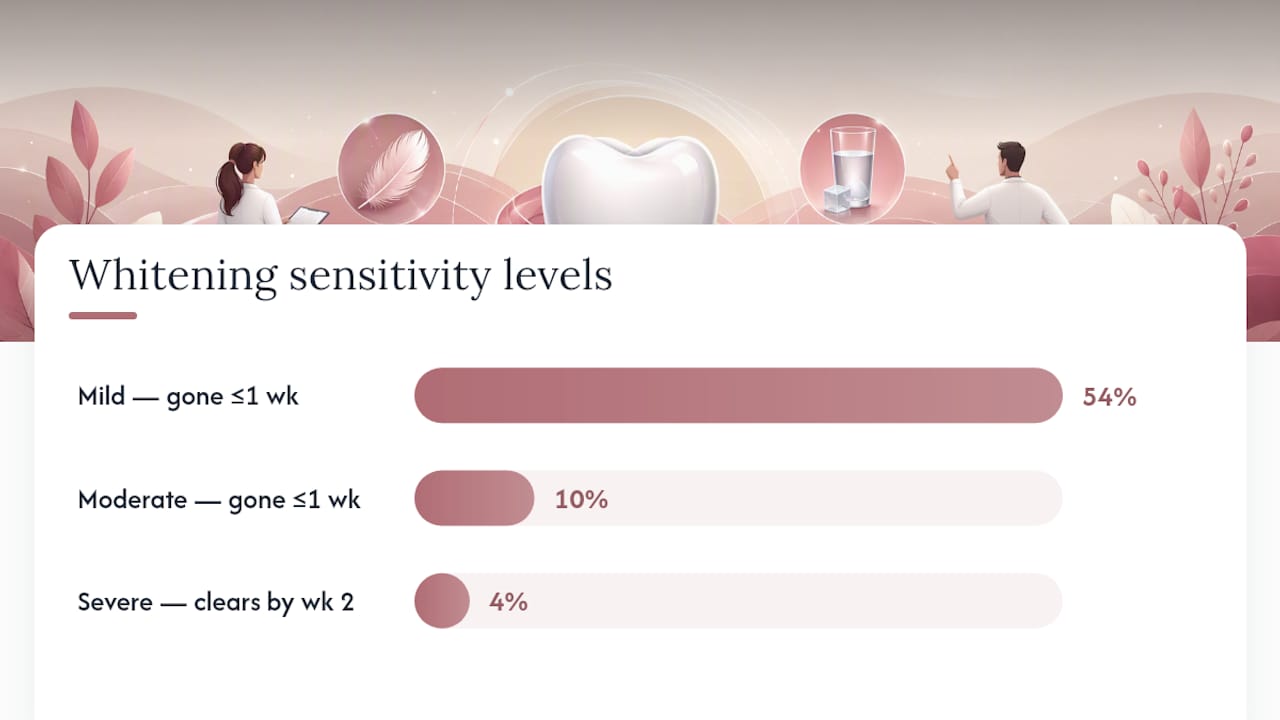
A randomized study of home whitening patients found that 54% experienced mild sensitivity, 10% moderate, and only 4% severe, with the severe cases clearing up by the second week. In other words, some tenderness is closer to the norm than the exception, and severe or lingering pain is genuinely rare.
Method matters too. In-office treatments using high-concentration peroxide tend to produce a sharper, faster sensitivity spike, while lower-concentration at-home kits generally cause milder, slower-building discomfort that’s easier to manage day to day.
What Helps Right Away With Sensitive Teeth?
The first 24 to 72 hours after whitening are when discomfort peaks, and small choices make a real difference in how uncomfortable that window feels.
Switch to a desensitizing toothpaste. Formulas with potassium nitrate or stannous fluoride calm the nerve signal at the tubule level. Dental professionals often recommend applying it as a thin layer left on the teeth rather than rinsed away immediately, similar to a spot treatment.
Add a fluoride rinse or gel. Topical fluoride supports remineralization of the enamel surface and can speed up recovery from sensitivity.
Avoid temperature extremes. Skip ice water, hot coffee, and acidic drinks like citrus juice or soda for a couple of days. Lukewarm liquids, or sipping through a straw to bypass the front teeth, both help.
Brush gently. Use a soft-bristled brush and light pressure. Aggressive brushing right after whitening can irritate already-sensitive enamel.
Take an over-the-counter pain reliever if needed. A standard dose of ibuprofen can take the edge off during the worst 24 hours, especially before bed.
Consider a short-term topical gel for events. If you have a big day coming up, a spot-applied desensitizing gel can calm nerve activity for a few hours without derailing your whitening plan.
Pro Tip: Apply your desensitizing toothpaste right before bed on the night of treatment. Saliva production slows overnight, so the paste stays on your teeth longer and gets more time to work.
How to Reduce Sensitivity Before Your Next Whitening Session
The best time to manage whitening sensitivity is before you start, not after your teeth are already aching.
Begin using a potassium nitrate or stannous fluoride toothpaste before your whitening procedure to allow the desensitizing compounds time to build up in the dentinal tubules, so your teeth are already partly shielded when the peroxide goes on. Keep using it for a week or two afterward as well.
If you know you’re prone to sensitive teeth, ask about a lower-concentration option. A 10% carbamide peroxide formula produces less sensitivity than higher-strength alternatives, and the color result over several weeks is often comparable.
A few other adjustments matter more than people expect:
Ask your clinician about remineralizing adjuncts like nano-hydroxyapatite or ACP-CPP. Trials have shown ACP-CPP applied during bleaching reduces sensitivity without compromising the whitening result, and a similar effect has been shown when nano-hydroxyapatite or fluoride is applied before in-office bleaching.
Use custom-fitted trays instead of one-size strips. A well-fitted tray limits gel contact with your gumline, which is often the most sensitive area.
Never leave whitening product on longer than the instructions specify. More time doesn’t mean better results. It just means more peroxide exposure and more risk.
Checking your treatment against a proper safety checklist before whitening is worth five minutes, especially if you’re using an at-home kit you haven’t tried before.
When Sensitivity Signals a Bigger Problem
Ordinary whitening sensitivity feels like a general, even ache across multiple teeth that responds to cold and improves daily. That’s different from pain that should send you to a dentist.
Watch for these warning signs:
Sharp pain localized to one specific tooth rather than spread across several.
Pain that comes on spontaneously, without any cold, heat, or pressure trigger.
Pain when biting down or chewing.
Discomfort that’s still getting worse after a week, instead of easing.
Sensitivity that hasn’t improved at all after two weeks.
Any of these can point to something whitening didn’t cause: a cracked tooth, a leaking filling, decay, or an underlying pulp issue that whitening simply exposed. A dental professional can check for these specific problems with an exam and, if needed, an X-ray, rather than you guessing at home.
What a Clinician-Led Whitening Protocol Actually Looks Like
Most at-home sensitivity problems trace back to one thing: nobody checked the mouth before the peroxide went in.
A proper pre-whitening assessment catches the issues that turn mild tenderness into a genuinely painful week: unnoticed gum recession, thin enamel, a hairline crack, or a filling that’s starting to leak. Tailoring the concentration and timing to what your teeth can actually handle prevents most of the sensitivity people assume is unavoidable.
In a clinical setting, that assessment can lead to a few options rarely available in a drugstore kit: in-chair fluoride varnish applied immediately before or after bleaching, a custom tray loaded with desensitizing gel for 10 to 30 minutes before the whitening session starts, or a staged approach that spreads whitening across several shorter sessions instead of one aggressive treatment. Reviewing before-and-after results from clinician-supervised whitening gives a realistic sense of what a properly paced protocol can achieve without the sensitivity spike.
Managing Sensitivity for the Long Run
A single rough week after whitening doesn’t mean your teeth are damaged, but repeated aggressive whitening cycles can keep dentin exposed and sensitive on an ongoing basis. Long-term comfort comes down to pacing and maintenance, not toughing it out every time.
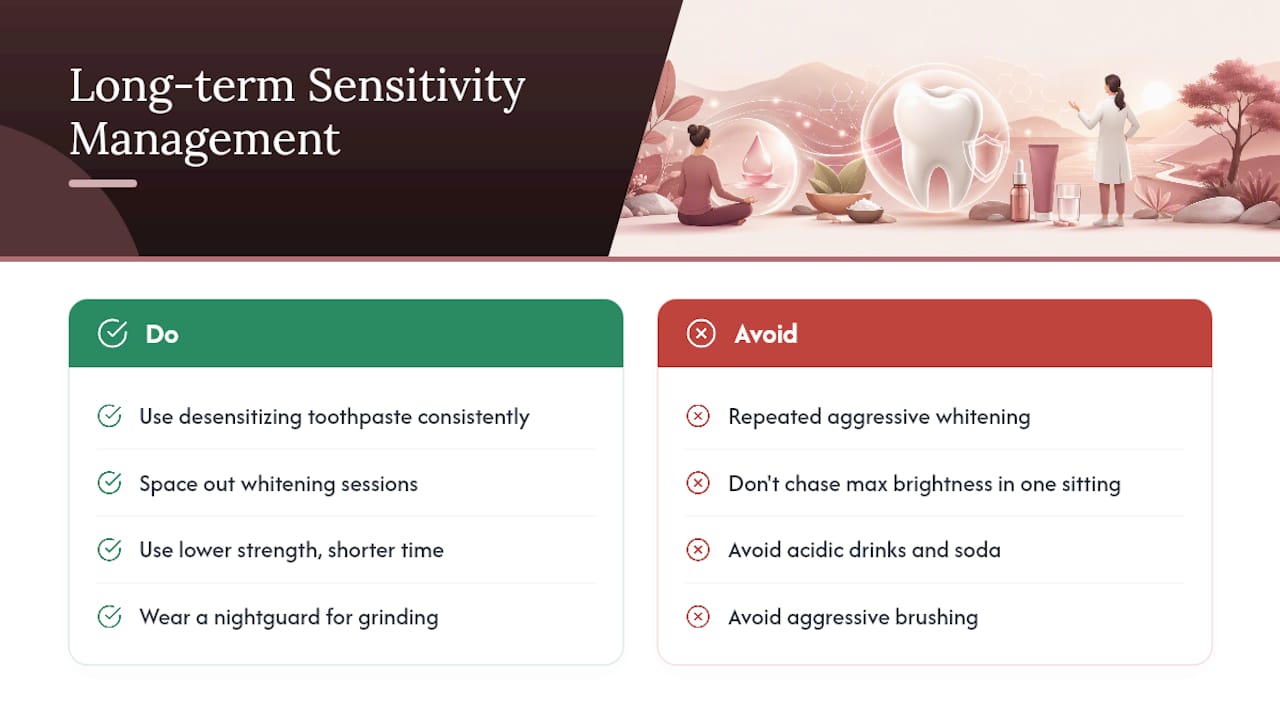
Keep a desensitizing toothpaste in permanent rotation if you whiten more than once or twice a year, not just in the weeks around treatment. Potassium nitrate needs consistent use to keep nerve signaling calmed, and stopping the moment your teeth feel fine lets sensitivity creep back in with the next round.
Space out whitening sessions instead of chasing maximum brightness in one sitting. A gradual approach, lower concentration, shorter contact time, more sessions spread over weeks, tends to produce a comparable final shade with far less nerve irritation along the way. It also gives your enamel time to remineralize between sessions rather than staying in a constantly stripped-down state.
Watch your everyday habits too. Acidic drinks, aggressive brushing, and teeth grinding all thin enamel over time and make you more reactive to future whitening. Addressing those separately, a nightguard for grinding, a softer brush, cutting back on soda, protects the results of whatever whitening method you choose next.
The Real Problem With Most Whitening Sensitivity Advice
Most of what’s written about whitening sensitivity treats it as something to endure. Grit your teeth, use a numbing gel, wait it out. That advice isn’t wrong, but it skips the part that actually matters most: prevention beats treatment every time, and almost nobody does the prep work.
The data backs this up plainly. Concentration and protocol drive sensitivity far more than luck or individual toughness does. A person using a properly fitted low-concentration tray with a pre-treatment desensitizing routine is playing an entirely different game than someone slapping on generic strips for the maximum recommended time because the box says it’s fine.
What gets underrated is the pre-whitening assessment. Most people jump straight to the product and treat sensitivity as an unavoidable toll. It isn’t. Catching thin enamel, gum recession, or a hidden crack before treatment starts changes the entire experience. If there’s one thing worth prioritizing, it’s booking a proper check before your next whitening round instead of after the pain starts.
— chevonne
Get Whitening Without the Guessing Game
Most sensitivity problems come from skipping the one step that actually prevents them: a real assessment before the peroxide goes on. A proper assessment of enamel, gum health, and sensitivity risk before treatment starts can help manage whitening sensitivity more effectively.

Clients get a clinician-led protocol tailored to their teeth, whether that means a lower-concentration formula, a staged whitening schedule, or a fluoride varnish applied on the spot to limit discomfort. The Signature Teeth Whitening service is built around comfort as much as results, with pre-treatment guidance that at-home kits simply can’t offer. If you’ve been putting off whitening because of past sensitivity, book a consultation through the teeth whitening page and get a plan built around what your teeth can actually handle.
This article is general information, not a substitute for advice from a qualified doctor. Consult a qualified healthcare professional about your own circumstances before acting on anything here.
Sources
FAQ
How do you fix sensitive teeth after whitening?
Switch to a desensitizing toothpaste with potassium nitrate or stannous fluoride, apply a fluoride rinse, avoid hot or cold foods, and brush gently for a few days until the discomfort fades.
Why is my teeth whitening causing sensitivity?
Peroxide temporarily makes enamel more permeable, allowing it to reach the dentin and trigger fluid movement inside microscopic tubules that irritates the nerve, a process known as hydrodynamic sensitivity.
How long does the sensitivity last after teeth whitening?
Sensitivity typically peaks at 24 to 48 hours and improves within a few days; clinical data shows most cases resolve by two weeks, with severe reactions being uncommon.
How can I whiten my teeth if they’re very sensitive?
Choose a lower-concentration option like 10% carbamide peroxide, pre-treat with desensitizing toothpaste for a period before the whitening procedure, and consider a clinician-led plan with fluoride or ACP-CPP adjuncts through a service like Fundamentalskin’s whitening consultations.
Recommended
Comments