.png)
How Nutrition Shapes Skin Aging and Clinical Results
- chevonne stewart
- 11 minutes ago
- 10 min read


Nutrition materially affects visible skin aging and meaningfully changes how well clinical skin treatments work. Your diet influences collagen production, oxidative stress, and your skin’s ability to heal after procedures. Three mechanisms drive this most directly: antioxidants neutralize the free radicals that break down collagen and elastin; refined sugar triggers glycation, which stiffens and cross-links collagen fibers; and amino acids from dietary protein supply the raw materials your skin needs to rebuild. At Fundamentalskin, Chevonne, a Dermal Clinician with 15 years of experience, integrates nutrition awareness into every treatment plan because dietary deficiencies can visibly accelerate aging and blunt the results of even the most advanced clinical procedures.
Antioxidants from whole foods support defense against UV-induced free radical damage
Refined sugar intake accelerates collagen cross-linking through AGE formation
Protein and key micronutrients support post-procedure tissue repair
Supplementation alone rarely reverses advanced skin aging; clinical treatments and nutrition work best together
Table of Contents
What does the evidence actually show about diet and visible skin aging?
Which nutrients and foods most support healthy, youthful skin?
How does nutrition interact with clinical skin treatments and healing?
A practical nutrition plan for women preparing for clinical skin procedures
What should you ask your clinician about nutrition before a procedure?
How does nutrition affect skin aging at a biological level?
The role of nutrition in skin aging runs through four interconnected pathways that clinicians track closely.
Oxidative stress and antioxidant defense. Reactive oxygen species (ROS) generated by UV exposure and pollution degrade collagen and elastin. Dietary antioxidants, including vitamins C and E, carotenoids, selenium, and polyphenols, neutralize ROS before they cause structural damage. When antioxidant intake is low, this defense weakens and photoaging accelerates.
Collagen synthesis. Collagen requires proline, lysine, and vitamin C as direct cofactors. Without adequate dietary protein and vitamin C, fibroblasts cannot produce or maintain collagen at the rate skin needs, particularly after a resurfacing procedure. Vitamin C both attenuates UV-induced free radical production and promotes collagen formation in human skin models.
Glycation and AGEs. Diets high in refined sugar and trans fats promote formation of advanced glycation end products (AGEs) that cross-link collagen fibers, increasing rigidity and wrinkling. This non-enzymatic damage is largely irreversible once it accumulates, which is why reducing sugar intake before procedures matters.
Inflammation and matrix metalloproteinases (MMPs). Chronic dietary inflammation, driven by processed foods and low omega-3 intake, upregulates MMPs, enzymes that degrade the extracellular matrix. Omega-3 fatty acids and polyphenols suppress this inflammatory signaling and help preserve skin structure.
Pathway | Key dietary driver | Visible skin effect |
Oxidative stress | Low antioxidant intake | Photoaging, dullness, fine lines |
Collagen synthesis | Low protein, low vitamin C | Thinning, poor wound healing |
Glycation (AGEs) | High refined sugar, trans fats | Stiffness, deep wrinkles, loss of elasticity |
Inflammation / MMPs | Low omega-3, high processed food | Redness, accelerated structural breakdown |
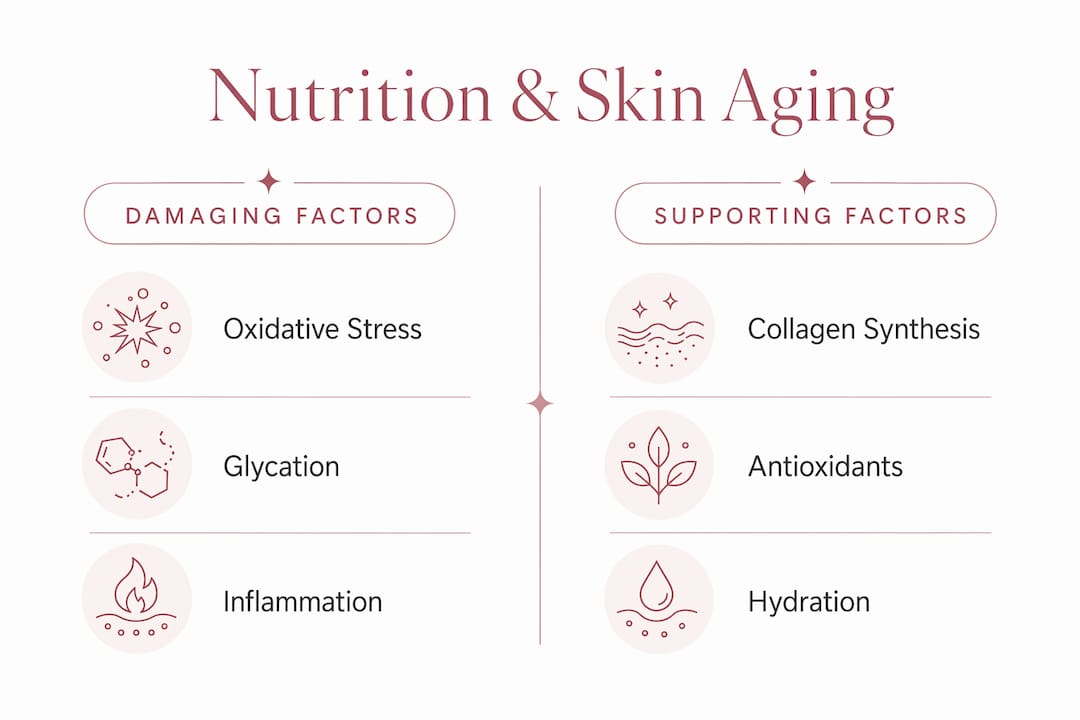
The epidermis has no direct blood supply, so nutrients reach it by diffusion from the dermis. This is why combining oral micronutrients with targeted topical applications consistently outperforms either route alone.
What does the evidence actually show about diet and visible skin aging?
The evidence is stronger for whole-food dietary patterns than for isolated supplements, and clinicians should frame it that way.
Proven: Vitamin C supports collagen synthesis and reduces photoaging markers in human studies. Omega-3 fatty acids, particularly linoleic acid, are associated with less skin atrophy and lower photo-inflammatory responses. Nutrient deficiencies in vitamin C, zinc, and protein impair wound healing in clinical settings.
Probable: Whole-food, plant-forward diets may lengthen telomeres and reduce circulating compounds linked to cellular aging, attributed to high antioxidant and anti-inflammatory concentrations. Dietary antioxidants and omega-3 intake are consistently linked to reduced photoaging and improved skin hydration across multiple studies.
Promising but limited: Oral collagen peptides show benefit for hydration and suppleness in some trials, though study quality varies. Nutricosmetic products are an active area of research, but marketing claims frequently outrun the clinical evidence.
Mixed: Caloric restriction delays aging indicators in animal models; human evidence is more limited and does not translate directly to short pre-procedure interventions.
“Combining systemic nutritional support with targeted topical or procedural interventions produces the most meaningful outcomes in advanced skin aging.” — Wiley, Potential Role of Dietary Antioxidants During Skin Aging
Which nutrients and foods most support healthy, youthful skin?
Every nutrient below has a specific job in skin structure or defense. Food-first is the right starting point.
Nutrient | Why it matters | Top food sources | Practical portion |
Vitamin C | Collagen cofactor, antioxidant | Bell peppers, kiwi, citrus, broccoli | 1 cup raw bell pepper daily |
Vitamin A (retinoids/carotenoids) | Epidermal turnover, collagen stimulation | Sweet potato, carrots, leafy greens, eggs | ½ cup cooked sweet potato |
Vitamin E | Protects collagen from oxidative breakdown | Almonds, sunflower seeds, avocado | Small handful almonds daily |
Omega-3 fatty acids | Anti-inflammatory, photoaging protection | Salmon, sardines, walnuts, flaxseed | Regular intake of omega-3-rich foods |
Zinc | Wound repair, antioxidant enzyme function | Pumpkin seeds, oysters, legumes | Regular sources of zinc in diet |
Selenium | Antioxidant enzyme support, UV protection | Brazil nuts, tuna, eggs | Sources of selenium from diet |
Polyphenols | Free radical scavenging, MMP suppression | Berries, green tea, dark chocolate, red grapes | Dietary intake of polyphenol-rich foods |
Protein / amino acids | Collagen building blocks (proline, lysine) | Chicken, fish, legumes, Greek yogurt | Adequate protein intake per meal from whole food sources |
Fiber / probiotics | Gut-skin axis, microbiome balance | Oats, kefir, kimchi, lentils | Daily serving fermented food |
Hydration and electrolytes. Skin turgor depends on water content in the stratum corneum, but hydration is not just about drinking more water. Electrolytes, especially sodium, potassium, and magnesium, regulate cellular fluid balance. Alcohol dehydrates skin at the cellular level and depletes B vitamins; caffeine in moderate amounts is generally neutral, but high intake can worsen dehydration if fluid intake is low.

Pro Tip: Whole foods deliver nutrients in synergistic combinations that isolated supplements cannot replicate. The selenium in a Brazil nut, for example, is more bioavailable when paired with the vitamin C in your next meal. Build the plate first; supplement only to address a confirmed gap.
For a deeper look at vitamins for aging skin, Fundamentalskin’s resource library covers each micronutrient in clinical detail.
How does nutrition interact with clinical skin treatments and healing?
Nutrient status directly affects wound healing speed, infection risk, collagen remodeling, post-procedure inflammation, and pigmentation risk. Deficiencies in vitamin C, zinc, and protein produce delayed wound repair and poor collagen formation, which is clinically significant when you are planning a peel or resurfacing treatment.
Pre-procedure checklist (2–4 weeks before):
Optimize protein intake from whole food sources to support collagen reserves
Increase intake of vitamin C–rich produce to support collagen synthesis
Add omega-3 sources like fatty fish and walnuts to support anti-inflammatory mechanisms
Pause high-dose vitamin E supplements and high-dose fish oil if your clinician flags bleeding risk
Reduce refined sugar and alcohol intake to lower AGE burden and systemic inflammation
Disclose all supplements to your clinician, including herbal products
Post-procedure checklist (2–6 weeks after):
Prioritize vitamin C, zinc, and protein to accelerate tissue repair
Continue omega-3 foods to manage post-procedure inflammation
Stay well hydrated with electrolyte balance in mind
Avoid alcohol during the acute healing phase
Follow your clinician’s guidance on when to reintroduce any paused supplements
Certain supplements raise specific procedural risks. High doses of vitamin E and fish oil may increase bleeding risk and should be evaluated before procedures. Some botanical supplements, including St. John’s Wort, are photosensitizing and should be paused before light-based treatments. Always disclose everything to your clinician before any procedure. For detailed post-treatment skin care guidance, Fundamentalskin’s recovery protocol covers the full timeline.
A practical nutrition plan for women preparing for clinical skin procedures
Sample weekly framework:
Breakfast daily: Greek yogurt with mixed berries, a small handful of walnuts, and a kiwi. This covers protein, polyphenols, omega-3s, and vitamin C in one meal.
Lunch: Leafy green salad with grilled salmon or sardines, avocado, pumpkin seeds, and lemon dressing. Hits omega-3s, vitamin E, zinc, and vitamin C simultaneously.
Dinner: Lean protein (chicken, fish, or legumes), roasted sweet potato or carrots, and a green vegetable. Covers amino acids, vitamin A, and fiber.
Snack: 1–2 Brazil nuts plus a piece of citrus fruit. Selenium and vitamin C together improve selenium bioavailability.
Drinks: 2 cups green tea daily; limit alcohol to zero in the two weeks before and after any procedure.
Pre-procedure (2–4 weeks before): Increase protein to support collagen reserves, cut refined sugar, add a daily fermented food for gut-skin axis support, and confirm supplement safety with your clinician.
Post-procedure (2–6 weeks after): Keep protein high, prioritize vitamin C and zinc daily, maintain hydration with electrolyte-containing foods (coconut water, leafy greens, bananas), and avoid anything that raises inflammation.
Pro Tip: If you are undergoing a pigmentation treatment or resurfacing procedure, increase carotenoid-rich foods (carrots, sweet potato, leafy greens) in the two weeks before. Carotenoids accumulate in skin tissue and offer measurable photoprotection that supports your recovery.
When do supplements help, and when should you be cautious?
Whole-food sources are generally preferred because nutrients in food arrive with co-factors that improve absorption and reduce the risk of excess. Very high doses of single-nutrient supplements can exceed physiological needs and sometimes reduce benefits rather than increase them.
Some supplements, such as oral collagen peptides, vitamin C at physiological doses, and zinc, may support skin health, though evidence varies. Evidence for many nutricosmetic products is preliminary.
Safety flags to discuss with your clinician:
High-dose vitamin E: bleeding risk around procedures
High-dose fish oil: bleeding risk
St. John’s Wort can increase photosensitivity and should be used cautiously before light-based treatments
Fat-soluble vitamins (A, D, E, K): toxicity risk at sustained high doses
Any herbal supplement: potential medication interactions
Pro Tip: When choosing a supplement, look for third-party testing certification (NSF International or USP), a dose within the physiological range, and clinician approval before starting. A supplement that passes these three checks is worth considering; one that fails any of them is not.
What should you ask your clinician about nutrition before a procedure?
Bring these questions to your next consultation:
Which supplements should I pause, and how many days before my procedure?
Do I need any nutrient testing (vitamin D, zinc, iron) before we begin?
How will my current diet affect my healing timeline for this specific treatment?
Can you factor a nutrition review into my treatment plan?
For treatments like the Larimedical Biomimetic Peel, what is the ideal nutritional window before and after?
Are there foods or supplements that could affect my pigmentation response or increase photosensitivity?
Asking for a documented nutrition plan tied to your procedure timeline is entirely reasonable. Clinicians who integrate nutrition into procedural planning, as Chevonne does at Fundamentalskin, can give you specific, timed guidance rather than generic advice.
The verdict: what to do right now
Nutrition shapes skin aging through mechanisms that are well-established, and it directly influences how well clinical treatments work. Start by cutting refined sugar and increasing protein and vitamin C–rich produce. Stop high-dose supplements you have not discussed with your clinician. Ask your dermal clinician how nutrition fits into your specific procedure timeline.
Dietary changes take time to show up in skin markers. Expect 4–8 weeks of consistent dietary improvement before you see meaningful changes in skin texture and resilience. Treatment responsiveness, particularly for collagen remodeling procedures, improves when nutritional status is optimized beforehand.
Coordinate with Chevonne or your own dermatologist to build a plan that connects your dietary habits to your treatment timeline.
Key Takeaways
Nutrition is a clinically meaningful variable in skin aging and treatment outcomes, not a lifestyle add-on.
Point | Details |
Diet affects skin aging directly | Oxidative stress, glycation, collagen synthesis, and inflammation are all diet-driven pathways. |
Whole foods outperform supplements | Synergistic nutrient combinations in food improve absorption and reduce toxicity risk. |
Pre/post-procedure nutrition matters | Optimize protein, vitamin C, and zinc before procedures; pause high-dose vitamin E and fish oil if flagged. |
Sugar accelerates collagen damage | AGEs from refined carbohydrates cross-link collagen fibers, causing stiffness and visible wrinkling. |
Fundamentalskin integrates nutrition | Chevonne builds nutrition awareness into clinical treatment plans, including the Larimedical Biomimetic Peel. |
A clinician’s perspective on nutrition and skin aging
Most women who come to me for clinical skin treatments have never been asked about their diet. That gap matters more than people realize. When I assess a client’s skin before a peel or resurfacing treatment, I am looking at tissue quality, hydration, and healing potential, and all of those are shaped by what she eats. A client who is low in protein and vitamin C will not remodel collagen as efficiently after a procedure, regardless of how well the treatment itself goes.
What I find most underestimated is the glycation piece. Refined sugar is not just a general health concern; it is actively degrading the collagen we are trying to protect and rebuild. Clients who reduce sugar intake in the weeks before a treatment consistently present with better skin texture and recover faster.
At Fundamentalskin, I integrate nutrition guidance into the consultation process for treatments including the Larimedical Biomimetic Peel. Before-and-after images from our clients show real improvements in skin tone and texture, and the clients who prepare nutritionally tend to see the most consistent results. If you are considering a clinical procedure, bring your supplement list and your diet habits to the conversation. That information changes the plan.
Fundamentalskin: nutrition-aware clinical skin treatments
Fundamentalskin pairs clinical expertise with nutrition-informed treatment planning so your skin is genuinely prepared for every procedure, not just treated on the surface.

Chevonne’s approach means your consultation covers both what happens in the treatment room and what supports your results at home. Services available include the Larimedical Biomimetic Peel, which addresses aging skin and pigmentation without downtime; the Biomimetic Peel + LED Therapy at $249, combining resurfacing with light therapy for accelerated collagen support; and the Synergie Peel, a clinically oriented option for women targeting texture and tone. Book your consultation at Fundamentalskin and bring your nutrition questions with you.
Useful sources
Key peer-reviewed references used throughout this guide:
Role of Nutritional Elements in Skin Homeostasis (PMC12190690) — mechanisms, minerals, vitamins, and anti-aging diet overview
Nutritional Dermatology: Optimizing Dietary Choices for Skin Health (PMC11723311) — skin-healthy dietary pattern, nutrient-by-nutrient evidence
Role of Micronutrients in Skin Health and Function (PMC4428712) — topical and systemic nutrition, dual-route evidence
Discovering the Link Between Nutrition and Skin Aging (PMC3583891) — vitamin C, omega-3s, caloric restriction, photoaging
Whole-Food, Plant-Based Diet Review (PMC7380694) — telomere markers, anti-inflammatory diet patterns
Potential Role of Dietary Antioxidants During Skin Aging (Wiley, fsn3.70231) — AGEs, antioxidants, combination treatment evidence
Skin Health, Linus Pauling Institute — nutrient deficiency and wound healing, supplement safety
MDPI Nutrition and Skin Structure Review (2020) — dietary deficiency and treatment responsiveness
Diet and Skin Health: The Good and the Bad (ScienceDirect) — glycation, sugar, hydration, and skin health overview
This article is general information, not medical or nutritional advice. Confirm supplement safety and dietary changes with your clinician or a registered dietitian before any procedure.
Recommended
Comments