.png)
Why Skin Loses Elasticity with Age: Science and Solutions
- chevonne stewart
- 1 day ago
- 8 min read


Skin loses elasticity with age because the collagen and elastin fibers that give your skin its structure and recoil gradually break down, and your body’s ability to replace them slows significantly. This isn’t just surface-level dryness or a hydration issue. It’s a deep dermal process involving your skin’s extracellular matrix (ECM), the fibroblast cells that maintain it, and a cascade of molecular events that accelerate with both time and environmental exposure.
Here’s what’s happening beneath the surface:
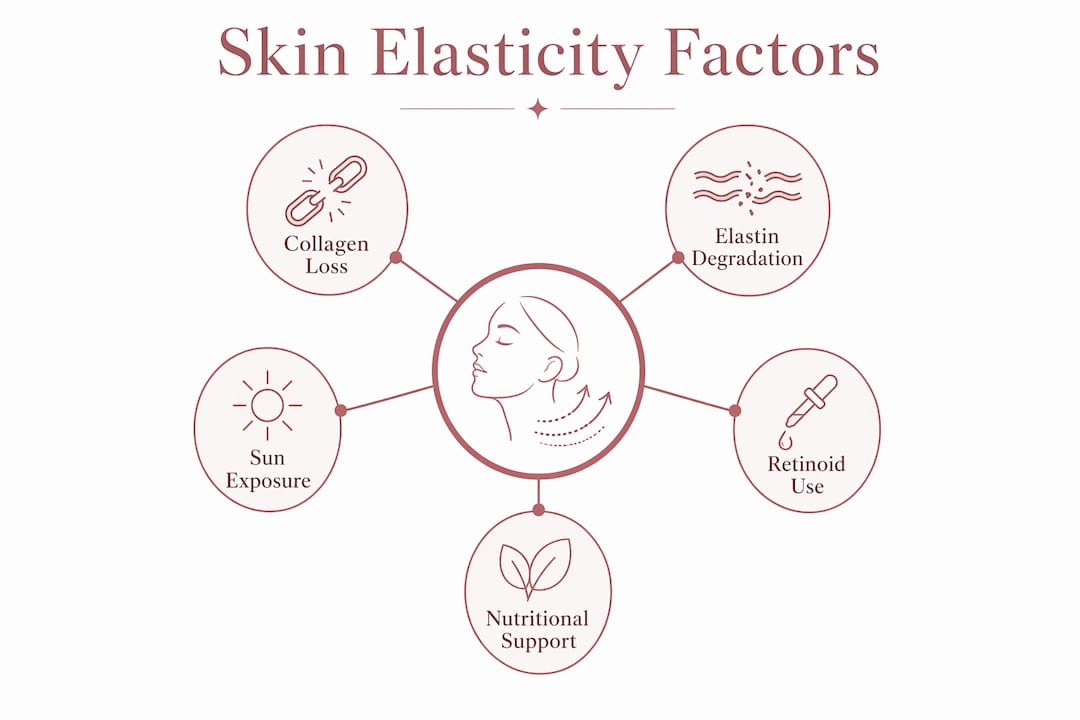
Collagen fragmentation: In young skin, collagen fibrils are tightly packed and well-organized. With age, matrix metalloproteinases (MMPs) increase their activity, breaking collagen into fragments. At the same time, collagen biosynthesis slows, creating a net deficit that shows up as sagging and wrinkles.
Elastin degradation: Elastin fibers give skin its snap-back quality. In intrinsically aged skin, fibrillin-rich microfibrils in the papillary dermis are selectively degraded. In sun-exposed skin, MMP-12 drives elastin breakdown, leading to solar elastosis where disorganized, nonfunctional elastic material accumulates in the dermis.
Fibroblast decline: Fibroblasts are the cells responsible for producing collagen, elastin, and other ECM proteins. As collagen fragments accumulate, fibroblasts lose their mechanical connection to the ECM, shrink in size, and produce progressively less of everything your skin needs to stay firm.
Oxidative stress and ROS: Reactive oxygen species (ROS) generated during aging activate signaling pathways that increase MMP expression and suppress transforming growth factor-beta (TGF-β), the key driver of collagen synthesis. This creates a self-reinforcing feedback loop that accelerates dermal atrophy.
Glycation: Excess sugar in the bloodstream binds to collagen through a process called glycation, forming advanced glycation end products (AGEs). These cross-link collagen fibers, making them stiff and brittle rather than resilient.
Hormonal shifts: Declining estrogen levels, particularly during menopause, reduce fibroblast activity and skin thickness, compounding the structural losses already underway.
Understanding this process isn’t just reassuring. It’s the foundation for choosing interventions that actually work at the right level.
Table of Contents
What accelerates skin elasticity loss, inside and out?
Elasticity decline isn’t driven by a single cause. It’s the cumulative result of intrinsic biological aging layered with external stressors, and the two categories amplify each other in ways that matter for how you approach prevention and treatment.

Intrinsic factors
These are the changes driven by your biology and genetics, independent of environment:
Cellular senescence: As cells age, they stop dividing and accumulate in tissues. Senescent fibroblasts don’t just become inactive; they actively secrete inflammatory molecules that damage surrounding ECM components.
Reduced collagen synthesis: Collagen production declines measurably with each decade of adult life. The result is progressively thinner, less resilient skin that takes longer to recover from any kind of stress.
Hormonal changes: Menopause reduces skin collagen by about 30% within the first five years due to estrogen loss. Estrogen supports fibroblast function, skin hydration, and dermal thickness, so its decline has a compounding effect on firmness.
Epidermal thinning: The epidermal turnover rate in adults in their 80s is at least 30% slower than in adults in their 30s, meaning the skin’s renewal and barrier functions weaken over time.
Extrinsic factors
These are the environmental and lifestyle influences you have more control over:
UV radiation: UV is the strongest external accelerant of skin aging. It induces MMP expression that fragments both collagen and elastin, and it drives solar elastosis in chronically exposed skin. A large portion of premature facial aging is attributable to long-term solar radiation.
Oxidative stress from pollution and smoking: Environmental pollutants and cigarette smoke generate ROS that activate the same MMP pathways as UV, degrading structural proteins and suppressing collagen synthesis.
Glycation from dietary sugar: Excess sugar causes glycation, cross-linking collagen fibers until they stiffen and lose their elastic properties. This is an often-overlooked driver of skin laxity that operates independently of UV damage.
Dehydration: Hyaluronic acid and glycosaminoglycans in the dermis decline with age, reducing the skin’s water-binding capacity. Chronic dehydration accelerates the visible signs of this loss.
Poor nutrition: Inadequate protein intake limits the amino acid supply your fibroblasts need to synthesize collagen. Antioxidant deficiencies leave ROS unchecked, accelerating ECM breakdown.
The practical takeaway: intrinsic aging sets the pace, but extrinsic factors can dramatically accelerate it. Addressing the external drivers is where you have the most leverage.
Science-backed ways to improve skin elasticity
The good news is that skin elasticity responds to targeted intervention at multiple levels. The most effective approaches work on the dermis directly, not just the surface. Here’s what the clinical evidence supports, organized by category.
Topical treatments
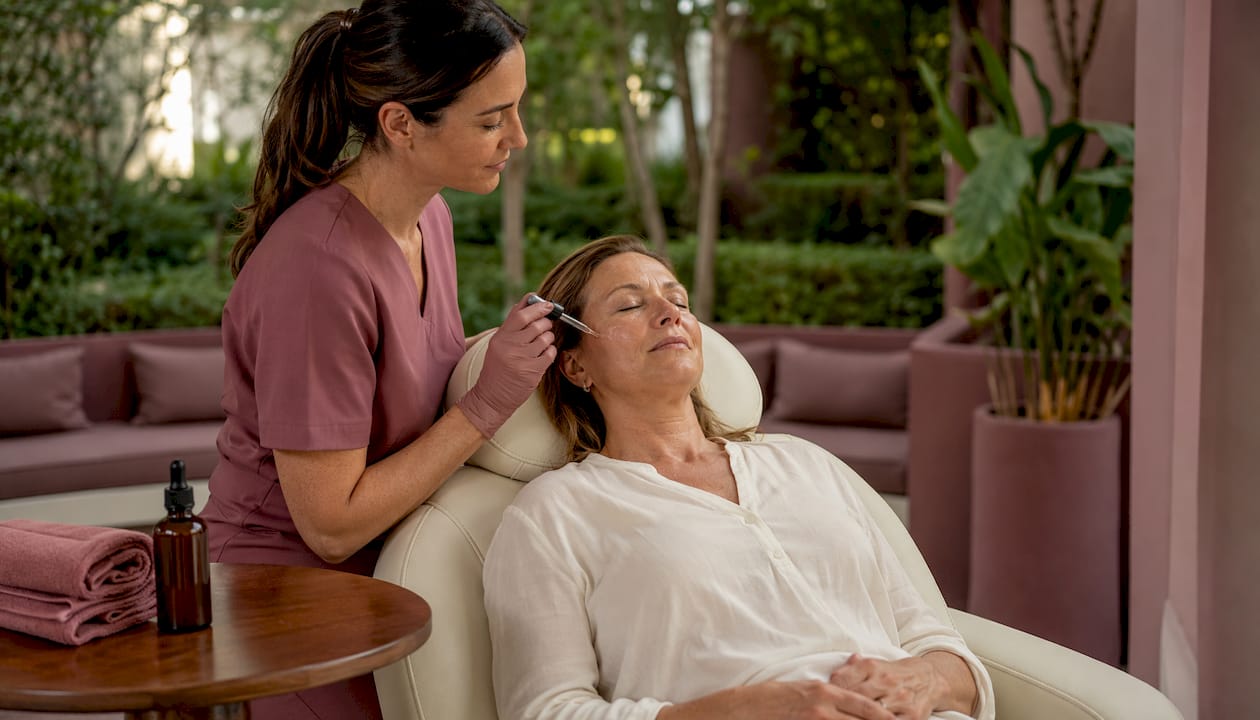
Retinoids: Topical retinoids are among the most evidence-supported actives for stimulating fibroblast activity and ECM production. They work by activating fibroblasts to produce collagen and other structural proteins, going beyond surface hydration to address the underlying deficit. Start with a low-concentration retinol and build tolerance gradually to maintain consistency.
Vitamin C: A potent antioxidant that neutralizes ROS and is a required cofactor for collagen synthesis. Stabilized L-ascorbic acid formulations at concentrations of 10–20% are the most studied for anti-aging efficacy.
Peptides: Signal peptides such as Matrixyl (palmitoyl pentapeptide-4) communicate with fibroblasts to upregulate collagen and elastin production. They’re well-tolerated and complement retinoids in a layered routine.
Hyaluronic acid: While it doesn’t rebuild collagen or elastin directly, hyaluronic acid restores dermal hydration and plumps the appearance of fine lines. Low-molecular-weight forms penetrate more deeply and support the ECM environment where fibroblasts operate.
Nanoretinol: Advanced delivery systems using biomimetic lipid nanoparticles improve retinoid penetration and reduce irritation. Clinical data shows nanoretinol can increase elasticity by up to 56% and produce 61% firmer skin in 56 days compared to conventional retinoids, with better patient adherence due to reduced side effects.
Professional treatments
Professional interventions reach the dermis in ways topical products cannot, triggering wound-healing and remodeling responses that stimulate new collagen and elastin production. Options worth knowing:
Laser resurfacing: Ablative and non-ablative lasers create controlled thermal injury in the dermis, prompting fibroblast activation and collagen remodeling. Results are among the most dramatic available without surgery.
Radiofrequency (RF): RF energy heats the deep dermis to stimulate collagen contraction and new fiber formation. It’s particularly effective for skin laxity and pairs well with RF skin tightening protocols targeting specific areas.
Microneedling: Fine needles create micro-injuries that trigger the skin’s repair cascade, increasing collagen and elastin synthesis. Often combined with platelet-rich plasma (PRP) for enhanced results.
Platelet-rich plasma (PRP) injections: PRP concentrates growth factors from your own blood and delivers them into the dermis, where they stimulate fibroblast activity and ECM repair. Clinical evidence supports its use for improving skin texture and firmness.
Chemical peels: By removing damaged outer layers, chemical peels accelerate cell turnover and signal the dermis to increase collagen production. Depth of peel determines the degree of remodeling achieved.
Ultrasound therapy (Ultherapy): Focused ultrasound delivers energy to the deep dermis and superficial muscular layer, stimulating collagen synthesis at depths topical products cannot reach.
For a full comparison of these non-invasive skin treatments, the modalities, indications, and expected outcomes vary considerably by skin type and degree of laxity.
Photoprotection
Consistent, daily broad-spectrum sunscreen use is the single most important preventive measure for preserving collagen and elastin. SPF 30+ broad-spectrum protection is clinically validated to prevent UV-induced collagen degradation. Starting early yields better long-term outcomes than trying to reverse advanced laxity later.
Pro Tip: Apply sunscreen as the final step in your morning routine, every day, regardless of cloud cover. UVA rays penetrate glass and clouds and are the primary driver of photoaging.
Nutrition and lifestyle
Protein intake: Your fibroblasts need amino acids, particularly glycine, proline, and hydroxyproline, to synthesize collagen. Adequate dietary protein (1.2–1.6g per kilogram of body weight for active adults) supports this process in ways no topical product can replicate.
Antioxidants: Vitamins C and E, polyphenols from berries and green tea, and carotenoids from colorful vegetables all help neutralize the ROS that degrade collagen and elastin. For more on vitamins that support aging skin, targeted supplementation can fill dietary gaps.
Reducing sugar: Limiting refined sugar intake directly reduces glycation, slowing the cross-linking of collagen fibers that makes skin stiff and less resilient.
Hydration: Adequate water intake supports the dermal environment where fibroblasts operate, though it works in concert with topical and nutritional strategies rather than replacing them.
Collagen supplements
Oral collagen supplements improve skin hydration, texture, and some measures of elasticity by delivering bioactive peptides that stimulate fibroblast activity and increase ECM protein production. The evidence is promising, particularly for hydrolyzed collagen peptides. That said, supplements support but don’t replace the fibroblast capacity that depends on adequate protein, antioxidants, and a low-glycation diet. Think of them as one layer in a broader strategy, not a standalone fix.
What clinicians know about long-term elasticity management
The science of skin aging has shifted significantly in recent years. The clearest insight from current molecular research is that skin aging is a coordinated collapse of all dermal layers simultaneously. Treating only the epidermis, the outermost layer, limits how much you can actually achieve. Meaningful, lasting improvement requires engaging the deep dermis: the fibroblasts, the ECM, and the signaling pathways that govern structural protein production.
“Effective anti-aging treatments must engage deep dermal structural organization and fibroblast activity for sustained elasticity. Targeting only the top layer limits anti-aging effectiveness. Skin aging is a coordinated collapse of all layers, and the most durable results come from interventions that address this at the molecular level.” — Molecular Mechanisms of Dermal Aging and Antiaging Approaches, Springer Nature
This perspective has practical implications. It explains why a retinoid outperforms a basic moisturizer for long-term firmness. It explains why professional treatments that reach the dermis produce results that topicals alone cannot. And it underscores why collagen supplements, while genuinely useful for hydration and some elasticity measures, don’t replace the fibroblast activity that rebuilds structural ECM.
Clinicians who specialize in aging skin consistently emphasize one thing above all else: consistency over time beats any single treatment. A retinoid used faithfully for two years will outperform a more aggressive intervention used sporadically. Photoprotection maintained across decades prevents the UV-driven collagen loss that no procedure can fully reverse. The adults who see the most meaningful improvements are those who commit to a layered, long-term approach rather than cycling through trends.
Newer delivery technologies are changing what’s possible with topical care. Nanoretinol systems, which use lipid nanoparticles to improve penetration and reduce irritation, are producing clinical results that close the gap between topical and procedural outcomes. For people who can’t tolerate conventional retinoids or aren’t ready for in-clinic treatments, this represents a genuine advance.
The most effective long-term strategy combines daily photoprotection, a retinoid or nanoretinol, targeted nutritional support, and periodic professional treatments calibrated to your skin’s specific needs. Viewing this as a decades-long commitment rather than a short-term fix is what separates meaningful results from temporary improvements. For a deeper look at how dermal clinicians assess and address these changes, the evaluation of aging skin involves far more nuance than a surface-level assessment.
Ready to restore your skin’s firmness?

At Fundamentalskin, Chevonne and the team specialize in exactly this kind of layered, science-driven approach to aging skin. With 15 years of clinical experience and access to advanced treatments including the Larimedical Biomimetic Peel, Fundamentalskin delivers targeted, non-invasive results backed by before-and-after evidence. If you’re ready to move beyond guesswork and into a personalized plan for healthier, firmer skin, book your consultation today.
Key Takeaways
Skin loses elasticity with age primarily because collagen and elastin fibers degrade faster than fibroblasts can replace them, a process driven by both intrinsic biology and external stressors including UV radiation, glycation, and hormonal decline.
Point | Details |
Collagen and elastin are the core issue | Fragmented collagen and degraded elastin fibers are the direct cause of sagging and reduced skin recoil with age. |
UV radiation is the top external accelerant | Chronic sun exposure drives MMP activity that fragments collagen and elastin, accounting for the majority of premature facial aging. |
Menopause accelerates structural loss | Estrogen decline during menopause reduces skin collagen within the first years, thinning the dermis significantly. |
Nanoretinol outperforms conventional retinoids | Biomimetic lipid nanoparticle delivery can increase elasticity by up to 56% and produce up to 61% firmer skin in 56 days versus standard retinoids. |
Consistency is the clinical differentiator | Daily photoprotection and long-term retinoid use deliver more sustained results than any single high-intensity treatment used sporadically. |
Recommended
Comments