.png)
Real Examples of Skin Texture Improvement That Work

What does effective skin texture improvement actually look like?
The clearest examples of skin texture improvement come from combining targeted exfoliation, collagen stimulation, and daily barrier protection. Chemical exfoliants, retinoids, microneedling, and professional peels all produce measurable changes in smoothness, pore size, and tone. Here is what each approach looks like in practice:
Chemical exfoliation (AHAs/BHAs): Glycolic acid and salicylic acid dissolve the bonds holding dead cells on the surface, visibly reducing roughness and refining pore appearance within weeks.
Retinoids: Retinol, adapalene, and prescription tretinoin accelerate cell turnover and stimulate collagen. Initial results appear in 4–6 weeks; deeper refinement builds over months.
Microneedling with biostimulants: Combining microneedling with topical PDLLA or exosomes drives collagen production and delivers active ingredients deeper into the dermis, producing sustained pore reduction and smoother surface texture.
Chemical peels: Light peels using glycolic, lactic, or salicylic acid refine roughness with minimal downtime. Medium-depth peels address scarring and etched lines more aggressively.
Laser therapies: Non-ablative fractional lasers remodel collagen without removing the skin surface. Ablative fractional lasers (CO2, erbium) deliver more dramatic smoothing for select cases.
Vitamin C and niacinamide: Topical vitamin C fights UV-induced oxidative damage; niacinamide at 2–5% regulates oil, tightens the look of pores, and supports the skin barrier.
Daily broad-spectrum SPF: Consistent sun protection prevents UV-driven collagen breakdown, which is one of the fastest ways texture deteriorates over time.
Pro Tip: Pair a retinoid on most nights with a leave-on AHA on alternate nights. This combination addresses both cell turnover and surface smoothing without overloading the barrier.
Why does your skin feel rough or uneven in the first place?
Uneven skin texture rarely has a single cause. Most people are dealing with two or three overlapping factors, which is why a single product rarely solves the whole picture.
Dead cell buildup: When cellular turnover slows, especially after your mid-20s, dead cells accumulate on the surface and create a dull, rough feel.
UV damage: Sun exposure breaks down collagen and elastin, enlarging pores and creating an uneven, crepey surface over time.
Genetics and sebum production: Oily skin types tend toward larger, more visible pores because excess sebum stretches the follicle walls.
Skin picking and aggressive extraction: Repeated skin trauma from picking inflames tissue, worsens scarring, and creates lasting texture irregularities. Gentle, consistent care consistently outperforms aggressive intervention.
Barrier impairment: A compromised skin barrier loses moisture and becomes reactive, leading to chronic low-grade inflammation that roughens the surface.
Environmental stressors: Pollution, heat, and humidity all stress the skin, triggering oxidative damage and oil imbalance that worsen texture over time.
Common treatments that visibly improve skin texture
Chemical exfoliants
AHAs like glycolic and lactic acid work on the skin’s surface to dissolve dead cell bonds. BHAs like salicylic acid penetrate the pore lining, making them especially effective for oily and acne-prone skin. Over-exfoliation damages the barrier and causes chronic inflammation, so short-contact application (applying an acid for a few minutes, then rinsing) is a practical way to get the benefit with less irritation.
Retinoids
Retinoids are the most clinically supported topical ingredient for texture improvement. Adapalene 0.1% is widely available and well-tolerated; prescription tretinoin offers the strongest data for collagen remodeling. Expect 4–6 weeks before initial changes are visible, and several months for meaningful refinement.
Microneedling with topical biostimulants
Microneedling creates controlled micro-injuries that trigger the skin’s healing response, boosting collagen and elastin. When paired with PDLLA (poly-d,l-lactic acid), the microchannels created by the needles carry the biostimulant deeper into the dermis. In a published case series, pore size scores dropped from an average of 6 to 3 at 12 weeks, with 80% of patients reporting high satisfaction and effects maintained through 22 weeks. Side effects were mild and resolved within 48 hours.
For a deeper look at how RF microneedling adds radiofrequency energy to this process, tightening deeper layers with minimal surface disruption, Fundamentalskin’s treatment page covers the technology in detail.
Chemical peels
Light peels using glycolic, lactic, mandelic, or salicylic acid refine surface roughness with little to no downtime. Medium-depth peels using TCA blends or Jessner’s solution address acne scars and etched lines more substantially, though they require several days of peeling. The American Board of Cosmetic Surgery notes that peel effects are cumulative, and many people benefit from periodic retreatment.
Laser treatments
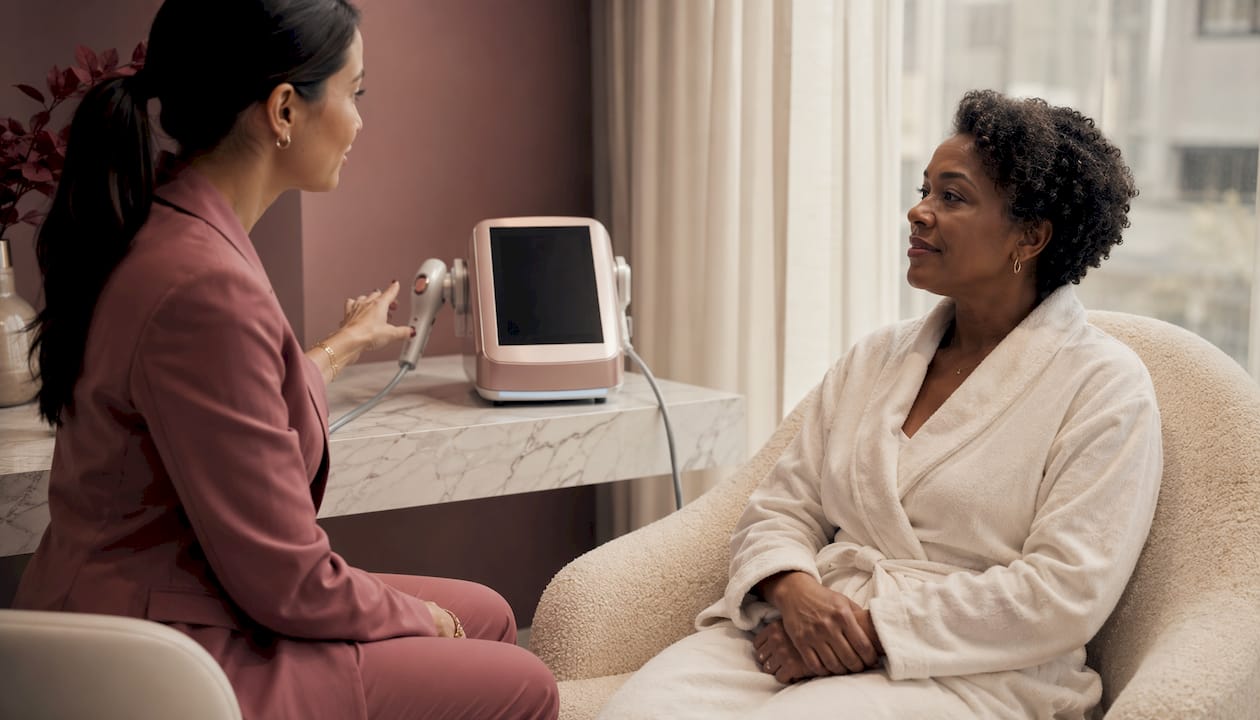
Non-ablative fractional lasers heat the dermis to stimulate collagen without removing the surface, requiring little downtime. Ablative fractional lasers (CO2, erbium) remove controlled columns of skin for more dramatic smoothing, but carry higher risk and longer recovery. Picosecond devices with fractional handpieces improve fine texture and pigment with lower downtime across a broader range of skin tones. Laser therapies carry a real risk of post-inflammatory hyperpigmentation, particularly for darker skin tones, making patient selection and provider expertise critical. You can compare non-invasive treatment options across modalities to find the right fit for your skin.
Treatment timeline at a glance:
Treatment | Visible change | Full results |
Chemical exfoliants (AHA/BHA) | 2–4 weeks | 4–6 weeks |
Retinoids | 4–6 weeks | 3–6 months |
Microneedling + PDLLA | 3–4 weeks | 22 weeks |
Chemical peels (light) | Immediately post-peel | Cumulative with repeat sessions |
Non-ablative fractional laser | 4–6 weeks | Multiple sessions over months |
How to build a daily routine that actually improves skin texture
Consistency is what separates people who see results from those who don’t. A well-structured daily skincare routine does not need to be complicated, but it does need to be followed.
Morning routine:
Gentle cleanse: Use a cream or gel cleanser suited to your skin type. Avoid anything that leaves skin feeling tight or stripped.
Antioxidant serum: Vitamin C (L-ascorbic acid at 10–15%) neutralizes UV-induced free radicals and supports collagen. Pair with vitamin E or ferulic acid for added stability.
Moisturizer with niacinamide: Niacinamide at 2–5% regulates oil, refines the look of pores, and reinforces the barrier. Ceramide-rich creams suit drier skin; lightweight gels work better for oily types.
Broad-spectrum SPF 30–50: Apply every morning without exception. UV exposure accelerates collagen breakdown and worsens every texture concern you are trying to address.
Evening routine:
Double cleanse if you wore sunscreen or makeup.
Retinoid or exfoliant (alternate nights): Use a retinoid most evenings for collagen support and cell turnover. On off nights, apply a leave-on AHA or BHA suited to your skin type.
Barrier repair: Finish with ceramides, fatty acids, and cholesterol to seal in moisture. Urea at 2–10% softens rough patches without harshness.
Weekly additions:
Short-contact AHA/BHA exfoliation (apply for a few minutes, then rinse) for extra refinement with less irritation.
Clay or sulfur masks once or twice a week for oil control, especially around the nose and chin.
Hydrating masks with panthenol or beta-glucan after active treatment nights to calm and restore the barrier.
For skin that is sensitive or prone to redness, PHAs (gluconolactone, lactobionic acid) and low-strength lactic acid are gentler alternatives to glycolic. Darker skin tones benefit from mandelic and lactic acids, which carry a lower risk of triggering post-inflammatory hyperpigmentation. Building an organic skincare routine with well-sourced ingredients can also reduce the risk of irritation for reactive skin.
What clinical research confirms about skin texture treatments
The most compelling evidence for skin texture improvement comes from studies combining microneedling with advanced topical therapies. A published case study documented a woman in her late 40s with Grade 3 pore enlargement and rosacea who received just two sessions of topical exosome therapy following superficial microneedling. Results were tracked using AI-assisted 3D imaging and validated clinical scales over 21 months.
“Clinical photographs revealed visible refinement in skin texture and tone beginning at the 3-week mark, with continued progression over the next several months. By 3 weeks, a reduction in visible pore size and improved uniformity of the skin’s surface were clearly observable, particularly across the cheeks and nose.” — Published case study, PMC, 2024
Objective measurements confirmed a 41% reduction in pore size, a 42% reduction in erythema, and a 31% reduction in melanin at 5.5 months. Crucially, these improvements were sustained at 21 months without any additional treatment. No adverse events were reported throughout the study.
Outcome measure | Reduction at 5.5 months | Status at 21 months |
Pore size | 41% | Maintained |
Erythema (redness) | 42% | Sustained |
Melanin (pigmentation) | 31% | Sustained |
Surface roughness (Ra) | — | Maintained |
The microneedling-plus-PDLLA research reinforces a similar pattern. Pore scores halved over 12 weeks with high patient satisfaction and only mild, transient redness that resolved within 48 hours. Compared to laser therapies and chemical peels, this combination carries a lower risk of post-inflammatory hyperpigmentation, making it a practical option for a wider range of skin tones.
Lifestyle factors shape how well any treatment performs. Sleep, diet, and stress all influence skin repair. Protein, omega-3 fatty acids, and colorful produce provide the building blocks for collagen synthesis. High-glycemic foods and excessive alcohol promote glycation, which stiffens collagen and worsens texture. Seven to nine hours of sleep gives skin the overnight repair window it needs. For science-backed guidance on pairing lifestyle habits with an active skincare routine, the evidence consistently points to consistency over intensity.
Fundamentalskin offers personalized skin texture treatments with real, visible results
Seeing clinical data is one thing. Having a qualified clinician apply the right treatment to your specific skin is another entirely.
Fundamentalskin is led by Chevonne, a Dermal Clinician with 15 years of experience treating pigmentation, redness, fine lines, and dull skin texture in women who want real results without harsh downtime. The approach is personal: every treatment is matched to your skin’s actual needs, not a generic protocol.

The Biomimetic Peel + LED Therapy is Fundamentalskin’s signature non-invasive treatment, combining advanced peel technology with LED light therapy to refine texture, address pigmentation, and restore a healthier, more even complexion. Before-and-after images on the site show the kind of visible improvement that builds genuine confidence. Organic, Australia-sourced ingredients mean the treatments are effective and gentle, even for sensitive skin.
Ready to see what your skin can look like? Book your personalized consultation with Fundamentalskin and take the first real step toward smoother, healthier skin.
Key Takeaways
Combining targeted exfoliation, collagen-stimulating treatments, and consistent daily sun protection produces the most durable improvements in skin texture, with clinical studies confirming results that last well beyond the treatment period.
Point | Details |
Retinoids need time | Initial texture changes appear in 4–6 weeks; meaningful refinement builds over several months of consistent use. |
Microneedling delivers lasting results | Combined with PDLLA, pore scores halved at 12 weeks and 80% of patients reported high satisfaction with effects sustained at 22 weeks. |
Exosome therapy shows durable outcomes | A 41% pore size reduction and 42% erythema reduction at 5.5 months were largely sustained at 21 months without retreatment. |
Daily SPF is non-negotiable | UV exposure accelerates collagen breakdown, worsening every texture concern you are actively treating. |
Fundamentalskin personalizes treatment | Chevonne’s clinic offers non-invasive peels and advanced treatments tailored to your skin’s specific texture concerns. |
Recommended
Comments