.png)
Neck Pigmentation Treatment: Safety First Clinician Plan, 8–16 Weeks

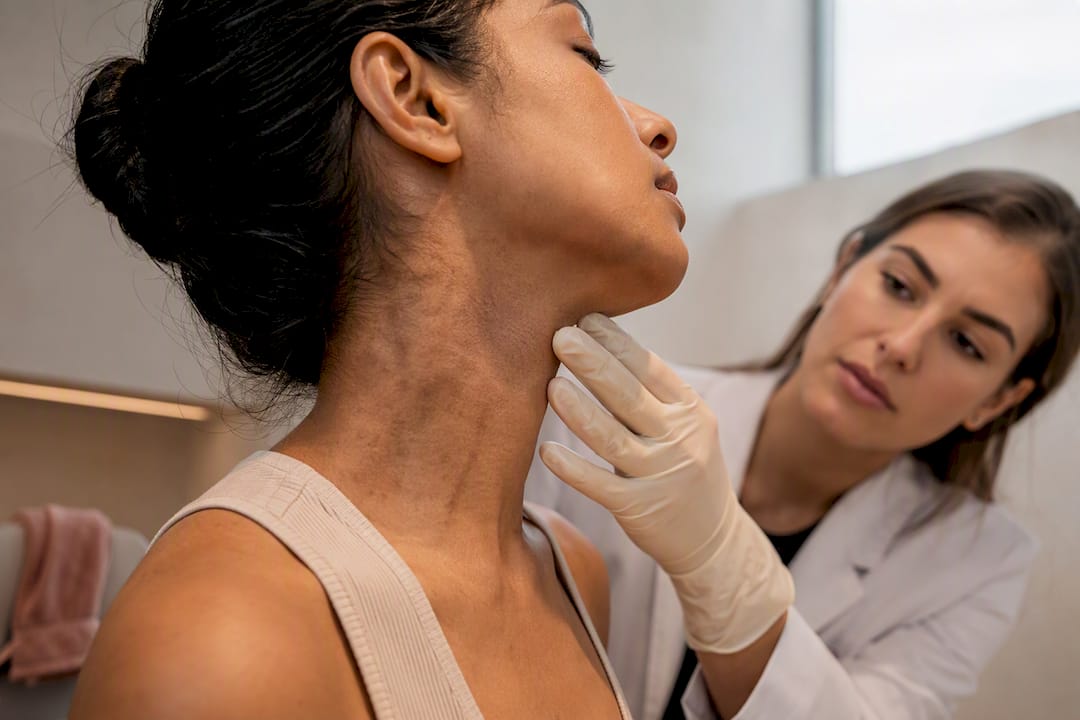
Start with a clinical diagnosis, a supervised topical regimen, and strict daily sun protection. That combination resolves the majority of neck pigmentation cases without ever needing a laser or peel. Procedures like Q-switched Nd:YAG or picosecond lasers work well for specific lesions such as lentigos, but they carry a real risk of post-inflammatory hyperpigmentation on neck skin, so most clinicians hold them in reserve. Expect a realistic timeline of 8 to 16 weeks before judging whether a topical plan is working, and get any device-based option assessed by a qualified practitioner first.
TL;DR:
Topical treatments like retinoids and tyrosinase inhibitors are the first-line approach and should be used consistently for 8 to 16 weeks before considering procedures.
Laser and peel treatments are reserved for stubborn lentigos or lesions unresponsive to topicals, with a focus on gentle settings and conservative protocols, especially in darker skin types.
The causes of neck pigmentation vary widely, including sun damage, hormonal influences, insulin resistance, friction, and medication effects, requiring accurate diagnosis for effective treatment.
Protecting the neck with daily broad-spectrum sunscreen is essential to prevent regression, and patch-testing active ingredients minimizes the risk of worsening pigmentation.
Costs for professional treatments range from approximately $199 to $299 per session, often requiring multiple sessions, with personalized plans based on individual diagnosis and skin type.
Table of Contents
What Causes Neck Pigmentation Treatment to Vary So Much?
Not all dark patches on the neck come from the same source, and that is precisely why treatment plans differ so widely from one person to the next. A clinician’s first job is naming the cause correctly, because the wrong protocol can deepen the discoloration instead of fading it.
The most common culprits include:
Photodamage — sun-induced brown spots (solar lentigos) that appear as flat, well-defined patches, usually on the sides and back of the neck where sun exposure is heaviest.
Post-inflammatory hyperpigmentation (PIH) — darkening that follows irritation, acne, friction, or a skin injury; it often mirrors the shape of whatever caused the inflammation.
Melasma — hormonally driven patches, typically more symmetrical and blotchy, that can worsen with heat, sun, or pregnancy.
Acanthosis nigricans — velvety, thickened, darkened skin usually in the folds of the neck, frequently tied to insulin resistance.
Dermatitis neglecta — a buildup of dead skin and debris from under-cleansing, which can look like pigmentation but often wipes away with proper cleansing.
Drug-induced pigment — discoloration linked to certain medications, including some antibiotics and hormonal treatments.
Clinicians look at texture, location, symmetry, and how the pigmentation started to narrow down a diagnosis. Velvety, thickened patches in the neck creases warrant a metabolic workup, including fasting glucose or HbA1c, since acanthosis nigricans is closely tied to insulin resistance. Resist the urge to self-diagnose from a search engine and reach for a bleaching cream. Guessing wrong wastes months and can make things worse.
Which Topical Treatments Work Best First?
Global treatment guidelines are clear on sequencing: topical therapy is the recommended starting point for pigment concerns like PIH, and procedures come later if needed. That guidance holds true for neck skin specifically, where the global consensus on treating melanin hyperpigmentation urges extra caution before jumping to devices.
A typical first-line plan, introduced in stages, looks like this:
Retinoid at night — start with a low concentration two to three nights a week, then build tolerance gradually. Retinoids speed cell turnover and help fade pigment over time.
Tyrosinase inhibitors — ingredients like niacinamide, thiamidol, or azelaic acid slow new pigment production and pair well with retinoids.
Hydroquinone, if prescribed — reserved for short courses under clinician supervision, never as a long-term daily habit.
Broad-spectrum sunscreen every morning — non-negotiable, since UV exposure undoes topical progress almost as fast as it happens.
Vitamin C or gentle exfoliation — supportive, not curative, and best limited to once or twice a week on neck skin to avoid irritation.
Neck skin is thinner and more reactive than facial skin, so patch-test any new active for several days before applying it more broadly, and expect to run at a lower concentration than you would on your face. Layer sunscreen over active ingredients every single morning, since OTC brightening agents rarely resolve deep pigment on their own without consistent photoprotection behind them.
Avoid unregulated bleaching creams with unlisted ingredients and skip abrasive scrubs entirely. Friction and harsh exfoliation are two of the fastest ways to trigger PIH in the first place.
Pro Tip: Introduce one new active ingredient at a time and wait two full weeks before adding another. Stacking retinoids, acids, and vitamin C all at once on neck skin is the most common reason home regimens backfire.
For a broader look at building a routine around pigment-prone skin, this guide on adjusting skincare for pigmentation-prone skin breaks down sequencing in more detail.
When Do Lasers and Peels Make Sense?
Procedures earn their place when topical therapy stalls or when the cause is a lesion that responds better to energy-based devices, like a stubborn sun-induced lentigo. Even then, most clinicians treat the neck more conservatively than the face.
The main options:
Superficial chemical peels (glycolic, lactic, or mandelic acid) — good for shallow, sun-related pigment, minimal downtime, and often used in a staged series rather than one aggressive session.
Low-fluence Q-switched Nd:YAG lasers — effective for established lentigos, run at reduced energy settings on neck skin to lower the chance of rebound pigmentation.
Picosecond lasers — faster pulse delivery, often better tolerated, but still requires conservative settings in medium to deep skin tones.
IPL (intense pulsed light) — works well for diffuse sun damage, though it demands more caution in higher Fitzpatrick types.
Microneedling or RF microneedling — useful as a texture and pigment adjunct, typically layered in after pigment has already started responding to topical care.
A typical procedural course runs 3 to 6 sessions spaced 4 to 8 weeks apart, though the exact number depends on the diagnosis and how the skin responds. Practitioner-led series for skin of color that follow a “low and slow” protocol tend to show visible change within 8 to 12 weeks, rather than after a single dramatic session.
The global hyperpigmentation consensus treats these devices as second-line for exactly this reason: on neck skin, especially in darker phototypes, the risk of triggering new pigment often outweighs the benefit unless a topical-first approach has already been tried and exhausted.
Is Neck Skin More Prone to Pigmentation Problems?
Neck skin is thinner than facial skin, has fewer oil glands, and reacts faster to friction, heat, and inflammation. That combination makes it more prone to rebound pigmentation than most other treatment areas on the body, which is exactly why experts stress tailoring energy settings and concentrations more conservatively here than they would on the face.
Fitzpatrick skin types III through VI carry a meaningfully higher risk of developing PIH from any treatment that involves heat, light, or aggressive exfoliation. That doesn’t rule procedures out. It means the protocol needs adjusting: lower fluence, longer intervals between sessions, and closer monitoring.
A safe-practice checklist worth applying to any plan:
Confirm a test patch was performed on neck skin specifically, not just the forearm or jaw.
Ask what energy or acid concentration is being used and whether it’s been adjusted for your skin type.
Space sessions further apart than you’d expect, rather than rushing a course.
Follow aftercare instructions exactly, including avoiding sun exposure for the specified window.
Apply sunscreen daily, without exception, for the full duration of treatment.
Pro Tip: If a neck treatment area looks redder or darker than usual more than 48 hours after a session, stop further treatments and contact the clinic. That’s the earliest sign of PIH forming, and catching it early makes it far easier to reverse.
Readers dealing specifically with darker skin tones may find this deeper breakdown on clinician-led PIH treatment for skin of color useful for understanding how protocols shift by phototype.
How Long Does It Take to See Results?
Topical regimens generally need 8 to 16 weeks before you can fairly judge whether they’re working. Procedural courses tend to run 3 to 6 sessions, spaced 4 to 8 weeks apart, though the timeline shifts depending on what’s driving the pigmentation:
Metabolic causes (acanthosis nigricans) often improve over months, in step with better blood sugar control, not weeks.
Sun-induced lentigos tend to respond faster to targeted laser treatment, sometimes within a few sessions.
PIH usually needs the longest runway, since new pigment can form again if the underlying trigger (friction, inflammation) isn’t addressed.
Maintenance is not optional once pigment improves. Daily sunscreen, a topical maintenance routine, and occasional touch-up sessions keep results from sliding backward. Get a written timeline and session estimate from any clinic before starting. Treat cost and timeline figures you read online as illustrative only, since actual protocols vary by individual case.
What Should You Ask Before Booking a Clinic?
A short consult can tell you almost everything you need to know about whether a clinic will treat your neck safely.
Work through this list before committing to a course of treatment:
Confirm credentials. Ask specifically about the practitioner’s experience treating pigment on neck skin, not just facial cases.
Ask about test-patch policy. A responsible clinic patch-tests any new device or peel on your neck before a full session, every time.
Ask what settings they use. You want a direct answer about energy level or acid concentration, and how it’s adjusted for your skin tone.
Ask how many sessions they expect and why. A vague answer is a red flag; a specific range tied to your diagnosis is a good sign.
Ask about documented aftercare. Written instructions, not a verbal reminder, protect you if something feels off after you leave.
Walk away from anywhere pushing unregulated bleaching products, skipping patch tests, or promising dramatic results in a single visit. If a clinician suspects a metabolic driver, they should refer you for bloodwork or to a dermatologist before starting cosmetic treatment.
What Does Neck Pigmentation Treatment Actually Cost?
Costs vary widely depending on whether you’re managing pigment at home or working with a clinician, and by how many sessions a procedural course requires.
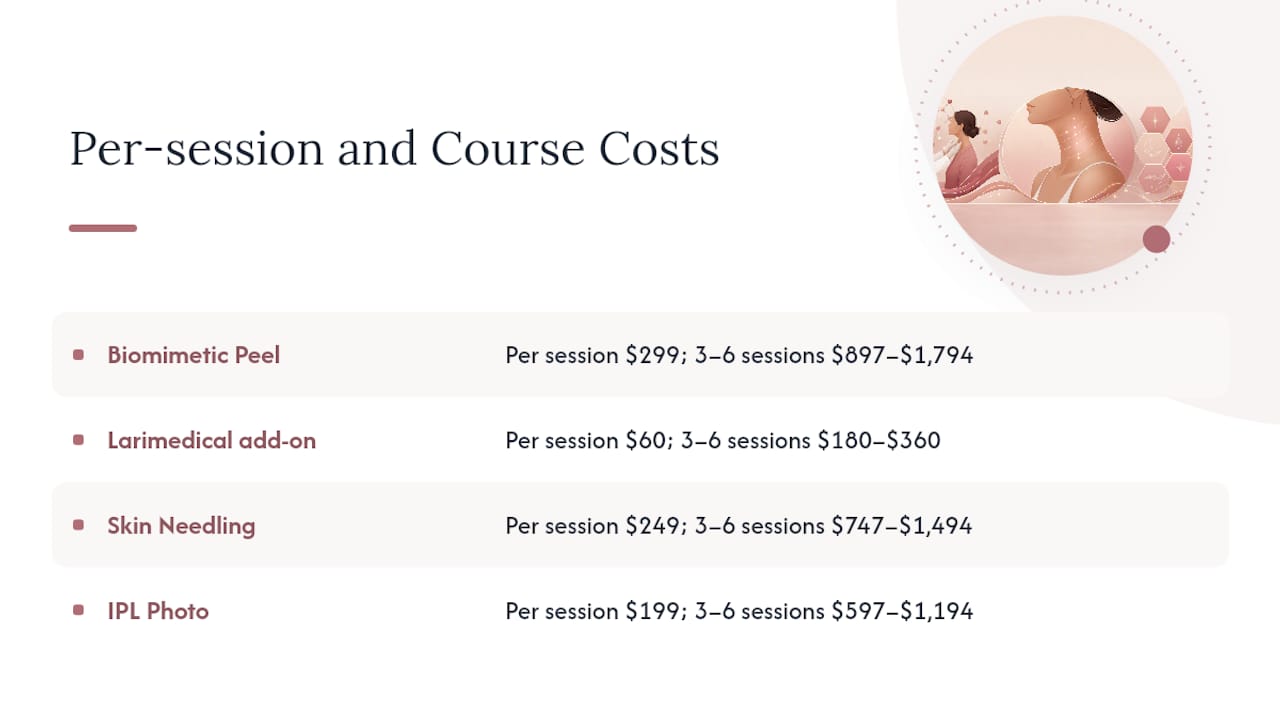
Home-care regimens built around retinoids, niacinamide, and sunscreen typically run in the range of a modest monthly skincare budget, since most of the cost is the ongoing product itself rather than a one-time fee. In-clinic options carry a per-session or per-treatment price instead. At Fundamentalskin, a Biomimetic Peel + LED Therapy session is $299, with an Add-on Larimedical Cocktail available for $60. Skin Needling runs $249 per session, and IPL Photo Rejuvenation is $199 per session.
Because most procedural courses involve multiple sessions spaced weeks apart, the total investment adds up across a plan rather than in one visit. A course of 3 to 6 sessions naturally multiplies the per-session figure, which is why getting a written quote and session count at consult matters more than comparing a single advertised price. Home-care products layered on top of a procedural plan (sunscreen, a maintenance retinoid, a brightening serum) add a smaller, recurring cost but are essential to protecting whatever progress a clinic session achieves. Treat any number you read online, including the ones above, as a starting reference. Confirm the exact plan and price directly with the clinic you choose.
Can Diet or Hormones Really Affect Neck Pigmentation?
Yes, and this is one of the most overlooked pieces of the puzzle. Pigmentation on the neck is not always a purely topical problem. It can be a visible symptom of something happening systemically.
Insulin resistance is the clearest example. Acanthosis nigricans, the velvety darkening often seen in neck folds, is strongly linked to insulin resistance and metabolic syndrome, and treating the underlying metabolic cause is central to improving these lesions. Patients with this pattern of pigmentation benefit from a fasting glucose or HbA1c check, because skin treatments alone will only get partway there if blood sugar control isn’t addressed alongside them.
Hormonal shifts play a role too, particularly with melasma-type pigmentation, which tends to worsen with pregnancy, hormonal contraceptives, or thyroid imbalances. Heat and humidity can aggravate melasma independently of sun exposure, which is why some people notice flare-ups during hot months even with diligent sunscreen use.
Obesity and weight-related skin friction can also contribute, since acanthosis nigricans often appears more prominently in skin folds under these conditions. None of this means diet or weight loss alone will erase existing pigment. It means that a clinician who only looks at the skin, without asking about your broader health picture, is missing half the story. A metabolic workup alongside a skincare plan is often the more complete approach.
Why Does Sun Protection Matter More Than Any Treatment?
Every treatment covered so far, from a nightly retinoid to a picosecond laser, can be undone by unprotected sun exposure. Photoprotection isn’t a supporting detail; dermatology guidance treats daily broad-spectrum sunscreen as a mandatory, non-negotiable part of both preventing and treating pigment disorders.

The neck is easy to neglect because it sits below the jawline, out of the mirror’s usual frame, and often gets skipped when sunscreen is applied to the face. That gap is precisely why so many people develop photodamage patches along the sides and back of the neck first.
A workable aftercare and prevention routine includes:
Broad-spectrum SPF 30 or higher applied to the full neck every morning, reapplied if you’re outdoors for extended periods.
A wide-brim hat or scarf during peak sun hours, especially after any procedural treatment.
Avoiding direct sun exposure for the window your clinician specifies after a peel, laser, or microneedling session.
Choosing a sunscreen formula suited to pigment-prone skin, since some formulas leave a residue that discourages consistent daily use.
For guidance on formula selection specifically for pigmentation-prone skin, see this breakdown on choosing sunscreen for pigmented skin. Skipping this step is the single most common reason a treatment plan that was working starts to regress.
A Conservative, Personalized Path Works Best for Neck Skin
Neck skin punishes shortcuts. It’s thinner, more reactive, and slower to recover than most people expect, which is exactly why an aggressive one-size-fits-all protocol so often backfires into new pigment instead of clearing the old. A tailored plan, built around a test spot, photographic tracking, and modest, staged settings, respects that the neck simply isn’t the face.
That’s the approach guiding care at Fundamentalskin, led by Chevonne, a Dermal Clinician with 15 years of experience, using organic, Australia-sourced ingredients and non-invasive protocols wherever they can achieve the goal safely.
— chevonne
Book a Personalized Plan for Neck Pigmentation
Fundamentalskin builds neck pigmentation plans around your specific diagnosis and skin tone, not a fixed protocol run the same way for every client. If your pattern points toward sun damage or visible lentigos, the Biomimetic Peel + LED Therapy offers a non-invasive option with no downtime, priced at $299 per session, with an optional Add-on Larimedical Cocktail for $60. For texture alongside pigment concerns, Skin Needling is available at $249 per session, and IPL Photo Rejuvenation runs $199 per session for diffuse sun damage.

Every plan starts with a consult and, where appropriate, a test patch on your neck before committing to a full course, exactly the safety-first sequence this article has walked through. That means your settings and concentration get calibrated to your actual skin, not a generic average. Book a consultation through Fundamentalskin’s advanced skin treatments page to get a diagnosis, a written session plan, and a realistic timeline before you commit to anything.
This article is general information, not a substitute for advice from a qualified doctor. Consult a qualified healthcare professional about your own circumstances before acting on anything here.
Sources
FAQ
How do I get rid of hyperpigmentation on my neck?
Start with a clinical diagnosis, then follow a supervised topical regimen (retinoid, niacinamide or thiamidol, daily sunscreen) for 8 to 16 weeks before considering a peel or laser. Procedures like the Biomimetic Peel + LED Therapy can help once a cause is confirmed and topical care has been tried.
What is the reason for neck pigmentation?
Common causes include sun damage (lentigos), post-inflammatory hyperpigmentation from friction or irritation, melasma driven by hormones, acanthosis nigricans linked to insulin resistance, and dermatitis neglecta from inconsistent cleansing.
Which is best for neck pigmentation?
There’s no single best treatment. Topical therapy under clinician supervision is the recommended starting point for most cases, while low-fluence lasers, picosecond devices, or superficial peels are reserved for specific lesions like stubborn lentigos once topical care has been given a fair trial.
Can I remove pigmentation naturally?
Some over-the-counter ingredients like vitamin C and niacinamide can modestly brighten skin, but they rarely resolve deep or long-standing pigment on their own. Home remedies that involve scrubbing or unregulated bleaching agents often make pigmentation worse rather than better.
Recommended
Comments