.png)
How to Create a Consistent Skincare Routine Schedule
- chevonne stewart
- Jul 6
- 7 min read


A consistent skincare routine schedule is the single most reliable path to visible improvements in pigmentation, aging, and overall skin health. Dermatologists confirm that visible results typically require 6 to 12 weeks of daily practice, with complex concerns like deep pigmentation taking 3 to 4 months. That timeline is not a warning. It is a framework. The three non-negotiable steps in any daily skincare schedule are a gentle cleanser, a moisturizer, and a broad-spectrum SPF 30+ sunscreen. Start there, and everything else builds naturally.
How to create a consistent skincare routine schedule that actually sticks
The biggest mistake people make is starting with too many products. A 3-step routine endorsed by dermatologists in 2026 proves that a gentle cleanser, moisturizer, and SPF 30+ sunscreen form a complete, sustainable foundation. Simplicity is not a compromise. It is the strategy that keeps you consistent.
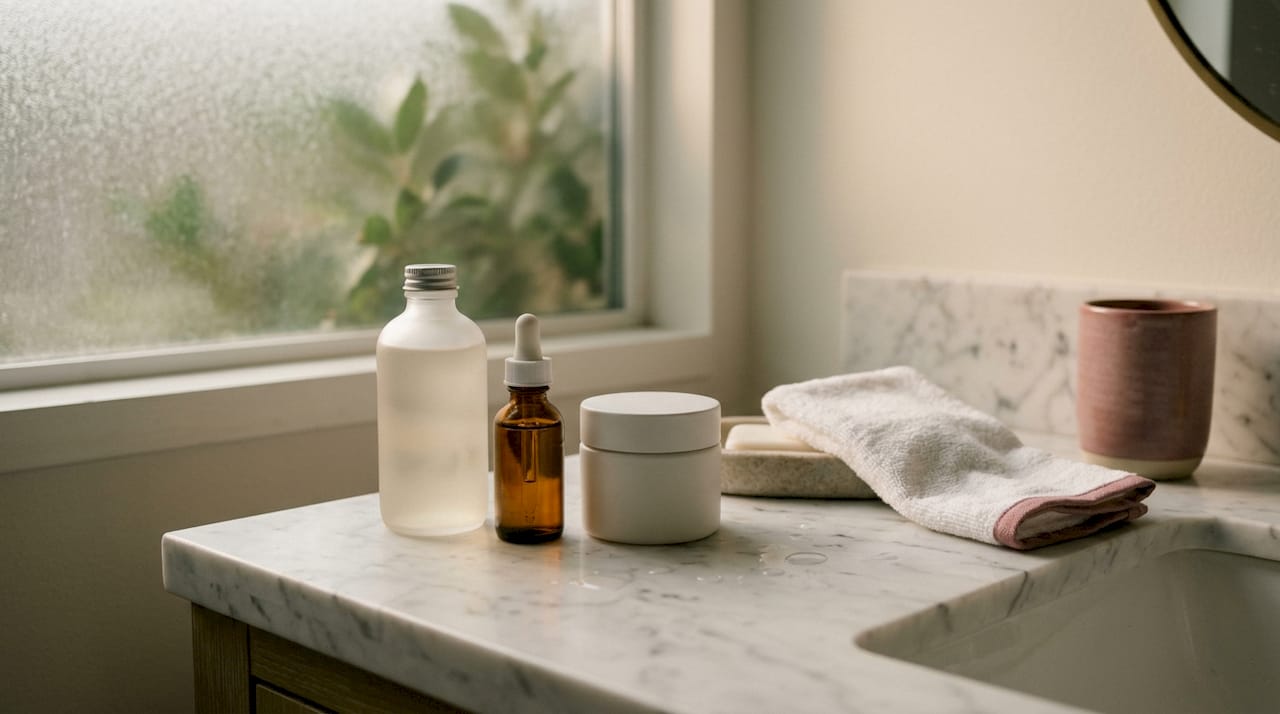
The essential product categories
Every effective daily skincare schedule starts with three product types. Optional treatments like vitamin C serums, retinol, or exfoliating acids come later, added one at a time so you can track how your skin responses.
Product Category | Purpose | Best Time to Use |
Gentle cleanser | Removes dirt, oil, and residue | AM and PM |
Moisturizer | Supports the skin barrier | AM and PM |
Broad-spectrum SPF 30+ | Prevents UV damage and pigmentation | AM only |
Vitamin C serum | Antioxidant protection, brightening | AM (before SPF) |
Retinol or retinoid | Cell turnover, anti-aging | PM only |
Exfoliating acid (AHA/BHA) | Texture refinement, pigmentation | PM, 2–3x per week |
When you add optional treatments, introduce one product at a time and wait two weeks before adding another. This approach lets you identify what is working and what is causing irritation.
What to know about product stability
One detail most people overlook is ingredient stability. Vitamin C serums oxidize quickly and should be used within 4 to 6 months of opening. Buying large bottles to “save money” often means applying an ineffective product. For longer shelf life, look for formulas containing tetrahexyldecyl ascorbate (THD), a more stable form of vitamin C that also delivers antioxidant and anti-aging benefits. Check your clean skincare ingredient checklist before purchasing to confirm you are choosing stable, effective formulas.
How do you schedule a daily skincare routine for real consistency?
Scheduling is where most routines fail. People plan elaborate regimens and then skip them when life gets busy. The fix is not more willpower. It is smarter habit design.
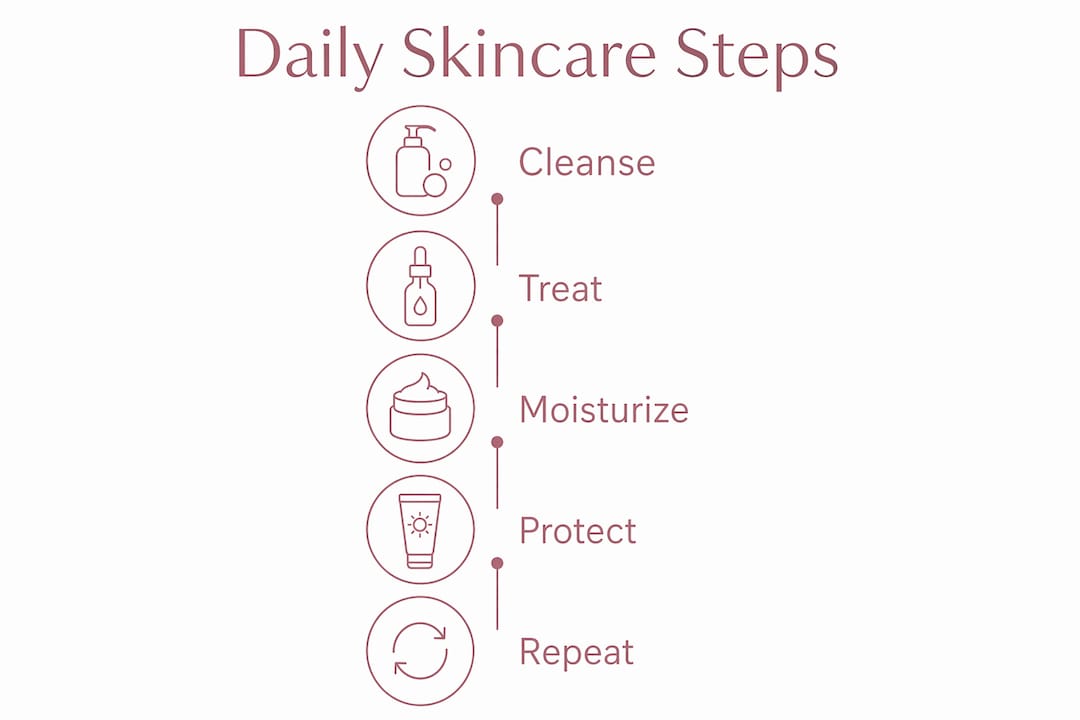
The anchor method connects each skincare step to a habit you already do every day. Brushing your teeth is the most reliable anchor. Place your cleanser next to your toothbrush. When you brush in the morning, you cleanse. When you brush at night, you cleanse again. The habit piggybacks on an existing behavior, which removes the need to remember it separately.
A simple morning and evening schedule
Morning routine (5–8 minutes):
Cleanse with a gentle, sulfate-free cleanser
Apply any water-based serum (vitamin C, niacinamide)
Apply moisturizer
Apply SPF 30+ sunscreen as the final step
Evening routine (5–10 minutes):
Double cleanse if you wore sunscreen or makeup
Apply any treatment serum (retinol, peptides)
Apply a richer moisturizer or facial oil
Keep both routines under 10 minutes when you are starting out. A short routine you do every day beats a thorough one you do twice a week.
Pro Tip: Set a phone reminder for 7:00 AM and 9:00 PM labeled “skin.” After 30 days, the reminder becomes unnecessary because the habit is already formed.
When you travel or face a disrupted schedule, reduce your routine to the three core steps: cleanse, moisturize, and SPF. Protecting the skin barrier during stressful periods matters more than maintaining a full regimen.
What is the right order to layer skincare products?
Product layering order directly affects how well ingredients absorb and whether they conflict with each other. The rule is simple: apply from thinnest to thickest texture. Water-based serums go first, oil-based products go next, and thicker creams or sunscreens go last.
Here is why this matters. Heavier products create a physical barrier on the skin. If you apply a cream before a serum, the serum cannot penetrate effectively. You are essentially wasting the active ingredient.
Avoiding ingredient conflicts
Active ingredients are powerful, but combining the wrong ones causes irritation, redness, and can worsen pigmentation. Advanced regimens use cycling to rotate active ingredients across days rather than stacking them all at once.
Do not combine retinol and AHA/BHA acids in the same application. Use acids on alternate nights.
Do not combine vitamin C and niacinamide in high concentrations if your skin is sensitive. Use one in the morning and one at night.
Do combine hyaluronic acid with almost anything. It is a hydra tor, not an active, and it plays well with every other ingredient.
Cycle actives by assigning specific treatments to specific nights. For example: Monday and Thursday for retinol, Tuesday and Friday for an exfoliating acid.
Cycling actives preserves skin barrier integrity and improves treatment outcomes over time. For a detailed breakdown of product order, the skincare routine order guide from Fundamentalskin covers each step with clinical clarity.
Pro Tip: If your products are pilling (rolling off the skin), you are applying them too quickly. Wait 30 to 60 seconds between each layer to let the previous product absorb before adding the next.
To avoid over-layering active ingredients, reviewing a guide on minimizing your ingredient list helps you identify which products are genuinely necessary and which are redundant.
What should you do when your skincare routine stops working?
Routine inconsistency is normal. The way you respond to it determines whether you rebuild or quit entirely.
Missed applications are data points, not failures. If you skip three nights in a row, that is information. It tells you the routine is too complex, too time-consuming, or placed at the wrong time of day. Adjust the routine, not your self-assessment.
The most common obstacles and how to address them:
Routine feels too long. Strip it back to cleanser, moisturizer, and SPF only. Rebuild from there once the habit is stable.
Skin is reacting with redness or breakouts. Stop all active ingredients for one week. Reintroduce one at a time to identify the trigger.
Results feel slow. Check the timeline. Visible improvement takes 6 to 12 weeks at minimum. Switching products before that window closes resets the clock.
Pigmentation is worsening. Aggressive layering of acids and brightening actives can irritate the skin and trigger more pigmentation. More products do not equal better results. Simplify and focus on SPF as your primary pigmentation defense.
Lifestyle changes disrupted the routine. Reassign your anchor habit. If you stopped brushing teeth at the same time, find a new anchor: morning coffee, a shower, or getting into bed.
Focusing on skin barrier health rather than aggressively treating every concern is the most reliable long-term strategy. A healthy barrier improves how every other product performs. For specific guidance on managing pigmentation within your routine, the skin pigmentation best practices guide from Fundamentalskin offers dermatologist-approved steps.
Key Takeaways
A consistent skincare routine schedule built on three core steps, proper layering, and habit anchoring produces visible skin improvement within 6 to 12 weeks.
Point | Details |
Start with three steps | Cleanser, moisturizer, and SPF 30+ form a complete and sustainable daily foundation. |
Use the anchor method | Attach skincare steps to existing habits like brushing teeth to build lasting consistency. |
Layer thinnest to thickest | Apply water-based serums first, then oils, then creams to maximize ingredient absorption. |
Cycle active ingredients | Rotate acids and retinol on alternate nights to protect the skin barrier and avoid irritation. |
Treat missed days as data | Simplify your routine when you skip consistently rather than pushing through a complex regimen. |
What 15 years of skin work taught me about routine consistency
The clients who see the most dramatic improvements are rarely the ones with the most products. They are the ones who show up every single day with three or four steps and do not deviate. I have seen women with significant pigmentation and deep fine lines transform their skin not because they found a miracle ingredient, but because they finally stopped switching products every six weeks.
The hardest part of building a custom skincare regimen is resisting the urge to do more when results feel slow. Skin has a biological timeline. You cannot rush collagen remodeling or force melanin to clear faster by adding another acid. What you can do is protect the skin barrier, apply SPF without fail, and give your actives the time they need to work.
My honest advice: build the smallest routine you will actually do every day. A two-step routine done consistently for three months will outperform a ten-step routine done sporadically. Once the habit is locked in, you can add complexity. Start minimal. Stay consistent. The skin responds to that more than anything else.
— chevonne
How Fundamentalskin supports your skincare routine
Professional treatments work best when your daily routine is already in place. At Fundamentalskin, Chevonne designs treatment plans that complement and accelerate the results you are building at home.

The Larimedical Biomimetic Peel is a non-invasive clinical treatment that targets pigmentation, fine lines, and dull texture without downtime. It works alongside your daily routine, not instead of it. For clients who want to address both surface texture and deeper skin health simultaneously, the Biomimetic Peel combined with LED Therapy at $249 delivers accelerated results backed by before-and-after clinical outcomes. All treatments use organic, Australia-sourced ingredients tailored to your skin’s specific needs. Book a consultation to find out which professional treatment fits your current routine stage.
FAQ
How long does it take to see results from a skincare routine?
Visible results typically require 6 to 12 weeks of consistent daily practice. Complex concerns like deep pigmentation or significant aging may take 3 to 4 months.
What are the three most important skincare products?
A gentle cleanser, a moisturizer, and a broad-spectrum SPF 30+ sunscreen form the complete foundation of any effective daily skincare schedule. Every other product is optional and should be added gradually.
What order should I apply skincare products?
Apply products from thinnest to thickest texture: water-based serums first, then oils, then creams, and sunscreen last in the morning. This order maximizes absorption and prevents heavier products from blocking lighter actives.
Can I use retinol and acids together?
Retinol and AHA/BHA acids should not be applied in the same session. Cycle them on alternate nights to avoid irritation and protect the skin barrier. Combining them increases the risk of redness and can worsen pigmentation.
How do I stay consistent when life gets busy?
Reduce your routine to the three core steps: cleanse, moisturize, and SPF. Attach those steps to an existing daily habit using the anchor method. A minimal routine done every day is more effective than a full routine done occasionally.
Recommended
Comments