.png)
Know When to Book Professional Skin Treatment
- chevonne stewart
- Jul 30
- 13 min read


For most maintenance goals, professional facials every 4–6 weeks is the right rhythm. Corrective or active resurfacing procedures need longer spacing, typically 6–12 weeks or more depending on treatment intensity.
Here is what that looks like in practice:
Routine maintenance facials: every 4–6 weeks to keep the barrier normalized and turnover on track
Active congestion or acne management: every 2–4 weeks under a clinician’s supervision
Light chemical peels: every 4–6 weeks for a course; medium-depth peels need 6–8 weeks minimum
Laser resurfacing or deep peels: 8–12+ weeks between sessions, sometimes longer
Event timing: schedule a first-time active treatment 2–4 weeks before a major event; a familiar maintenance facial can be booked 5–7 days before for a fresh glow
Exceptions that change everything: active isotretinoin use, pregnancy, recent laser work, open wounds, or sunburn all require a delay or a clinician’s clearance before booking
When you are unsure, book a consultation rather than a treatment on the same day. A qualified clinician will assess your skin’s current state and tell you exactly what is safe and when.
Table of Contents
Why spacing between appointments changes your results
Timing is not just a scheduling preference. It directly affects both the safety and the effectiveness of what you are paying for.
Skin has a natural repair cycle. After any professional treatment, the barrier goes through a recovery phase: inflammation settles, epithelial cells regenerate, and deeper collagen remodeling begins. Book your next session too soon, and you interrupt that process. The result is not faster progress; it is chronic sensitivity, prolonged redness, and a compromised barrier that makes future treatments less effective and more reactive.
Over-exfoliation is the most common mistake. Stacking active peels, microdermabrasion, or aggressive at-home acids too close together strips the barrier faster than it can rebuild. That leads to persistent irritation, uneven pigmentation, and sometimes a cycle of sensitivity that takes months to calm.
Collagen remodeling is a mid- to long-term process. Follow-up sessions timed during that remodeling window tend to deliver better cumulative results than sessions booked before the skin has had a chance to respond.
The flip side is also real. Waiting too long between maintenance sessions allows congestion to build, cell turnover to slow, and pigmentation to deepen. The 4–6 week window exists because it respects both recovery and momentum.
Pro Tip: If your skin is still red, flaky, or sensitive from your last appointment, that is your body telling you it needs more time. Do not push through it. Reschedule and let the barrier catch up.
A staged, consultation-led plan consistently outperforms ad-hoc bookings. Clinicians who adjust frequency based on your skin’s actual response, not a fixed calendar, get better outcomes for their clients.
What your skin goes through after a professional treatment
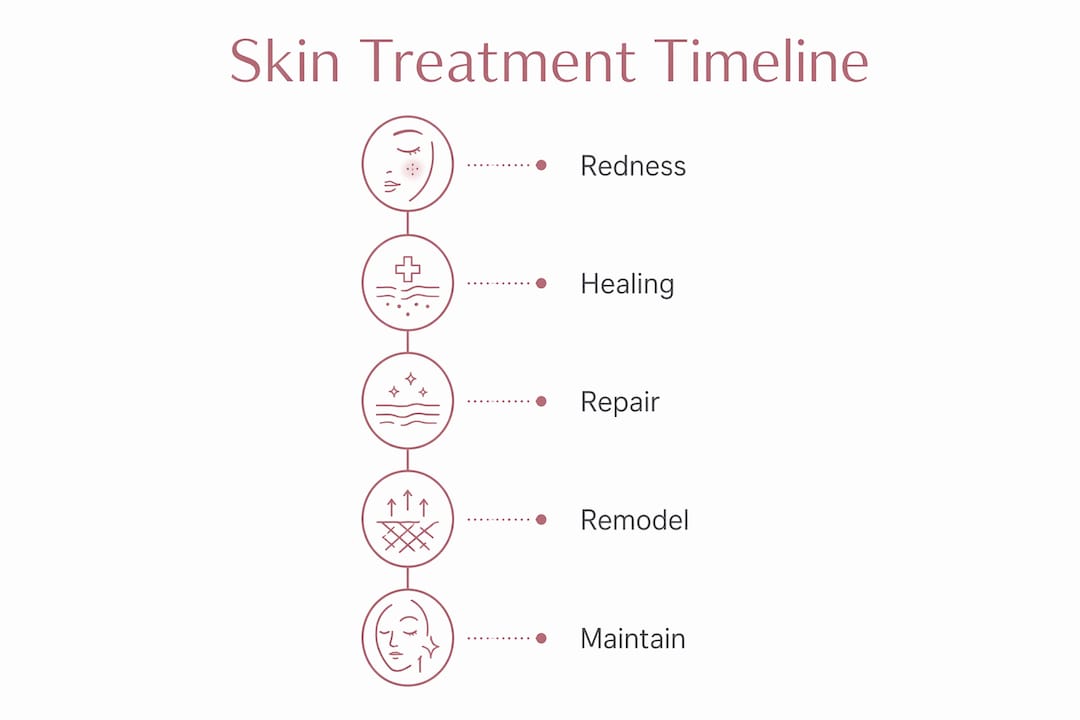
Most professional treatments follow a predictable arc: immediate redness and sensitivity, followed by barrier repair, then a longer remodeling phase where the real results appear.

Day 0–3 brings the most visible reactions. Redness, mild swelling, and heightened sensitivity are normal after active procedures. Your skin is in triage mode. Gentle cleansers, barrier-supporting moisturizers, and physical sunscreen are non-negotiable. Avoid anything active, including retinoids, vitamin C serums, and exfoliating acids.
Week 1–4 is the repair phase. The outer layers of skin regenerate, and you may notice some purging (especially after peels or microneedling) as congestion works its way to the surface. Gradual improvement in texture and tone usually becomes visible by the end of this window. This is also when many people feel tempted to book again, but for corrective procedures, it is too soon.
The remodeling window for collagen-stimulating treatments runs from roughly 4 weeks to 3 months post-treatment. Booking a follow-up session before this window closes, rather than after it, tends to build on the collagen response rather than starting from scratch.
1–3 months is where the most meaningful changes from collagen-stimulating procedures become visible. Microneedling, medium-depth peels, and non-ablative lasers all work through this longer timeline. Judging a treatment’s effectiveness before the 6–8 week mark is premature for most corrective modalities.
A solid post-treatment skin care protocol during this window protects your investment and keeps the healing process on track.
How often should you book each type of treatment?
The right spacing depends on what you are having done. Maintenance treatments are more forgiving; corrective and resurfacing procedures need longer gaps to be safe and effective.
Treatment | Maintenance rhythm | Corrective course spacing | Notes |
Routine facial | Every 4–6 weeks | N/A | Can be 2–4 weeks for active acne management |
Light chemical peel | Every 4–6 weeks | 4–6 weeks per session | Reduce frequency if sensitivity increases |
Medium-depth peel | Every 6–8 weeks minimum | 6–8 weeks minimum | Requires clinician assessment between sessions |
Microdermabrasion | Every 4–6 weeks | 4–6 weeks | Combine with caution if using retinoids |
Microneedling | Every 4–6 weeks | 4–6 weeks (series of 3–6) | Results build over 3 months post-series |
Non-ablative laser | Every 4–6 weeks | 4–6 weeks per session | Fitzpatrick type affects safe frequency |
Ablative laser | Every 3–6 months | 8–12+ weeks minimum | Full healing required before repeat |
LED therapy | Weekly to monthly | Can be combined same-day with gentle facials | No downtime; safe to layer |
Injectables (Botox/filler) | Every 3–6 months | As directed by injector | Not a resurfacing treatment; different rules apply |
A few important adjustments to keep in mind:
Combination therapies (e.g., peel plus microneedling in the same session) require longer recovery gaps than either treatment alone
Darker skin tones (Fitzpatrick IV–VI) need more conservative spacing for resurfacing procedures to reduce hyperpigmentation risk
Retinoid users should pause topical retinoids 5–7 days before most active treatments and confirm with their clinician
Isotretinoin (Accutane): most clinicians recommend waiting 6–12 months after completing a course before any resurfacing procedure
Pregnancy: avoid chemical peels, lasers, and most active resurfacing; gentle facials may be appropriate with clinician clearance
Active infection, open wounds, or sunburn: always delay until fully resolved
For a deeper look at how non-invasive treatment types differ in recovery profiles, that context helps when planning a multi-modality course.
How to safely combine treatments and plan a sequence
The general rule: non-invasive, hydrating, or light-energy treatments can often be done on the same day; active resurfacing, lasers, and chemical peels need to be spaced from each other.
Same-day combinations that are commonly safe include LED therapy with a gentle facial, a mild enzyme treatment followed by LED, or injectables paired with a non-active facial (depending on the injector’s guidance). These pairings work because neither modality significantly compromises the barrier or creates competing inflammatory responses.
Stacking two resurfacing treatments in the same session, or booking a laser too soon after a medium peel, does not double the benefit. It doubles the recovery burden and raises the risk of prolonged redness, barrier damage, and post-inflammatory hyperpigmentation.
Combinations that require spacing include laser resurfacing followed by a chemical peel (allow full healing, typically 8–12 weeks), microneedling followed by an active peel (wait at least 4–6 weeks), and any two ablative or medium-depth procedures in sequence.
Before any multi-modality plan, your clinician should confirm:
Patch testing for new actives or devices you have not used before
Staged escalation, starting with the gentler modality and building intensity over sessions
Check-in points after the first 1–2 sessions to reassess your skin’s tolerance
For event planning, follow this sequence:
Avoid active resurfacing within 2–4 weeks of a major event (wedding, reunion, photoshoot)
A familiar maintenance facial 5–7 days before is ideal for a healthy glow with minimal risk
If you want a corrective treatment before an event, plan the timing carefully and book at least 4–6 weeks out
Pro Tip: If you are trying a new treatment or a higher-strength peel for the first time, do not schedule it within a month of any important event. Reactions are unpredictable on first exposure, and you want time to course-correct if needed.

Personal factors that change how often you should book
The 4–6 week maintenance rule is a starting point, not a prescription. Your actual frequency depends on several personal variables that a clinician needs to assess.
Skin type and sensitivity are the biggest modifiers. Oily, resilient skin often tolerates more frequent active treatments than dry or sensitized skin. Reactive or rosacea-prone skin may need gentler modalities and longer gaps between sessions.
Age and skin thickness matter too. Skin thins with age, and the barrier becomes less robust. Older skin may need more recovery time between resurfacing procedures, even at the same treatment strength.
Active prescriptions change the equation significantly. Topical retinoids increase photosensitivity and thin the outer skin layers, making it more vulnerable to resurfacing. Oral isotretinoin is a hard stop for most active procedures. Certain antibiotics, blood thinners, and immunosuppressants also affect healing and should be disclosed before any treatment.
Pigmentation risk is a critical factor for medium-to-deeper skin tones. Fitzpatrick IV–VI skin has a higher risk of post-inflammatory hyperpigmentation after resurfacing, which means more conservative spacing and often lower-intensity modalities. Understanding your pigmentation risk before starting a corrective course is not optional.
Questions to bring to your consultation:
What medications or supplements are you currently taking?
Have you had any resurfacing procedures in the last 3–6 months?
What active ingredients are in your current home routine?
Have you had any unusual reactions to treatments or products in the past?
Do you have any upcoming events, travel, or sun exposure planned?
Contraindications that mean you should delay booking:
Currently on isotretinoin or within 6–12 months of completing a course
Active skin infection, cold sore, or open wound in the treatment area
Sunburn or recent significant UV exposure
Pregnancy (for most active resurfacing procedures)
Immune-compromising conditions or medications that affect healing
Pro Tip: Bring a photo of your current home routine products to your consultation. Your clinician needs to know exactly what actives you are using, not just a general description. Retinoids, AHAs, BHAs, and vitamin C all affect how your skin responds to professional treatments.
What to avoid between appointments
What you do between sessions matters as much as the treatment itself. The goal is to protect the barrier, avoid triggering inflammation, and let the remodeling process run its course.
Avoid these immediately after any active procedure:
Direct sun exposure without SPF 30+ physical sunscreen, for at least 2–4 weeks post-treatment
Retinoids and exfoliating acids (AHAs, BHAs, vitamin C in high concentrations) for at least 5–7 days post-treatment, longer after medium or deep peels
Hot tubs, saunas, and steam rooms for at least 48–72 hours after any resurfacing procedure
Picking, scrubbing, or rubbing the skin, even if it is flaking or peeling
Intense exercise that causes heavy sweating for 24–48 hours after active treatments
The skin’s barrier is most vulnerable in the first 72 hours after a resurfacing treatment. Anything that increases heat, friction, or chemical exposure during that window can trigger prolonged redness or hyperpigmentation, especially in warmer months.
After the immediate recovery window, the focus shifts to protecting what the treatment started. Gentle cleansers, fragrance-free moisturizers, and consistent physical sun protection are the three habits that most directly support your results between appointments.
Pro Tip: Swap your regular cleanser for a gentle, non-foaming formula for the first week after any active treatment. Foaming cleansers often contain surfactants that strip the barrier exactly when it needs the most support.
Why winter is often the best time for corrective skin treatments
Cooler months are generally the safer window for corrective procedures like medium-depth peels and laser resurfacing, particularly in the U.S. Lower UV intensity, more time spent indoors, and easier aftercare all reduce the risk of post-treatment hyperpigmentation.
University of Utah Health recommends scheduling lasers and medium-depth peels in winter specifically because reduced UV exposure during the healing phase lowers the chance of pigment complications. When your skin is in active repair mode, even incidental sun exposure can trigger melanin overproduction in the treated area.
That said, season is not the only factor. As clinicians note, personal lifestyle and sun exposure control often matter more than the calendar month alone. Someone who works outdoors in January faces more UV risk than someone who stays indoors in July.
Seasonal scheduling guide:
Fall (September–November): ideal for starting a corrective course; UV levels drop, healing is easier, and you have time to complete multiple sessions before summer
Winter (December–February): best window for medium-depth peels, ablative lasers, and any procedure with significant downtime
Spring (March–May): fine for maintenance facials and light peels; be cautious about starting new corrective courses as UV rises
Summer (June–August): stick to maintenance, hydrating facials, LED therapy, and gentle treatments; avoid active resurfacing unless you can strictly control sun exposure
Exceptions worth noting:
Low-UV climates (Pacific Northwest, northern states in winter) extend the safe corrective window
Frequent travelers or outdoor workers need to factor UV exposure into scheduling regardless of season
Year-round SPF use and sun-avoidance habits can make corrective treatments safer in any season
How to decide when to book a consultation vs. a treatment
Book a consultation when your skin has changed, is not responding to your home routine, or you are planning a corrective course. Book a treatment only after a clinician has assessed your skin and cleared you for the specific procedure.
Signs it is time to see a professional:
Persistent dullness, rough texture, or dehydration despite consistent home care
Repeated breakouts that your current routine is not resolving
New or worsening pigmentation, redness, or sensitivity
Skin that feels congested or looks uneven in tone and texture
You have an event in 6–8 weeks and want a targeted result
What to bring to your appointment:
A list of all current medications and supplements
Names of active ingredients in your home routine (retinoids, acids, vitamin C)
Photos of your skin concerns, ideally in natural light
Notes on any past reactions to treatments or products
Your event date, if relevant to treatment planning
When to call sooner rather than later:
Sudden or unexplained pigment changes
Persistent irritation or redness that is not resolving
Signs of infection (swelling, warmth, discharge) after a recent treatment
An unexpected reaction to a new product or procedure
Booking tips for your first call:
Ask whether a patch test is required before your chosen treatment
Confirm pre-treatment instructions (what to stop using and when)
Ask for an honest estimate of downtime and when results become visible
Pro Tip: When you call to book, mention your skin type, any active prescriptions, and your event date if you have one. That information helps the clinic match you to the right treatment and the right timing from the first appointment.
How a qualified clinic builds your personalized treatment plan
A well-run clinic does not hand you a generic schedule. The process starts with a thorough consultation, maps your skin goals, and builds a staged plan that balances maintenance and corrective phases based on how your skin actually responds.
At Fundamentalskin, the workflow follows a clear sequence:
Intake and skin analysis: current concerns, medical history, medications, and home routine are reviewed before any treatment is recommended
Patch testing: introduced for new actives or devices to confirm tolerance before a full session
Staged course design: treatments are sequenced with built-in spacing and check-in points, not booked back-to-back without assessment
Response monitoring: after the first 1–2 sessions, frequency and intensity are adjusted based on how the skin has responded
A personalized skin consultation is the foundation of this approach. It is what separates a plan that delivers results from one that creates setbacks.
Here is how that plays out in practice. A client presenting with pigmentation and dull texture might start with a gentle peel series every 6 weeks through autumn. After two sessions, if the skin is tolerating the treatment well and showing improvement, the clinician might introduce a complementary modality, such as LED therapy, between peel sessions. If sensitivity increases, the interval is extended and the home routine is adjusted before continuing. The plan evolves with the skin, not against it.
The most effective treatment plans are living documents. They start with a clear goal, build in checkpoints, and adapt based on real skin response, not a fixed protocol.
Understanding how a treatment series works helps you set realistic expectations and stay committed to the process, especially during the weeks when results are still building beneath the surface.
Chevonne, Fundamentalskin’s lead Dermal Clinician with 15 years of experience, builds every client’s plan around this staged, response-monitored approach. The goal is always the same: safe, visible progress without compromising the skin’s long-term health.
Key Takeaways
Booking professional skin treatments at the right intervals, not the most frequent ones, is what produces lasting, healthy results.
Point | Details |
Default maintenance rhythm | Routine facials every 4–6 weeks; active acne management may be at a more frequent interval under clinician oversight. |
Corrective procedure spacing | Medium peels and lasers need several weeks between sessions based on intensity and recovery; judge results at 6–8 weeks minimum. |
Event timing rule | Book a first-time active treatment a few weeks before an event; a familiar maintenance facial several days before. |
Seasonal advantage | Fall and winter are the safest windows for corrective peels and lasers in the U.S. due to lower UV exposure. |
Fundamentalskin approach | Chevonne builds personalized, staged treatment plans at Fundamentalskin using intake, skin analysis, and response monitoring. |
Strategic scheduling beats booking more often
The most common mistake people make with professional skin care is treating frequency as a proxy for results. More sessions do not mean faster progress. They often mean slower progress, because the skin never gets the recovery time it needs to remodel, strengthen, and respond.
Skin is a living organ with its own repair timeline. Collagen remodeling does not happen overnight, and the barrier cannot rebuild while it is being repeatedly disrupted. When clients push for more frequent sessions than their skin can handle, the results plateau or reverse. Sensitivity becomes the baseline. Treatments that should be delivering visible improvement start feeling like maintenance just to stay even.
The more productive mindset is to think of professional skin care as a course, not a calendar. Each session builds on the last, but only if the skin has had time to respond. A well-spaced series of six treatments over six months will almost always outperform twelve sessions crammed into the same period.
What I see consistently is that clients who respect the spacing, follow their post-treatment protocols, and come back for check-ins get the results they were hoping for. The ones who rush tend to hit a wall of sensitivity and frustration. Strategic scheduling is not about doing less. It is about doing the right thing at the right time, and that is what actually moves the needle.
What a personalized Fundamentalskin consultation looks like for you
Knowing the general rules is a solid start. Translating them into a plan that fits your skin, your goals, and your schedule is where a qualified clinician makes the real difference.
At Fundamentalskin, a consultation with Chevonne covers your full skin history, current home routine, any medications or recent procedures, and your specific concerns, whether that is pigmentation, aging, texture, or all three. From there, you get a clear, staged treatment plan with honest timelines and realistic expectations.

The Biomimetic Peel + LED Therapy is a popular starting point for clients who want a corrective result without significant downtime. It combines a mild resurfacing peel with LED light therapy in a single session, making it a well-suited entry point for a staged corrective course or a maintenance upgrade.
Ready to know exactly when and how often to book for your skin goals? Book a consultation with Fundamentalskin and leave with a personalized timetable, not a guess.
Useful sources
The sources below are U.S.-relevant and practitioner-focused, covering scheduling guidelines, seasonal timing, and post-treatment care.
Facials: What Are They, and What Do They Really Do? — Cleveland Clinic
Why Winter Is the Perfect Season for Skin Treatments — University of Utah Health
Last-Minute vs. Smart Planning: Why Timing Matters for Skin and Laser Treatments — Sara Duane Clinics
Perfect Time for Your Facial Treatment: When to Book for the Best Results — Beauty Connection Spa
Is There a Right Time of Year for Cosmetic Procedures? — Dr. Geetika Paliwal
Do I Need a Facial Treatment? 7 Signs to Look For — True Medispa
Skin Treatment Series Explained: Your Clear Guide — Fundamentalskin
Benefits of Personalised Skin Consultation for Real Results — Fundamentalskin
This article is general information, not medical or professional advice. Confirm current guidelines and your personal suitability with a qualified clinician before booking any treatment.
Recommended
Comments