.png)
How to Reduce Facial Dark Spots Naturally and Safely
- chevonne stewart
- 4 hours ago
- 8 min read

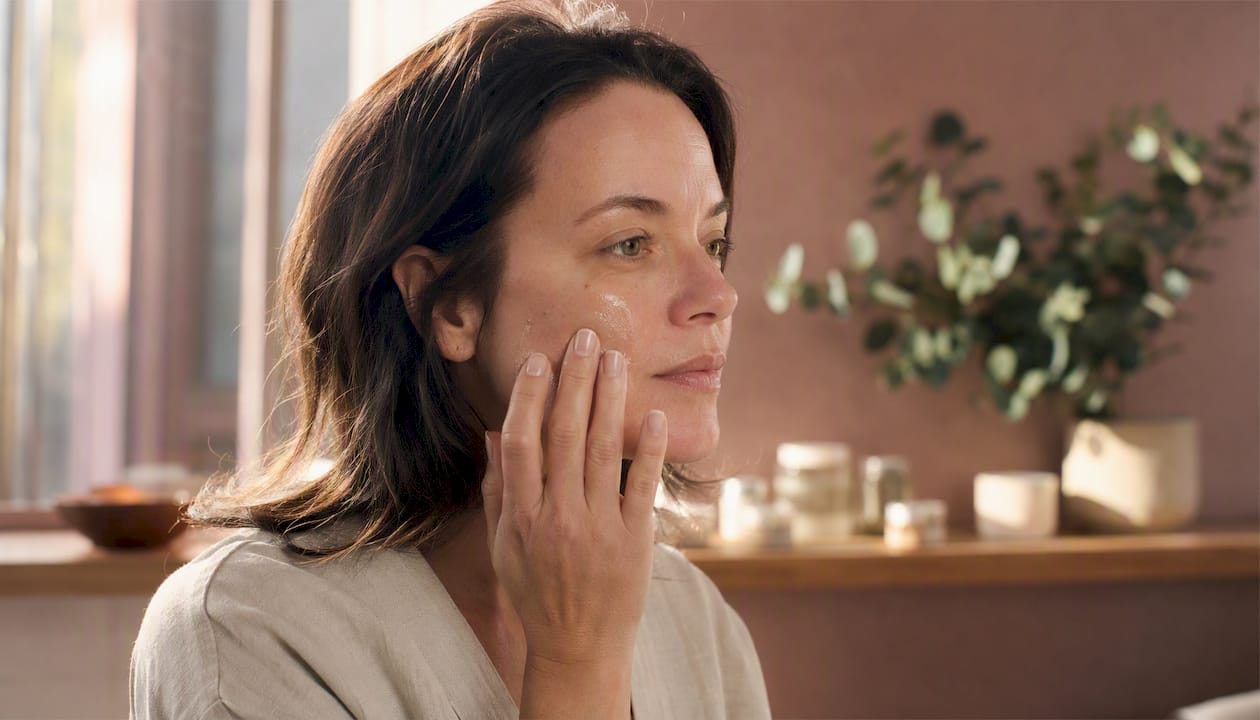
The safest, evidence-informed approach to reduce facial dark spots naturally combines daily broad-spectrum sunscreen (SPF 30+) with consistent use of researched natural actives like vitamin C, aloe vera, licorice/glabridin, and green tea/EGCG, plus gentle exfoliation and lifestyle support. Start here:
Sunscreen first. Apply broad-spectrum SPF 30+ every morning, rain or shine. This is the single step that prevents new spots and stops existing ones from deepening.
Pick one active. Choose a stable topical vitamin C serum, an aloe vera gel, or a licorice-derived product. One at a time, consistently.
Patch test before anything new. Apply a small amount to your inner forearm, wait 24 hours, and watch for redness or irritation before applying it to your face.
Stop any treatment that causes burning, new darkening, or inflammation, and book a clinician visit if spots change shape, grow rapidly, or persist after several months of safe home care.
Pro Tip: Tinted sunscreens containing iron oxide do double duty: they block UV and visible light, which is especially helpful for melasma and darker skin tones.
Key Takeaways
Natural approaches to facial dark spots work best when sunscreen, a single evidence-backed active, and consistent safe exfoliation are combined and maintained for at least 8–12 weeks.
Point | Details |
Sunscreen is non-negotiable | Broad-spectrum SPF 30+ daily prevents new spots and stops existing ones from deepening. |
Start with one active | Vitamin C, aloe vera, or licorice/glabridin are the most evidence-supported starting points. |
Patch test every new product | Apply to your inner forearm for 24 hours before using on your face. |
Expect 6–12 weeks minimum | Most natural actives take 8 weeks; untreated PIH can take 6–12 months without intervention. |
Fundamentalskin for persistent spots | Chevonne’s clinician-led peels and personalized plans address pigmentation that home care alone cannot resolve. |
Table of Contents
What causes facial dark spots and hyperpigmentation?
Facial dark spots, clinically called hyperpigmentation, form when melanocytes (pigment-producing cells) are triggered to overproduce melanin. The trigger determines the type, and the type shapes which natural approach works best. A detailed breakdown of each pigment type is available in this guide to facial pigmentation types.
The three most common types:
Solar lentigines (sunspots): Caused by cumulative UV exposure; appear on cheeks, nose, and forehead.
Post-inflammatory hyperpigmentation (PIH): Follows skin injury, acne, picking, or irritating products. The skin’s healing response deposits excess melanin.
Melasma: Driven by hormonal changes (pregnancy, oral contraceptives) and worsened by UV and visible light.
Other contributors include certain medications, thyroid conditions, and aggressive skincare products that disrupt the skin barrier.
According to the AAD, untreated dark spots often fade on their own within 6–12 months, but consistent sun protection and targeted treatment can meaningfully speed that process.
Prevention matters as much as treatment. Every unprotected sun exposure can deepen existing spots and create new ones, which is why sunscreen is the foundation of any fading plan, not an optional add-on.
Which natural ingredients actually have evidence for fading dark spots?
Natural actives vary widely in how well they are studied. Some have solid lab data and small human trials; others are mostly anecdotal. A review of natural actives and their mechanisms explains the formulation considerations in more depth.
Vitamin C (L-ascorbic acid)
A well-researched antioxidant that interferes with melanin production and offers some photoprotection. Formulated serums (look for L-ascorbic acid at 10–20%) are far more stable and effective than rubbing raw citrus on your face. Raw lemon juice can increase sun sensitivity and irritate the skin barrier.
Aloe vera (aloesin)
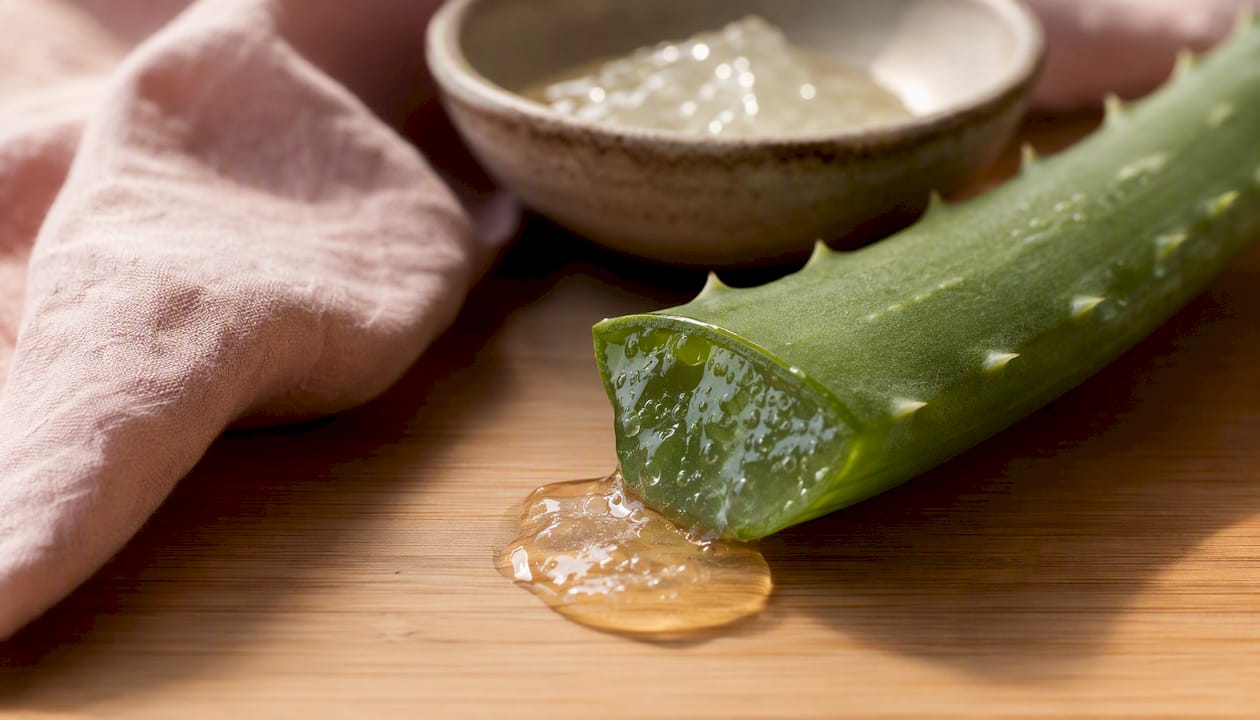
Aloesin, a compound in aloe vera, may inhibit tyrosinase, the enzyme central to melanin production. Aloe gel is gentle enough for most skin types and carries a low irritation risk, making it a practical first choice for sensitive skin.
Licorice root (glabridin)
Glabridin offers both UVB-protective properties and tyrosinase inhibition. It appears in many formulated brightening serums and is considered one of the more evidence-supported plant-derived actives for pigmentation.
Green tea extract (EGCG)
Epigallocatechin gallate (EGCG) is an antioxidant that may slow melanin production. Most supporting studies are small or preclinical, so results are promising but not yet definitive.
Lactic acid (from yogurt or formulated products)
A gentle alpha-hydroxy acid (AHA) that exfoliates the surface layer of skin, helping pigmented cells shed faster. Yogurt and diluted apple cider vinegar contain mild acids that may act like gentle chemical peels for mild hyperpigmentation, but human research remains limited and irritation is possible.
A 2024 review highlighted that natural extracts including aloe vera, licorice root, and curcumin show potential for skin lightening, but clinical research is limited and adverse reactions are possible. Treat these actives as supportive tools, not guaranteed treatments.
Avoid DIY bleaching with household chemicals, undiluted acids, or citrus applied directly to skin before sun exposure. These approaches can worsen pigmentation rather than fade it.
A simple, safe at-home routine for fading dark spots
Effective hyperpigmentation care requires a multi-step routine, not a single miracle ingredient. Here is a practical daily and weekly framework.
AM routine
Gentle, pH-balanced cleanser.
Stable vitamin C serum or green tea antioxidant product.
Moisturizer (optional but helpful for barrier support).
Broad-spectrum SPF 30+ sunscreen. For darker skin tones or melasma, choose a tinted sunscreen with iron oxide to block visible light.
PM routine
Gentle cleanser to remove sunscreen and buildup.
Targeted natural active: aloe vera gel, a licorice-derived brightening serum, or a low-concentration AHA product.
Moisturizer to support overnight repair.
Note: Retinoids can accelerate cell turnover and support fading, but they require clinician guidance, especially for darker skin tones.
Weekly (1–2 times, based on tolerance)
A papaya enzyme mask or a lactic-acid-based night treatment to gently exfoliate pigmented surface cells.
Patch-test protocol
Apply a small amount of any new product to your inner forearm.
Wait 24 hours before applying to your face.
For diluted acids (such as apple cider vinegar), use a 1:1 ratio with water.
Stop immediately if you notice redness, stinging, or new darkening.
Practical safety rules:
Introduce one new active at a time.
Avoid layering multiple acid sources in the first month.
Always follow any acid treatment with sunscreen the next morning. Many DIY acidic treatments increase sun sensitivity, which can worsen pigmentation without daily protection.
How long does it take to see results from natural approaches?
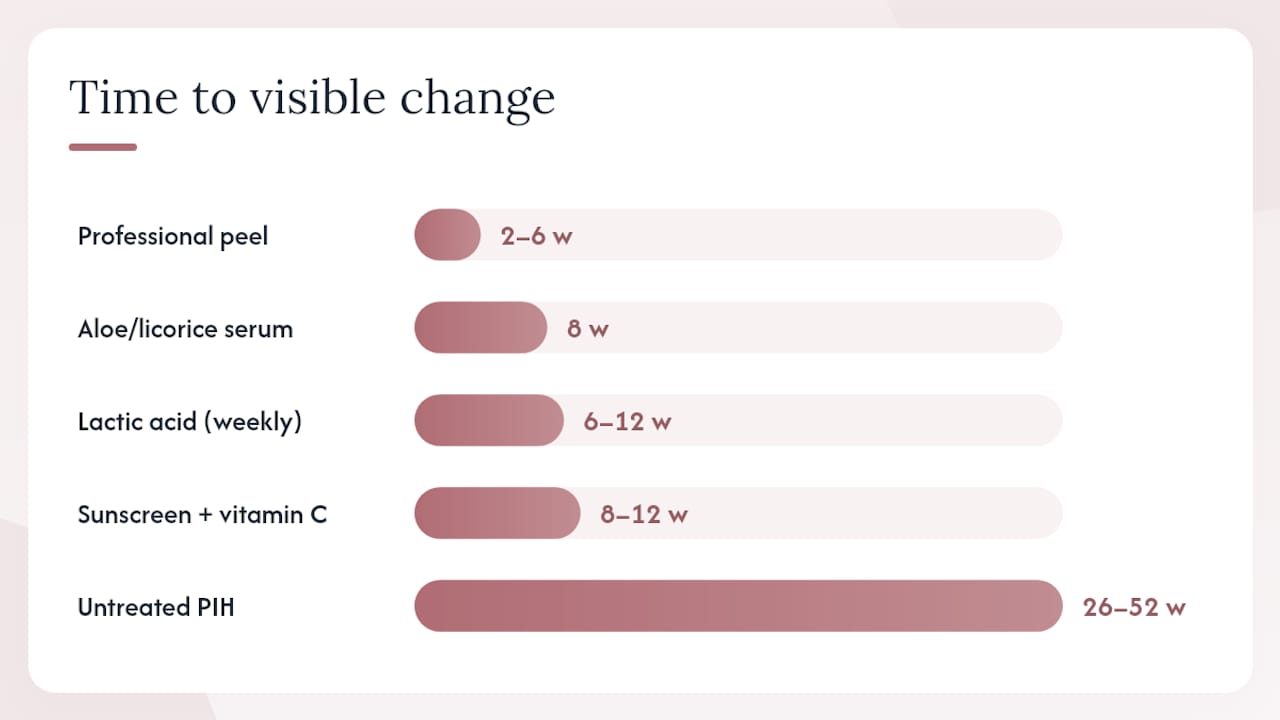
Patience is genuinely required here. Most natural actives work gradually, and visible change takes weeks to months.
Approach | Typical visible change | Notes |
Daily sunscreen + vitamin C | 8–12 weeks | Prevents deepening; gradual brightening |
Aloe vera / licorice serum | 8 weeks | Gentler; suits sensitive skin |
Lactic acid exfoliation (weekly) | 6–12 weeks | Surface pigment sheds faster |
Untreated PIH (no treatment) | 6–12 months | Per AAD guidance |
Professional peel (in-clinic) | 2–6 weeks post-treatment | Faster, clinician-supervised |
Laser / IPL (in-clinic) | 1–3 sessions, weeks apart | Targets deeper pigment |
Pro Tip: Photograph your skin in consistent natural light, against a neutral background, at the same distance every four weeks. Progress is often too gradual to notice day-to-day, but a side-by-side comparison at week eight can be genuinely motivating.
Verywell Health experts note that home remedies should be viewed as supplementary to professional care, not replacements for significant pigmentation. If you see no change after three months of consistent, safe home care, it is time to consult a clinician.
Special precautions for darker skin tones
Darker skin tones (Fitzpatrick types IV–VI) carry a higher risk of PIH because melanocytes are more reactive to inflammation. A spot that fades in a fair-skinned person may deepen in darker skin if the wrong treatment is used.
Pro Tip: For medium-to-dark skin tones, gentle is always safer than aggressive. A mild routine used consistently outperforms a harsh one used once.
Common triggers to avoid:
Aggressive physical scrubs or high-concentration at-home peels.
Picking at acne or blemishes.
Applying undiluted essential oils or citrus directly to skin.
Skipping sunscreen after any exfoliating treatment.
The AAD specifically recommends tinted sunscreens with iron oxide for darker skin tones, as visible light can trigger melanin production independently of UV. Standard mineral or chemical sunscreens may not block this wavelength range fully.
Signs your routine is causing harm: new spots appearing where you applied a product, increased redness or inflammation, or existing spots darkening after treatment. Stop the offending product immediately, apply a gentle moisturizer, and give skin a week to settle before reintroducing anything. Guidance on adjusting your routine for pigmentation-prone skin can help you simplify and sequence products more safely.
When should you see a clinician about dark spots?
Home remedies can help with mild cosmetic hyperpigmentation, but some situations call for professional evaluation.
See a dermatologist or dermal clinician if:
A spot changes shape, color, or grows rapidly.
You notice asymmetry, irregular borders, or multiple colors within one lesion.
Spots persist despite three or more months of consistent, safe home care.
You develop new spots in areas not exposed to sun.
You have a personal or family history of skin cancer.
Professional options, briefly:
Prescription topicals (hydroquinone, tretinoin, azelaic acid): Target melanin production directly; require clinician supervision.
Chemical peels: Remove surface layers of pigmented skin; recovery ranges from a few days to two weeks depending on depth.
Laser resurfacing and IPL: Target deeper pigment; typically require multiple sessions and carry higher PIH risk for darker tones.
Cryotherapy: Freezes individual spots; best suited to isolated, superficial lesions.
Most clinicians combine professional treatments with a tailored home-care plan and strict sun protection for the best outcomes. A comparative overview of pigmentation treatment options can help you prepare for that conversation.
Why clinician guidance makes a real difference
Chevonne, Fundamentalskin’s lead Dermal Clinician with 15 years of experience specializing in pigmentation, takes a personalized approach that home routines alone cannot replicate. Combining in-clinic treatments like the Larimedical Biomimetic Peel with a tailored home-care plan typically delivers faster, safer results than either approach alone, particularly for complex or persistent pigmentation.
Fundamentalskin’s documented before-and-after outcomes reflect clinician-led customization using organic, carefully sourced ingredients. Clinical follow-up also reduces risk for darker skin tones, where the margin between effective treatment and worsening PIH is narrower.
Pairing informed home care with professional guidance is not about replacing what you do at home. It is about making sure what you do at home is actually working for your skin, not against it.
A clinician’s perspective on natural care and realistic goals
Natural skincare for pigmentation works best when you treat it as a long-term commitment rather than a quick fix. Patience, consistency, and protection are the three pillars. The most common mistake is abandoning a routine after four weeks because results feel slow, when the skin actually needs eight to twelve weeks of consistent care to show meaningful change.
Protect your skin first, then treat. And if a product inflames your skin, stop it immediately. Inflammation is one of the fastest ways to deepen a dark spot, especially in medium-to-dark skin tones. When in doubt, simpler is safer.
Ready for results that go beyond what home care can do?
If you have been consistent with your home routine and your dark spots are still holding on, a professional treatment may be the missing piece.

At Fundamentalskin, Chevonne designs every treatment plan around your skin specifically, not a one-size-fits-all protocol. The Biomimetic Peel + LED Therapy combines clinician-grade exfoliation with light therapy to address pigmentation at a depth that topical actives cannot reach, with no downtime. For women in the Tweed Heads and Gold Coast region dealing with stubborn spots, melasma, or PIH, this is a clinician-supervised path to visibly clearer skin. Book your personalized skin consultation at Fundamentalskin today and see what targeted, professional care can do for your complexion.
Sources
This article is for general informational purposes only and is not a substitute for professional medical or dermatological advice. Consult a qualified clinician for persistent, changing, or complex pigmentation.
Recommended
Comments