.png)
Skincare Routine Sequencing: What Order Really Means


Skincare routine sequencing is defined as the practice of applying skincare products in a deliberate order to maximize each product’s absorption and effectiveness. Dermatologists recommend a consistent sequence: cleanser, toner or serum, targeted treatments, moisturizer, and sunscreen in the morning. Getting this order wrong does not just waste product. Applying a heavy occlusive before a lightweight active can reduce that active’s effectiveness entirely. The science behind proper skincare sequence goes deeper than “thin to thick,” and understanding it changes how you build every routine you follow.
What is skincare routine sequencing based on scientifically?
Sequencing is governed by dermal absorption and molecular weight, not marketing trends. Molecules under 500 Daltons can passively diffuse through the stratum corneum, the skin’s outermost layer. Larger molecules sit on top and work as surface humectants or occlusives. This is why you apply small-molecule actives first and seal with larger-molecule creams last.
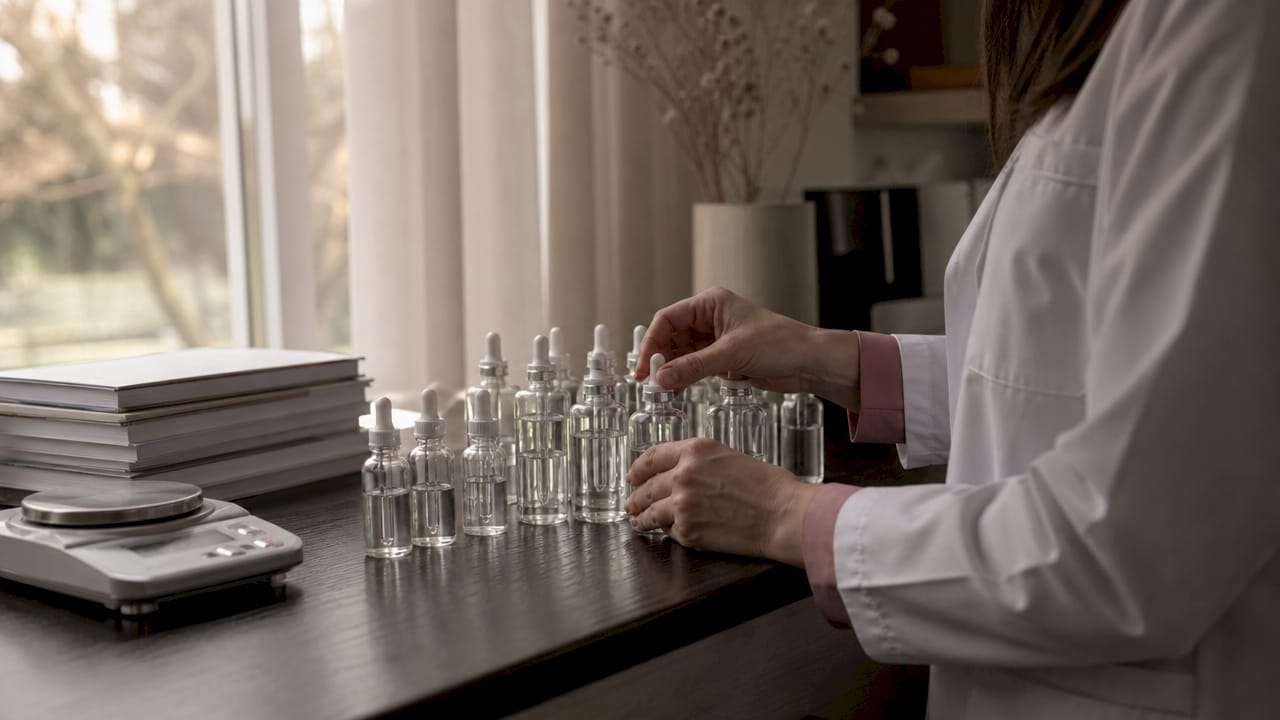
pH compatibility is the second governing principle. Vitamin C operates at a pH below 3.5, while retinol sits closer to pH 5.5. Layering them back to back without a break causes what formulators call “pH shock,” which reduces the bioavailability of both ingredients. The fix is simple: separate conflicting actives into morning and evening routines, or wait at least 20 minutes between applications.
Function overrides texture as a sequencing rule. The popular “thin to thick” guideline works most of the time, but applying products by function rather than texture alone produces better results. An active ingredient needs direct skin contact to work. A heavier serum packed with peptides should still go before a lightweight gel moisturizer if the peptides are the treatment and the gel is the barrier.
Here is a quick reference for the core principles:
Molecular weight first: Small molecules penetrate; large molecules protect. Apply in that order.
pH compatibility: Acidic actives (AHAs, Vitamin C) need spacing from higher-pH products like retinol.
Function before texture: Actives that treat go before products that seal.
Occlusives go last: Any balm, oil, or thick cream applied early blocks everything that follows.
No conflicting actives together: Benzoyl peroxide and Vitamin C deactivate each other. Keep them in separate routines.
Pro Tip: Hyaluronic acid exists in multiple molecular weights. Low-molecular-weight hyaluronic acid penetrates deeper, while high-molecular-weight hyaluronic acid sits on the surface as a humectant. Sequencing reflects these properties, so apply a low-weight HA serum before your moisturizer, not after.
How to structure a morning skincare routine for optimal protection
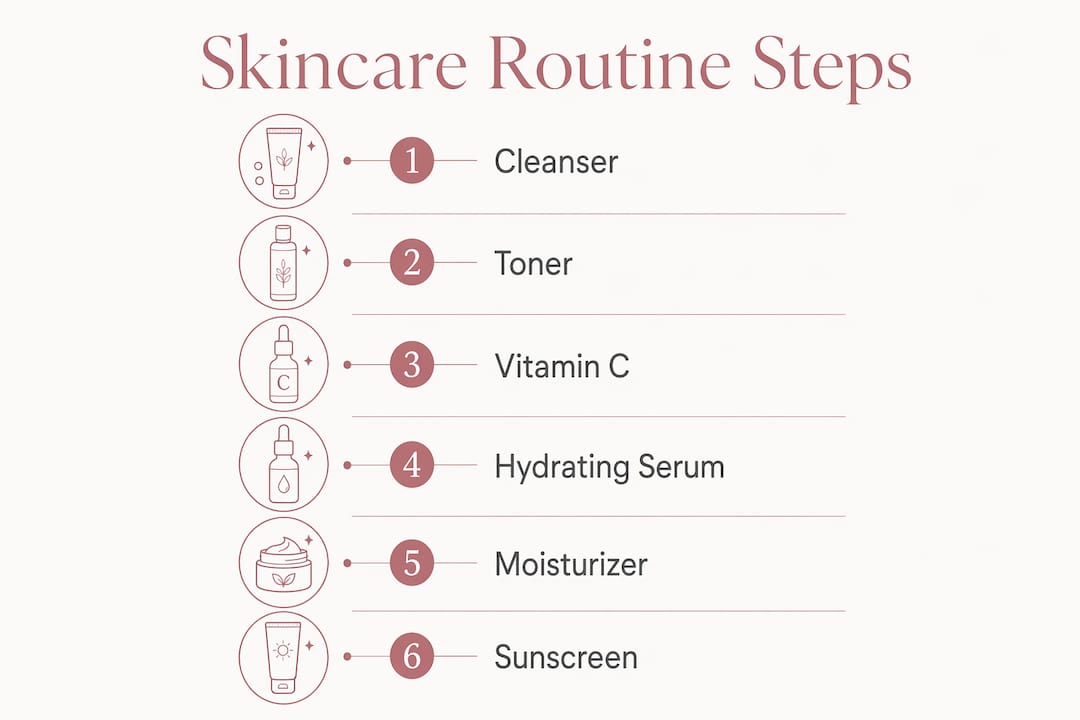
The morning routine has one primary goal: protect skin from environmental damage while keeping it hydrated. Every step in the proper skincare sequence for AM serves that goal. Here is the clinically recommended order:
Cleanser. Start with a gentle, pH-balanced cleanser to remove overnight sebum and any residue from your evening products. This prepares a clean surface for everything that follows.
Toner (optional). A hydrating or pH-balancing toner preps the skin barrier and can improve the absorption of serums applied next. Skip it if your skin is sensitive and your cleanser already maintains pH balance.
Vitamin C serum. Apply your antioxidant serum here, directly onto clean skin. Vitamin C serums applied before peptides and moisturizers get maximum skin contact and deliver the strongest antioxidant protection against UV-generated free radicals.
Lightweight hydrating serum. A hyaluronic acid or niacinamide serum goes on next. These work on the surface and just below it, drawing moisture into the skin before you seal it in.
Moisturizer. Choose a formula suited to your skin type. Moisturizers containing ceramides, glycerin, or niacinamide reinforce the skin barrier and lock in the actives underneath. This step seals your treatment layer.
Sunscreen. This is always the final step in the morning. Applying anything after sunscreen dilutes its protective film and compromises UV defense. Use a broad-spectrum SPF 30 or higher every single day.
Pro Tip: Wait 15–60 seconds between layers to allow each product to absorb before applying the next. This prevents pilling and gives each ingredient time to begin working before it is covered.
The morning sequence is not about using the most products. It is about using the right products in the right order. A well-sequenced three-step morning routine outperforms a poorly ordered six-step one every time. For a detailed stepwise layering guide, Fundamentalskin has a clear breakdown worth bookmarking.
How to sequence your evening skincare routine for repair and renewal
The evening routine focuses on repair. Your skin’s cell turnover rate peaks at night, which makes it the right time to apply treatment actives like retinoids, AHAs, and peptides. The steps in skincare routine order for PM look like this:
Double cleanse if you wore sunscreen or makeup. Start with an oil-based cleanser or micellar water to break down SPF and makeup. Follow with a water-based cleanser to clear the skin fully.
Exfoliating acid treatment (2–3 nights per week). Apply AHAs like glycolic or lactic acid directly to clean skin. These work at the surface level and need direct contact to resurface effectively.
Targeted serums. Peptide serums and growth factor serums go here, after acids have been absorbed. These support collagen production and skin repair overnight.
Retinoid treatment. Retinol and prescription retinoids go on after serums. For those new to retinoids, use the “retinol sandwiching” technique: apply retinol after moisturizer initially to reduce irritation, then transition to applying it before moisturizer once your skin has acclimated.
Moisturizer. A richer, more occlusive formula works well at night. Look for ceramides and fatty acids that repair the barrier while you sleep. This step seals in all the actives below it.
Healing balm (optional). If your skin is reactive or you have used strong actives, a thin layer of a barrier-repair balm over your moisturizer adds extra protection. Apply this last.
The evening routine is where most of the real skin change happens. Pairing a facial oil for overnight repair with your moisturizer can deepen hydration and support barrier recovery, especially after acid nights.
Common sequencing mistakes and how to avoid them
Most routine failures come down to a handful of repeatable errors. Recognizing them saves you money and protects your skin.
Applying heavy creams before actives. A thick moisturizer or oil applied first creates a physical barrier. Actives applied on top cannot penetrate. Always apply treatments to bare skin.
Layering conflicting pH products without a break. Acidic actives followed immediately by retinol cause pH shock. The result is reduced efficacy from both products, not a combined benefit.
Over-layering beyond four leave-on products. Using more than four leave-on products causes pilling and blocks absorption. More layers do not mean better results. They often mean worse ones.
Skipping absorption time. Applying the next product immediately after the previous one prevents proper penetration. Give each layer at least 30 seconds, and up to a minute for thicker formulas.
Mixing benzoyl peroxide and Vitamin C in the same routine. These two actives deactivate each other on contact. Vitamin C belongs in the morning; benzoyl peroxide belongs at night.
“Consistency and correct layering matter more than routine length. A three-step routine applied in the right order every day will outperform a ten-step routine applied randomly.” This principle, supported by clinical sequencing guidelines, is the single most important thing to internalize about how to layer skincare products.
Pro Tip: If your products are pilling, the most common cause is too many layers applied too quickly. Simplify to four products maximum and wait between each step. Simplified routines focused on cleansing, treating, moisturizing, and protecting avoid most compatibility issues.
When you are adding a new product to your routine, introduce it one at a time and watch how your skin responds. Fundamentalskin’s guide on how skin responds to new products walks through this process clearly.
Key Takeaways
Correct skincare routine sequencing, guided by molecular weight, pH compatibility, and product function, determines whether your actives actually work or simply sit on the surface.
Point | Details |
Sequence by function, not texture | Apply actives that treat before products that seal, regardless of thickness. |
pH spacing prevents ingredient loss | Separate acidic actives from retinol using AM/PM splits or a 20-minute wait. |
Sunscreen is always last in the AM | Anything applied after sunscreen breaks down its protective film. |
Limit leave-on layers to four | More than four products causes pilling and blocks absorption of actives below. |
Evening routines drive repair | Retinoids and AHAs work best at night when skin cell turnover is highest. |
Why I think “thin to thick” is only half the answer
After 15 years working with clients on their skin, the most common mistake I see is not the wrong products. It is the right products applied in the wrong order. People invest in high-quality actives and then layer them under a thick cream that blocks everything. The results disappoint, and they blame the product when the sequence was the real problem.
The “thin to thick” rule is a useful starting point, but it is not the full picture. I have seen clients with genuinely glowing, healthy skin who use three products in the correct order. I have also seen clients with ten-step routines who are getting almost nothing from their actives because the layering is off. Applying products by function rather than texture is the shift that changes outcomes.
What I tell every client is this: learn why the order matters, not just what the order is. When you understand that a Vitamin C serum needs direct skin contact to neutralize free radicals, you will never apply it over a moisturizer again. When you understand that an occlusive seals the skin barrier, you will always put it last. That understanding sticks. A memorized list does not.
Patience matters as much as sequence. Skin responds to consistent, correctly ordered routines over weeks, not days. The clients I see with the best long-term results are not the ones with the most products. They are the ones who build consistent routines and stick to them.
— chevonne
Personalized skin treatments that work with your routine
Getting your at-home sequence right is a strong foundation. Professional treatments take those results further by working at a depth that topical products cannot reach on their own.

At Fundamentalskin, Chevonne designs every treatment plan around your skin’s specific needs, whether that is pigmentation, fine lines, redness, or dull texture. The Larimedical Biomimetic Peel is one of the clinic’s most requested treatments. It addresses skin concerns at a cellular level with no downtime, and it works best when paired with a well-sequenced home care routine. Clients who come in with a solid routine already in place see faster, more visible results. If you are ready to see what professional care can do alongside your optimized regimen, book a consultation with Fundamentalskin today.
FAQ
What is skincare routine sequencing?
Skincare routine sequencing is the practice of applying skincare products in a specific, deliberate order to maximize each product’s absorption and effectiveness. The standard sequence runs from cleanser through to sunscreen in the morning, with actives applied before moisturizers in both AM and PM routines.
Does the order of skincare products really matter?
Yes. Applying a heavy occlusive before a lightweight active can block it from penetrating the skin entirely, reducing its effectiveness to zero. Correct sequencing ensures each ingredient reaches the skin layer it is designed to treat.
What is the correct order for a morning skincare routine?
The correct morning order is: cleanser, toner (optional), Vitamin C serum, hydrating serum, moisturizer, and sunscreen last. Sunscreen must always be the final step because anything applied over it dilutes its protective film.
Can you mix retinol and Vitamin C in the same routine?
No. Retinol and Vitamin C have incompatible pH levels that reduce each other’s effectiveness when applied together. Use Vitamin C in the morning and retinol in the evening to get the full benefit of both.
How many skincare products should you layer at once?
Limit leave-on products to four per routine. Using more than four layers causes pilling and prevents proper absorption, meaning the actives you paid for are not reaching your skin.
Recommended
Comments