.png)
What Is Ultrasound Skin Therapy? Your 2026 Guide
- chevonne stewart
- Jul 11
- 8 min read

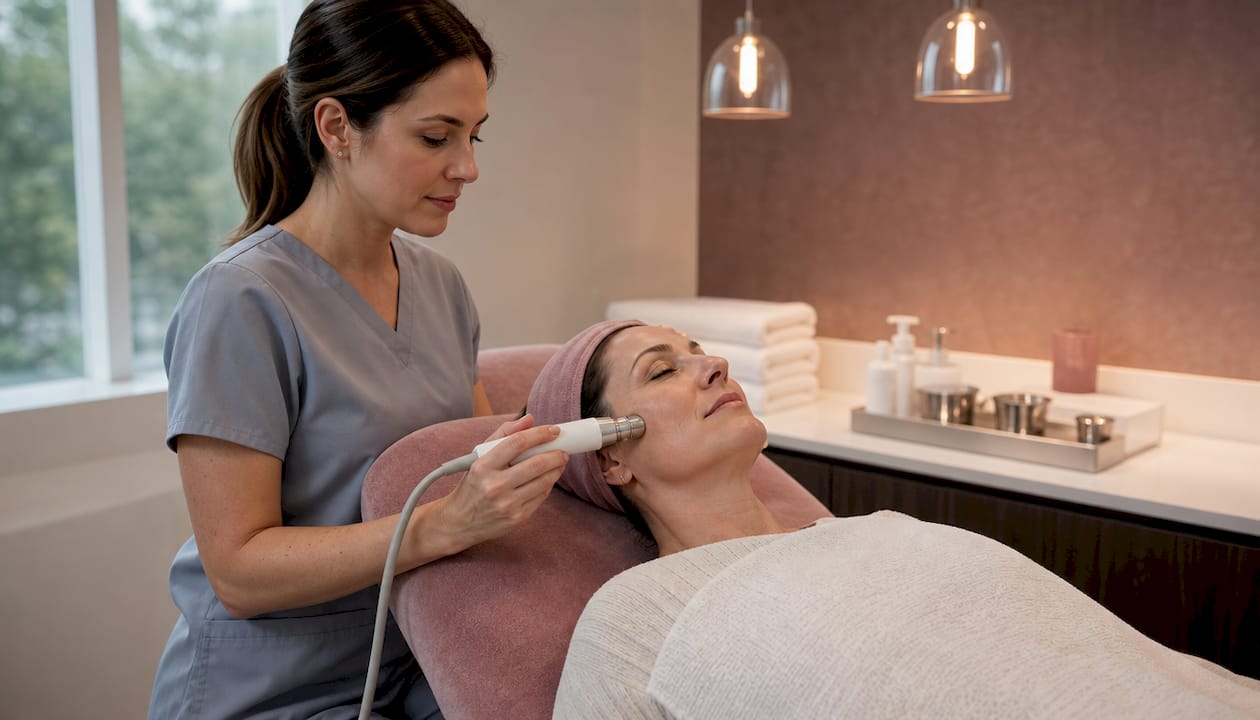
Ultrasound skin therapy is a non-invasive cosmetic treatment that tightens and rejuvenates skin by stimulating natural collagen production using focused ultrasound energy. Clinically known as microfocused ultrasound with visualization (MFU-V), this procedure targets the face, neck, and chest without surgery or downtime. The American Institute of Ultrasound in Medicine (AIUM) recognizes it as a safe option when administered by licensed practitioners. If you are researching non-invasive skin rejuvenation for concerns like aging, fine lines, or laxity, understanding how this technology works is the clearest first step toward making a confident decision.
What is ultrasound skin therapy and how does it work?
Ultrasound skin therapy delivers focused sound wave energy to precise depths within the skin. Unlike topical creams or surface-level treatments, it reaches the structural layers where collagen lives. That depth is what makes it genuinely effective for tightening and lifting.
The treatment targets three specific skin depths: 1.5mm, 3.0mm, and 4.5mm depths, including the superficial muscular aponeurotic system (SMAS). The SMAS is the same layer surgeons address during a facelift. Reaching it non-invasively is what separates ultrasound therapy from most surface treatments.
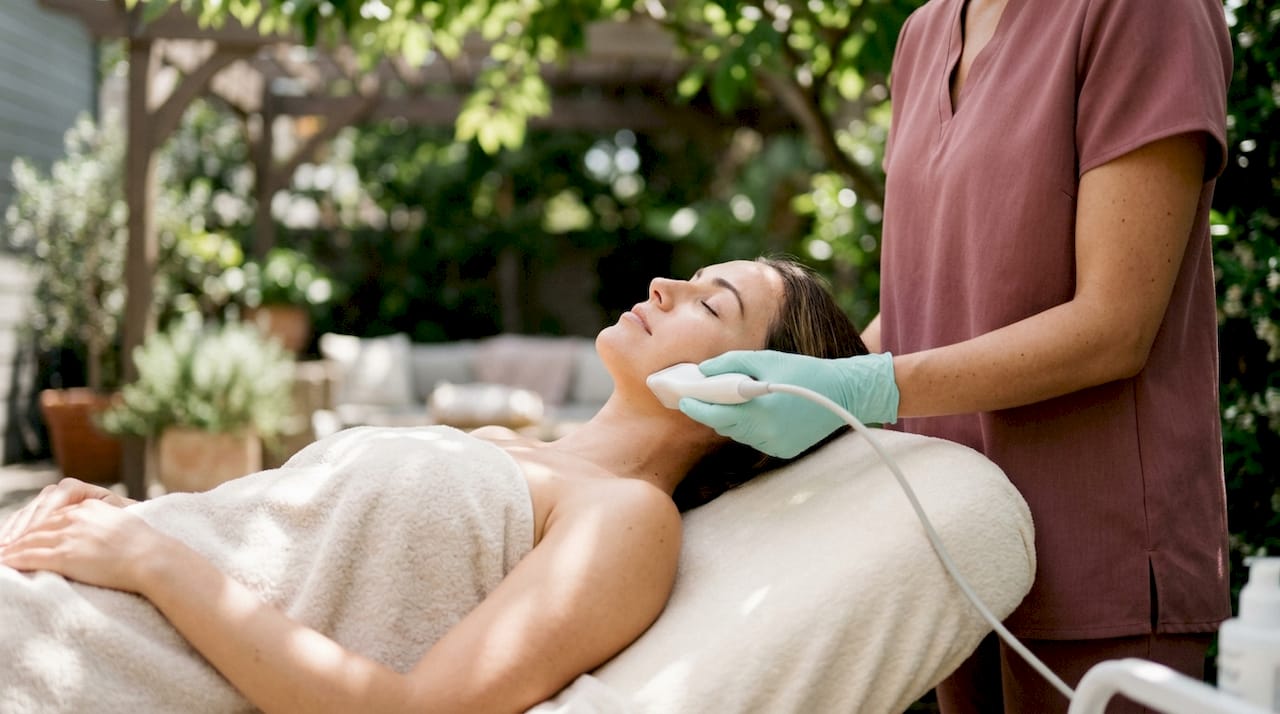
At each depth, the device generates temperatures between 60°C and 70°C. Those temperatures create tiny thermal coagulation points in the tissue. The body reads these as micro-injuries and responds with a healing cascade: inflammation, matrix remodeling, and finally, new collagen and elastin production.
This biological process is called neocollagenesis and elastogenesis. The key distinction from physiotherapy ultrasound is intentional. Cosmetic ultrasound intentionally heats specific skin layers to cause collagen remodeling, while physiotherapy ultrasound promotes healing and blood flow without thermal coagulation. They use the same technology for completely different outcomes.
1.5mm depth: Targets the superficial dermis for texture and fine line improvement
3.0mm depth: Reaches the deep dermis for collagen density and skin firmness
4.5mm depth: Addresses the SMAS layer for structural lifting and tightening
Pro Tip: Ask your clinician which depths they plan to treat before your session. A skilled practitioner customizes depth selection based on your anatomy and skin status, not a one-size-fits-all protocol.
What are the clinical benefits and expected results?
The clinical evidence for ultrasound skin therapy is strong. An observational study with 77 participants showed 80% improvement in facial and neck skin laxity following treatment. That figure reflects real, measurable change in skin appearance, not just patient satisfaction scores.
The most common treatment areas include the brow, jawline, chin, neck, décolletage, and chest. Each area responds differently based on skin thickness and the degree of laxity present. Clients with mild to moderate laxity see the most consistent results. Those with severe sagging are better suited to surgical options, and ultrasound facial rejuvenation delivers incremental, natural results rather than facelift-level changes.
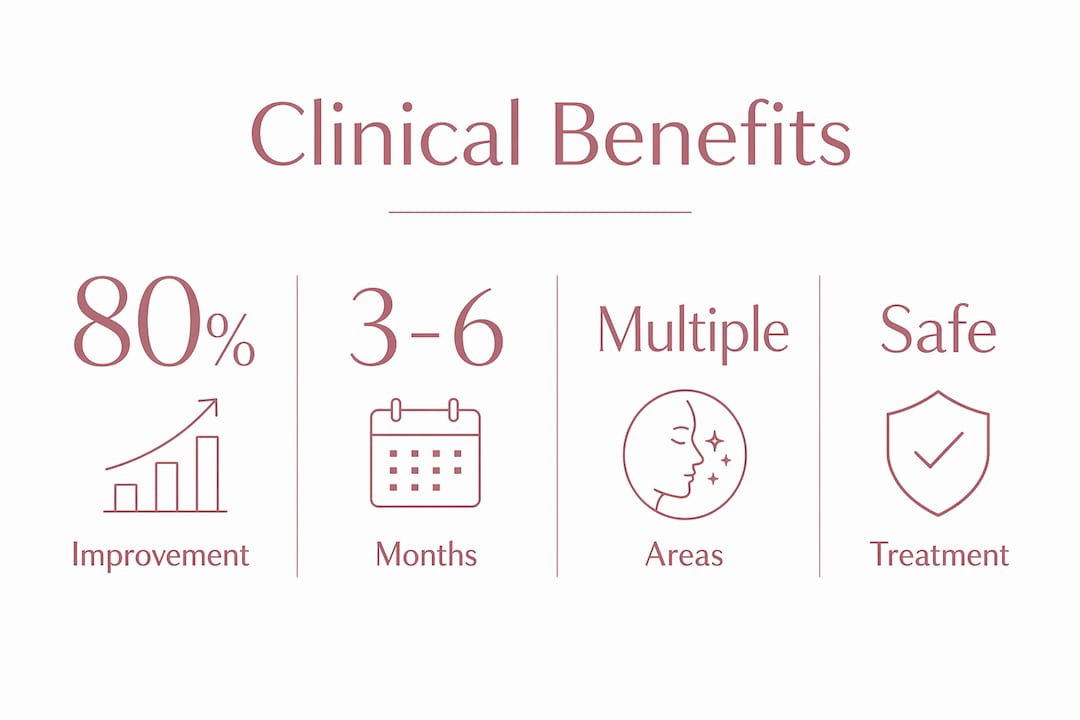
Results do not appear overnight. Collagen remodeling takes 3 to 6 months to reach peak improvement. Many clients notice a subtle tightening sensation immediately after treatment, but the full benefit builds gradually as new collagen matures. That timeline is a feature, not a flaw. It means results look natural rather than sudden.
The benefits extend beyond tightening alone:
Skin firmness: Improved structural support from new collagen fibers
Texture refinement: Smoother surface from superficial dermal remodeling
Elasticity: Increased bounce and resilience from elastin stimulation
Brow lift effect: Subtle elevation of the brow line without surgery
Décolletage improvement: Reduced crepiness and fine lines on the chest
Ultrasound therapy also pairs well with other modalities. Combining it with a skin rejuvenation treatment like a clinical peel can address both structural laxity and surface concerns such as pigmentation and dullness in the same treatment plan.
Are there risks and side effects you should know about?
Ultrasound skin therapy has a well-documented safety profile. The AIUM confirms that common side effects are mild and transient, including redness, tenderness, mild pain, tingling, and temporary swelling. These typically resolve within hours to a few days.
Serious adverse events are rare but possible when treatment is performed incorrectly. The AIUM’s 2025 guidelines state that inappropriate application risks tissue damage and that licensed operators are strongly recommended. This is not a treatment to receive from an unqualified provider.
Contraindications include active skin infections, open wounds, cystic acne over the treatment area, and recent neuromodulator injections in the same zone. Clients with metal implants, pacemakers, or certain nerve conditions should consult their doctor before booking. Pregnancy is also a contraindication for cosmetic ultrasound.
The technology itself includes a built-in safety feature: real-time ultrasound visualization. This allows the practitioner to see exactly where energy is being delivered before activating the device. Real-time imaging enhances precise energy delivery and reduces the risk of accidentally targeting nerves or blood vessels.
Common side effects: Redness, tenderness, mild swelling, tingling (all temporary)
Rare risks: Nerve irritation, bruising, or uneven results from poor technique
Key contraindications: Active infection, pregnancy, metal implants, recent injectables
Pro Tip: Always choose a clinician who uses a device with real-time visualization. It is the single most important safety feature in cosmetic ultrasound, and not all devices include it.
What happens during an ultrasound skin therapy session?
A typical session follows a clear, comfortable sequence. Knowing what to expect removes the anxiety and helps you get the most from your appointment.
Consultation and skin assessment: Your clinician reviews your skin laxity, medical history, and treatment goals. Treatment protocols vary based on your anatomy and skin status, so this step directly shapes your outcome.
Skin preparation: The treatment area is cleansed and a conductive gel is applied. The gel allows the ultrasound handpiece to glide smoothly and ensures consistent energy transmission.
Imaging pass: The clinician uses the device’s visualization function to map the skin layers before delivering energy. This confirms correct depth targeting for your specific anatomy.
Energy delivery: The handpiece moves across the treatment area in systematic passes. You may feel a warm, tingling, or prickling sensation as energy reaches the deeper layers. Discomfort is mild for most clients.
Post-treatment care: No bandages or special dressings are needed. Your clinician may apply a soothing serum or SPF. You can return to normal activities immediately.
Sessions last 30 to 90 minutes depending on the number of areas treated. A full face and neck session sits closer to 90 minutes. A targeted brow or chin treatment may take 30 minutes. There is no downtime, no recovery period, and no need to rearrange your schedule. You can wear makeup the same day if needed.
For most clients, one session per year maintains results. Some practitioners recommend a follow-up session at 6 months for clients with more significant laxity or faster collagen turnover.
How does ultrasound therapy compare with other non-invasive options?
Understanding where ultrasound therapy fits among non-invasive skin treatments helps you make a genuinely informed choice. Each energy-based modality works differently and suits different concerns.
The most important distinction is depth. Ultrasound penetrates deeper than laser treatments, reaching the SMAS layer at 4.5mm. Laser energy typically addresses the epidermis and superficial dermis, making it better suited for pigmentation, texture, and surface renewal. Radiofrequency (RF) uses electromagnetic energy to heat the dermis and is effective for mild tightening, but it does not reach the SMAS layer and lacks real-time visualization in most devices.
Feature | Ultrasound (MFU-V) | Radiofrequency | Laser |
Treatment depth | Up to 4.5mm (SMAS) | 1–3mm dermis | Epidermis to superficial dermis |
Mechanism | Thermal coagulation points | Resistive heating | Photothermal energy |
Real-time visualization | Yes (MFU-V devices) | Rarely | No |
Downtime | None | None to minimal | Varies (none to several days) |
Best for | Laxity, lifting, tightening | Mild tightening, texture | Pigmentation, texture, surface renewal |
Results timeline | 3–6 months | 1–3 months | Weeks to months |
The right choice depends on your primary concern. Ultrasound therapy is the strongest non-invasive option for structural lifting and laxity. Laser treatments address pigmentation and surface texture more directly. RF works well as a maintenance or combination treatment. Many clients benefit from a planned sequence of all three, guided by a qualified clinician who can assess which concern to address first.
Complementing ultrasound with an anti-cellulite massage or body treatment can extend the skin-lifting benefits to other areas beyond the face.
Key Takeaways
Ultrasound skin therapy is the most effective non-invasive option for structural skin lifting because it reaches the SMAS layer at 4.5mm depth, triggering real collagen remodeling that builds over 3 to 6 months.
Point | Details |
Depth is the differentiator | MFU-V reaches the SMAS at 4.5mm, deeper than RF or laser treatments. |
Results take time | Peak collagen improvement appears 3 to 6 months after treatment, not immediately. |
Safety depends on the provider | Licensed clinicians using real-time visualization devices reduce the risk of adverse effects. |
Ideal candidate profile | Mild to moderate skin laxity responds best; severe sagging requires surgical assessment. |
Combine for full results | Pairing ultrasound with clinical peels addresses both structural laxity and surface concerns. |
What 15 years in the treatment room taught me about ultrasound therapy
The most common misconception I see is that ultrasound therapy is a shortcut to surgical results. It is not, and I say that as someone who genuinely believes in this technology. When a client comes in expecting a facelift from a single session, I know the conversation we need to have before we even pick up the handpiece.
What ultrasound therapy does brilliantly is buy time. For clients in their late 30s to early 50s with early laxity, one well-timed session per year can meaningfully slow the visible aging process. The collagen you stimulate today is working for you six months from now. That is a powerful thing when you understand it properly.
The skill of the practitioner matters more than most clients realize. I have seen results from the same device category vary dramatically based on depth selection, energy settings, and the number of passes. Treatment parameters adjusted to your anatomy are what separate a good outcome from a great one. A clinician who rushes the imaging step or uses a generic protocol is leaving results on the table.
My honest advice: do not book ultrasound therapy based on price alone. The device, the training, and the clinical assessment behind your session are what you are actually paying for. Get those right, and the results speak for themselves.
— chevonne
Advanced skin treatments at Fundamentalskin
Fundamentalskin offers a range of advanced, non-invasive treatments designed for women navigating pigmentation, aging skin, fine lines, and dull texture. Led by Chevonne, a Dermal Clinician with 15 years of clinical experience, every treatment plan is built around your skin’s specific needs, not a generic menu.

For clients exploring skin rejuvenation beyond ultrasound therapy, the Larimedical Biomimetic Peel is a standout option. It addresses surface concerns like pigmentation and texture with zero downtime, making it an ideal complement to structural treatments. The Biomimetic Peel with LED Therapy takes that further by combining deep skin renewal with light therapy for enhanced collagen support. Book a consultation with Fundamentalskin to find the right combination for your skin goals.
FAQ
What is ultrasound skin therapy used for?
Ultrasound skin therapy tightens and lifts the face, neck, chin, and chest by stimulating collagen production at depths of up to 4.5mm. It is most effective for mild to moderate skin laxity and fine lines.
How long does it take to see results from ultrasound skin treatment?
Most clients see gradual improvement over 3 to 6 months as new collagen matures. A subtle tightening effect may be noticeable immediately after the session.
Is ultrasound skin therapy safe?
Yes, when performed by a licensed clinician using a device with real-time visualization. The AIUM confirms that side effects are typically mild and transient, including temporary redness and tenderness.
How long does an ultrasound facial therapy session take?
Sessions last 30 to 90 minutes depending on the treatment area. There is no downtime, and clients can return to normal activities immediately after.
How does ultrasound therapy differ from radiofrequency or laser treatments?
Ultrasound reaches the SMAS layer at 4.5mm depth, deeper than radiofrequency or laser. It is the strongest non-invasive option for structural lifting, while laser better addresses surface pigmentation and texture.
Recommended
Comments