.png)
What Is Skin Health Maintenance? Your 2026 Guide


Skin health maintenance is the deliberate, consistent practice of protecting, nourishing, and supporting your skin’s biological functions to preserve its structural integrity, resilience, and appearance over time. The clinical term for this broader goal is skin longevity, which focuses on core biological pathways like mitochondrial function, cellular senescence, and extracellular matrix remodeling. This goes well beyond anti-aging creams. True skin health maintenance addresses barrier function, inflammation control, and collagen integrity as daily priorities. Understanding what is skin health maintenance gives you a framework that serves your skin for decades, not just seasons.
What are the essential daily habits to maintain healthy skin?
Daily sun protection is the single most effective habit for long-term skin health. UV radiation breaks down collagen and elastin, accelerating visible aging and increasing skin cancer risk. Broad-spectrum SPF 30 or higher, applied every morning and reapplied every two hours outdoors, is the non-negotiable foundation of any routine for healthy skin.
Gentle cleansing comes next. Harsh soaps and over-washing strip the skin’s natural oils, weakening the barrier that keeps moisture in and irritants out. A mild, pH-balanced cleanser used once or twice daily removes impurities without disrupting the protective acid mantle.

Moisturizing with barrier-supporting ingredients completes the daily core. Ingredients like niacinamide and hyaluronic acid have clinically supported benefits for hydration, barrier strength, and visible aging improvement. Niacinamide reduces redness and strengthens the skin barrier. Hyaluronic acid draws water into the skin and holds it there.
Hydration from within matters just as much. Drinking adequate water supports skin plumpness and the efficient delivery of nutrients to skin cells. Dehydrated skin shows fine lines more readily and recovers from damage more slowly.
Avoiding harmful habits protects everything you build with your routine. Smoking accelerates collagen breakdown and restricts blood flow to the skin. Tanning beds deliver concentrated UV damage with no safe threshold.
Apply broad-spectrum SPF 30+ every morning, rain or shine
Use a gentle, pH-balanced cleanser morning and night
Moisturize with niacinamide or hyaluronic acid to reinforce the barrier
Drink enough water daily to support skin hydration from within
Avoid smoking and tanning beds entirely
Pro Tip: Layer your skincare products from thinnest to thickest consistency. A thick cream applied first blocks absorption of any active serum you apply afterward, reducing its effectiveness significantly.
How do lifestyle factors influence long-term skin health?
The six pillars of lifestyle medicine directly modulate the molecular pathways that drive skin aging. These pillars are not abstract wellness concepts. They operate at the level of mitochondrial function and extracellular matrix remodeling, which means the choices you make daily show up in your skin’s structure over time.
Nutrition. Antioxidant-rich foods reduce oxidative stress, one of the primary drivers of collagen degradation. Diets high in refined sugar promote glycation, a process that stiffens collagen fibers and dulls skin tone.
Physical activity. Regular exercise improves circulation, delivering oxygen and nutrients to skin cells. It also supports cellular energy production, which slows the accumulation of senescent cells in the skin.
Stress regulation. Chronic stress elevates cortisol, which triggers inflammation and breaks down collagen. Practices like breathwork, meditation, or even consistent downtime reduce this inflammatory load.
Restorative sleep. Adults who consistently achieve 7–9 hours of quality sleep show fewer signs of premature skin aging. Sleep is when barrier repair and collagen rebuilding peak.
Avoidance of harmful exposures. Beyond sun protection, this includes limiting alcohol, which dehydrates the skin and depletes vitamin A, and avoiding air pollution where possible.
Social connection. Chronic loneliness elevates systemic inflammation. Lower inflammation means slower degradation of the skin’s structural proteins.
These six factors work together. Improving even two or three of them produces measurable changes in skin resilience and texture over months, not years.
What evidence-based skincare ingredients support skin longevity?
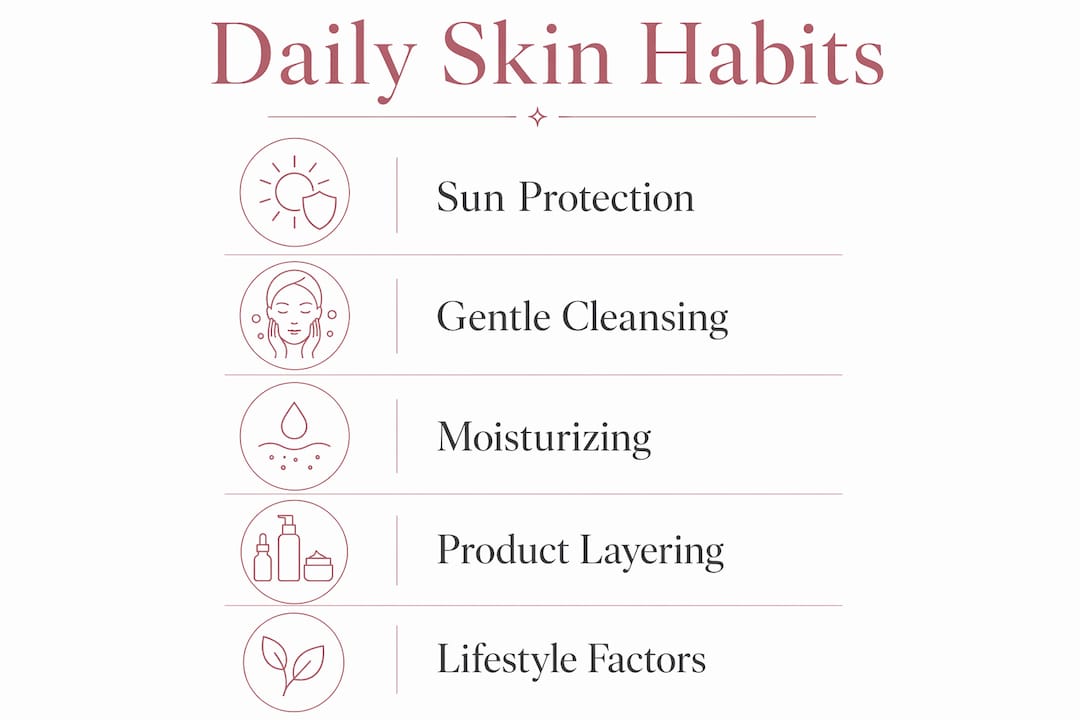
The best skincare routine is a simplified daily routine built around cleansing, moisturizing, and sun protection. Excessive product layering increases the risk of irritation and sensitization, particularly for people with reactive or compromised skin. Adding one new active ingredient at a time lets you identify what works and what causes problems.
The following table outlines the most clinically supported ingredients and their primary benefits:
Ingredient | Primary benefit | Best for |
Niacinamide | Barrier strengthening, redness reduction | Sensitive, oily, and aging skin |
Hyaluronic acid | Deep hydration, plumping | All skin types, especially dry |
Vitamin C | Antioxidant protection, brightening | Dull, uneven, or sun-damaged skin |
Peptides | Collagen support, firmness | Aging and mature skin |
Retinoids | Cell turnover, fine line reduction | Aging skin (introduce gradually) |
Retinoids deserve a specific note. They are among the most studied ingredients for skin longevity, but they require careful introduction. Starting with a low concentration two nights per week and building slowly prevents the dryness and peeling that cause many people to abandon them prematurely.
Vitamin C works best in the morning, where it reinforces SPF protection against UV-induced free radicals. Peptides support the skin’s own collagen production without the irritation risk of retinoids, making them a strong option for sensitive skin types.
Choose ingredients matched to your specific skin concerns, not trends
Introduce one new active at a time, waiting two to four weeks before adding another
Pair Vitamin C with SPF in the morning for compounded antioxidant protection
Use retinoids at night only, starting low and building frequency gradually
Pro Tip: Individualized, less complex routines tailored to your skin type reduce irritation risk and deliver better long-term results than elaborate multi-step regimens. If you are unsure where to start, a consultation with a qualified Dermal Clinician cuts through the noise fast.
A common misconception is that anti-aging and skin health maintenance are the same goal. They are not. Anti-aging focuses on cosmetic appearance. Skin longevity prioritizes barrier maintenance, recovery, and inflammation control. Smoother-looking skin is not automatically healthier skin. This distinction shapes which ingredients and treatments actually serve your skin long-term. For a deeper look at how natural actives fit into this picture, the guide to natural actives at Fundamentalskin covers the evidence clearly.
How do you monitor your skin’s health and adapt your routine?
Monitoring is the part of skin care most people skip, and it is where early problems become late ones. Self-examination, mole mapping, and professional skin checks allow you to identify changes early and adjust your care before small issues escalate. Early detection improves outcomes for skin cancer and permits timely skincare adaptations.
A practical monitoring approach includes:
Monthly self-checks. Examine your skin in good lighting for new moles, changes in existing spots, persistent redness, or unusual dryness. Use the ABCDE rule for moles: asymmetry, border irregularity, color variation, diameter over 6mm, and evolving shape.
Photo documentation. Take consistent photos of areas of concern every one to two months. Side-by-side comparison reveals gradual changes that are easy to miss in daily observation.
Annual professional skin checks. A dermatologist or qualified Dermal Clinician can assess changes you cannot see and recommend adjustments to your routine based on your skin’s current condition.
Seasonal routine adjustments. Skin behaves differently in winter versus summer. Cold, dry air weakens the barrier and calls for richer moisturizers. Higher UV in summer demands more diligent SPF reapplication.
Post-treatment care. After any clinical procedure, your skin’s needs change temporarily. Following your clinician’s guidance on post-treatment skin protection prevents setbacks and protects your results.
Skin type also evolves with age, hormonal shifts, and environmental changes. A routine that worked at 30 may not serve you as well at 45. Checking in with a professional every year or two keeps your approach current and effective.
Key Takeaways
Skin health maintenance is a lifelong practice built on barrier protection, evidence-based ingredients, lifestyle habits, and consistent monitoring rather than reactive treatment.
Point | Details |
Daily SPF is non-negotiable | Broad-spectrum SPF 30+ prevents UV-driven collagen breakdown and skin cancer risk. |
Lifestyle drives skin aging | Sleep, nutrition, stress, and exercise modulate the molecular pathways behind visible aging. |
Simplicity outperforms complexity | A three-step routine of cleansing, moisturizing, and SPF outperforms overloaded multi-step regimens. |
Layer products thinnest to thickest | Applying thick creams first blocks active serums from penetrating the skin effectively. |
Monitor and adapt regularly | Annual professional skin checks and seasonal routine adjustments keep your skin care current. |
What 15 years in skin health taught me about keeping it simple
The most common mistake I see is people building routines around trends rather than their skin’s actual needs. Someone comes in with a 12-step regimen, a sensitized barrier, and a cabinet full of actives that are fighting each other. The fix is almost always subtraction, not addition.
Skin longevity is not about doing more. It is about doing the right things consistently. SPF every day without exception. A barrier-supporting moisturizer. One or two well-chosen actives. That is genuinely enough for most people to see meaningful improvement over time.
What I find most rewarding in clinical practice is shifting the mindset from “fixing flaws” to investing in your skin’s biological future. Your skin is a living organ. It responds to how you sleep, what you eat, and how much stress you carry. Treating it as a system rather than a surface changes everything about how you approach care.
The emerging skin longevity framework validates what good clinicians have always known: barrier health, inflammation control, and protection come first. Cosmetic results follow naturally when the biology is supported. I have seen this play out in clients who committed to the fundamentals and achieved results that no product alone could have delivered. For anyone wanting to understand how aging skin care fits into this framework, the principles are consistent across every skin type and age group.
— chevonne
How Fundamentalskin treatments support your skin health goals
Your daily routine builds the foundation. Professional treatments accelerate and deepen what that foundation can achieve.

At Fundamentalskin, the Biomimetic Peel + LED Therapy is designed specifically to support skin repair and collagen rebuilding, the same biological processes your daily habits work to protect. Led by Chevonne, a Dermal Clinician with 15 years of experience, every treatment is personalized to your skin’s current condition and goals. Whether you are managing pigmentation, fine lines, redness, or dull texture, the approach integrates clinical expertise with Australia-sourced organic ingredients for results you can see. Treatments are non-invasive and require no downtime, making them a practical complement to your ongoing skin care routine.
FAQ
What is skin health maintenance in simple terms?
Skin health maintenance is the consistent daily practice of protecting, nourishing, and monitoring your skin to preserve its barrier function, resilience, and appearance over time. It prioritizes long-term skin health over short-term cosmetic fixes.
How often should I update my skincare routine?
Review your routine at least once a year or whenever your skin type, environment, or health status changes significantly. Seasonal shifts, hormonal changes, and aging all affect what your skin needs.
What are the most important ingredients for healthy skin?
Niacinamide, hyaluronic acid, Vitamin C, peptides, and retinoids are the most clinically supported ingredients for barrier health, hydration, and visible aging improvement. Choose based on your specific skin concerns rather than using all of them at once.
Does lifestyle really affect skin health that much?
Yes. The six pillars of lifestyle medicine, including sleep, nutrition, stress, and exercise, directly modulate the molecular pathways behind skin aging. Adults who consistently get 7–9 hours of quality sleep show measurably fewer signs of premature skin aging.
When should I see a professional about my skin?
See a qualified Dermal Clinician or dermatologist annually for a professional skin check, or sooner if you notice new or changing moles, persistent redness, unusual dryness, or any skin change that does not resolve within a few weeks.
Recommended
Comments