.png)
How Professionals Build Skincare Routines That Work


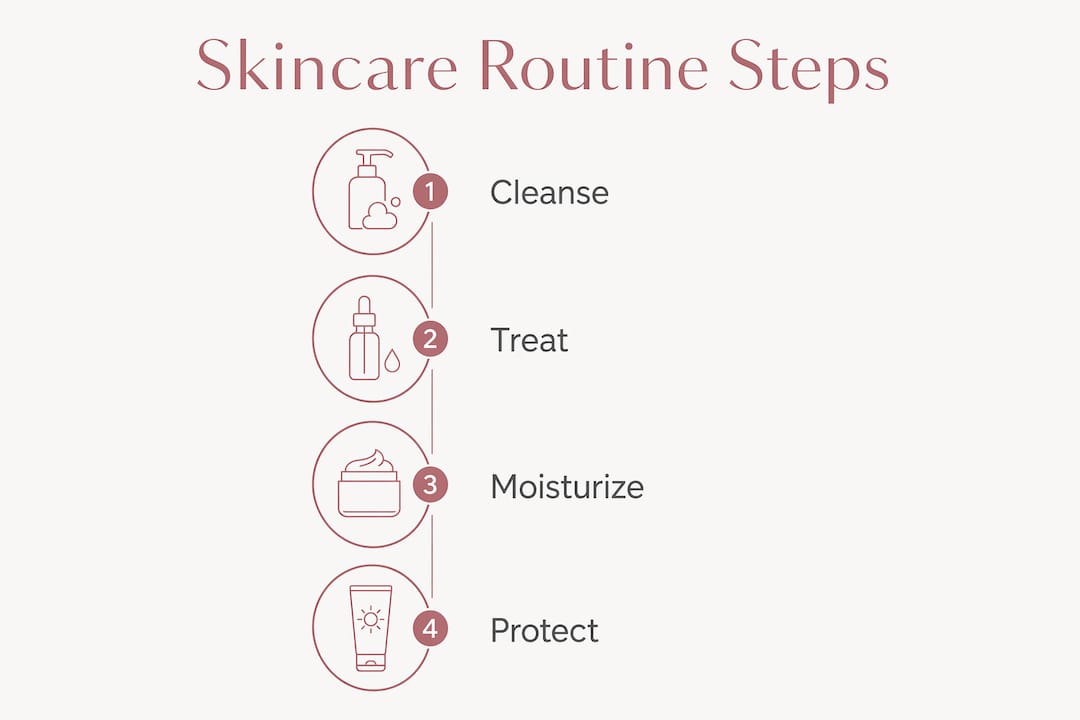
A professional skincare routine is defined by four core steps: cleanse, treat, moisturize, and protect. This structure is not arbitrary. Dermatologists and dermal clinicians consistently return to this framework because it addresses the skin barrier first and targets specific concerns second. Understanding how professionals build skincare routines means recognizing that four steps outperform complex 10-step regimens every time. Fundamentalskin applies this exact philosophy with every client, pairing clinical expertise with a focused, results-driven approach to skin health.
What are the four fundamental steps in professional skincare routines?
A professional skincare regimen is built on four non-negotiable steps. Each one has a specific job, and skipping any of them creates gaps that undermine the others.
Cleanse. Cleansing removes excess oil, pollution, and product residue without stripping the skin barrier. A gentle, pH-balanced cleanser is the right choice for most skin types. Harsh foaming cleansers disrupt the acid mantle and leave skin vulnerable to irritation.
Treat. This step targets your primary skin concern using active ingredients. Professionals use Vitamin C serums in the morning for antioxidant protection and brightening. In the evening, retinoids take over to support cell turnover and collagen production. The key is choosing one targeted active per session, not stacking multiple potent ingredients at once.
Moisturize. Moisturizer seals in the treatment layer and repairs the skin barrier. It is not optional, even for oily skin types. A well-chosen moisturizer reduces transepidermal water loss and keeps the barrier intact so actives can do their job without causing irritation.
Protect. Daily broad-spectrum sunscreen with SPF 30 or higher is the single most effective anti-aging and pigmentation prevention tool available. No serum or treatment works well if UV damage is undoing it every day.
Pro Tip: Apply your sunscreen as the absolute last step in your morning routine, after moisturizer has fully absorbed. Mixing it into moisturizer dilutes the SPF and reduces protection.
How do professionals focus on one skin concern at a time?

Focusing on one primary skin concern per routine yields better results and prevents barrier damage. This is one of the most consistent pieces of professional skincare advice, and it is also one of the most ignored.
The logic is straightforward. When you layer multiple actives targeting different concerns simultaneously, you increase the risk of irritation, redness, and barrier compromise. Your skin cannot repair itself and respond to treatments at the same time. Professionals prioritize one goal and build the entire routine around it.
Common primary concerns and their corresponding actives include:
Pigmentation: Vitamin C (AM), niacinamide, and azelaic acid
Anti-aging: Retinoids (PM), peptides, and growth factors
Barrier repair: Ceramides, panthenol, and gentle fatty acid moisturizers
Redness and sensitivity: Centella asiatica, oat extract, and minimal product use
Once the primary concern shows measurable improvement, professionals introduce a secondary concern gradually. This phased approach prevents the skin from becoming overwhelmed and gives each active enough time to show real results. Patience is not optional here. Most actives require 8–12 weeks of consistent use before visible changes appear.
Pro Tip: Write down your one primary skin concern before you buy a single product. Every product in your routine should either directly address that concern or support your barrier. If it does neither, leave it out.
Fundamentalskin’s approach at the clinic level mirrors this exactly. Chevonne assesses each client’s primary concern first and structures treatments around that single focus before layering in additional goals. You can read more about this in the organic skincare routine checklist for a practical framework to apply at home.
What is the difference between AM and PM skincare routines?
The most effective skincare routine structures product use around circadian skin biology. Your skin behaves differently during the day than it does at night, and your routine should reflect that.
Morning routine: protection and hydration
Gentle cleanse (or water rinse if skin is not oily)
Vitamin C serum for antioxidant defense and brightening
Lightweight moisturizer suited to your skin type
Broad-spectrum SPF 30 or higher, applied generously
Evening routine: repair and regeneration
Double cleanse if you wore sunscreen or makeup
Retinoid or targeted treatment serum (niacinamide, azelaic acid, peptides)
Richer moisturizer or barrier repair cream
The AM routine defends. The PM routine rebuilds. Mixing these functions causes problems. Retinoids, for example, degrade in UV light and increase photosensitivity. Using them at night protects their efficacy and reduces the risk of sun-related irritation. Vitamin C, on the other hand, neutralizes free radicals generated by UV exposure, making it most useful in the morning.
Clients who understand the purpose of each product in their routine show significantly better compliance and results. When you know why you are applying something, you apply it correctly and consistently.
Pro Tip: Keep your PM moisturizer slightly richer than your AM moisturizer. Skin loses more water overnight, and a heavier barrier cream supports the repair cycle that happens while you sleep.
What practical tips help you build a professional-grade routine?
Building a clinic-inspired routine at home requires discipline around what you leave out, not just what you put in. Over-layering products strips the skin barrier and causes the stinging, redness, and sensitivity that many people mistake for a product reaction.
Key practical guidelines:
Use less product than you think you need. A pea-sized amount of retinoid covers the entire face. More product does not mean faster results. It means more irritation.
Schedule recovery days. Professionals design recovery days without potent actives to prevent chronic low-level inflammation. On these days, use only a gentle cleanser, a barrier repair moisturizer, and SPF. Your skin needs rest.
Never mix harsh actives in the same session. Retinoids and AHAs together, or Vitamin C and niacinamide in high concentrations, can cause unnecessary irritation. Alternate them across days or AM/PM sessions instead.
Apply sunscreen generously and reapply. Most people apply only 25–50% of the recommended sunscreen amount. That means an SPF 30 may effectively function like SPF 7–15 in real life. Apply a full quarter teaspoon to the face and reapply every two hours outdoors.
Choose a gentle cleanser suited to your skin type. Gel cleansers work well for oily skin. Cream or milk cleansers suit dry and sensitive skin. Avoid anything that leaves your face feeling tight after washing.
The quality and purpose of each product matter far more than the number of products you use. A three-product routine built around bioactive ingredients outperforms a ten-product routine filled with redundant formulas.
How do you adjust your skincare routine as your skin changes?
Your skin is not static. Hormones, seasons, age, and stress all shift how it behaves, and your routine needs to shift with it. Knowing when and how to adjust is a skill that professionals develop over years of observation.
Signs your routine needs a change:
Persistent redness or stinging that was not present before
New breakouts in areas that were previously clear
Increased dryness or flakiness despite regular moisturizing
A new skin concern appearing alongside an existing one (for example, pigmentation developing alongside fine lines)
When adjusting, change one product at a time. Swapping multiple products simultaneously makes it impossible to identify what caused a reaction or improvement. Introduce new actives slowly, starting with two or three nights per week before building to daily use.
Barrier health is the priority during any transition. If your skin is reacting to a new active, repairing the skin barrier comes before resuming treatment. Strip the routine back to cleanser, moisturizer, and SPF until the barrier stabilizes, then reintroduce actives one at a time.
Patch testing is non-negotiable for new products. Apply a small amount to the inner arm or behind the ear for 48 hours before using it on your face. This simple step prevents full-face reactions that set your skin back weeks.
Key Takeaways
A professional skincare routine built on four focused steps, separated into AM and PM functions, consistently outperforms complex multi-product regimens for skin health and long-term results.
Point | Details |
Four core steps | Cleanse, treat, moisturize, and protect form the non-negotiable foundation of every effective routine. |
One concern at a time | Targeting a single primary concern prevents barrier damage and delivers faster, clearer results. |
AM protects, PM repairs | Morning routines defend against UV and pollution; evening routines rebuild and regenerate skin overnight. |
Sunscreen application matters | Applying only 25–50% of the recommended SPF amount reduces real-world protection to a fraction of the labeled SPF. |
Recovery days are productive | Scheduled days without actives prevent chronic inflammation and give the skin barrier time to repair. |
Why simplicity is the most underrated skincare strategy
After 15 years working with clients as a Dermal Clinician, the pattern I see most often is this: people come in with eight to twelve products and skin that is more reactive than when they started. They have read everything, bought everything, and their barrier is exhausted.
The hardest thing I do in a consultation is convince someone to use fewer products. There is a deeply held belief that more effort equals more results. In skincare, the opposite is usually true. The skin barrier is the most important element to protect, and every unnecessary product is a potential threat to it.
What actually works is boring. A gentle cleanser. One targeted active. A good moisturizer. Sunscreen. That is it for most people, most of the time. The magic is not in the product count. It is in the consistency and the patience to let each product do its job over weeks, not days.
I also see a lot of people skip learning what their ingredients actually do. They follow a routine without understanding why each step is there. When you understand that Vitamin C neutralizes free radicals and retinoids stimulate collagen, you stop swapping products every three weeks and start giving them the time they need. Knowledge builds confidence, and confidence builds consistency.
If you are feeling lost about where to start, the aging skin care best practices guide is a good place to ground yourself in the fundamentals before adding anything more complex.
— chevonne
Professional treatments that support your skincare routine
Your homecare routine sets the foundation, and professional treatments take your results further. At Fundamentalskin, the Biomimetic Peel + LED Therapy treatment is designed to work alongside your daily regimen, not replace it. It targets pigmentation, fine lines, and dull texture at a clinical level, with no downtime required.

Chevonne builds each treatment plan around your primary skin concern, using the same focused, four-step philosophy described throughout this article. A professional treatment regimen paired with a structured homecare plan enhances and maintains long-term skin results in ways that homecare alone cannot achieve. If you are ready to see what clinical expertise can do for your skin, book a consultation with Fundamentalskin today.
FAQ
What are the four steps professionals use in every skincare routine?
The four core steps are cleanse, treat, moisturize, and protect. Consistent use of this structure outperforms complex multi-step regimens for most skin types and concerns.
How long does it take to see results from a professional skincare routine?
Most active ingredients require 8–12 weeks of consistent use before visible improvements appear. Changing products before this window closes prevents accurate assessment of what is working.
Why do professionals separate morning and evening skincare routines?
Morning routines focus on protection and hydration, while evening routines focus on repair and regeneration. Separating these functions prevents ingredient conflicts and optimizes how each active performs.
How much sunscreen should you apply to your face?
A full quarter teaspoon applied to the face and neck is the recommended amount. Applying less than this reduces real-world SPF protection significantly below the labeled value.
When should you adjust your skincare routine?
Adjust your routine when you notice persistent redness, new breakouts, increased dryness, or a new skin concern emerging. Change one product at a time and prioritize barrier repair before reintroducing active treatments.
Recommended
Comments