.png)
Why Pigmentation Affects Skin Confidence: A Clear Guide


Pigmentation is defined as the uneven distribution of melanin in the skin, producing visible patches, spots, or discoloration that alter how you look and how you feel about yourself. The most common forms include melasma, post-inflammatory hyperpigmentation (PIH), and solar lentigines. Understanding why pigmentation affects skin confidence starts with recognizing that melasma alone affects up to one-third of women in sun-exposed populations worldwide. That scale means millions of women carry not just visible skin changes, but the emotional weight that comes with them. The connection between skin tone and self-image is well-documented, and it runs deeper than appearance alone.
What psychological effects does pigmentation cause?
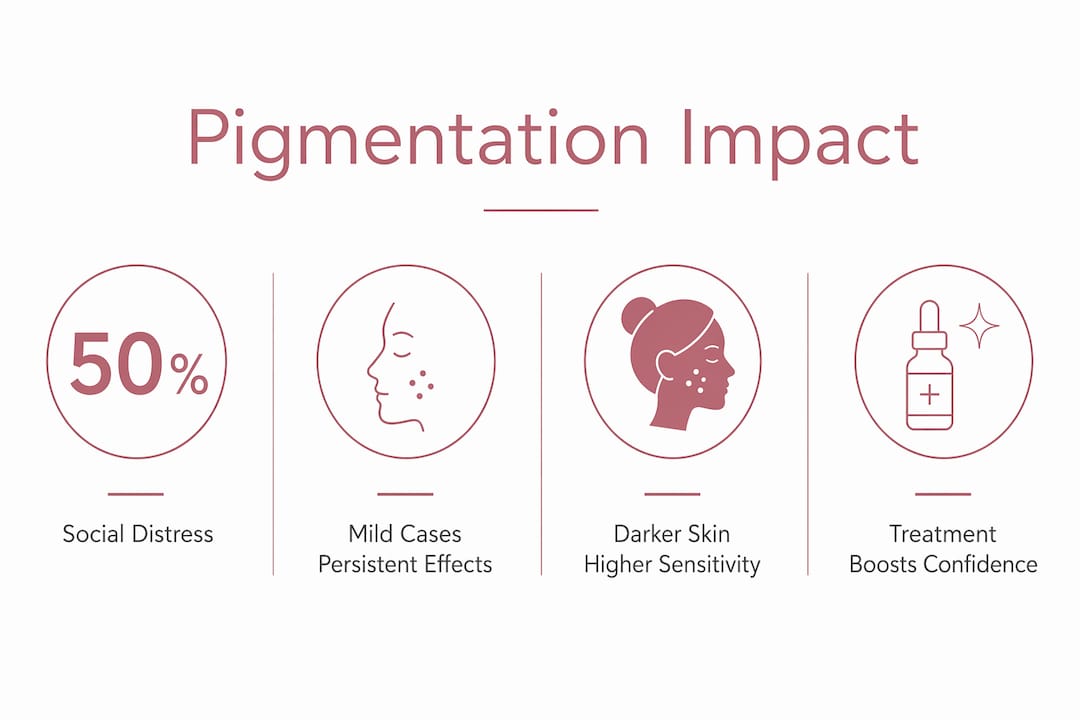
Pigmentation changes the way you see yourself, and that shift in self-perception creates real psychological consequences. Clinical research shows that 50% of melasma patients report high distress about social interactions, while 46.7% feel unattractive in recreational settings. Those numbers reflect something that goes far beyond a cosmetic concern.
The most commonly reported psychological effects include:
Anxiety and social withdrawal. Many people avoid social events, photographs, or public spaces because of visible pigmentation.
Depression and low self-esteem. Persistent skin changes contribute to a negative self-image that affects daily functioning.
Fear of negative judgment. Facial pigmentation increases social self-consciousness because the face is the first thing others see and the hardest area to conceal.
Reduced quality of life. Work performance, relationships, and personal goals all suffer when confidence is consistently undermined.
The face is the focal point of human connection. When pigmentation appears there, it sits in the center of every interaction you have, making it nearly impossible to ignore.
“Pigmentation in exposed facial areas is difficult to conceal, exacerbating self-consciousness and social anxiety. The psychosocial burden extends well beyond what clinical severity scores capture, affecting how patients engage with the world around them.”
What makes this particularly significant is that these psychological effects persist even when pigmentation is mild. The impact of pigmentation on confidence is not proportional to how severe the discoloration looks to a clinician. It is shaped by how visible it feels to you.
How does pigmentation disproportionately affect darker skin tones?
People with Fitzpatrick skin types III–VI carry a heavier burden from pigmentation than lighter skin tones, and the reasons are both biological and systemic. Melanin-rich skin produces more intense and longer-lasting pigmentation responses to inflammation, sun exposure, and hormonal shifts. Individuals with darker skin types experience a disproportionate psychosocial burden due to pigmentation visibility and the lack of representation in dermatology research and beauty standards.
The systemic gaps compound the personal experience in four key ways:
Limited research representation. Underrepresentation of darker skin tones in dermatologic studies means treatment protocols are often developed without this population in mind, leading to less effective or even harmful outcomes.
Colorism and beauty standards. Cultural beauty standards that value clear, even skin tone create additional pressure, particularly in communities where colorism is embedded in social hierarchies.
Longer persistence of pigmentation. Post-inflammatory hyperpigmentation can last months or years after the original skin condition resolves, requiring sustained care that is not always accessible.
Mismanaged treatments. Treatments designed for lighter skin can trigger further pigmentation in darker tones, worsening both the physical condition and the emotional toll.
Pro Tip: If you have a darker skin tone, always confirm that any pigmentation treatment has been validated for Fitzpatrick types III–VI before proceeding. Treatments that are too aggressive can worsen pigmentation rather than reduce it.
The confidence impact in these communities is not just about skin. It intersects with identity, cultural belonging, and the daily experience of being seen. Addressing pigmentation for skin of color requires care that acknowledges this full picture, not just the clinical presentation.

Does clinical severity predict how pigmentation affects self-esteem?
Clinical severity scores do not reliably predict how much distress a person experiences from pigmentation. Research shows a weak or absent correlation between clinical mMASI scores and quality-of-life measures in melasma patients. A person with mild pigmentation can experience profound confidence loss, while another with more visible changes may cope well.
Factor | Influence on perceived impact |
Age and life stage | Younger people often report greater distress from visible pigmentation |
Personality and coping style | Resilience and self-acceptance buffer the emotional impact |
Social and cultural context | Environments with high appearance pressure amplify distress |
Location of pigmentation | Facial pigmentation causes more distress than pigmentation on covered areas |
Duration of condition | Longer-lasting pigmentation correlates with greater psychological fatigue |
This disconnect matters clinically. Post-inflammatory pigmentation changes after psoriasis have a greater quality-of-life impact than the psoriasis itself in many patients. That finding challenges the assumption that treating the primary skin condition resolves the patient’s full experience of distress.
Subjective quality-of-life assessments, not just clinical scoring, must guide treatment planning. What you feel about your skin is as valid a data point as what a clinician observes. Patient-centered care means taking both seriously.
Effective ways to build skin confidence despite pigmentation
Building confidence alongside pigmentation management requires more than a single cream or treatment. The most effective approach combines clinical care, realistic expectations, and psychosocial support. Targeted treatment for post-inflammatory hyperpigmentation significantly improves quality of life and social confidence within 12 weeks, which shows that clinical improvement does translate to emotional gains when the right protocol is used.
Practical steps that support both skin health and confidence include:
Consistent sun protection. UV exposure is the primary driver of most pigmentation types. Daily broad-spectrum SPF 50 is non-negotiable for anyone managing pigmentation.
Targeted active ingredients. Ingredients like niacinamide, vitamin C, and azelaic acid address pigmentation at the cellular level. Learning how natural actives treat pigmentation helps you choose products that match your skin’s needs.
Adjusting your skincare routine. A routine built for pigmentation-prone skin reduces triggers and supports barrier health, which directly affects how well treatments work.
Professional treatments with realistic timelines. Peels, LED therapy, and biomimetic treatments produce measurable results, but pigmentation management is a long-term commitment, not a one-session fix.
Psychological support. Integrated dermatologic and mental health approaches produce better outcomes than clinical treatment alone. Counseling, peer support groups, and open conversations with your clinician all contribute to lasting confidence gains.
Education to reduce stigma. Patient-centered communication fosters adherence and reduces stigma, which improves both treatment compliance and emotional well-being.
Pro Tip: Track your skin with monthly photos in consistent lighting. Progress in pigmentation treatment is gradual, and photos give you objective evidence of improvement that your Daily Mirror check cannot.
Psychosocial recovery requires a combination of clinical treatment and supportive care. Clinical improvements alone do not fully resolve confidence challenges, which is why the emotional dimension of pigmentation care deserves equal attention. You deserve to feel good in your skin at every stage of treatment, not just at the finish line.
Key Takeaways
Pigmentation affects skin confidence through a combination of visible change, psychological distress, and cultural pressure, and effective care must address all three dimensions simultaneously.
Point | Details |
Pigmentation and self-esteem | Half of melasma patients report high social distress, regardless of clinical severity. |
Darker skin tones carry more burden | Fitzpatrick III–VI skin types face greater pigmentation persistence and less research support. |
Severity does not predict distress | Clinical scores weakly correlate with quality-of-life impact; subjective experience matters most. |
Treatment improves confidence | Targeted pigmentation treatment produces measurable quality-of-life gains within 12 weeks. |
Holistic care is required | Lasting confidence improvement needs both clinical treatment and psychological support. |
What 15 years of treating pigmentation has taught me
After 15 years working with clients who have pigmentation concerns, the pattern I see most consistently is this: the skin improves faster than the confidence does. A client can finish a course of treatment with genuinely clearer skin and still struggle to look in the mirror without focusing on what remains. That gap between clinical outcome and emotional recovery is real, and the dermatology field has been slow to address it directly.
What I find most frustrating is the assumption that treating pigmentation is purely a cosmetic exercise. For the women I work with, it is deeply personal. It affects how they show up at work, how they feel on a first date, whether they let someone photograph them. Reducing that to a skin score misses the point entirely.
I also think the industry has underserved women with darker skin tones for too long. The research base is thinner, the treatment options are narrower, and the beauty standards that drive distress are often built around skin that looks nothing like theirs. Culturally sensitive care is not a bonus feature. It is a clinical necessity.
My honest advice: do not wait until your pigmentation is “bad enough” to seek help. The emotional cost of living with skin you feel self-conscious about accumulates quietly. Getting support early, whether clinical, psychological, or both, produces better outcomes than waiting for a threshold that may never feel clear.
The skin you are in right now deserves care and attention. Start there.
— chevonne
Personalized pigmentation care at Fundamentalskin
Fundamentalskin specializes in pigmentation treatment for women who want real, lasting results without downtime. Led by Chevonne, a Dermal Clinician with 15 years of clinical experience, the practice combines advanced technology with Australia-sourced, organic ingredients to create treatment plans that fit your skin specifically.

The Larimedical Biomimetic Peel targets uneven skin tone and hyperpigmentation at a cellular level, with visible improvements in skin clarity and texture. For clients seeking a combined approach, the Biomimetic Peel with LED Therapy adds light-based treatment to accelerate pigmentation correction and support skin renewal. The Synergie Peel offers a gentler option for sensitive or reactive skin. Every treatment at Fundamentalskin is backed by before-and-after results and delivered with the kind of patient-centered care that addresses both your skin and your confidence.
FAQ
What is the main reason pigmentation affects confidence?
Pigmentation alters visible appearance in areas like the face that are central to social interaction, triggering anxiety, self-consciousness, and reduced self-esteem. Research shows that 50% of melasma patients report high distress specifically around social settings.
Does pigmentation cause mental health problems?
Pigmentation is associated with anxiety, depression, and social withdrawal, particularly when it appears on the face. Many patients experience more psychological distress from pigment changes after inflammatory conditions than from the original skin disease itself.
Why does pigmentation affect darker skin tones more severely?
Darker skin types produce stronger and longer-lasting pigmentation responses to inflammation and UV exposure, and they are underrepresented in dermatology research. This combination means treatment options are less tailored and the psychosocial burden is greater.
Can treating pigmentation improve self-esteem?
Yes. Targeted pigmentation treatment produces statistically significant improvements in quality of life and social confidence within 12 weeks. Clinical improvement and psychological support together produce the most lasting gains in self-esteem.
Does the severity of pigmentation determine how much it affects confidence?
No. Clinical severity scores show weak correlation with how much distress a person actually feels. Factors like age, cultural context, and the location of pigmentation on the face often matter more than the size or darkness of the affected area.
Recommended
Comments