.png)
How to Choose Sunscreen for Pigmented Skin

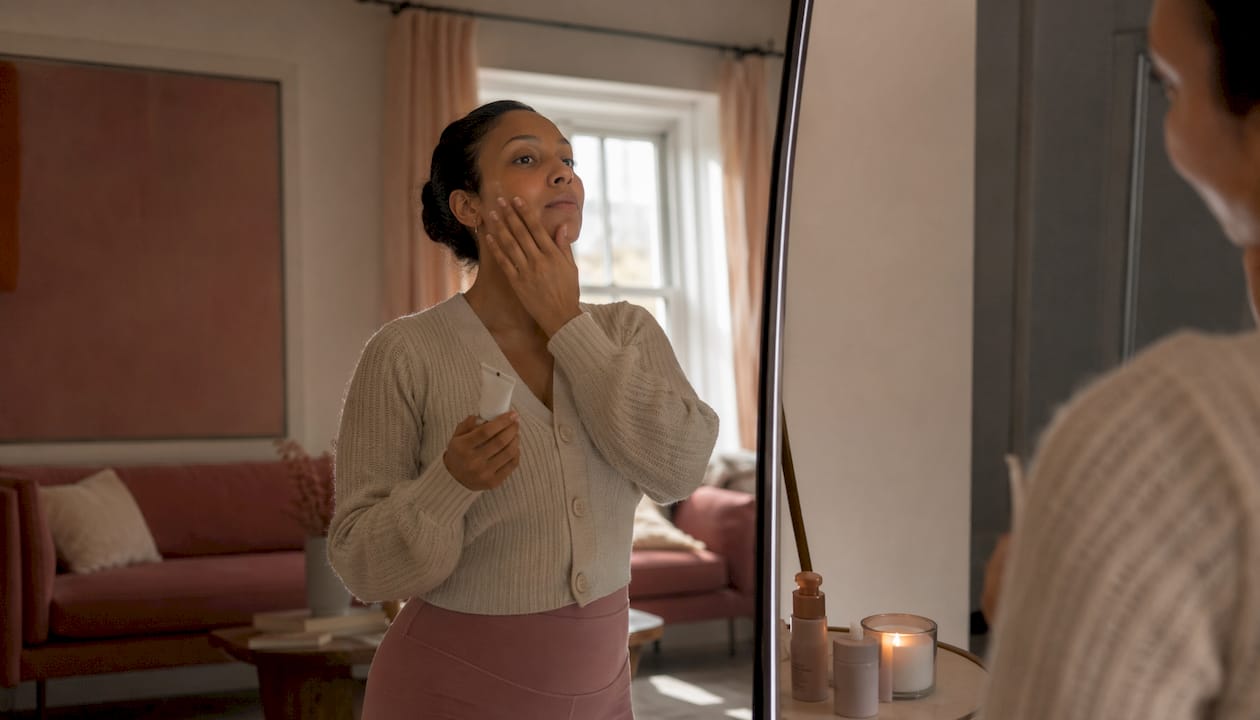
The most effective sunscreens for pigmented or dark skin share three non-negotiable features: broad-spectrum protection with SPF 30 or higher, tinted formulas containing iron oxides to block visible light, and a finish that does not leave a white or ashy cast. If a sunscreen checks only one or two of those boxes, it is not doing the full job your skin needs.
Here is what to look for when you choose sunscreen for pigmented skin:
SPF 30 minimum for daily use; higher SPF is preferred for hyperpigmentation-prone skin
Broad-spectrum rating covering UVB, UVA, and ideally UVA1 (340–400 nm)
Iron oxides in the formula to block high-energy visible (HEV) light, the main driver of melanin overproduction
Tinted formulation to prevent white or gray cast on deeper skin tones
Niacinamide or antioxidants to calm inflammation and reduce pigment formation
Fragrance-free, simple ingredient list to avoid irritation that can worsen discoloration
Cosmetically elegant texture you will actually wear every single day
Why pigmented skin needs more than a standard SPF
Melanin gives darker skin a natural degree of UV protection, but it does not eliminate the risk of hyperpigmentation. In fact, it can make the problem worse. When skin with higher melanin content is exposed to UV radiation and visible light, it tends to produce excess pigment as a defense response, leading to dark spots, melasma, and post-inflammatory hyperpigmentation (PIH).
The part most standard sunscreens miss is visible light protection. Research confirms that high-energy visible light, particularly blue-violet light, triggers melanin overproduction specifically in Fitzpatrick skin types III through VI. That is the range covering medium, olive, brown, and deep skin tones. UVA1 penetrates even deeper than UVB, promoting photoaging and pigmentation in all skin types, but darker skin is especially vulnerable to its pigment-stimulating effects.
A sunscreen that only blocks UVB is essentially leaving the door open. UVA and visible light pass straight through and keep triggering the very discoloration you are trying to prevent. For anyone managing pigmentation-prone skin, this distinction between wavelengths is the difference between a sunscreen that helps and one that gives false confidence.
Daily protection matters even on cloudy days and indoors near windows, since UVA and visible light penetrate glass. Skipping sunscreen because you are not in direct sun is one of the most common mistakes people with hyperpigmentation make.
Chemical vs. mineral sunscreens: which works better for pigmented skin?
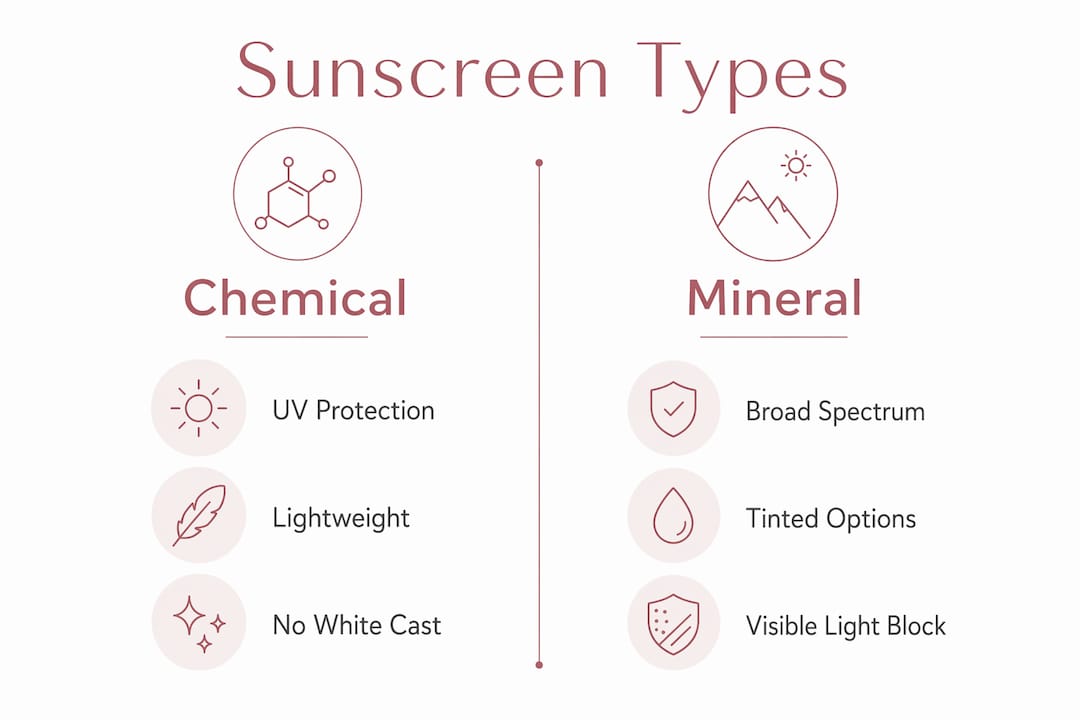
Neither type wins outright. The right choice depends on your skin tone, sensitivity, and how you use the product.
How each type works:
Chemical sunscreens absorb UV radiation and convert it to heat. They tend to be lightweight, blend invisibly, and leave no white cast, making them cosmetically appealing for darker skin tones.
Mineral sunscreens (zinc oxide, titanium dioxide) sit on the skin’s surface and physically scatter UV rays. They offer excellent broad-spectrum coverage but often leave a visible white or gray cast on medium to deep skin tones.
The white cast problem with mineral formulas comes down to particle size. Nanoparticle mineral sunscreens may not scatter visible light effectively because their particles are too small, yet they still appear white on skin. Larger-particle zinc or titanium formulas scatter more light but look even more opaque. Neither version is ideal on deeper skin without a tint.
The solution that bridges both worlds is a tinted mineral or hybrid formula with iron oxides. Iron oxides neutralize the white cast visually while adding a layer of visible light protection that neither pure chemical nor untinted mineral formulas provide, available through mobile skincare & facials at home. Products like La Roche-Posay Anthelios Mineral Tinted SPF 50 and CeraVe Hydrating Mineral Sunscreen SPF 30 Face Sheer Tint use this approach effectively.
Pros and cons at a glance:
Chemical sunscreens: No cast, lightweight, great for daily wear. Potential for irritation with oxybenzone or avobenzone in sensitive skin.
Mineral sunscreens (untinted): Gentle, stable, but leave a white cast on darker skin and do not block visible light adequately.
Tinted mineral or hybrid formulas: Best overall protection for pigmented skin. Iron oxides block HEV light and eliminate cast. Shade matching matters.
Fragrance-free formulas: Preferred for all types, since fragrance and preservatives are common irritants that can worsen pigmentation.
Pro Tip: If you have sensitive skin and prefer mineral filters, choose a tinted formula with iron oxides in a shade close to your skin tone. The tint does double duty: it blocks visible light and removes the ashy finish that makes mineral sunscreens so hard to wear consistently.
How to apply sunscreen to protect against hyperpigmentation
Getting the formula right is only half the equation. How you apply it determines whether you actually get the protection on the label.
Use enough product. The clinical standard is 2 mg/cm², which translates to roughly one teaspoon for the face alone. Most people apply less than half that amount, which cuts the effective SPF dramatically.
Apply 15–20 minutes before sun exposure when using chemical sunscreens, so the filters have time to absorb and activate.
Cover all exposed areas evenly, including the hairline, ears, and neck, which are common sites for sun-induced pigmentation that people routinely miss.
Reapply every two hours during outdoor activity, and immediately after swimming or heavy sweating. Reapplication is more protective than chasing a higher SPF number.
Layer strategically if needed. If you cannot find a tinted sunscreen in your exact shade, apply a broad-spectrum SPF 50 underneath and a tinted iron oxide-containing primer or BB cream on top. This combination covers both UV and visible light.
Avoid rubbing aggressively. Pat or press sunscreen into skin rather than rubbing, especially over areas with active pigmentation, to reduce friction-related irritation.
Choose textures you enjoy wearing. A lightweight gel like Supergoop! Unseen Sunscreen SPF 40 or a glow-finish formula like Naturium Dew-Glow Moisturizer SPF 50 makes daily application feel like skincare, not a chore.
Pro Tip: Reapplication over makeup is easier than most people think. Powder sunscreens like the Colorescience Sunforgettable SPF 50 Powder Brush or It Cosmetics Your Skin But Better CC+ Airbrush Perfecting Powder SPF 50 let you top up protection without disturbing your base. Keep one in your bag for midday touch-ups.
Dermatologist-recommended sunscreens for pigmented skin
Tinted sunscreens with iron oxides are the dermatologist-preferred choice for hyperpigmentation protection, particularly for Fitzpatrick skin types III through VI. The products below cover the full spectrum of needs, from daily lightweight wear to post-treatment protection.
Product | SPF | Iron Oxides / Tinted | Filter Type | Best For | Skin Type |
30 | Yes, tinted | Chemical | Dark skin, no cast | All, especially deep | |
EltaMD UV Clear Broad-Spectrum SPF 40 | 40 | Optional tint | Chemical | Sensitive, acne-prone | Oily, sensitive |
Supergoop! Unseen Sunscreen SPF 40 | 40 | No | Chemical | Daily wear, under makeup | All |
50 | Yes, iron oxides | Mineral | Sensitive, pigmentation-prone | Sensitive | |
CeraVe Hydrating Mineral Sunscreen SPF 30 Face Sheer Tint | 30 | Yes, sheer tint | Mineral | Dry, sensitive pigmented skin | Dry, sensitive |
Aveeno Positively Radiant SPF 30 | 30 | No | Chemical | Daily hydration, tone correction | Normal, combination |
30 | No | Chemical | Casual daily wear, no cast | All | |
— | Yes, tinted | Mineral | Dark skin, mineral protection | All | |
50 | Yes, iron oxides | Mineral | On-the-go reapplication | All | |
Colorescience Sunforgettable Total Protection Face Shield Flex SPF 50 | 50 | Yes | Mineral | Active lifestyles, touch-ups | All |
50 | No | Mineral | Sensitive, minimal ingredient skin | Sensitive | |
50 | Yes, tinted BB | Mineral/Chemical | Coverage + protection | All | |
EltaMD Restore Broad Spectrum SPF 40 Tinted | 40 | Yes, tinted | Chemical | Aging, pigmented skin | Dry, mature |
EltaMD Restore Broad Spectrum SPF 40 Untinted | 40 | No | Chemical | Layering under tinted products | All |
EltaMD UV Physical Broad Spectrum SPF 41 | 41 | Yes, tinted | Mineral | Post-procedure, sensitive | Sensitive |
EltaMD UV Elements Broad Spectrum SPF 44 Tinted | 44 | Yes, tinted | Mineral | Outdoor activity, water resistance | All |
Colorescience Sunforgettable SPF 50 Powder Brush | 50 | Yes | Mineral | Reapplication over makeup | All |
50 | Yes, tinted | Mineral | Coverage + SPF in one step | All | |
50 | Yes, tinted | Chemical | Full coverage, pigmented skin | All | |
50 | Yes, deep tint | Mineral | Deep skin tones, full coverage | All | |
Supergoop! Glowscreen SPF 40 | 40 | No | Chemical | Luminous finish, daily wear | All |
La Roche-Posay Anthelios Anti-Shine SPF 50 | 50 | No | Chemical/Mineral | Oily, shine-prone skin | Oily |
— | No | Chemical | Lightweight daily protection | All | |
EltaMD UV Sheer Broad Spectrum SPF 40 | 40 | No | Chemical | Sheer, lightweight daily wear | All |
50 | No | Chemical | Hydration + glow finish | Dry, normal | |
30 | No | Chemical | Invisible finish, all tones | All | |
— | No | Chemical | Body protection, active use | All | |
La Roche-Posay Anthelios Melt-In Milk Sunscreen SPF — | — | No | Chemical | Maximum UV protection, body | All |
30 | Yes, tinted | Mineral | Dark skin, mineral preference | All | |
40 | No | Chemical | Skincare-sunscreen hybrid | Normal, dry | |
50 | No | Chemical | Luxury finish, anti-aging | All |
A few products deserve extra attention. Black Girl Sunscreen was formulated specifically for deeper skin tones, with a tinted formula that blends invisibly and includes moisturizing ingredients like avocado and jojoba. EltaMD UV Clear Broad-Spectrum sunscreen earns consistent dermatologist recommendations for acne-prone and pigmented skin because it pairs niacinamide with a lightweight, non-comedogenic base. For those who prefer a mineral option without the cast, La Roche-Posay Anthelios Mineral Tinted uses iron oxides to deliver visible light protection while matching a range of skin tones.
If you need full coverage in one step, MD SolarSciences Mineral BB Cream SPF 50 Deep is formulated for deep skin tones specifically, which is rarer than it should be in the SPF 50 mineral category. Buttah Skin Invisible Tinted Mineral Facial Sunscreen takes a similar approach, designed with melanin-rich skin in mind from the ground up.
Combining sunscreen with pigmentation treatments for better results
Sunscreen is not just a preventive step. When you are actively treating hyperpigmentation with peels, laser therapy, or topical actives, the right sunscreen becomes a clinical tool. Without it, treatments that remove or suppress pigment can trigger a rebound effect, where the skin produces even more melanin in response to unprotected UV and visible light exposure.
After treatments like chemical peels or light therapy, the skin barrier is temporarily compromised and more reactive to UV and visible light. This is when post-treatment sun protection becomes most critical. A tinted SPF 50 with iron oxides applied consistently in the weeks following a peel can be the deciding factor between a result that holds and one that fades back into discoloration.
Layering also matters during active treatment. If your prescribed topical includes retinoids, vitamin C, or azelaic acid, pair them with a fragrance-free, mineral-leaning tinted sunscreen to avoid compounding irritation. Products like EltaMD UV Physical Broad Spectrum SPF 41 and EltaMD UV Elements Broad Spectrum SPF 44 Tinted are frequently used in clinical settings post-procedure because they are gentle enough for compromised skin while still delivering meaningful visible light coverage.
For guidance on active ingredients that work alongside sunscreen to reduce pigmentation, pairing niacinamide-rich formulas with consistent SPF use produces measurably better outcomes than either approach alone. You can also explore successful pigmentation treatment outcomes to understand what a well-structured protocol looks like in practice.
Pro Tip: During any active pigmentation treatment, switch to a tinted SPF 50 with iron oxides as your daily sunscreen, not just your outdoor sunscreen. Visible light from indoor screens and windows is enough to stimulate melanin in reactive skin, and an untinted formula will not block it.
Fundamentalskin offers clinical pigmentation care beyond the bottle
Choosing the right sunscreen is a strong first step. But if you are dealing with persistent melasma, post-inflammatory hyperpigmentation, or uneven skin tone that has not responded to topical products alone, a professional treatment can shift the trajectory.

Fundamentalskin, led by Dermal Clinician Chevonne with 15 years of clinical experience, specializes in non-invasive pigmentation treatments for women who want real, lasting results. The Larimedical Biomimetic Peel works at a cellular level to address discoloration without downtime, using organic, carefully sourced ingredients that support rather than stress the skin barrier. Unlike a standard facial, it is a targeted clinical protocol designed around your specific pigmentation pattern and skin tone. If you are ready to move beyond managing pigmentation with SPF alone, this is a natural next step.
Key Takeaways
Tinted sunscreens with iron oxides and SPF 30 or higher are the most effective daily choice for preventing and managing hyperpigmentation in pigmented skin.
Point | Details |
SPF 30 is the daily minimum | SPF 50 is preferred for hyperpigmentation-prone or post-treatment skin. |
Iron oxides block visible light | Tinted formulas with iron oxides protect against HEV light, the primary driver of melanin overproduction. |
Apply one teaspoon to the face | Applying the clinical standard of 2 mg/cm² and reapplying every two hours delivers the labeled SPF. |
Tinted sunscreens suit all filter types | Both mineral and chemical formulas work well when they include iron oxides and match your skin tone. |
Fundamentalskin offers clinical support | For persistent hyperpigmentation, the Larimedical Biomimetic Peel provides targeted, non-invasive treatment beyond daily SPF. |
Recommended
Comments