.png)
Dull Aging Skin Causes: What's Really Happening
- chevonne stewart
- 6 days ago
- 9 min read

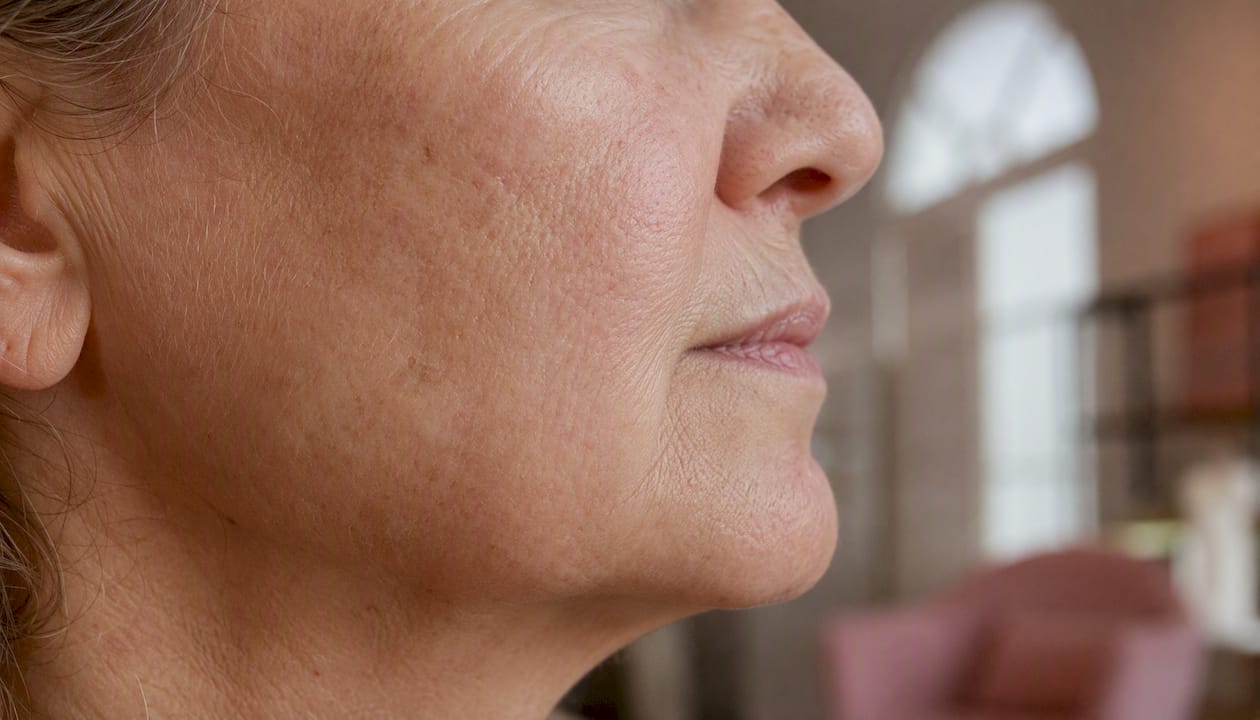
Dull aging skin results from three converging biological processes: slowed epidermal cell turnover, progressive collagen and elastin loss, and cumulative UV-driven photoaging. The most effective first steps are daily broad-spectrum sunscreen (SPF 30 or higher), a retinoid or gentle exfoliant, and a hydrating moisturizer with antioxidant support.
Start today:
Apply broad-spectrum SPF 30+ sunscreen every morning, rain or shine
Introduce a retinoid or gentle chemical exfoliant (glycolic or lactic acid) two to three nights per week
Use a hydrating moisturizer containing hyaluronic acid, niacinamide, or vitamin C
Table of Contents
What dull aging skin causes looks like biologically
Dullness is not just a cosmetic complaint. It reflects measurable changes happening beneath the surface. As skin ages, the epidermis thins, cell turnover slows from roughly every 28 days in young skin to a substantially longer cycle in aged skin, and the dermal matrix becomes disorganized. The result is a surface that scatters light unevenly, producing that flat, sallow, or uneven-toned appearance you notice in the mirror.
Research published in The EMBO Journal describes skin aging as an “ecosystemic collapse” combining intrinsic biological decline with cumulative environmental exposure. That framing matters because it explains why a single cream rarely fixes the problem.
The seven hallmarks of skin aging provide the scientific framework clinicians use to map these changes: genomic instability, telomere attrition, epigenetic alterations, loss of proteostasis, deregulated nutrient sensing, mitochondrial dysfunction, cellular senescence, stem cell exhaustion, and altered intercellular communication. Each hallmark contributes to the visible signs you see.
Pro Tip: If your skin looks dull even after cleansing, that is a strong signal of slowed turnover rather than surface dirt. A gentle chemical exfoliant addresses the root cause; scrubbing harder does not.
1. Intrinsic (chronological) aging slows everything down
Intrinsic aging is genetically programmed and begins in your twenties. Collagen production declines, elastin fibers lose their spring, and sebaceous glands produce less oil. Skin becomes thinner, drier, and less able to retain moisture. Stem cell exhaustion means the skin’s repair capacity diminishes year by year. Hormonal shifts, particularly the estrogen decline during perimenopause and menopause, accelerate this process, reducing skin thickness and hydration significantly.
2. UV exposure is the single biggest modifiable driver
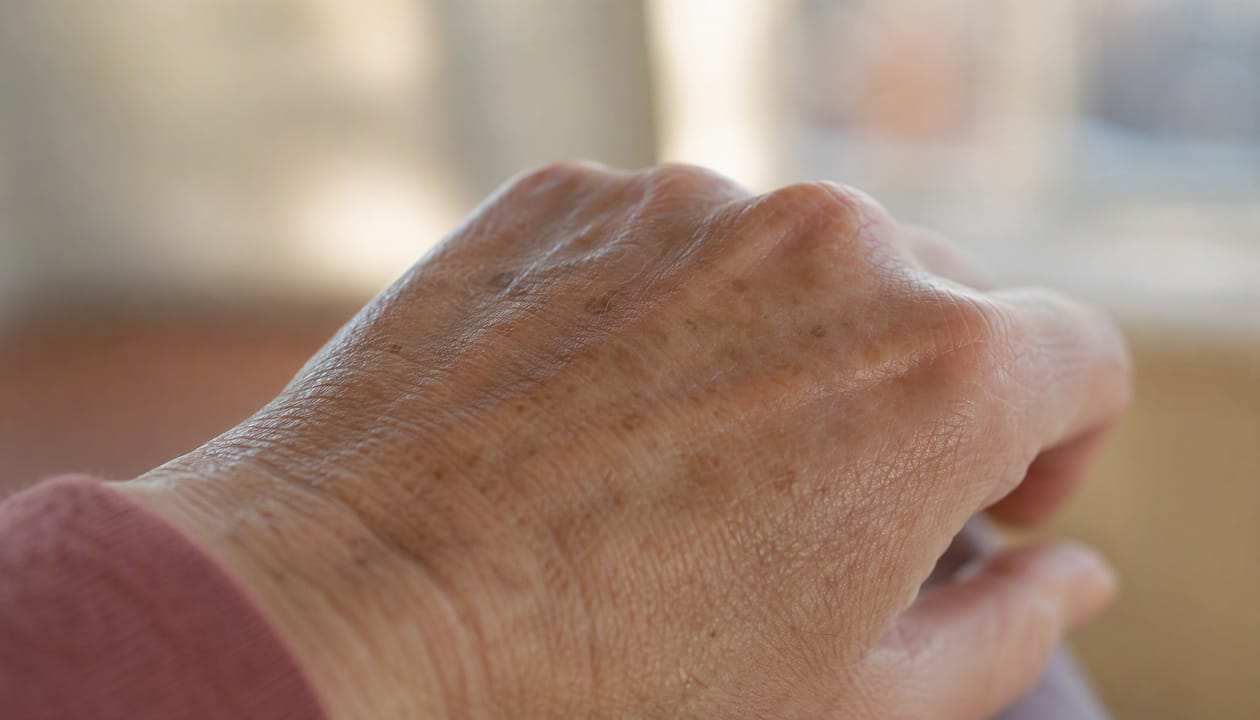
According to MedlinePlus, sun exposure is the greatest single factor in visible skin aging. Comparing sun-exposed skin to protected skin on the same person tells the whole story: pronounced elastosis, uneven pigmentation, and coarser texture appear where UV has accumulated. Yale Medicine notes that photoaging can begin as early as the teens and twenties, accumulating invisibly long before the first visible sign appears. The Merck Manuals confirm photoaging as the cornerstone concern in clinical skin aging, driving collagen breakdown, leathery texture, and pigment irregularity.
3. Environmental pollution accelerates oxidative damage
Airborne particulate matter, nitrogen dioxide, and polycyclic aromatic hydrocarbons penetrate the skin barrier and generate free radicals. Those free radicals degrade collagen, trigger inflammatory pathways, and disrupt the skin microbiome. The result is accelerated dullness, uneven tone, and weakened barrier function. Urban skin ages differently from rural skin for exactly this reason.
4. Smoking starves skin of oxygen and nutrients
Smoking constricts blood vessels, reducing oxygen and nutrient delivery to skin cells. It also activates matrix metalloproteinases (MMPs), enzymes that break down collagen and elastin. Smokers typically show deeper lines, a grayish or sallow tone, and significantly reduced skin elasticity compared to non-smokers of the same age.
5. Poor diet and high sugar intake damage collagen through glycation
When excess sugar circulates in the bloodstream, it binds to collagen and elastin fibers in a process called glycation, forming advanced glycation end-products (AGEs). AGEs make collagen stiff and brittle, reducing skin’s ability to reflect light evenly. A diet low in antioxidant-rich foods also leaves skin more vulnerable to oxidative stress from UV and pollution.
6. Chronic sleep deprivation and stress impair skin repair
Skin repair peaks during deep sleep, when growth hormone is released and cortisol levels drop. Chronic sleep deprivation elevates cortisol, which breaks down collagen and impairs the skin barrier. Persistent stress produces similar effects, contributing to a dull, tired appearance that no amount of topical product fully corrects without addressing the root cause.
7. Dehydration and barrier impairment flatten skin’s glow
Skin hydration factors go beyond drinking water. The skin’s natural moisturizing factor (NMF) and lipid barrier determine how well the epidermis retains moisture. When the barrier is compromised, transepidermal water loss increases, leaving the surface dry, rough, and light-scattering. Humectants like hyaluronic acid draw moisture into the skin; emollients like squalane smooth the surface; occlusives like petrolatum seal moisture in. Aging skin typically needs all three, not just one.
8. Hormonal changes, especially menopause, reduce skin brightness
Estrogen plays a direct role in collagen synthesis, skin thickness, and sebum production. After menopause, estrogen levels drop sharply, accelerating collagen loss and reducing the skin’s ability to hold moisture. This hormonal shift is a major reason why skin brightness and firmness often decline noticeably in the late forties and fifties, independent of sun exposure.
9. Medications and systemic health conditions contribute
Certain medications, including diuretics, antihistamines, and some blood pressure drugs, reduce skin hydration or increase photosensitivity. Systemic conditions such as hypothyroidism, anemia, and diabetes affect skin cell turnover and circulation, contributing to a dull, uneven complexion. If your skin changed noticeably after starting a new medication, that connection is worth discussing with your doctor.
10. Practical steps you can start at home today
A prioritized approach works better than adding every product at once.
Daily broad-spectrum SPF 30+ sunscreen. The Cleveland Clinic identifies this as the single most effective non-negotiable step, even on cloudy days.
Topical antioxidants. Vitamin C (L-ascorbic acid), niacinamide, and vitamin E neutralize free radicals and support collagen. Apply vitamin C in the morning under sunscreen for best effect. For a deeper look at antioxidants for aging skin, the clinical evidence is compelling.
Oral adjuncts can complement topical care. Professional guidance cites nicotinamide and Polypodium leucotomos as evidence-based supplements that reduce inflammation and structural damage from UV exposure. For a full review of vitamins supporting aging skin, the evidence behind each is worth reading.
Timeline: Expect smoother surface texture within several weeks of consistent exfoliation and hydration. Pigment and collagen changes take a few months of daily sunscreen and retinoid use.
Pro Tip: Never layer a strong chemical exfoliant and a retinoid on the same night. Alternate them to avoid barrier disruption and irritation, especially if you are also using a prescription retinoid or taking photosensitizing medications.
11. Why OTC products sometimes aren’t enough
Retail products are formulated to be safe for unsupervised use, which limits their active concentrations. For chronic photodamage, that ceiling matters. Merck Manuals notes that clinical therapies, including professional peels, photodynamic therapy (PDT), and prescription-strength retinoids, address structural damage at depths OTC products cannot reach.
Professional options and who benefits most:
LED light therapy: supports collagen synthesis with no downtime; good for maintenance and sensitivity. How LED therapy works explains the mechanism clearly.
At a consult, ask about expected downtime, realistic timelines for your skin type, contraindications with current medications, and how results will be documented.
Pro Tip: Before any professional peel or resurfacing, stop retinoids and exfoliating acids for at least five to seven days. Failing to do so increases the risk of over-exfoliation and prolonged recovery.
12. Realistic timelines and approximate U.S. cost ranges
Intervention | Timeline to visible change | Approximate U.S. cost range |
Daily SPF + retinoid (OTC) | 4–12 weeks (surface); 3–6 months (pigment/collagen) | $20–$80/month |
Professional chemical peel (series) | 2–4 weeks post-series | $150–$600 per session |
Micro-needling (series of 3) | 6–12 weeks after final session | $200–$700 per session |
LED light therapy (series) | 4–8 weeks | $75–$200 per session |
Laser resurfacing | 4–8 weeks post-treatment | $1,000–$3,500+ per session |
Costs vary by clinic, geographic location, and treatment depth. Cosmetic procedures are not covered by health insurance. A single session rarely delivers the same result as a planned series.
Expect surface improvements first; deeper structural changes take longer
Pigment irregularity responds more slowly than texture
Maintenance sessions extend results after an initial series
13. Red flags that need professional evaluation
See a dermatologist or clinician promptly if you notice:
A new or rapidly changing mole, lesion, or dark spot
Persistent scaly or rough patches that do not resolve with moisturizer. Harvard Health notes that actinic keratoses carry a risk of progressing to squamous cell carcinoma if left untreated
Any lesion that bleeds, crusts, or fails to heal within three weeks
Sudden, severe texture changes across a large area of skin
Skin changes that began shortly after starting a new medication
When you book:
Bring photos documenting the change over time if possible
List all current medications, supplements, and your existing skincare routine
Request a full skin check, not just an assessment of the area of concern
A teleconsult is appropriate for general guidance; in-person evaluation is necessary for any lesion that needs physical examination.
14. What your diet is actually doing to your skin’s glow
Antioxidant-rich foods, including berries, leafy greens, tomatoes, and green tea, supply polyphenols and carotenoids that neutralize free radicals at the cellular level. These compounds support the same pathways that topical antioxidants target, working from the inside out. The gut-skin microbiome connection is also relevant here: a diverse, fiber-rich diet supports a balanced gut microbiome, which in turn reduces systemic inflammation that accelerates skin aging.
Reducing refined carbohydrates and added sugar directly limits glycation, the process described in Section 5 that stiffens collagen and dulls skin tone. Omega-3 fatty acids from oily fish, walnuts, and flaxseed support the skin’s lipid barrier, improving moisture retention. Adequate protein provides the amino acids needed for collagen synthesis.
Diet alone will not reverse established photoaging, but it meaningfully slows the rate of new damage and supports the results of topical and clinical treatments.
Key Takeaways
Dull aging skin results from reduced cell turnover, collagen loss, and cumulative UV damage, and the most effective response combines daily sunscreen, a retinoid, and layered hydration.
Point | Details |
UV is the top modifiable cause | Daily broad-spectrum SPF 30+ prevents further photoaging and is the single highest-impact step. |
Cell turnover slows with age | Gentle chemical exfoliation or a retinoid accelerates surface renewal and improves glow within 4–8 weeks. |
Hydration requires layering | Humectants, emollients, and occlusives each serve a distinct function; aging skin benefits from all three. |
Diet and lifestyle matter | Reducing sugar, eating antioxidant-rich foods, and prioritizing sleep support skin repair from within. |
Fundamentalskin offers clinical options | When home care plateaus, professional peels and LED therapy address structural damage OTC products cannot reach. |
What I’ve seen after 15 years treating dull, aging skin
The most common misconception I encounter is that dullness is simply a hydration problem. Clients arrive having tried every moisturizer on the market, frustrated that nothing has changed. The reality is that chronic dullness in aging skin is almost always a structural issue, not a surface one. Slowed turnover, collagen disorganization, and years of UV accumulation cannot be moisturized away.
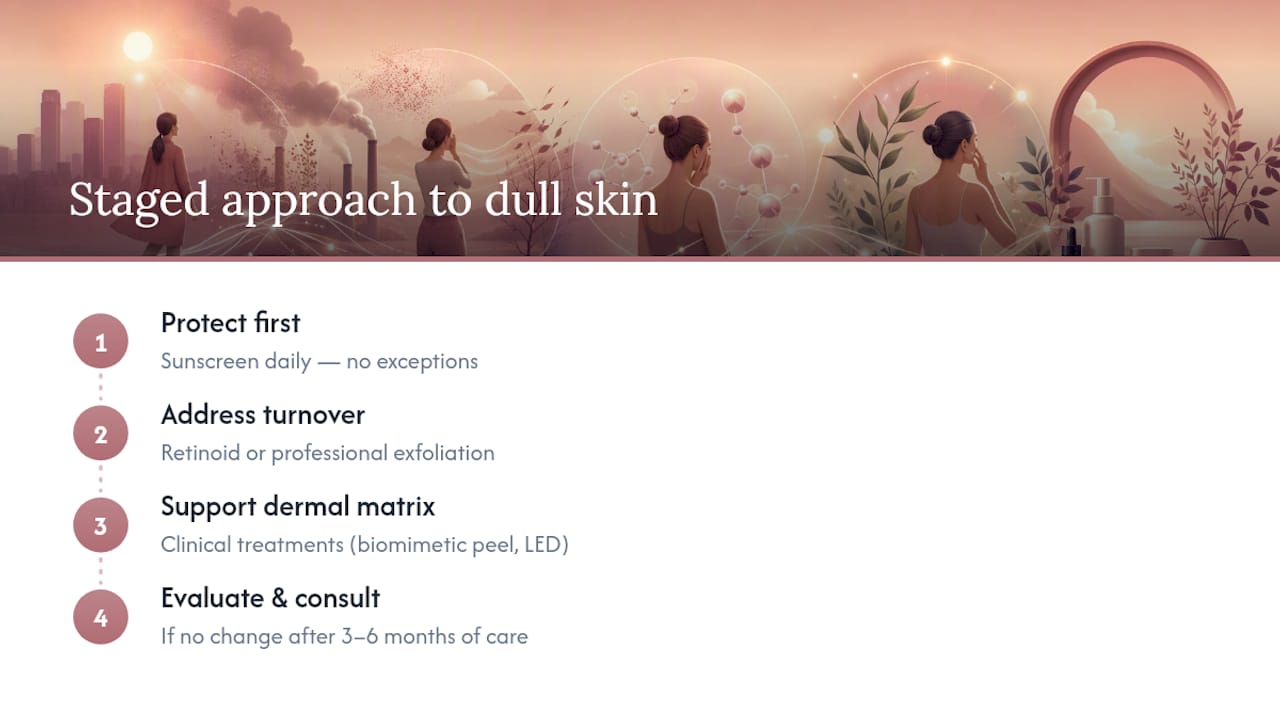
What actually shifts results is a staged approach: protect first (sunscreen, every day, no exceptions), then address turnover (retinoid or professional exfoliation), then support the dermal matrix (clinical treatments when the home routine has reached its ceiling). The clients who see the most meaningful change are the ones who commit to that sequence rather than chasing the next trending ingredient.
The other thing I’d say plainly: the gap between what an OTC product can do and what a well-chosen clinical treatment can do is significant. That is not a sales argument. It is a penetration-depth reality. A biomimetic peel or a targeted LED series works at a level a retail product simply cannot access. That does not mean everyone needs clinical treatment, but if you have been consistent with home care for three to six months and your skin still looks flat and tired, that is the signal to book a consult.
Personalized skin care at Fundamentalskin
If your skin still looks flat after months of consistent home care, a professional assessment changes what is possible. At Fundamentalskin, Chevonne brings 15 years of dermal clinician experience to every consultation, assessing your skin’s specific pattern of aging, whether that is photoaging, hormonal change, or barrier impairment, and building a plan around it.

Clients typically begin with a thorough skin assessment, followed by a tailored treatment plan that may include the Biomimetic Peel + LED Therapy package, a non-invasive combination treatment designed to resurface, brighten, and support collagen without downtime. Before-and-after images are used to document real progress at every stage. For clients with more advanced photoaging, the Larimedical peel range offers a deeper resurfacing option tailored to your skin’s tolerance.
Bring your current skincare routine and a list of any medications to your first appointment. Book your consultation at Fundamentalskin and see what a targeted clinical plan can do for your skin.
Useful sources and further reading
The following sources informed this article and are recommended for deeper reading:
For further reading on treatment options and daily care, visit the Fundamentalskin blog or explore the facial renewal treatment guide.
This article provides general educational information and is not a substitute for personalized medical or clinical advice. Consult a qualified clinician or dermatologist for an assessment suited to your individual skin and health history.
Recommended
Comments