.png)
Facial Renewal Treatment Options Compared: 2026 Guide


Facial renewal treatments are non-surgical procedures that target skin aging, pigmentation, texture, and volume loss without going under the knife. With nearly 9.9 million Botox procedures recorded in the U.S. in 2024 alone, the demand for facial rejuvenation treatments has never been higher. The challenge is not finding a treatment. It is knowing which one actually fits your skin, your schedule, and your goals. This guide puts the key facial renewal treatment options compared side by side so you can make a confident, informed decision.
1. What are the main facial renewal treatment options compared?
The four core non-surgical treatments are neuromodulators, dermal fillers, microneedling, and chemical peels. Each targets a different skin concern, works through a different mechanism, and delivers results on a different timeline. Knowing how they differ is the first step to choosing well.
Neuromodulators (Botox): Relax the muscles that cause dynamic wrinkles like forehead lines and crow’s feet. Results last 3–4 months. No downtime required.
Dermal fillers: Restore lost volume and smooth static wrinkles. Hyaluronic acid fillers last 6–18 months and recorded over 5.3 million procedures in 2024. That makes them the second most popular non-surgical facial treatment in the U.S.
Microneedling: Creates controlled micro-injuries in the skin to stimulate collagen production. Best for texture improvement, acne scars, and mild skin laxity. Downtime is typically 24–72 hours of redness.
Chemical peels: Remove the outer skin layer using acids to resurface, brighten, and correct pigmentation. Downtime ranges from none (superficial peels) to several days (medium or deep peels).
Pro Tip: If you are new to facial rejuvenation treatments, start with a superficial chemical peel or a basic microneedling session. These carry the lowest risk and give your skin a chance to respond before you commit to more intensive options.
2. How does radiofrequency microneedling compare to standard treatments?
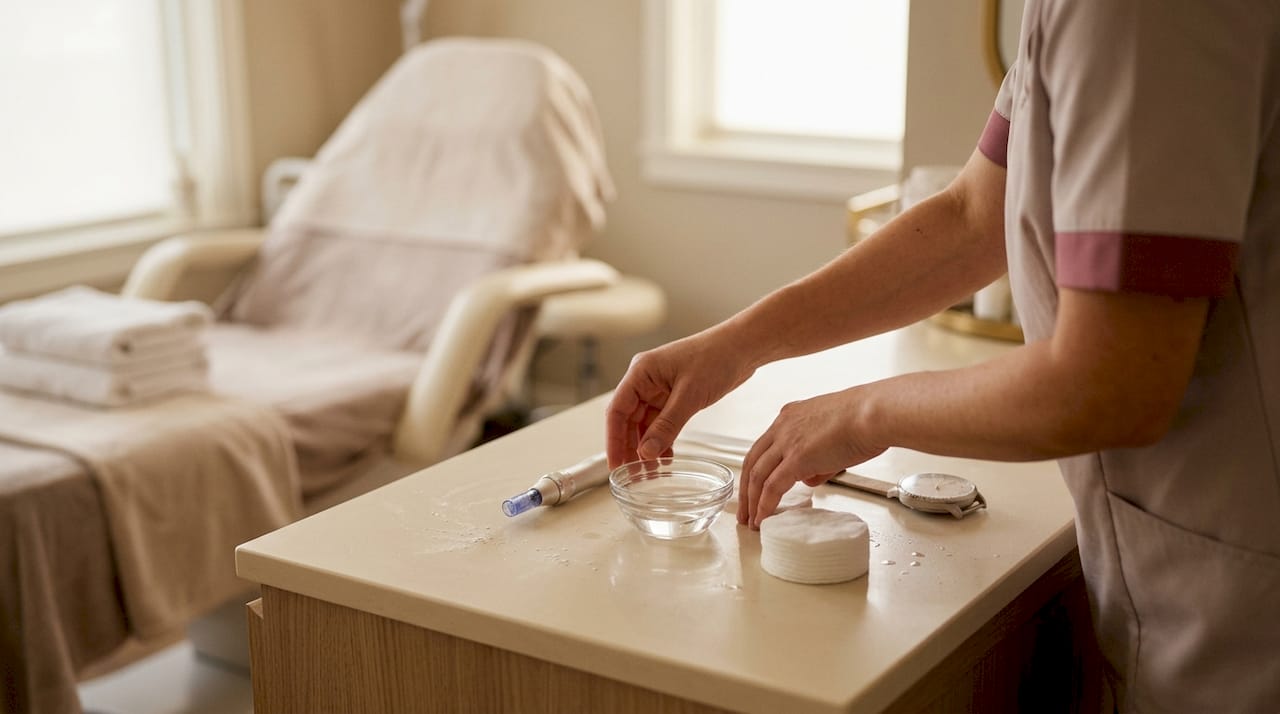
Radiofrequency microneedling, or RFMN, combines the collagen-stimulating effect of microneedling with radiofrequency energy delivered directly into the dermis. This dual action produces skin tightening and texture improvement that standard microneedling alone cannot match.
A systematic review of 22 studies covering 558 participants found patient satisfaction rates above 90% for RFMN. That figure is among the highest reported for any non-surgical facial rejuvenation procedure. High Global Aesthetic Improvement Scale scores across those studies confirm that the results are visible and meaningful, not just self-reported.
Side effects are mild and temporary. The most common are erythema (redness) and edema (swelling), both of which typically resolve within a few days. Downtime is minimal compared to laser resurfacing, making RFMN a strong option for people who cannot afford extended recovery.
RFMN fits best in the anti-aging and skin tightening category. It addresses skin laxity, enlarged pores, and uneven texture. You can learn more about how this technology works at Fundamentalskin’s RF microneedling page.
3. What role do clinical facials play in a facial renewal plan?
Clinical facials are not the same as spa facials. The distinction matters when you are building a real skin renewal plan.
Spa facials focus on relaxation and general skin maintenance. Clinical facials, such as HydraFacial and DiamondGlow, involve exfoliation, serum infusion, and personalized protocols tailored to your specific skin state. They target barrier repair, active congestion, dehydration, and early pigmentation in ways that a standard spa treatment cannot.
Clinical facials fall into four broad categories:
Maintenance facials: Keep healthy skin in good condition between more intensive treatments.
Corrective facials: Address specific concerns like pigmentation, congestion, or sensitivity using active ingredients.
Regenerative facials: Stimulate collagen and cell renewal, often using peptides, growth factors, or LED therapy.
Holistic facials: Combine skin treatment with lymphatic drainage or facial massage for circulation and tone.
Dr. Victoria Scott Lang notes that facials provide temporary boosts and work best within a broader, personalized skin plan rather than as standalone solutions. That view aligns with how Fundamentalskin approaches treatment planning: facials prepare and maintain the skin, while clinical procedures deliver the deeper change.
Pro Tip: Schedule a clinical facial 2–4 weeks before a chemical peel or microneedling session. Prepping your skin with medical-grade skincare in that window enhances safety and efficacy and leads to better collagen remodeling outcomes.
4. How to choose the best facial renewal treatment for your skin concerns
Matching the right treatment to your skin concern is more important than choosing the most popular or most expensive option. The best results come from combining treatments under a personalized clinician-directed plan rather than relying on a single modality.
Use this framework to guide your thinking:
Skin concern | Best-matched treatment | Typical downtime |
Dynamic wrinkles (forehead, eyes) | Neuromodulators (Botox) | None |
Volume loss, static wrinkles | Hyaluronic acid dermal fillers | Minimal (1–2 days) |
Texture, acne scars, pores | Microneedling or RFMN | 1–3 days |
Pigmentation, dull tone | Chemical peel or biomimetic peel | 0–5 days depending on depth |
Skin laxity, tightening | RFMN or radiofrequency therapy | 1–3 days |
Beyond skin concern, consider these factors before booking:
Downtime tolerance: Neuromodulators and light facials require no recovery. Medium-depth peels and RFMN need a few days. Plan around your schedule.
Session frequency: Botox needs repeating every 3–4 months. A good microneedling series typically involves 3–6 sessions spaced 4–6 weeks apart.
Budget: Non-invasive treatments range from $100 to $2,000 per session depending on complexity. Surgical facelifts start at $5,000 and climb well above $15,000. Non-surgical options deliver strong results at a fraction of that cost.
Clinician expertise: The same treatment produces very different outcomes depending on who delivers it. Always choose a qualified Dermal Clinician or medical professional with documented results.
For a broader look at what is available in 2026, the non-invasive skin treatments guide at Fundamentalskin covers the full spectrum.
5. How do combination treatment plans outperform single treatments?
Single treatments address one concern well. Combination plans address the full picture. That is the core argument for personalized, multi-modality planning in facial rejuvenation.
A common example: Botox relaxes the muscles causing forehead lines, but it does nothing for skin texture or pigmentation. Adding a chemical peel to the same plan corrects tone and surface quality. Adding a clinical facial between sessions maintains hydration and barrier function. The result is skin that looks genuinely healthier, not just frozen or filled.
Combination planning also reduces the risk of over-treating any one area. When each treatment has a defined role, the clinician uses lower doses and gentler settings across the board. That approach produces more natural results and fewer side effects.
Fundamentalskin’s approach to skin treatment series reflects this thinking directly. Treatments are sequenced and layered based on your skin’s response, not applied in isolation.
6. What makes a facial renewal treatment clinically effective?
Clinical effectiveness depends on three things: the right mechanism for the target concern, adequate treatment depth, and proper aftercare. A treatment that ticks all three delivers visible, lasting results.
Mechanism matters most. Neuromodulators work by blocking nerve signals to muscles. Fillers work by physically restoring volume. Microneedling and RFMN work by triggering the skin’s wound-healing response to produce new collagen. Chemical peels work by controlled removal of damaged surface cells. Each mechanism is suited to a specific problem. Applying the wrong mechanism to a concern produces disappointing results, regardless of how advanced the technology is.
Treatment depth is the second variable. Superficial peels reach only the epidermis. Medium peels reach the upper dermis. RFMN delivers energy into the mid-dermis where collagen lives. Deeper treatments produce more dramatic results but also carry more risk and require longer recovery. Matching depth to your skin’s actual condition is a clinical judgment, not a personal preference.
Aftercare determines how much of the result you keep. Collagen remodeling from microneedling continues for weeks after the session. Using medical-grade skincare during that window protects and extends the result. Skipping aftercare is one of the most common reasons people feel disappointed with otherwise effective treatments.
7. How do at-home devices fit into a facial renewal plan?
At-home facial devices have improved significantly and now serve a real supporting role between clinical sessions. They do not replace in-clinic treatments, but they extend the results and maintain skin health in between.
The most effective at-home categories include LED light therapy panels, microcurrent devices, and ultrasonic cleansing tools. LED therapy at home uses the same red and near-infrared wavelengths used in clinical settings, though at lower power. Regular use supports collagen production and reduces inflammation. Microcurrent devices tone facial muscles and improve circulation with consistent use over weeks. You can find a detailed look at at-home facial skincare devices and how they complement clinical treatments.
The key is sequencing. Use at-home devices on the days between clinic visits, not immediately after treatments that have disrupted the skin barrier. Your clinician should advise on the right timing based on what you have had done.
Key takeaways
The most effective approach to facial renewal is a personalized, multi-modality plan that matches each treatment to a specific skin concern, accounts for downtime, and includes maintenance between sessions.
Point | Details |
Match treatment to concern | Botox targets dynamic wrinkles; fillers restore volume; peels and microneedling correct texture and pigmentation. |
RFMN delivers high satisfaction | Systematic review data shows over 90% patient satisfaction with minimal downtime and lasting skin tightening. |
Clinical facials support, not replace | Use clinical facials to prepare skin and maintain results between more intensive procedures. |
Combination plans outperform single treatments | Multi-modality plans address wrinkles, texture, and pigmentation together for more natural, complete results. |
Budget shapes your options | Non-invasive treatments cost $100–$2,000 per session; surgical options start at $5,000 and climb significantly higher. |
What I have learned after 15 years of treating skin
After 15 years as a Dermal Clinician, the single biggest mistake I see is people choosing a treatment based on what is trending rather than what their skin actually needs. Botox is extraordinary for the right person. It is a waste of money for someone whose main concern is pigmentation and dull texture.
The second mistake is expecting one treatment to do everything. Skin aging is not one problem. It is a combination of muscle movement, volume loss, surface damage, and structural change. No single procedure addresses all of that. The clients I see achieve the most confident, glowing results are the ones who commit to a sequenced plan over time, not the ones who book the most expensive single session.
What I advocate for at Fundamentalskin is preparation first. Getting your skin barrier strong and your pigmentation under control before any resurfacing treatment makes the treatment safer and the results better. That 2–4 week prep window is not optional. It is where the real work begins.
The most underrated part of any facial renewal plan is maintenance. Treatments create the change. Consistent medical-grade skincare and regular clinical facials protect it. Without that, results fade faster than they should, and clients feel like treatments are not working when the real issue is the gap between sessions.
— chevonne
Fundamentalskin’s Biomimetic Peel and LED therapy
If you are ready to address pigmentation, uneven texture, or early signs of aging without downtime, the Biomimetic Peel + LED Therapy at Fundamentalskin is a strong starting point.

This treatment combines a clinically advanced peel with LED light therapy to resurface the skin, calm inflammation, and support collagen production in a single session. It is designed for women dealing with dull skin, pigmentation, and fine lines, and it works without the recovery time of deeper resurfacing procedures. Led by Chevonne, a Dermal Clinician with 15 years of experience, every treatment at Fundamentalskin is tailored to your skin’s current state. Results are documented with before-and-after images so you can see exactly what is changing. Book your session and start seeing your skin differently.
FAQ
What is the most popular facial renewal treatment in 2026?
Neuromodulators like Botox remain the most common minimally invasive facial procedure, with nearly 9.9 million U.S. applications recorded in 2024. Hyaluronic acid dermal fillers are the second most popular, with over 5.3 million procedures in the same year.
How long do facial rejuvenation treatments last?
Results vary by treatment. Botox lasts 3–4 months, hyaluronic acid fillers last 6–18 months, and microneedling results develop over several weeks as collagen rebuilds. Chemical peel results depend on depth and aftercare.
Is radiofrequency microneedling safe for most skin types?
RFMN has a strong safety profile across skin types. A systematic review of 22 studies found that adverse events are mainly mild and transient, including temporary redness and swelling that resolve within a few days.
Can I combine multiple facial treatments at once?
Combining treatments is often the most effective approach, but sequencing matters. A qualified clinician will space treatments to allow skin recovery and maximize each procedure’s benefit without overloading the skin barrier.
How much do non-surgical facial renewal treatments cost?
Non-invasive options range from approximately $100 to $2,000 per session depending on the procedure. Chemical peels and microdermabrasion sit at the lower end, while radiofrequency and laser treatments reach the higher end. Surgical facelifts start at $5,000 and can exceed $15,000.
Recommended
Comments