.png)
How to Protect Skin Post Pigmentation Treatment

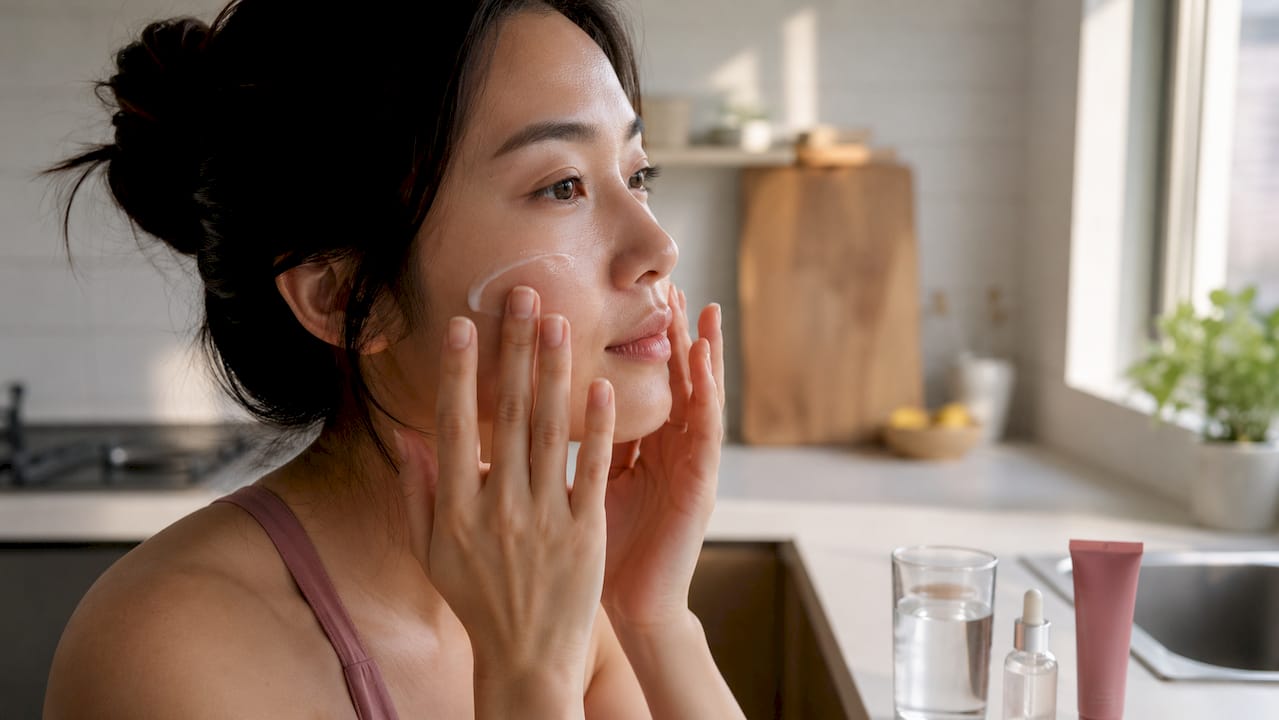
Post-inflammatory hyperpigmentation (PIH) and melasma are chronic, relapse-prone conditions, meaning your results after any pigmentation treatment depend almost entirely on what you do next. To protect skin post pigmentation treatment, you need two non-negotiable commitments: rigorous daily photoprotection and a carefully timed skincare routine that supports healing without triggering new inflammation. Skip either one, and the melanocytes your treatment just quieted will reactivate. This guide gives you the exact protocols, product categories, and timing windows that clinical consensus recommends for 2026.
Why photoprotection is the foundation of post pigmentation skin care
Sun protection is not optional after a pigmentation procedure. It is the single most powerful tool you have to prevent your results from reversing. UV radiation, longwave UVA, and high-energy visible light all stimulate melanocyte activity, meaning even a few minutes of unprotected exposure can undo weeks of treatment progress.
The 2025 global consensus on melanin hyperpigmentation disorders makes the standard clear: you need a broad-spectrum SPF 50 sunscreen that covers UVB, longwave UVA, and high-energy visible light (HEVL). A standard SPF 30 moisturizer with sunscreen does not meet this bar. Look specifically for tinted formulas containing iron oxide, because iron oxide is the only widely available filter that meaningfully blocks HEVL. This matters because HEVL penetrates windows and screens, so indoor exposure is a real risk.
How you apply sunscreen is just as important as which one you choose. Correct application requires approximately one quarter teaspoon spread evenly across the full face, reapplied at least every two hours during outdoor activity. Most people apply less than half the required amount, which cuts effective protection dramatically. Patient adherence to correct sunscreen dosing strongly predicts pigmentation control success, and frequent under-application compromises treatment outcomes regardless of how good the formula is.
Physical barriers add another layer of protection that sunscreen alone cannot provide:
Wide-brim hats (at least 3 inches) block direct UV and reduce facial exposure by up to 50%
UV-blocking sunglasses protect the periorbital area, which is prone to pigmentation
UPF 50+ clothing for the neck and décolletage if those areas were treated
Shade seeking between 10 a.m. and 3 p.m., when UV index peaks
Pro Tip: Set a phone alarm for midday as your sunscreen reapplication reminder. Powder sunscreens or SPF setting sprays make reapplication over makeup practical and quick.
Because melasma in particular has a chronic relapse pattern driven by UV and visible light, photoprotection is not a short-term post-procedure step. It is a permanent part of your skin care after pigmentation treatment.
How to care for your skin in the first 7 days after treatment
The week immediately after a pigmentation procedure is when your skin is most vulnerable. The barrier is compromised, melanocytes are reactive, and any inflammatory signal can trigger PIH. Your goal during Days 1 through 7 is simple: reduce inflammation, support barrier repair, and avoid everything that could cause irritation.
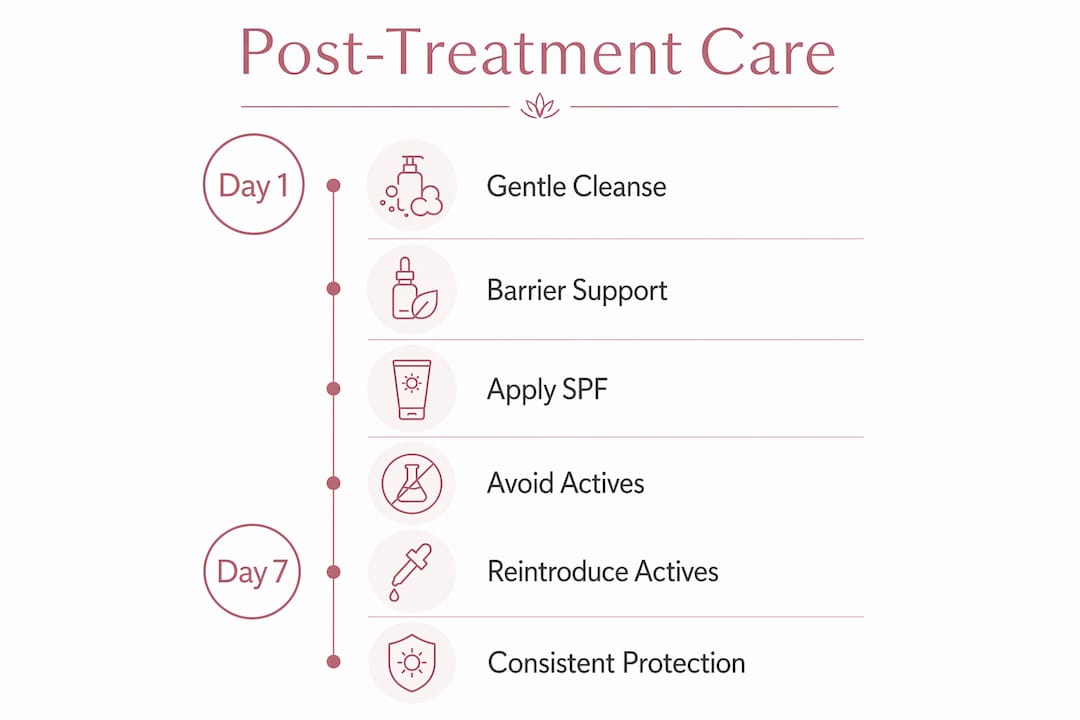
Retinoids, glycolic acid, lactic acid, salicylic acid, azelaic acid, and hydroquinone are all unsuitable during this window. Even though some of these ingredients are part of your regular pigmentation control routine, reintroducing them too early can trigger the exact inflammatory pathways that cause PIH. The skin needs to re-epithelialize before it can tolerate active ingredients again.
What your skin does need during this phase is barrier support. Ceramides, hyaluronic acid, niacinamide, and panthenol are the workhorses of immediate post-treatment care. Ceramides rebuild the lipid matrix of the skin barrier. Hyaluronic acid draws moisture into the skin. Niacinamide calms redness and supports barrier function without irritation. Panthenol (vitamin B5) accelerates tissue repair. Products from ranges like CeraVe, La Roche-Posay, and Avène are widely available and formulated around these ingredients.
Here is a clear reference for what to do and what to avoid in the first week:
Do | Avoid |
Apply broad-spectrum SPF 50 every morning | Retinoids (tretinoin, retinol) |
Use ceramide and hyaluronic acid moisturizer twice daily | Glycolic acid, lactic acid, salicylic acid |
Cleanse with a gentle, fragrance-free cleanser | Hydroquinone and azelaic acid |
Keep skin hydrated and protected | Physical scrubs or exfoliating brushes |
Stay out of direct sun as much as possible | Picking, peeling, or touching treated areas |
Pro Tip: If your skin feels tight or uncomfortable after cleansing, your cleanser is too stripping. Switch to a micellar water or a cream cleanser with no foaming agents during the healing phase.
Moisturizing post pigmentation treatment is not just about comfort. A well-hydrated barrier heals faster and is less likely to generate the subclinical inflammation that feeds PIH. Think of moisturizer as a protective film that keeps irritants out and healing signals in. For guidance on gentle skincare practices that support recovery and radiance, the approach is consistent: less is more in the first week.
When and how to reintroduce actives after treatment
Reintroducing pigmentation control actives too early is one of the most common reasons treatments fail to deliver lasting results. The general clinical window for resuming potent ingredients is after re-epithelialization, which typically occurs between Days 8 and 28 depending on the depth of the procedure and your individual healing rate.
Practitioners time this carefully because irritation during re-epithelialization can amplify melanocyte activity and cause PIH. The rule is: if your skin still looks pink, feels sensitive, or has any residual peeling, it is not ready for actives. Wait until the barrier feels fully intact.
When you are ready to reintroduce, follow this sequence:
Start with niacinamide and vitamin C. These are the most tolerated actives and provide meaningful pigmentation control without significant irritation risk. Vitamin C (L-ascorbic acid at 10 to 15%) inhibits tyrosinase, the enzyme that drives melanin production.
Add tranexamic acid. This ingredient targets the pigmentation cascade at a different point than vitamin C, making the combination more effective. Tranexamic acid is particularly well-suited to post-treatment maintenance because it is anti-inflammatory as well as depigmenting.
Reintroduce alpha arbutin. Alpha arbutin is a gentler alternative to hydroquinone and works well in combination with the above. Multi-active protocols combining tranexamic acid, niacinamide, vitamin C, and alpha arbutin target multiple steps in the melanogenesis cascade and produce better results than any single ingredient alone.
Reintroduce retinoids last, at the lowest concentration. Start with retinol 0.025% or 0.05% every third night and build tolerance over four to six weeks before increasing frequency or strength.
Reintroduce exfoliating acids only after retinoids are tolerated. Begin with lactic acid at 5% rather than glycolic acid, as it is gentler on a recovering barrier.
Pro Tip: Never layer a retinoid and an acid on the same night during the reintroduction phase. Use retinoids on alternate nights and acids on the nights between, so your skin gets recovery time between each active.
Continuous photoprotection during this maintenance phase is non-negotiable. Actives like vitamin C and retinoids increase photosensitivity, which means your SPF 50 becomes even more critical once you restart your full routine.
Common mistakes that set back your results
The most damaging mistake people make after a pigmentation treatment is skipping or under-applying sunscreen. UV re-stimulation of melanocytes is the fastest way to reverse your results, and it can happen within days of a procedure if photoprotection is inconsistent.
Other frequent errors include:
Restarting irritating actives too soon. Premature use of retinoids or acids triggers inflammatory pathways that increase PIH risk. Patience in the first two weeks pays off significantly in the long run.
Over-exfoliating. More exfoliation does not mean faster results. Aggressive scrubbing or stacking multiple acids damages the healing barrier and perpetuates hyperpigmentation rather than clearing it.
Picking at treated areas. Any trauma to healing skin, including picking at peeling skin, creates micro-wounds that trigger melanocyte activity. Leave the skin alone.
Expecting one treatment to solve everything. Pigmentation conditions like melasma are chronic. A single peel or IPL session improves tone, but consistent maintenance is what sustains the result.
Skipping professional guidance. A personalized regimen from a qualified Dermal Clinician accounts for your skin type, treatment depth, and pigmentation pattern in ways a generic routine cannot.
“The clients who see the best long-term results are not the ones who had the most aggressive treatments. They are the ones who followed their post-treatment protocol consistently, especially the sunscreen.” — Chevonne, Dermal Clinician at Fundamentalskin
For guidance on switching to a gentler routine that supports healing without irritation, the principle is the same: simplify first, then build back gradually.
How preparing your skin before treatment improves outcomes
What you do before a pigmentation procedure shapes how well your skin heals afterward. Pre-treatment preparation, sometimes called skin priming, is a clinical strategy that reduces your risk of PIH and makes the treatment itself more effective.
Priming with topical lightening agents such as hydroquinone, azelaic acid, or kojic acid before a procedure lowers the baseline melanin load in the skin. This means the treatment starts from a better position and the melanocytes are less reactive going into the procedure.
Key pre-treatment steps include:
Using a lightening agent for four to six weeks before the procedure. Hydroquinone 4% or azelaic acid 15 to 20% are the most evidence-backed options for this purpose.
Strengthening the barrier with moisturizers. A well-hydrated, intact barrier tolerates procedures better and heals faster afterward. Ceramide-rich moisturizers used twice daily in the weeks before treatment make a measurable difference.
Maintaining SPF throughout the pre-treatment phase. Arriving at your procedure with sun-damaged or UV-stimulated skin increases PIH risk significantly.
Coordinating timing with your clinician. The right pre-treatment window and product selection depend on the specific procedure you are having. Your Dermal Clinician should guide this phase, not a generic protocol.
Pre-treatment care is the part of the process most people overlook. When you prepare skin before pigmentation treatment with the same discipline you apply post-procedure, your outcomes improve noticeably.
Key takeaways
Protecting your skin after a pigmentation treatment requires consistent photoprotection, a carefully timed reintroduction of actives, and a gentle barrier-focused routine in the first seven days.
Point | Details |
SPF 50 is non-negotiable | Use a broad-spectrum, iron-oxide tinted sunscreen daily and reapply every two hours outdoors. |
Avoid actives for Days 1 to 7 | Retinoids, acids, and hydroquinone must be paused immediately after treatment to prevent PIH. |
Reintroduce actives in order | Start with vitamin C and niacinamide, then add tranexamic acid, alpha arbutin, and retinoids last. |
Pre-treatment priming matters | Using lightening agents before your procedure lowers PIH risk and improves treatment efficacy. |
Consistency beats intensity | Long-term photoprotection and a steady maintenance routine outperform aggressive short-term fixes. |
What 15 years of treating pigmentation has taught me
After more than a decade working with clients on pigmentation concerns, the pattern I see most often is this: the treatment itself goes beautifully, and then the results fade within a few months because the post-treatment routine was not maintained. The procedure is only half the work.
The hardest part of my job is not choosing the right peel or IPL setting. It is helping clients understand that melasma and PIH are not problems you solve once. They are conditions you manage. That shift in mindset, from “fix it” to “maintain it,” is what separates clients who keep their results for years from those who are back to square one by summer.
I have also noticed that the clients who struggle most with photoprotection are often the ones who do not enjoy wearing sunscreen. My honest advice: find a formula you actually like. There are elegant, lightweight, tinted SPF 50 options that feel nothing like the thick white sunscreens of the past. When you enjoy putting it on, you do it consistently. And consistency is everything.
The other thing I want you to know is that healing skin after pigmentation treatment is not linear. You may see some darkening before you see lightening, especially in the first two weeks. That is normal. It does not mean the treatment failed. Trust the process, protect the skin, and give it time.
— chevonne
Ready to take the next step with your skin?
If you are serious about protecting and improving your skin after pigmentation treatment, professional support makes a real difference. At Fundamentalskin, Chevonne combines 15 years of clinical expertise with advanced technology to create personalized treatment plans that address your specific pigmentation concerns.

Whether you are exploring a Larimedical Peel for targeted pigmentation correction or considering the Biomimetic Peel with LED Therapy to support healing and skin renewal, every treatment at Fundamentalskin is designed to work with your skin, not against it. You will also receive a tailored post-treatment protocol so you know exactly how to care for your skin at every stage. Book your consultation today and start seeing the results you deserve.
FAQ
What sunscreen should I use after a pigmentation treatment?
Use a broad-spectrum SPF 50 sunscreen that covers UVB, UVA, and HEVL, ideally a tinted formula containing iron oxide. Apply approximately one quarter teaspoon to the full face each morning and reapply every two hours if you are outdoors.
How long should I avoid retinoids after a pigmentation procedure?
Avoid retinoids for at least the first seven days post-treatment, and only reintroduce them after your skin has fully re-epithelialized, typically between Days 8 and 28. Start at the lowest available concentration and use every third night before building frequency.
Can pigmentation come back after treatment?
Yes. Conditions like melasma and PIH are relapse-prone, and UV or visible light exposure can reactivate melanocytes even after successful treatment. Consistent daily photoprotection is required indefinitely to maintain results.
What ingredients are safe to use immediately after a pigmentation treatment?
Ceramides, hyaluronic acid, niacinamide, and panthenol are safe and beneficial during the first seven days. These ingredients support barrier repair and reduce inflammation without triggering PIH.
Does what I do before treatment affect my results?
Yes. Priming with topical lightening agents like hydroquinone or azelaic acid for four to six weeks before a procedure lowers the melanin baseline and reduces PIH risk, leading to better and more lasting outcomes.
Recommended
Comments