.png)
How to Switch to an Organic Skincare Routine


Making the decision to switch to an organic skincare routine is exciting. But for most people, the first week brings confusion, unexpected breakouts, and a bathroom counter full of half-read labels. The good news is that these setbacks are almost always avoidable. With the right preparation, a clear understanding of what “organic” actually means on a label, and a gradual approach to swapping products, you can transition to natural beauty without wrecking your skin in the process. This guide walks you through every stage, from decoding certifications to building a long-term routine that genuinely works.
Table of Contents
Key takeaways
Point | Details |
Go gradual, not all at once | Replace one product category per week to pinpoint any irritation source and protect your skin barrier. |
Certifications are important | Look for Certified Organic or Natural labels to verify a product’s true organic or natural content. |
Purging is normal, reactions are not | Temporary skin purging lasts a few weeks; persistent redness or hives signal a reaction and need immediate attention. |
Results take time | Expect meaningful improvements in texture and hydration after 4 to 8 weeks of consistent use. |
Patch test every new product | Test on your jawline or forearm for 24 to 48 hours before applying anything new to your full face. |
What organic skincare actually means
Now, about the benefits of organic skincare: the science is encouraging but not absolute. The primary documented advantage is reduced pesticide exposure from avoiding synthetic agrochemicals in ingredient sourcing. Organic formulations also tend to exclude common irritants like synthetic fragrances, parabens, and sulfates, which is particularly relevant for sensitive or reactive skin types.
One more thing worth knowing: under the Modernisation of Cosmetics Regulation Act (MoCRA), the FDA is expected to require individual fragrance allergen disclosure by 2026. Right now, brands can hide dozens of potential irritants under the single word “fragrance.” Choosing certified organic products, which ban artificial fragrances, is one way to sidestep this problem entirely while the regulations catch up.
Pro Tip: When shopping, flip the product over and look for the COSMOS logo before reading any front-of-label claims. The front is marketing; the back is the truth.
Assessing your skin before you start
Switching without a plan is where most people go wrong. The first step is not buying new products. It is important to understand what your skin actually needs right now.
Start by identifying your skin type and your primary concerns:
Oily or acne-prone skin: Look for non-comedogenic organic oils like rosehip or jojoba. Avoid heavy butters like coconut oil on the face.
Dry or dehydrated skin: Prioritise organic formulas rich in hyaluronic acid, shea butter, or squalane.
Sensitive or reactive skin: Fragrance-free, minimal-ingredient formulas are your safest starting point. Organic skincare for sensitive skin should have five ingredients or fewer in the first product you try.
Combination skin: You may need different products for different zones. Start with a gentle, balanced cleanser that works for the whole face.
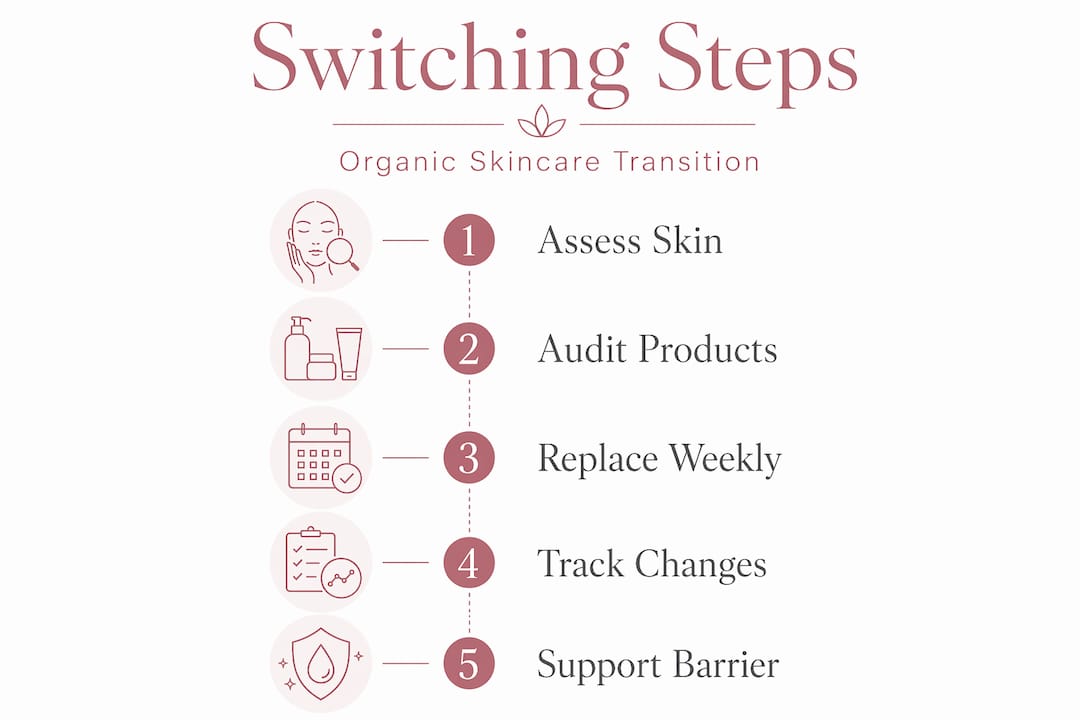
Next, audit your current products. Write down every product you use and note the ingredients you want to move away from, whether that is synthetic fragrance, silicones, or chemical sunscreen filters. This list becomes your shopping guide for organic replacements.
The goal here is not to throw everything out on day one. That approach almost guarantees a reaction because your skin loses its reference point for what is normal. Gradual swapping protects your skin barrier and keeps your routine manageable.

Pro Tip: Take a photo of your skin before you start. It sounds simple, but having a visual baseline makes it much easier to notice real improvements after six to eight weeks.
Your week-by-week transition plan
This is the part most guides skip over. A structured timeline removes the guesswork and, more importantly, removes the most common cause of breakouts during the switch: changing too many products at once.
Here is a proven sequence to follow:
Weeks 1 to 2: Replace your cleanser. Your cleanser is the lowest-risk swap. It contacts your skin briefly and rinses off. Choose a gentle, sulfate-free organic cleanser suited to your skin type. Use nothing else new during this window.
Weeks 3 to 4: Introduce your organic moisturiser. Once your skin has settled with the new cleanser, add a certified organic moisturiser. Watch for any changes in texture, oiliness, or breakouts.
Weeks 5 to 6: Add targeted treatments. This is where serums, facial oils, or exfoliants come in. Introduce only one at a time. If you want to try a vitamin C serum and a retinol alternative, start with one and wait two weeks before adding the second.
Week 7 onward: Switch your sunscreen. Mineral sunscreens with zinc oxide are the gold standard in organic-aligned routines. Save the application for last because sunscreen texture varies widely and can affect how your other products feel.
Now, let’s discuss the difference between purging and reactions. Purging looks like small whiteheads or pimples appearing in areas where you already break out. It is your skin accelerating its natural cell turnover cycle. It is temporary and typically resolves within two to eight weeks if you stay consistent.
An allergic reaction looks different: redness, hives, burning, or swelling in areas where you do not normally break out. If you see those signs, stop using the new product immediately.
Before applying any new organic product to your full face, patch test it on your jawline or inner forearm. Wait 24 to 48 hours. If there is no redness or itching, you are clear to proceed.
The Fundamentalskin team also recommends exploring how professional skin barrier treatments can support your skin during this adjustment period, particularly if you experience prolonged sensitivity.
Pro Tip: Keep a simple skincare journal during your transition. Note what you applied, when, and how your skin responded. This turns a confusing process into a clear, trackable record.
Common mistakes that derail the transition
Even with a solid plan, certain habits can set you back. Here is what to watch for:
Switching multiple products at once. This is the single biggest reason transitions fail. If your skin reacts, you will have no idea which product caused it. The sequential approach is not optional; it is the whole strategy.
Over-exfoliating with natural acids. AHAs from fruit sources and enzymes from papaya are genuinely effective, but they are still exfoliants. Using them too frequently disrupts your skin barrier just as aggressively as synthetic versions.
Ignoring comedogenicity ratings. Not all natural ingredients are skin-friendly for every skin type. Coconut oil, for example, rates high on the comedogenic scale and can clog pores on acne-prone skin despite being completely natural.
Expecting instant results. Organic and natural formulations work differently from conventional products. Silicones in conventional moisturisers create an immediate smoothing effect. Organic alternatives work by actually improving your skin’s biology, which takes longer but produces more lasting results.
Misreading a purge as a failure. Many people quit their new routine right when their skin is adjusting. If you are in week two and seeing small breakouts in your usual problem zones, that is likely purging, not a sign the product is wrong for you.
Pro Tip: If your skin becomes overwhelmed at any point, strip your routine back to just a gentle cleanser and a plain moisturiser for a week. Simplicity is always the right reset.
What to expect and how to maintain results
Patience is not just a virtue here. It is the actual mechanism. Natural products work gradually, supporting your skin’s biology rather than masking it. Here is a realistic timeline of what you can expect:
Timeframe | What typically changes |
Weeks 1 to 2 | Skin may feel different in texture; some initial purging is possible |
Weeks 3 to 4 | Hydration levels begin to stabilise; redness often reduces |
Weeks 5 to 6 | Skin tone starts to even out; texture feels smoother |
Weeks 7 to 8 | Meaningful improvement in glow, firmness, and overall balance |
To maintain these results long-term, your routine needs support from the rest of your lifestyle:
Hydration: Drinking adequate water supports skin cell turnover and helps organic hydrating ingredients work more effectively.
Diet: Antioxidant-rich foods complement the antioxidant botanicals in organic skincare formulas.
Sun protection: Consistent use of a mineral SPF preserves everything your organic routine builds.
Seasonal adjustments: Your skin’s needs change with the weather. Revisit your moisturiser and treatment choices every three to four months.
When you are ready to expand your routine, introduce new products using the same one-at-a-time method. Skincare is an ongoing process. The goal is a routine that evolves with your skin, not one that stays frozen in place.
My honest take after 15 years of working with skin
I have worked with hundreds of clients who came to me frustrated after their “organic switch” made their skin worse. Almost every time, the problem was not the products. It was the process.
What I have learned is that the transition to natural beauty asks something of you that conventional skincare never did: patience and attention. Conventional products often deliver quick cosmetic results because of ingredients like silicones and film-forming polymers. When those are removed, your skin has to relearn how to regulate itself. That adjustment period feels uncomfortable, but it is actually a sign that something real is happening.
The most common myth I hear is that natural equals gentle and therefore safe for everyone. That is not true. Essential oils, botanical extracts, and natural acids can all cause reactions in sensitive skin. The difference is that certified organic formulations are free from synthetic additives that add unnecessary risk on top of the natural complexity.
My advice: start with a maximum of three products. A cleanser, a moisturiser, and an SPF. Get comfortable with those for six weeks before adding anything else. I have seen this simple approach transform skin that had been struggling for years. Customisation matters more than the number of products in your routine.
— chevonne
Ready to take your skin further?
If you have started your transition to organic skincare and want professional support to accelerate your results, Fundamentalskin is here to help. Chevonne specialises in treatments designed for women navigating pigmentation, sensitivity, redness, and aging skin, using organic, Australia-sourced ingredients that align with your new routine.
The Biomimetic Peel + LED Therapy is a standout option for anyone mid-transition. It gently resurfaces skin, reduces inflammation, and strengthens your skin barrier without downtime. For a fully personalised experience, explore Fundamentalskin’s expert facial treatments designed to complement and support whatever organic routine you are building at home. Your skin deserves care that meets it exactly where it is.
FAQ
What does “switch to an organic skincare routine” actually mean?
It means gradually replacing your conventional skincare products with formulations made from certified organic or natural-origin ingredients, free from synthetic chemicals, artificial fragrances, and petrochemical derivatives.
How long does it typically take to see results from organic skincare?
Most people notice meaningful changes in skin texture, hydration, and tone after 4 to 8 weeks of consistent use. The first two weeks may include a temporary purging phase.
How do I know if a product is truly organic?
Look for third-party certifications like COSMOS Organic or COSMOS Natural on the label. These involve independent audits of ingredients, manufacturing, and packaging, unlike unverified “organic” marketing claims.
Is organic skincare safe for sensitive skin?
Sensitive skin generally tolerates certified organic formulas that are fragrance-free and minimal in ingredients. Always patch test new products for 24 to 48 hours before full facial use.
Can I switch all my skincare products at once?
No. Changing multiple products simultaneously makes it impossible to identify the cause of any reaction. Replace one product category at a time, starting with your cleanser, and wait one to two weeks before introducing the next change.
Recommended
Comments