.png)
Melasma vs Sunspots: How to Tell Them Apart
- chevonne stewart
- 4 hours ago
- 11 min read

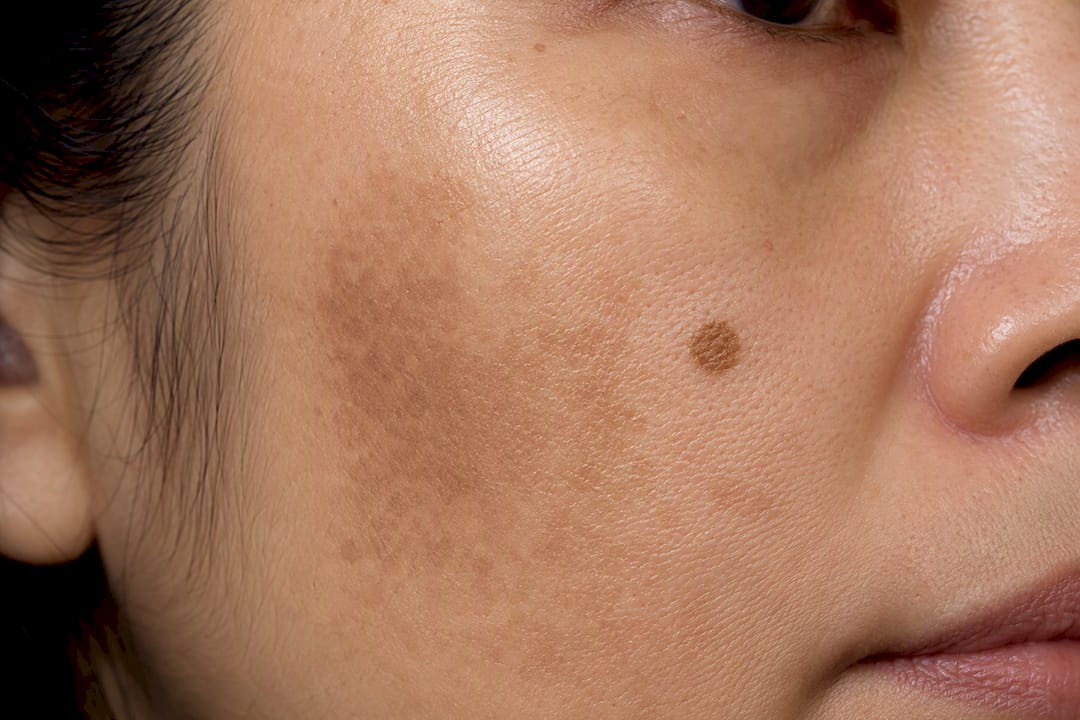
If the discoloration is large, symmetric, and flares with heat or hormones, you’re likely looking at melasma. If it’s an isolated, sharply bordered patch tied to years of sun exposure, it’s more likely a sun spot. That one distinction changes everything about treatment, because a procedure built for sun spots can make melasma worse.
Melasma: symmetric, blurred edges, often on cheeks, forehead, or upper lip; linked to hormones, heat, and visible light
Sun spots: small, well-defined, flat brown marks; caused by cumulative UV exposure
The one caution to remember: aggressive lasers and heavy resurfacing, which work well on sun spots, frequently trigger rebound pigmentation in melasma. Before booking any pigment treatment, get a proper assessment. Melasma usually calls for a conservative, maintenance-based plan rather than a one-time fix.
Table of Contents
Melasma vs Sunspots: What Melasma Actually Looks Like
Melasma shows up as larger, blotchy patches of brown or gray-brown discoloration with soft, feathered edges that seem to melt into the surrounding skin rather than stop abruptly. It tends to appear symmetrically, meaning you’ll usually see a mirrored pattern on both sides of your face rather than a single isolated mark. The most common locations are the cheeks, forehead, upper lip, and the bridge of the nose, often forming a mask-like pattern that dermal clinicians sometimes call the “mask of pregnancy,” though it affects plenty of women who have never been pregnant.
What drives it is hormonal sensitivity. Melasma is strongly associated with pregnancy, hormonal contraception, and hormone replacement therapy, and it disproportionately affects women, particularly those with medium to deeper skin tones. Unlike a straightforward sunburn response, melasma’s pigment producing cells become chronically overactive, reacting not just to UV rays but to heat and even visible light from the sun or bright indoor lighting.
Soft, blurred borders rather than crisp outlines
Symmetric distribution across both sides of the face
Common on cheeks, forehead, upper lip, and chin
Often worsens in summer, pregnancy, or with oral contraceptive use
Pro Tip: Snap a photo of your pigmentation every few weeks in the same lighting. Melasma often darkens and fades in cycles tied to sun exposure and hormones, and that pattern alone can help a clinician confirm the diagnosis before you spend money on the wrong treatment.
What Are Sunspots (Solar Lentigines)?
Sun spots, medically known as solar lentigines, are small, flat, well-defined brown spots that stay put once they form. Unlike melasma’s soft blur, a sun spot has a crisp border you could trace with a pencil, and it typically appears as an isolated mark rather than a sprawling patch.
The cause is straightforward: years of cumulative UV exposure damage melanocytes in specific spots, leaving behind concentrated deposits of pigment. You’ll usually find them on the areas that get the most sun over a lifetime: the face, the backs of the hands, the chest, and the forearms. They’re sometimes called age spots, which causes confusion, but the terms describe the same sun-driven process under different names.
Sun spots tend to appear later in life, usually from your late 30s onward, and they accumulate gradually rather than flaring and fading. That predictability is actually good news for treatment. Because the pigment sits at a consistent depth and isn’t hormonally driven, sun spots generally respond well and quickly to targeted procedures.
Small, flat, sharply defined brown or dark brown spots
Isolated rather than patchy or symmetric
Common on the face, hands, chest, and forearms
Appear gradually with age and cumulative sun exposure
Respond predictably to laser, cryotherapy, or peel treatments
Melasma vs Sunspots: A Quick Mirror-Check Checklist
A three-step self-check in front of a mirror can point you in the right direction before you book anything.
Look at symmetry. Do you see matching patches on both cheeks or both sides of your forehead? That leans melasma. A single spot on one side leans sun spot.
Check the border. Run your eye along the edge. A soft, hazy transition into normal skin suggests melasma; a clean, definable outline suggests a sun spot.
Consider the timeline. Did it appear gradually over years, or has it darkened and faded with seasons, pregnancy, or sun exposure? Cyclical flaring points to melasma; a permanent, slow-building mark points to a sun spot.
Roughly many patients present with a mix of both conditions at once, particularly people in their 40s and 50s who have both years of sun exposure and hormonal history. If your mirror check gives you a split result, that’s not a failure of the checklist. It’s a signal to get a professional opinion before choosing a treatment, since a combined case needs a plan built around the more reactive condition, which is almost always melasma.
Why Melasma Flares With Heat While Sunspots Track UV
The two conditions come from genuinely different biological processes, and understanding that difference explains why they need different management.
Melasma stems from melanocyte hyperactivity. The pigment-producing cells themselves become oversensitive and start overproducing melanin in response to a wider range of triggers than sun spots ever face. UVA rays, visible light from the sun and screens, heat, hormonal shifts from pregnancy or contraception, and certain medications can all set it off. Sun spots, on the other hand, come from cumulative, localized UVB and UVA damage to melanocytes in specific spots, without the hormonal amplification.
That mechanistic gap is why trigger control looks different for each. For melasma, it helps to avoid prolonged heat exposure (saunas, hot yoga, standing over a stove), limit unprotected screen time in bright conditions, and talk to your doctor about hormonal medications if flares track your cycle. For sun spots, the fix is more singular: consistent, rigorous sun protection over time prevents new ones from forming, even though it won’t erase existing spots.
Melasma: driven by melanocyte overactivity, sensitive to heat, hormones, and visible light
Sun spots: driven by cumulative UV damage, stable once the pigment has formed
Shared culprit: unprotected sun exposure worsens both, just through different pathways
How Do Dermal Clinicians Diagnose Melasma vs Sun Spots?
A proper assessment starts with your history and a visual pattern check: symmetry, border quality, and known triggers like pregnancy or hormonal medication all factor in. From there, clinicians often use a Wood’s lamp, which shines ultraviolet light on the skin to reveal whether pigment sits closer to the surface (epidermal) or deeper in the dermis. Dermoscopy, a magnified skin view, adds further detail on pigment pattern and vascular changes.
Determining that depth matters enormously, because epidermal pigment generally responds better to topical treatment while deeper dermal pigment is more stubborn and more prone to worsening with aggressive intervention. A biopsy or dermatology referral becomes appropriate when a spot changes shape rapidly, bleeds, or doesn’t fit the classic pattern of either condition, since ruling out other skin changes always comes first.
History taking: hormonal status, sun exposure, medication use
Visual pattern check: symmetry, border sharpness, distribution
Wood’s lamp: assesses whether pigment is epidermal or dermal
Dermoscopy: magnifies pigment structure for finer detail
Biopsy or specialist referral: reserved for atypical or fast-changing spots
Pro Tip: Bring a timeline of your pigmentation to your appointment, including when it appeared, whether it fades in winter, and any hormonal changes around that time. That single detail often speeds up diagnosis more than any test.
Melasma vs Sunspots Treatment: What Actually Works
Treatment paths for these two conditions diverge sharply, and using the wrong one is the most common mistake people make.
For melasma, the foundation is strict, consistent photoprotection alongside topical agents that calm pigment production rather than force it out aggressively. Azelaic acid, tranexamic acid, gentle retinoids, and hydroquinone under professional supervision are the standard toolkit, often paired with a mild peel designed for pigment-prone skin. Melasma management is a maintenance game rather than a cure. Expect gradual improvement over months, with ongoing upkeep needed to prevent relapse once triggers like sun, heat, or hormones return.
For sun spots, the toolkit shifts toward procedures built to target isolated, stable pigment: IPL, targeted laser, cryotherapy, and chemical peels. Because the pigment sits at a predictable depth and isn’t hormonally reactive, results tend to arrive faster and hold longer than what melasma allows.
High-energy lasers and aggressive resurfacing, both excellent tools for sun spots, frequently backfire on melasma by triggering rebound hyperpigmentation that can leave the skin darker than before treatment began.
That single caution explains a lot of frustrated clients who tried a “quick fix” laser and ended up worse off. Treatments to avoid or approach cautiously with melasma include high-fluence lasers, aggressive dermabrasion, and any resurfacing procedure that generates significant heat in the skin.
Melasma: azelaic acid, tranexamic acid, retinoids, supervised hydroquinone, gentle peels
Sun spots: IPL, targeted laser, cryotherapy, standard chemical peels
Avoid in melasma: high-energy lasers, aggressive resurfacing, excessive heat-based devices
Timeline: sun spots often improve within weeks; melasma takes months with ongoing maintenance
Pro Tip: If a clinic recommends the same laser for your melasma that they’d use on a sun spot, get a second opinion. The right melasma plan almost always starts gentler than you’d expect.
How to Prevent Flares With Daily Sun Protection
Photoprotection is the single most effective habit for both conditions, but melasma demands an extra layer of care that most people skip.
Apply broad-spectrum SPF 30 or higher every morning, using roughly a quarter teaspoon for the face alone, and reapply every two hours in direct sun.
Choose a tinted, iron-oxide sunscreen if you have melasma. Iron oxides block visible light, which standard mineral or chemical filters miss entirely, and visible light is a proven melasma trigger.
Add a wide-brimmed hat and seek shade during peak UV hours, especially if you’re prone to melasma flares in summer.
Manage heat exposure, since prolonged heat from saunas, hot yoga, or cooking over a stove can worsen melasma independent of sun exposure. A cool compress after heat exposure can help calm reactive skin.
Introduce brightening actives gradually, layering in ingredients like niacinamide or vitamin C only once your barrier tolerates daily SPF without irritation.
Pro Tip: Keep your sunscreen by your toothbrush. Reapplication compliance drops dramatically once a product isn’t part of an existing habit, and consistency matters more than any single ingredient.
Choosing the right formula matters too. A well-selected sunscreen suited to pigmented skin protects against both UV and visible light without leaving a heavy or ashy cast.
When to See a Clinician for Pigmentation
Book an appointment if your diagnosis feels uncertain, if a spot resists over-the-counter treatment after a few months, or if you notice rapid changes in size, shape, or color.
Uncertain whether your pigmentation is melasma, a sun spot, or both
Treatment-resistant pigment despite consistent skincare
Any mark that changes quickly or looks unusual
Bring these questions to your consultation:
Is my pigment epidermal or dermal, and how does that change my options?
What’s a realistic timeline for improvement, and what maintenance will I need?
Which treatments should I avoid given my skin type and pigment pattern?
A reasonable outcome is gradual, visible improvement with a maintenance plan built around your specific trigger pattern, not a single treatment that erases pigment permanently.
A Dermal Clinician’s Approach to Melasma and Sunspots
Fifteen years of clinical practice teaches you that melasma punishes impatience. Chevonne, Fundamentalskin’s Dermal Clinician, built her approach around sequencing treatments conservatively rather than chasing fast results that risk rebound pigmentation.
A typical clinic plan includes a thorough assessment, a gentle, biomimetic peel option suited to reactive skin, topical maintenance between sessions, and LED as a calming adjunct rather than a primary treatment. Individualized sequencing, not a fixed protocol, protects against the rebound risk that aggressive procedures carry.
Assessment first: pattern, pigment depth, and trigger history
Gentle peel options rather than high-energy resurfacing
Topical maintenance to sustain results between visits
LED therapy as a supportive, non-aggressive adjunct
Does Melasma or Sunspots Cause Itching or Pain?
Neither condition typically causes physical discomfort, and that’s actually a useful diagnostic clue in itself. Melasma is almost always painless and non-itchy. Most people notice it purely as a visual change, sometimes with a mild sensation of warmth in the affected area right after sun or heat exposure, but not true itching or burning.
Sun spots behave the same way. They’re flat, textureless, and asymptomatic, meaning you won’t feel them any differently than the surrounding skin. If a pigmented patch itches, burns, stings, or feels raised and rough to the touch, that’s a signal it may not be simple melasma or a sun spot at all. Those sensations can point toward other skin conditions, including irritated seborrheic keratosis, an inflammatory reaction, or in rare cases something that needs a biopsy to rule out.
This absence of sensation is part of why so many people ignore pigmentation for years before addressing it. Nothing hurts, so there’s no urgency signal pushing you toward a mirror check or a clinic visit. That’s exactly why the visual checklist matters more than symptom tracking here. Pay attention to how a patch looks and behaves over time rather than waiting for it to announce itself through discomfort. If you ever do notice pain, persistent itching, or a change in texture alongside pigmentation, treat that as a reason to book a clinical assessment rather than waiting it out.
The Emotional Weight of Visible Pigmentation
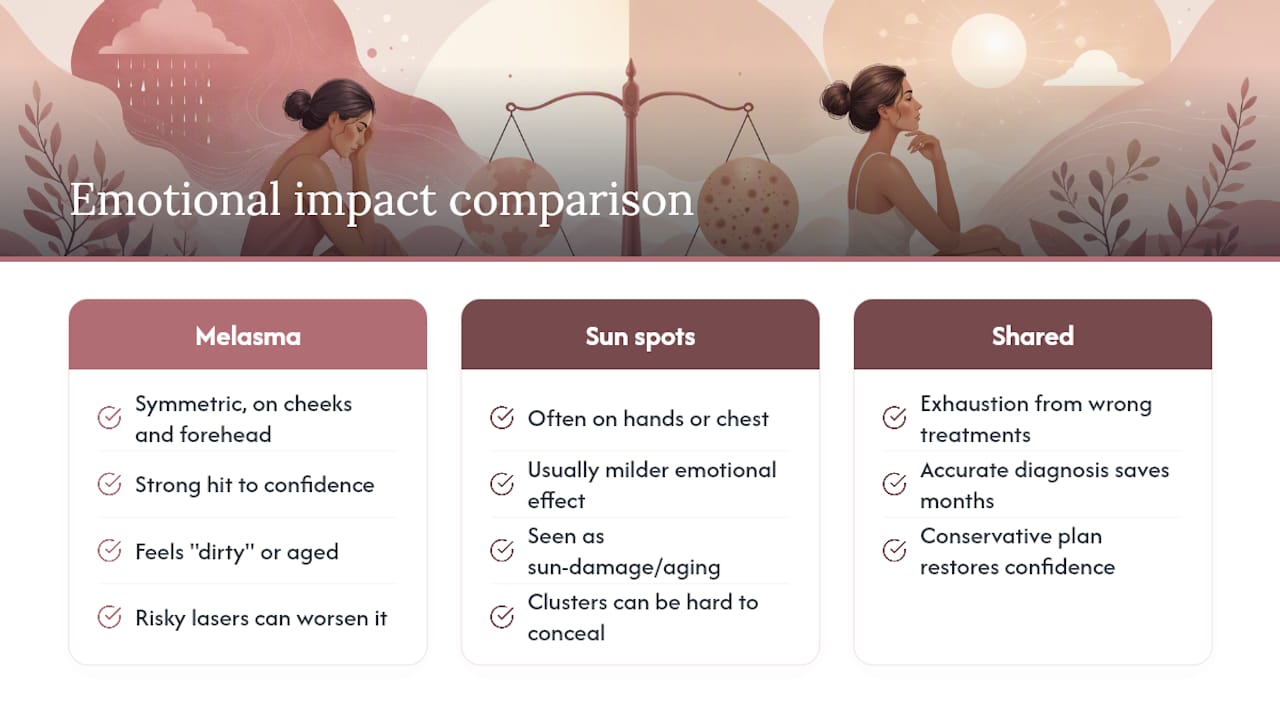
Facial pigmentation carries a psychological load that’s easy to underestimate until it affects your own skin. Melasma in particular tends to hit confidence hard because it’s often symmetric and prominent, sitting right across the cheeks and forehead where it’s impossible to angle away from in conversation or photos. Many women describe feeling like their skin looks “dirty” or aged beyond their years, and that perception can shape how comfortable they feel without makeup.
Sun spots carry a different, usually milder emotional weight. Because they’re often associated with aging or sun damage from decades past, some people read them as evidence of a life well lived outdoors, while others find them just as frustrating, particularly when they cluster on the hands or chest in ways that feel hard to conceal.
What both groups share is the exhaustion of chasing the wrong treatment. Trying product after product, or booking a laser that backfires on melasma, doesn’t just waste money. It erodes trust in your own skin and in the process of trying to fix it. That’s precisely why an accurate diagnosis matters beyond the clinical details. Getting the right label on your pigmentation early spares you months of trial and error, and that time saved is worth as much as any single treatment outcome. A conservative, well-explained plan tends to restore confidence faster than an aggressive one that risks setbacks.
Ready to Get a Clear Diagnosis and Treatment Plan?
Guesswork is the biggest risk factor in pigmentation treatment. A five-minute mirror check narrows the possibilities, but only a proper clinical assessment, including Wood’s lamp evaluation where needed, tells you exactly what you’re dealing with and which path is safe.
Fundamentalskin’s Larimedical Peel is designed specifically for pigment-prone skin, offering a gentler alternative to high-energy lasers for clients whose pigmentation leans toward melasma or a mixed presentation. For those wanting an added calming layer, the Biomimetic Peel plus LED Therapy bundle combines gentle exfoliation with light-based support, all built from organic, Australia-sourced ingredients and guided by Chevonne’s fifteen years of clinical judgment. Book a consultation and get a plan matched to your actual pigment pattern instead of a generic protocol.
Getting Pigmentation Right the First Time
Accurate diagnosis is the foundation of every safe pigmentation treatment plan, because melasma and sun spots demand fundamentally different management strategies.
Point | Details |
Symmetry and borders decide the diagnosis | Symmetric, blurred patches suggest melasma; isolated, sharp spots suggest sun spots. |
Mismatched treatment causes harm | High-energy lasers built for sun spots often trigger rebound pigmentation in melasma. |
Pigment depth changes the plan | Wood’s lamp assessment reveals epidermal versus dermal pigment, guiding safe treatment choice. |
Photoprotection is non-negotiable | Daily broad-spectrum SPF with iron oxides protects against both UV and visible-light triggers. |
Melasma needs maintenance, not a cure | Expect gradual improvement over months with ongoing upkeep to control relapse. |
An Editorial Take on Managing Pigmentation Safely
The conventional advice on pigmentation treats it like a shopping problem: pick a serum, pick a laser, done. That framing fails melasma clients constantly, because the research is clear that aggressive treatment is the leading cause of melasma getting worse, not better. The industry’s obsession with fast, dramatic before-and-afters pushes people toward tools built for sun spots, where speed is genuinely appropriate, and that mismatch is where most bad outcomes start.
What gets underestimated is how much trigger control matters compared to any single product or procedure. Heat, hormones, and visible light don’t get the attention UV does, yet they drive melasma just as strongly. Readers should prioritize an accurate diagnosis and a realistic, maintenance-based timeline over chasing the fastest visible result. Patience isn’t a consolation prize here. It’s the actual strategy that works.
— chevonne
This article is general information, not a substitute for advice from a qualified doctor. Consult a qualified healthcare professional about your own circumstances before acting on anything here.
Sources
Recommended
Comments