.png)
Prioritize Skincare Treatments by Concern: A Clinic Plan
- chevonne stewart
- 3 days ago
- 8 min read

Start at the base, not the trend. If you’re juggling more than one skin concern, the order is always Base → Middle → Top: protect and repair first, correct and renew second, optimize last. Three things belong in your routine today no matter what else is wrong: a broad-spectrum SPF, a barrier-supporting moisturizer, and a gentle, non-stripping cleanse.
Here’s your checklist for this week:
Start: a ceramide moisturizer and daily SPF 30+, even if you’re desperate to treat pigmentation or fine lines right now.
Pause: any new retinoid, acid, or peel if your skin is flaking, tight, or reactive.
Book: a clinician consult if two or more concerns overlap and you’re not seeing change after four to six weeks of consistent base care.
Pro Tip: Layering a strong active over a compromised barrier is the single most common reason skincare “doesn’t work.” Fix the barrier first, then add strength.
Key Takeaways
Protecting and repairing the skin barrier before introducing correction or optimization treatments produces faster, safer, and more lasting results.
Point | Details |
Follow the pyramid order | Prioritize protection, repair, and hydration before adding renewal actives or in-clinic boosters. |
Fix the barrier first | Redness, tightness, or flaking means pausing actives for two to four weeks before reintroducing them. |
Introduce one active at a time | Ramp up frequency slowly and never combine strong acids with retinoids too soon. |
Escalate when progress stalls | See a clinician if concerns overlap or show no change after four to six weeks. |
Build a personalized sequence | Fundamentalskin uses a clinician-led assessment and treatments like the Larimedical Biomimetic Peel to sequence care around your specific concerns. |
Table of Contents
Why the Skin Priority Pyramid Matters for Choosing Treatments
Skincare concerns rarely arrive one at a time. Pigmentation shows up alongside sensitivity. Fine lines show up alongside dehydration. The Skin Health and Beauty Pyramid gives you a hierarchy for deciding what earns your attention first, and it holds up well in clinical practice.
The structure breaks into three levels:
Base: protection, repair, and hydration. Non-negotiable, every day, for every skin type.
Middle: renewal and transformation. Retinoids, exfoliating acids, vitamin C. These change how your skin behaves over weeks to months.
Top: optimization. Peptides, growth factors, in-clinic boosters. These refine results once the foundation holds.
Hydration and barrier support run through all three levels as a constant, not a one-time fix. Updated clinical guidance on this model adds a wrinkle worth knowing: protection now extends beyond UV to visible light, pollution, and infrared exposure. Skip the base, and every active you add on top works harder than it should.
What Base Skincare Steps Come First?
Before you touch a single serum aimed at a specific concern, get these three right.
Cleanse gently. A low-foam, pH-balanced cleanser removes debris without stripping lipids. If your skin feels tight afterward, the formula is too aggressive.
Moisturize for repair. Look for ceramides, glycerin, and hyaluronic acid on the label. These rebuild the barrier rather than just sitting on top of it.
Apply broad-spectrum SPF 30 or higher, daily. This single habit does more for pigmentation, aging, and redness than almost any treatment you could add on top, according to expert consensus on cleansing, moisturizing, and photoprotection.
Signs your barrier is damaged: persistent redness, a tight feeling after cleansing, visible flaking, or stinging when you apply products that never used to sting.
If you spot those signs: drop actives for two to four weeks, simplify to cleanser, barrier moisturizer, and SPF, and avoid alcohol-based toners, fragrance, and physical scrubs until symptoms settle. Choosing sunscreen for pigmentation-prone skin matters here too, since the wrong formula can irritate skin that’s already compromised.
Pro Tip: Wait two to four weeks of consistent barrier repair before reintroducing any strong active, and patch test on your inner arm for 48 hours first.
Which Active Ingredients Should You Prioritize by Concern?
Once your base is stable, the middle layer is where targeted correction happens, and where most people rush and undo their progress.
Retinoids address turnover and aging by speeding cell renewal.
Vitamin C protects against oxidative stress and helps fade pigmentation.
Salicylic and glycolic acids clear congestion and refine texture.
Phasing rules matter more than product choice. Introduce one active at a time. Ramp up frequency slowly, starting two to three nights a week before moving to nightly. Never combine a high-strength AHA with a retinoid before your barrier can tolerate either alone; the MSD Manual’s principles of topical therapy note that vehicle and application timing change how much irritation a given active produces.
When concerns overlap, pick the gentler path first:
Acne + sensitivity: repair the barrier, then introduce azelaic acid or a low-strength retinoid rather than benzoyl peroxide out of the gate.
Pigmentation + dryness: vitamin C in the morning, a hydrating retinoid alternative at night, both layered over ceramide moisturizer.
Texture + early aging: a gentle glycolic acid two nights a week, retinoid on alternate nights, never combined.
For deeper pigmentation correction, adjusting your skincare order prevents the acids and brighteners from canceling each other out.
Pro Tip: Give each new active four full weeks before judging whether it’s working or irritating you. Skin turnover takes time.

When Should You Consider In-Clinic Treatments?
Home care builds the foundation, but some concerns respond faster, and more predictably, with a clinician involved.
Procedure Type | Best For | Typical Downtime | Session Cadence |
Superficial chemical peel | Dullness, mild pigmentation, texture | Minimal to none | Every 3–4 weeks |
Medium-depth peel | Deeper pigmentation, fine lines | 3 days | four to six weeks |
Laser resurfacing | Scarring, deeper texture change | five days | 3–6 sessions, spaced weeks apart |
Microneedling | Texture, mild scarring, firmness | 1–3 days | three to six sessions |
Injectables | Volume loss, deep lines | Minimal | As advised by clinician |
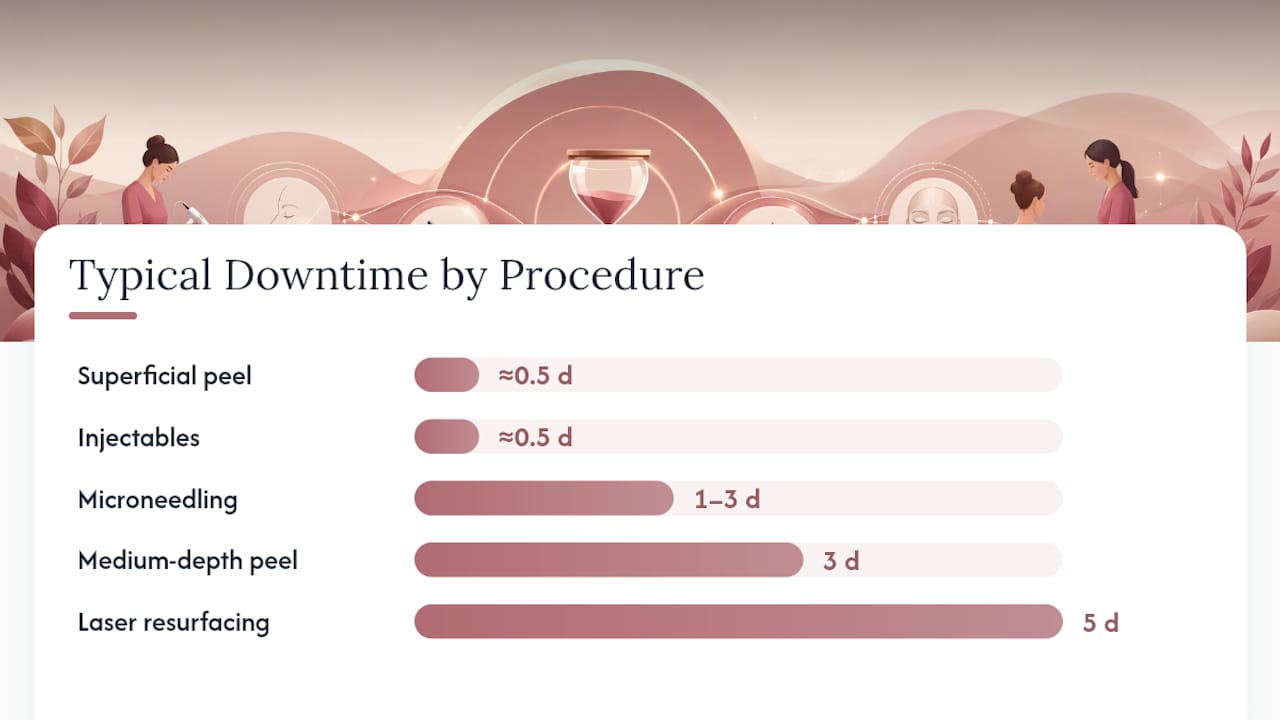
Wait until your barrier is stable and any active inflammation has settled before booking a procedure. Recent isotretinoin use, active breakouts, or a compromised barrier are all reasons a clinician may delay treatment rather than proceed on schedule. Most visible improvement from peels or microneedling shows up over three to six sessions, not one.
Pro Tip: Book a consultation before you buy a package. A clinician can confirm whether your skin is ready for a procedure or needs another few weeks of base repair first.
How Do You Build a Prioritization Plan for Your Own Skin?
Four steps, applied in order, work for almost any combination of concerns:
Assess barrier health and red flags. Redness, flaking, or pain means repair comes first, full stop.
Define your primary concern. If you have three issues, rank them by what bothers you most or changes fastest with treatment.
Pick one first step. One active or one in-clinic option, never several new things at once.
Set a monitoring timeline. Give it four to six weeks, then reassess and adjust.
Four common combinations, worked through:
Acne + hyperpigmentation: treat active acne first with a graded topical approach, then layer in pigmentation correction once breakouts calm, usually around week six.
Aging + sensitivity: barrier repair for three to four weeks, then a low-strength retinoid alternated with recovery nights.
Texture + dehydration: hydration and ceramide repair for two weeks, then a gentle exfoliating acid twice weekly.
Rosacea + dryness: avoid acids entirely at first; focus on barrier support and consult a clinician before adding any active.
Watch for red flags that override this plan entirely: worsening inflammation, spreading rash, signs of infection, or severe pain. Any of those mean stop and see a professional, not push through.
When Is It Time to See a Dermatologist?
Some presentations need more than a routine adjustment. See a professional if you notice a sudden widespread rash, painful cystic acne, a suspected infection, or a lesion that’s changing shape or color.
A proper consult includes a skin assessment, a working diagnosis, a sequenced treatment plan, and possibly a prescription. Expect realistic timelines: most improvement in acne, pigmentation, or texture takes six to twelve weeks of consistent treatment, not days. Sequencing, patience, and one change at a time consistently outperform doing everything simultaneously.
How a Clinic Builds a Prioritized Skin Plan
A client presenting with pigmentation, mild redness, and early fine lines is a familiar case at Fundamentalskin. The assessment starts with barrier integrity, then ranks concerns by what’s driving the most visible impact.
Priority order set: barrier repair and SPF first, redness calming second, pigmentation correction third.
In-clinic step chosen: a Larimedical Biomimetic Peel paired with LED therapy, timed once the barrier is stable.
Monitoring: progress checked at four and eight weeks, with home care adjusted between sessions.
Sequencing matters more than product count. A client who repairs the barrier first before any pigmentation treatment consistently sees faster, cleaner results than one who adds five products at once.
Before-and-after images from cases like this are available on the Fundamentalskin site, alongside details on the Synergie Peel as an alternative option for different skin presentations. This approach comes from Chevonne, a Dermal Clinician with 15 years of experience building exactly this kind of staged treatment plan.
A clinician’s note on getting the order right
The pyramid works because it respects biology over impatience. Protect and repair before you correct, and set expectations with a plan built for your skin, not a generic routine.
Book a consult to map your own priority order
Trying to sequence retinoids, peels, and SPF on your own is where most routines stall out, and it’s exactly the gap a clinician closes in one visit. Fundamentalskin builds a personalized plan around your specific concern mix rather than a one-size-fits-all product stack, using organic, Australia-sourced ingredients and non-invasive treatments that require no downtime.

If pigmentation, redness, or early aging are competing for attention, the Larimedical Biomimetic Peel addresses multiple concerns in a single non-invasive session, and the Biomimetic Peel + LED Therapy package pairs correction with recovery support for faster, more comfortable results. For milder concerns or a gentler entry point, the Synergie Peel is worth asking about at your consult. Book an assessment to find out which step belongs first on your skin.
Frequently Asked Questions
What should I treat first if I have more than one skin concern? Start with barrier repair, hydration, and SPF regardless of which concern bothers you most. Correction treatments only work reliably once the base is stable.
How long before I can tell if a new active is working? Give any new active four to six weeks before judging results, since skin cell turnover operates on that timeline.
Can I use a retinoid and an exfoliating acid at the same time? Not until your barrier tolerates each one individually. Combining them too early is a common cause of irritation and setbacks.
When does a skin concern need a dermatologist instead of home care? See a professional for sudden rash, painful cystic acne, suspected infection, or any lesion changing in size, shape, or color.
Is it normal for pigmentation and sensitivity to show up together? Yes, and the sequencing matters: calm sensitivity and repair the barrier first, then introduce pigmentation-targeted actives gradually.
This article is general information, not a substitute for advice from a qualified doctor. Consult a qualified healthcare professional about your own circumstances before acting on anything here.
Sources
The prioritization model in this guide draws on the original Skin Health and Beauty Pyramid research, updated guidance on exposome-driven protection, and graded acne treatment recommendations. For layering mechanics, see this explainer on active ingredient order. None of this replaces a personalized consult with a qualified clinician.
Recommended
Comments