.png)
Repair Skin Barrier in Aging Skin: 2026 Guide

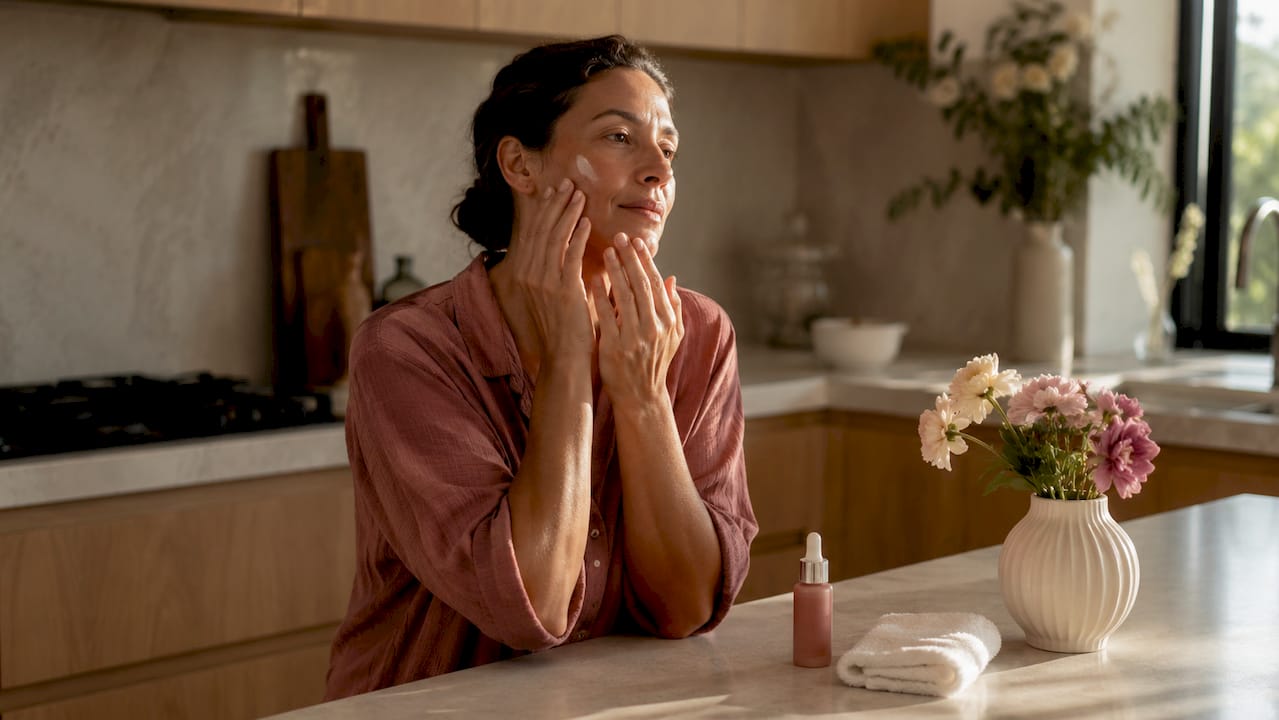
The skin barrier is defined as the outermost layer of the epidermis, responsible for keeping moisture in and environmental aggressors out. In aging skin, this barrier weakens as the body produces fewer ceramides, cholesterol, and fatty acids. The result is dryness, sensitivity, and accelerated fine lines. The good news: you can repair skin barrier in aging skin with a targeted, simplified routine built around structural lipids, humectants, and occlusives. Most people see visible improvement within 2–4 weeks.
What causes skin barrier damage in aging skin?
Lipid depletion is the primary cause of barrier breakdown in aging skin. As you age, your skin produces fewer ceramides, less cholesterol, and reduced free fatty acids. These three lipids form the “mortar” that holds skin cells together. Without them, the barrier becomes porous and reactive.
Several factors speed up this process:
Ceramide, cholesterol, and fatty acid decline: Natural production slows significantly after age 40, leaving the barrier structurally incomplete.
UV radiation: Sun exposure causes a cycle of barrier breakdown and partial rebuild. Without daily SPF, skin never fully recovers.
Environmental pollution: Airborne particles generate free radicals that degrade lipid layers and trigger chronic low-grade inflammation.
Harsh skincare actives: Retinoids, exfoliating acids, and vitamin C serums are effective but disruptive. Overuse strips the barrier faster than it can regenerate.
Over-exfoliation: Physical scrubs and high-frequency chemical peels remove the protective acid mantle, leaving skin exposed and raw.
When barrier damage goes untreated, the consequences compound. Transepidermal water loss (TEWL) increases, skin becomes chronically dry and tight, and sensitivity to products you once tolerated rises sharply. Persistent barrier damage also accelerates collagen breakdown, making fine lines and sagging appear faster. Treating the barrier is not cosmetic maintenance. It is a biological necessity for aging skin.
Which ingredients actually rebuild the skin barrier?
Effective barrier repair requires more than a single hero ingredient. The structure of the barrier depends on a precise lipid system, and your products need to reflect that.

The lipid triad: ceramides, cholesterol, and fatty acids
Optimal barrier repair requires ceramides, cholesterol, and free fatty acids in roughly a 3:1:1 ratio. Ceramides alone make up about 50% of barrier fats, but applying ceramides without cholesterol and fatty acids can actually disrupt the lipid lamellae and delay recovery. This is why single-ingredient ceramide serums often underdeliver. Look for products that list all three on the label.
Humectants: drawing moisture in
Humectants like glycerin and hyaluronic acid pull water into the skin from the environment and deeper skin layers. They work best when applied to slightly damp skin, where they have water to attract. On their own, humectants cannot seal moisture in. They need an occlusive layer on top to be fully effective.
Occlusives: sealing the repair
Petrolatum is the most effective occlusive available. Petrolatum reduces TEWL by up to 98%, making it the gold standard for overnight barrier repair. Squalane is a lighter alternative for daytime use. Both prevent moisture from evaporating while the barrier rebuilds underneath.
Supporting ingredients worth adding
Niacinamide: Stimulates ceramide synthesis and reduces redness. Works well at 4–5% concentration.
Panthenol (vitamin B5): Soothes irritation and supports cell regeneration.
Allantoin: Calms reactive skin and promotes healing.
Pro Tip: When comparing moisturizers, check that the product lists ceramides, cholesterol, AND a fatty acid (like linoleic acid or caprylic/capric triglycerides) within the first ten ingredients. If only ceramides appear, keep looking.
Ingredient Type | Examples | Primary Role |
Structural lipids | Ceramides, cholesterol, fatty acids | Rebuild lipid lamellae |
Humectants | Glycerin, hyaluronic acid | Attract and retain moisture |
Occlusives | Petrolatum, squalane | Seal moisture, reduce TEWL |
Skin soothers | Niacinamide, panthenol | Calm inflammation, support repair |
For a deeper look at barrier repair ingredients and how they work together, the research is clear: balance matters more than any single star ingredient.
How to restore your skin barrier step by step
A clear, consistent routine is what separates real recovery from ongoing frustration. Follow these steps in order.
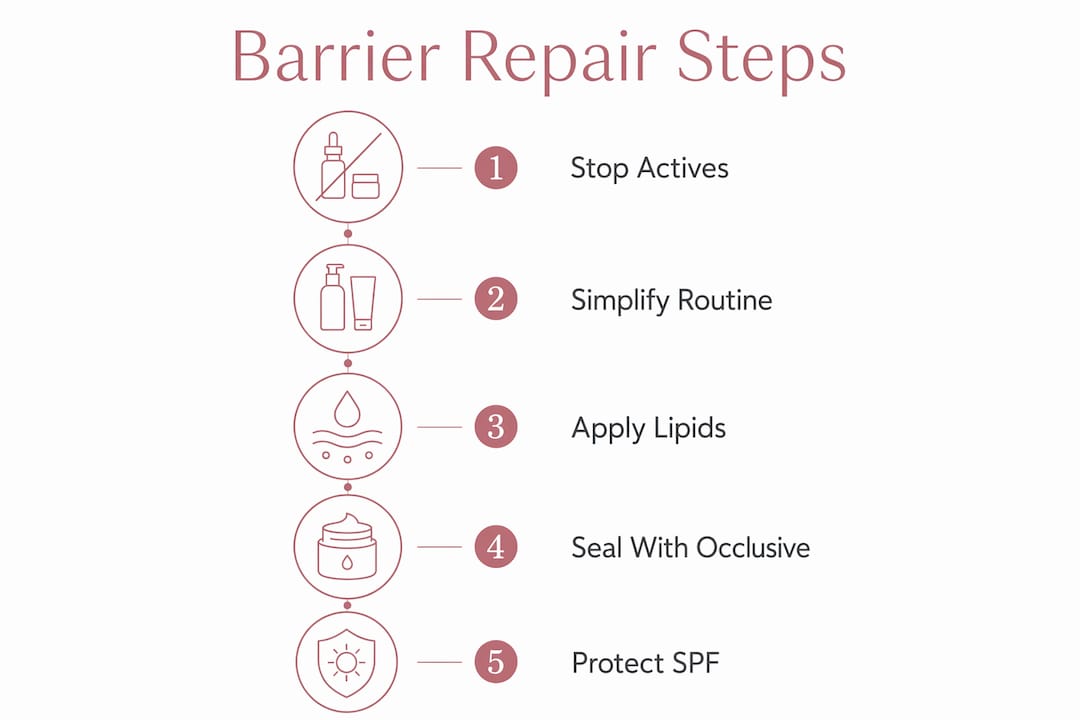
Stop all actives immediately. Retinoids, exfoliating acids (AHAs, BHAs), and vitamin C serums must pause. Visible improvement typically begins within days to 2–4 weeks once you stop these products. Continuing them while trying to repair the barrier is like patching a tire while still driving on it.
Switch to a gentle, low-pH cleanser. Avoid sulfates (sodium lauryl sulfate, sodium laureth sulfate). Choose a cream or micellar cleanser with a pH between 4.5 and 5.5. Cetaphil Gentle Skin Cleanser and La Roche-Posay Toleriane Hydrating Gentle Cleanser are widely available options that meet this standard.
Apply moisturizer on slightly damp skin. Applying moisturizer within 3 minutes of cleansing, while skin is still damp, locks in residual moisture and significantly improves humectant efficacy. Pat skin gently. Do not rub.
Use a ceramide-rich moisturizer morning and night. CeraVe Moisturizing Cream and Vanicream Moisturizing Skin Cream both contain the lipid triad. Apply generously. More is more during the repair phase.
Seal with an occlusive at night. Apply a thin layer of petrolatum (plain Vaseline works) over your moisturizer before bed. This technique, sometimes called “slugging,” creates an occlusive seal that dramatically reduces overnight water loss.
Apply mineral SPF every morning. Zinc oxide or titanium dioxide-based sunscreens protect the barrier from UV-driven damage without the irritation risk of chemical filters. Without this step, skin stays in a continuous damage cycle and cannot fully recover.
Reintroduce actives cautiously after 4–6 weeks. After the initial repair phase, add one active at a time, starting once weekly. Buffer retinoids by applying moisturizer before and after. Never layer multiple actives in the same session.
Pro Tip: Keep your routine to four products maximum during the repair phase: cleanser, moisturizer, occlusive, and SPF. Every additional product is a potential irritant.
Week | Focus | Products in Use |
1–2 | Stop actives, simplify | Cleanser, ceramide moisturizer, SPF |
3–4 | Seal and protect | Add petrolatum at night |
5–6 | Assess and stabilize | Continue simplified routine |
7+ | Cautious reintroduction | Add one active, once weekly |
For more guidance on building a gentle skincare routine that supports barrier health, Fundamentalskin has covered this topic in depth.
How to protect your skin barrier long term
Repairing the barrier is only half the work. Keeping it healthy requires consistent daily habits.
Daily SPF without exception. UV radiation keeps skin in a rebuild-and-tear-down cycle. Skipping sunscreen even occasionally undermines weeks of repair work.
Limit exfoliation to once or twice weekly. Once your barrier is restored, gentle chemical exfoliation (low-percentage lactic acid or mandelic acid) is fine. Anything more frequent risks re-damaging the barrier.
Add antioxidants strategically. Vitamin C (once your barrier is stable), vitamin E, and niacinamide neutralize free radicals from pollution and UV exposure. These protect the lipid layer from oxidative breakdown.
Drink enough water and manage stress. Chronic stress elevates cortisol, which suppresses ceramide synthesis. Hydration supports skin cell turnover. Neither replaces topical care, but both matter.
Adjust your routine seasonally. Cold, dry winters demand richer occlusives and more frequent moisturizing. Hot, humid summers may allow lighter textures. Your barrier’s needs shift with the climate.
Use advanced treatments carefully. Professional treatments like advanced skin rejuvenation can support long-term skin health when timed correctly. Always confirm your barrier is stable before booking resurfacing treatments.
The goal is a routine you can sustain, not one you sprint through for a month. Consistency over intensity is what keeps aging skin healthy and glowing.
What to do when barrier repair feels stuck
Sometimes the barrier does not respond as expected. Here is how to troubleshoot.
Persistent dryness and tightness after two weeks: You may still be using a hidden irritant. Check ingredient lists for fragrance, alcohol denat., and essential oils. These are common culprits in products marketed as “natural.”
Adding too many products too soon: The urge to do more when skin looks bad is the most common mistake. A 2–4 week reset with zero actives is the mandatory foundation. Skipping this phase is the single biggest reason barrier repair fails.
Reactions to new products: Introduce one new product at a time, waiting five to seven days before adding another. If redness or stinging appears, remove the newest addition first.
Environmental factors: Low indoor humidity (below 40%) accelerates TEWL. A humidifier in your bedroom can meaningfully support overnight repair. Pollution-heavy environments also slow recovery.
When to seek professional help: If skin remains reactive, red, or painful after four weeks of a simplified routine, consult a qualified Dermal Clinician. Conditions like perioral dermatitis, rosacea, or contact dermatitis require clinical assessment, not more products.
“Barrier repair is not about finding the right product. It is about removing the wrong ones and giving your skin the space to heal.”
For post-treatment skin protection guidance that applies equally well to barrier recovery, Fundamentalskin’s resources are worth reviewing.
Key takeaways
Repairing the skin barrier in aging skin requires stopping irritating actives, applying a balanced lipid triad, and protecting the barrier daily with SPF and occlusives.
Point | Details |
Stop actives first | Pause retinoids, acids, and vitamin C for at least 2–4 weeks to allow lipid matrix reassembly. |
Use the full lipid triad | Choose products with ceramides, cholesterol, AND fatty acids together, not ceramides alone. |
Seal moisture at night | Apply petrolatum over moisturizer to reduce TEWL by up to 98% during overnight repair. |
SPF is non-negotiable | Daily broad-spectrum sunscreen breaks the UV damage cycle that prevents full barrier recovery. |
Reintroduce actives slowly | After 4–6 weeks, add one active at a time, starting once weekly, to avoid re-damaging the barrier. |
What 15 years in the treatment room taught me about barrier repair
I have worked with hundreds of women whose skin was reactive, dry, and frustrated. The pattern I see most often is this: they come in having tried everything, and that is exactly the problem.
The most counterintuitive truth in skin barrier repair is that doing less works better than doing more. I have watched clients strip their routines down to four products and see more improvement in three weeks than they had in three years of layering serums. Lipid depletion is a biological reality of aging skin, and no amount of active ingredients fixes it if the barrier is too compromised to absorb them.
The other thing I want you to hear: the 2–4 week reset phase is where most people give up. Skin looks dull without actives. It does not feel exciting. But that quiet period is when the real work happens at a cellular level. Patience during this window predicts everything.
I also want to address the misconception that dryness means you need more exfoliation. More exfoliation is almost always the wrong answer for aging, reactive skin. What your skin is asking for is structural support, not more stripping.
Trust the process. Your skin knows how to heal. Your job is to stop getting in the way.
— chevonne
How Fundamentalskin supports your barrier recovery
If your skin needs more than a home routine can deliver, Fundamentalskin is here to help. Chevonne and the team specialize in personalized treatments for aging, sensitive, and reactive skin, using clinically proven protocols tailored to your unique needs.

The Larimedical Biomimetic Peel is designed to resurface and regenerate without compromising barrier integrity, making it one of the most appropriate professional treatments for aging skin in active repair. For clients ready to take the next step, the Biomimetic Peel + LED Therapy combines resurfacing with light-based regeneration to support collagen and barrier function simultaneously. Every treatment at Fundamentalskin begins with a thorough skin assessment so your barrier is protected, not pushed.
BOOK YOUR CONSULTATION and start loving the skin you are in.
FAQ
What are the first signs of a damaged skin barrier?
Persistent dryness, tightness, stinging from products you once tolerated, and increased redness are the clearest signs. Skin may also look dull and feel rough to the touch.
How long does it take to repair a damaged skin barrier?
Visible improvement typically begins within days to 2–4 weeks after stopping actives and adopting a simplified, lipid-rich routine. Full structural recovery can take up to 6 weeks.
Can i use retinol while repairing my skin barrier?
No. Retinoids must be paused during the repair phase. Reintroduce retinol only after 4–6 weeks of barrier stabilization, starting once weekly and buffering with moisturizer.
Is petrolatum safe for aging skin?
Yes. Petrolatum is non-comedogenic for most skin types and is one of the most evidence-backed occlusives available. It reduces water loss by up to 98% and accelerates overnight barrier repair.
Do i need professional treatments to repair my skin barrier?
A home routine handles most barrier repair effectively. Professional treatments like the Larimedical Biomimetic Peel at Fundamentalskin are best introduced after the barrier is stable, to support long-term skin health and rejuvenation.
Recommended
Comments