.png)
Rosacea Facial Treatment: The Barrier-First Clinic Approach
- chevonne stewart
- 10 hours ago
- 9 min read

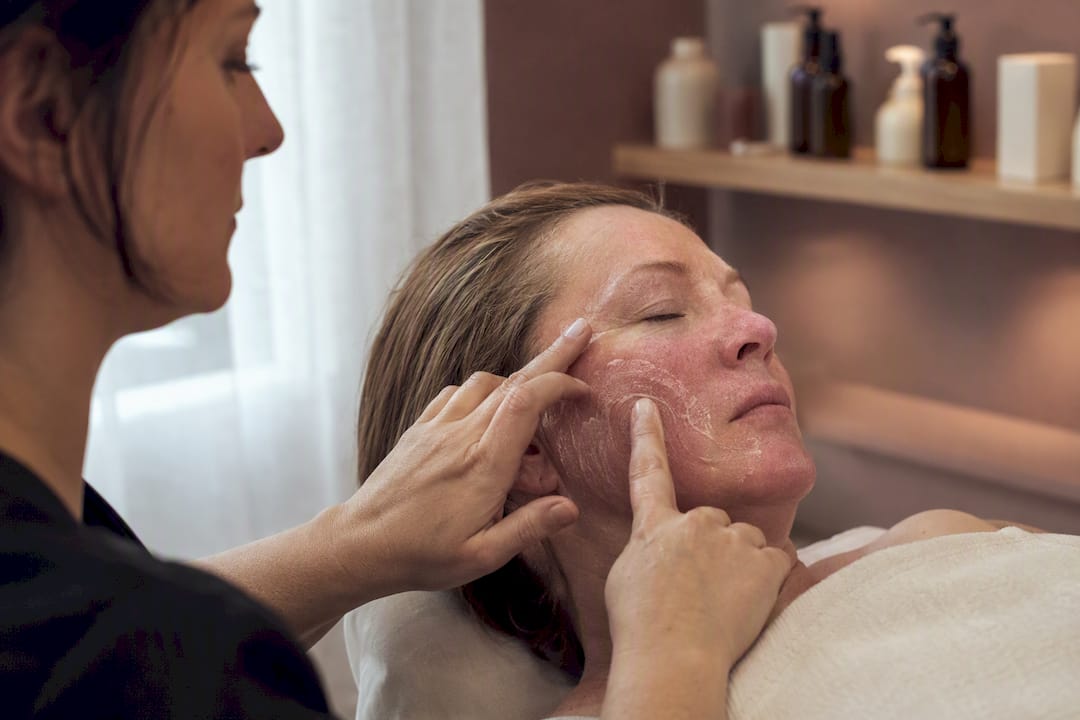
The most effective rosacea facial treatment options right now are biomimetic peels, gentle calming facials, and in-clinic red-light (LED) therapy, used together as part of a personalized plan. These approaches work because they support the skin barrier instead of stripping or inflaming it, which is the opposite of what aggressive peels and harsh exfoliation do to reactive skin.
Biomimetic peels encourage repair without the controlled injury of traditional acid peels, so there is minimal downtime and lower flare risk.
Gentle, calming facials use soothing masks and light enzyme exfoliation to reduce visible redness without irritating already-sensitized skin.
In-clinic LED/red-light therapy works below the skin surface to ease inflammation gradually, with results that build over a course of sessions.
The right starting point is a personalized consultation with a qualified dermal clinician, not a product off a shelf.
Key Takeaways
Barrier-first treatment, combining biomimetic peels with clinic-grade LED therapy under professional supervision, calms rosacea-related redness more reliably than aggressive resurfacing.
Point | Details |
Choose barrier-first options | Biomimetic peels, gentle facials, and clinic LED support repair instead of triggering inflammation. |
Expect gradual results | Improvement typically builds over weeks to months across a series of sessions, not one visit. |
Prioritize clinic-grade devices | Professional LED systems run at calibrated outputs a home device cannot match. |
Protect gains at home | Gentle cleansing, barrier moisturizer, and daily SPF preserve clinic results between sessions. |
Start with Fundamentalskin | The $249 Biomimetic Peel + LED Therapy package pairs a personalized assessment with a conservative, barrier-first protocol. |
Table of Contents
What Is the Best Rosacea Facial Treatment in a Clinic Setting?
Rosacea-prone skin reacts badly to anything that treats redness as damage to be aggressively resurfaced. The treatments that actually help work with the skin’s repair processes, not against them.
Biomimetic peels are formulated to mimic the skin’s own biological signals rather than force exfoliation through acid-driven injury. Instead of stripping the outer layers and triggering an inflammatory cascade, they support natural repair and barrier restoration, which is exactly what rosacea-prone skin needs. The Larimedical Biomimetic Peel used at Fundamentalskin follows this logic, and it is one reason clients see minimal downtime after a session rather than the raw, flushed look that follows a traditional glycolic or salicylic peel.
Gentle facials and calming modalities round out the barrier-first picture. Targeted soothing masks, light enzyme-based exfoliation, and manual lymphatic drainage techniques reduce puffiness and visible capillary congestion without mechanical abrasion. These treatments are chosen specifically for their low irritation potential.
In-clinic red-light or LED therapy, also called photobiomodulation, uses specific wavelengths of light to calm inflammation and support cellular repair at a deeper level than topical products can reach. Clinic-grade devices matter here: professional LED systems deliver higher, calibrated irradiance than consumer devices, with stronger clinical evidence behind their outcomes. That gap in power is precisely why a session on Fundamentalskin’s clinic equipment is not comparable to a handheld device bought online.
Start with a consultation and skin assessment to map your triggers and current barrier state.
Begin with a conservative peel or LED protocol to gauge how your skin responds.
Layer in additional sessions only once tolerance is confirmed.
Deeper resurfacing, such as aggressive chemical peels or ablative treatments, is generally avoided for rosacea-prone clients because the induced inflammation can trigger a flare that outlasts any short-term glow.
Pro Tip: If your skin flushes easily after a hot shower or a glass of wine, mention it at your consultation. That single detail tells a clinician exactly how conservative your first session needs to be.
How Long Does It Take to See Results From Rosacea Treatments?
Nobody walks out of a single appointment with rosacea gone. Realistic clinic plans are built in blocks, typically combining weekly LED sessions with one to three spaced biomimetic peels over several weeks, depending on how your skin responds at each check-in.
Red-light therapy is a cumulative treatment, not a single fix. Clinical reviews of photobiomodulation show it can improve texture and reduce redness over time, but the effect depends on regular, repeated sessions rather than one visit. Evidence specifically for rosacea remains preliminary, though LED is increasingly used as a supportive adjunct for erythema rather than a standalone cure.
Most clients notice calmer, less reactive skin somewhere between four and eight weeks into a combined plan, with tone and texture continuing to refine over the following months. Maintenance sessions, often monthly once the initial block is finished, keep those gains from sliding back. Before-and-after photography documented at each visit gives you and your clinician an objective way to track that gradual shift, since day-to-day redness can otherwise mask real progress.
Is Rosacea Facial Treatment Safe for Sensitive Skin?
Clinical supervision exists precisely because rosacea-prone skin does not tolerate guesswork. A few contraindications come up repeatedly:
Active photosensitizing medications (certain antibiotics, retinoids, some acne treatments) can make LED or peel sessions riskier.
Open lesions, active infection, or a recent sunburn should delay any facial treatment until skin has settled.
Pregnancy and certain autoimmune conditions call for a modified plan, not automatic exclusion.
Clinic devices matter here in a very concrete way. Professional-grade LED systems run at calibrated fluence and wavelength settings that a dermatologist or qualified clinician has assessed for the specific skin type in the chair, something a consumer device simply cannot replicate. A responsible clinic will always take a full medical history, patch test where appropriate, and start conservative rather than pushing intensity on day one.
If you notice unusual stinging, prolonged redness beyond the expected day or two, or any blistering after a session, report it immediately and pause further treatment until your clinician has reviewed it.
What Aftercare Keeps Rosacea Skin Calm Between Sessions?
Clinic results fade fast without the right home routine behind them. The goal at home is the same as in the treatment room: support the barrier, avoid triggers, and never rush new ingredients onto reactive skin.
Cleanse with a gentle, non-foaming formula and lukewarm water, never hot.
Apply a barrier-repair moisturizer within minutes of cleansing to lock in hydration.
Wear a broad-spectrum SPF every single day, rain or shine, since UV exposure is one of the most reliable rosacea triggers.
Reintroduce actives like retinoids or acids only on your clinician’s timeline, usually weeks after a peel, and only one new product at a time.
Harvard Health’s review of red-light therapy notes it works best alongside consistent sun protection and supportive skincare, not as a replacement for either. If you are curious about a home LED device between clinic visits, treat it as a minor supplement at most. Consumer devices deliver meaningfully lower output than clinic systems and carry far less independent evidence behind them, so they should never replace your in-clinic protocol. For a full breakdown of how to structure a gentle daily routine, Fundamentalskin’s guide on building a minimal effective skincare routine walks through the sequencing in more detail, and this gentle face cleansing workflow offers a useful companion routine for reactive skin types.
How Do You Choose the Right Clinic for Rosacea Treatment?
Not every clinic offering “redness treatments” understands rosacea’s specific triggers. Look for a dermal clinician with real hands-on experience treating reactive skin, not just a general aesthetics background.
Ask what the proposed treatment plan looks like over the first three months, not just the first visit.
Ask whether a patch test or conservative first session is standard practice.
Ask how aftercare and product recommendations are tailored to your specific triggers.
Ask about total costs across a full treatment block, not just the price of one session.
Be wary of any clinic promising instant, dramatic results or offering the exact same plan to every client regardless of skin type. That is a red flag, not a shortcut. Bring a list of current medications, the skincare products you already use, and photos of recent flare-ups so your clinician can see the full pattern, not just a single snapshot in the treatment chair. Fundamentalskin’s personalized skincare consultation guide covers what a thorough first assessment should include.
Pro Tip: Take a plain, unfiltered photo of your face during your worst flare before your first consultation. Clinicians can plan around a pattern far better than a description.
What Triggers Rosacea Flare-Ups?
Rosacea flares rarely come out of nowhere. Sun exposure sits at the top of most trigger lists, followed closely by heat, whether from hot showers, saunas, or simply a warm room on a summer day. Spicy food, alcohol (red wine especially), and hot drinks are classic culprits because they all cause the same thing: rapid vasodilation that floods the face with blood flow.
Stress is another major trigger, and an underrated one. The skin’s inflammatory response is closely tied to the nervous system, so a stressful week at work can show up on your face days later. Intense exercise, sudden temperature changes (walking from an air-conditioned office into summer heat), and certain skincare ingredients, particularly fragrance, alcohol-based toners, and harsh physical scrubs, round out the usual suspects.
Lifestyle modifications do not need to be extreme to make a difference. Keeping a simple trigger diary for a few weeks, noting what you ate, drank, or did before a flare, often reveals patterns faster than any product change. Small swaps help too: lukewarm water instead of hot, a wide-brimmed hat instead of relying on sunscreen alone, and pacing spicy meals rather than cutting them out entirely if that feels unrealistic. None of this replaces professional treatment, but it does reduce how hard your skin has to work between clinic visits.
Do Medications Work Alongside Facial Treatments for Rosacea?
Topical and oral medications prescribed by a physician address the inflammatory and vascular processes driving rosacea from the inside, while clinic facial treatments work on visible redness, texture, and barrier strength from the outside. The two are complementary, not competing.
Many clients arrive at a clinic already using a prescribed topical, and that is worth mentioning during your consultation, since some medications increase photosensitivity and change how your skin responds to LED therapy or a peel. A clinician who reviews your full medication list before treatment isn’t being cautious for the sake of it. It genuinely changes how conservative the first session should be.
Facial treatments like biomimetic peels and LED therapy are not designed to replace a prescribed medical regimen, and Fundamentalskin does not position them that way. They are positioned as a complementary layer that supports skin tone, texture, and comfort while any medical treatment a doctor has prescribed continues to do its work. If you are on an oral or topical prescription, loop your clinician in before booking, so the facial plan is built around what your skin is already managing rather than adding a variable your dermatologist has not seen.
Do All Rosacea Subtypes Respond to the Same Treatment?
Rosacea shows up differently from one face to the next, and the treatment emphasis shifts with it. Erythematotelangiectatic rosacea, marked by persistent redness and visible blood vessels, tends to respond well to a barrier-first plan built around biomimetic peels and LED therapy, since the priority is calming vascular reactivity without adding irritation.
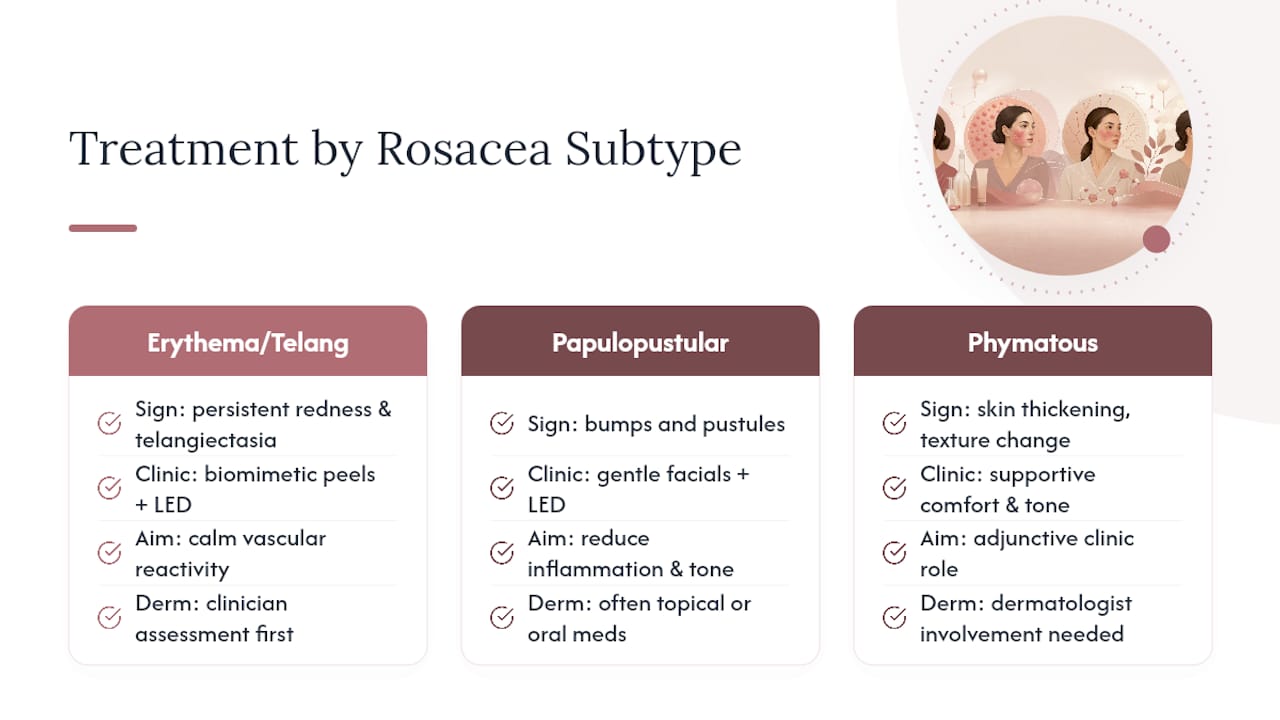
Papulopustular rosacea, which adds bumps and pustules to the redness, often needs a more layered approach. Gentle facials and LED can still help with the underlying inflammation and skin tone, but this subtype is more likely to already involve topical or oral medication from a physician, and a clinic plan should be built around that existing treatment rather than in isolation.
Phymatous rosacea, involving thickened skin and textural changes, usually needs a different level of care than facials alone can offer, and clients with this subtype should have a dermatologist involved in the broader treatment strategy. Where a clinic-based plan fits is in that supportive comfort and skin-tone role rather than as the primary intervention. The common thread across all three subtypes is the same: a clinician assesses which pattern you have before recommending anything, because a plan built for background redness is not the same plan a bumpier or thicker-skinned client needs.
Why Gentle, Cumulative Plans Work Better Than Quick Fixes
Rosacea-prone skin punishes shortcuts. A client who chases a dramatic peel for fast results usually ends up more reactive than before, which is why we build every plan around what the skin can tolerate that week, not what looks impressive on a treatment menu. Combining a biomimetic peel with LED sessions works because neither element forces the skin into a defensive, inflamed state.
Every plan starts with an individual assessment. Two clients with the same redness pattern can have completely different trigger thresholds.
— chevonne
Fundamentalskin’s Biomimetic Peel + LED Package
If the barrier-first approach described above sounds right for your skin, Fundamentalskin’s Biomimetic Peel + LED Therapy package is priced at $249 and built to be your next concrete step rather than another thing to research.
The appointment includes a full skin assessment with Chevonne, a Dermal Clinician with 15 years of experience treating reactive and rosacea-prone skin, followed by the biomimetic peel and LED session itself, and a personalized aftercare plan you take home. Every ingredient used is organic and Australia-sourced, chosen specifically to avoid the synthetic fragrances and harsh preservatives that commonly trigger flares in sensitive skin.
At your first visit, expect a conversation before any treatment touches your face: current medications, past reactions, trigger patterns, and what you’re hoping to see change. From there, Chevonne recommends a conservative starting protocol and outlines what a realistic multi-session plan looks like for your specific redness. You can view full details and book the Larimedical peel directly online to secure a consultation time that works for your schedule.
Sources
Recommended
Comments