.png)
Clinician Backed Teeth Whitening Aftercare for Australia: 48–72 Hours


For the first 48 hours, keep dark, pigmented, and acidic foods and drinks away from your teeth, treat sensitivity with a potassium nitrate toothpaste or a clinician-applied desensitizer, and follow the exact instructions your treating professional gave you. Healthdirect and the American Dental Association both back this approach, and similar guidance is commonly given by clinicians after a whitening session.
TL;DR:
The first 48 hours are critical for avoiding pigmented and acidic foods to prevent staining because enamel permeability is highest during this period.
Using a straw for pigmented drinks and rinsing immediately afterward can help minimize stain absorption if avoidance isn’t fully possible.
Sensitivity usually peaks within 48 hours and can be managed with potassium nitrate toothpaste, topical desensitizers, and over-the-counter pain relief; persistent or worsening pain should prompt professional consultation.
Gentle oral hygiene with soft brushes and avoiding abrasive or alcohol-based rinses is essential during the initial days to prevent further irritation.
Whitening results generally last 6 to 12 months, with touch-ups best using clinician-supplied trays, as restorations like crowns and veneers do not whiten and may remain mismatched.
Table of Contents
What to Avoid After Teeth Whitening (and for How Long)
Your enamel is temporarily more porous right after whitening, which means it picks up stains more easily than usual. The highest-risk window is the first 48 to 72 hours, though tobacco and heavily pigmented foods deserve caution for the full first week.
Steer clear of these while your teeth are most vulnerable:
Coffee, red wine, and black tea
Tomato sauce, berries, and soy sauce
Citrus fruits, vinegar-based dressings, and soda
Cigarettes and other tobacco products
Here’s the nuance most articles skip: a 2026 meta-analysis found no statistically significant difference in color change or sensitivity between people who strictly avoided pigmented foods and those who didn’t, though the evidence certainty was low. That doesn’t mean the old “white diet” advice is pointless. It means frequency and duration of exposure likely matter more than a single sip of coffee. Stick to water, milk, chicken, rice, and pale vegetables when you can, and you’ll minimize risk without much sacrifice.
Pro Tip: If you can’t avoid a pigmented drink entirely, use a straw and rinse with plain water right after.
Your First 48 to 72 Hours: A Practical Timeline
The restrictions you hear about aren’t arbitrary. They exist mainly for comfort and stain prevention while your enamel’s surface permeability is temporarily elevated.
Hours 0 to 24: Stick to room-temperature foods and drinks. Cold and hot extremes tend to trigger the sharp, brief “zinger” sensitivity many people notice right after treatment. Rinse with water after anything other than clear liquids.
Hours 24 to 48: Continue avoiding pigmented and acidic items. Brush gently with a soft-bristled brush and fluoride toothpaste, and skip whitening toothpaste for now.
Hours 48 to 72: Sensitivity usually starts easing. You can gradually reintroduce normal foods, though it’s still smart to rinse promptly after anything staining.
Your clinician’s written instructions take priority over any generic timeline you find online, since the exact protocol used, whether it’s a higher-strength in-office gel or a milder take-home tray, changes how long your enamel stays sensitive.
How Do You Manage Sensitivity After Whitening?
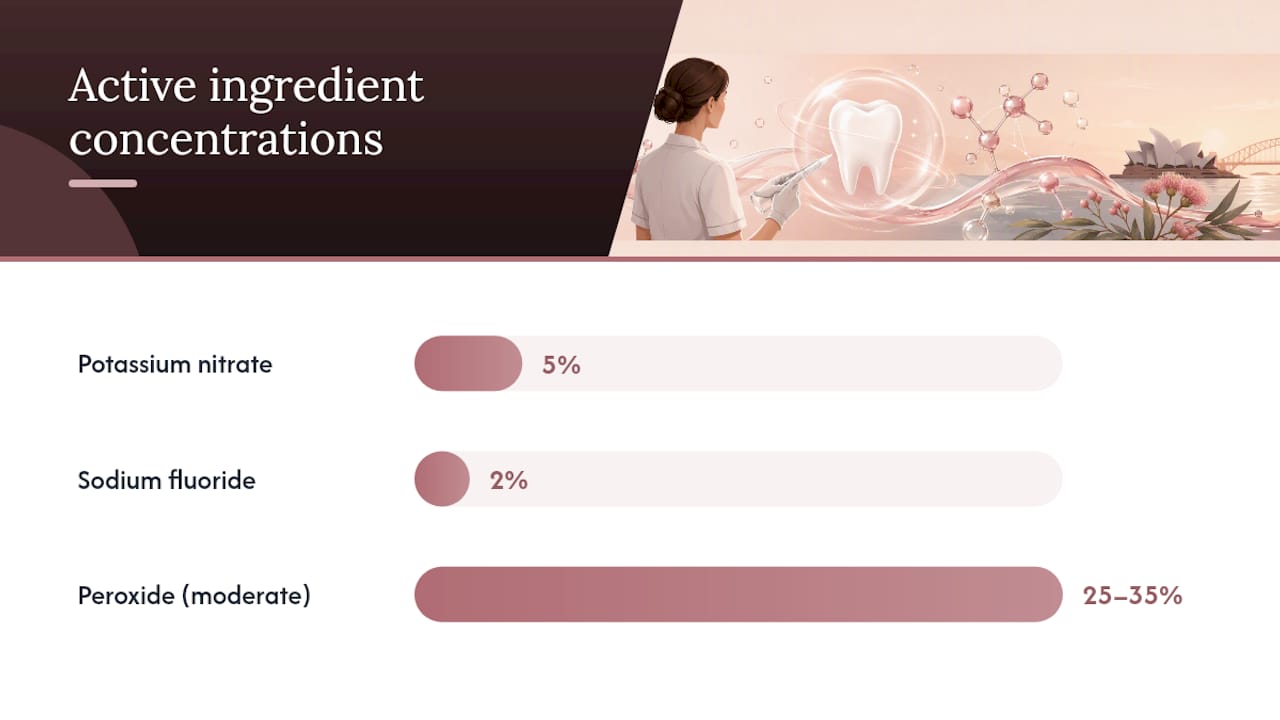
Cold-triggered sensitivity is the most common side effect of whitening, and for most people it fades within a day or two. A systematic review of randomized trials found that applying a desensitizing agent, specifically 5% potassium nitrate combined with 2% sodium fluoride, before in-office bleaching meaningfully reduced both immediate and 24-hour post-treatment sensitivity without affecting the whitening result.
Practical steps that actually help:
Switch to a potassium nitrate toothpaste a few days before treatment if your clinician recommends it, and keep using it for a week or two afterward.
Ask about a topical desensitizing gel applied in-clinic immediately before or after bleaching.
Take an over-the-counter analgesic like ibuprofen if discomfort is more than mild.
Avoid extreme temperatures in food and drink for the first two days.
An umbrella review of bleaching protocols also found that moderate peroxide concentrations, around 25% to 35%, can deliver whitening results comparable to stronger formulas while causing less sensitivity overall. That’s worth asking your clinician about if sensitivity has been an issue for you before.
Brief cold zingers are normal. Pain that gets worse, shows up without any trigger, or lasts beyond 48 to 72 hours is not, and it deserves a call to your dental professional.
Brushing, Flossing, and Rinsing the Right Way
Your regular oral hygiene routine doesn’t stop after whitening. It just needs to be gentler for a few days.
Wait about 30 minutes after eating or drinking anything acidic before brushing. Acid temporarily softens enamel, and brushing too soon can wear it down. Rinse with water first instead.
Use a soft-bristled brush and a standard fluoride toothpaste rather than an abrasive whitening formula while sensitivity is present.
Floss as usual, but keep the motion gentle around the gumline if it feels tender.
Choose plain water or a fluoride mouthwash over alcohol-based rinses, which can sting sensitized teeth and gums.
How Long Do Whitening Results Last?
There’s no universal touch-up schedule, and any article that gives you a flat number in weeks or months is oversimplifying. Longevity depends on your whitening method, your diet, how consistently you brush, whether you smoke, and how many restorations are in your mouth. The American Dental Association is clear that maintenance intervals should follow the treating professional’s guidance rather than a one-size-fits-all rule.
That said, a few signs point to needing a refresh:
Noticeable yellowing returning to your front teeth
A gap forming between the shade of your teeth and any visible restorations
More than 6 to 12 months since your last professional treatment (loosely, and only as a starting point for a conversation with your clinician)
Clinician-supplied take-home trays are generally the safest touch-up route, since they’re calibrated to your teeth and monitored by a professional. Avoid layering random over-the-counter whitening products on top of a recent professional treatment without asking first. For a fuller breakdown of what affects longevity, our guide on how long teeth whitening actually lasts walks through the variables in more detail.
Do Crowns and Veneers Whiten Too?
No, and this catches a lot of people off guard. Whitening products only work on natural tooth enamel, which means crowns, veneers, and fillings stay exactly the shade they were before treatment. Healthdirect confirms this directly, and it’s a common reason people end up with a visible mismatch between their now-brighter natural teeth and an older restoration.
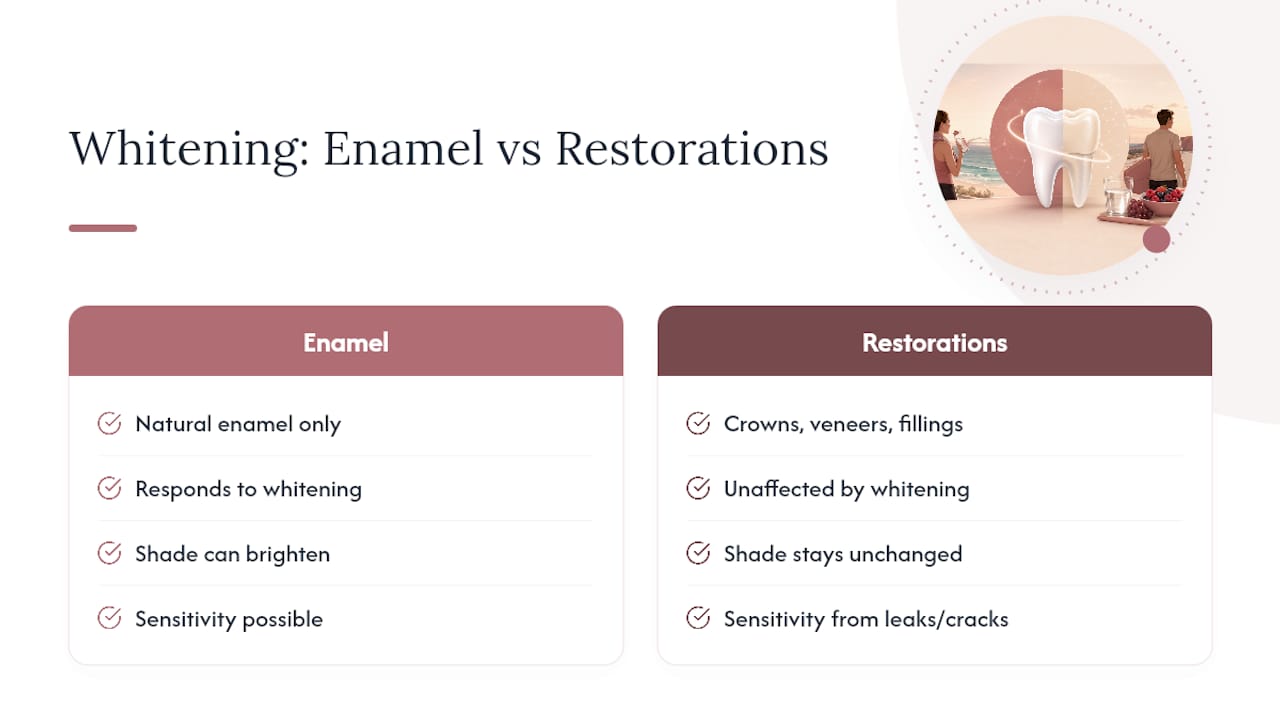
If you have several restorations, particularly on front teeth, get a pre-treatment assessment before whitening at all. It’s also worth knowing that a leaky filling or a hairline crack can cause sensitivity that looks whitening-related but isn’t. Before deciding on a repeat treatment or a new restoration shade, loop in your dental professional. Our before-and-after photo guide shows real examples of this mismatch so you know what to expect.
When Should You Call Your Dental Professional?
Contact your dentist if pain gets worse instead of better, lasts beyond 48 to 72 hours, comes on without any trigger, or is joined by gum burns, swelling, or pain isolated to one tooth. Any of those point to something beyond normal post-whitening sensitivity.
When you call, have this ready: which product was used, how long ago you were treated, and exactly what you’re feeling. In the meantime, stop any further whitening and rinse with plain water. Our guide on managing teeth whitening sensitivity covers clinician-backed next steps if you want more detail before you call.
Clinician Checklist: What Chevonne Tells Every Whitening Client
Screenshot this and keep it handy for the next few days:
Do: Stick to room-temperature, pale foods for 48 hours. Use a potassium nitrate toothpaste. Rinse promptly after anything staining or acidic.
Don’t: Smoke, drink coffee or red wine unrinsed, or use whitening toothpaste while sensitivity is active.
Book a review if: Pain lasts more than 48 to 72 hours, worsens, or comes with swelling.
Experienced dermal clinicians tailor treatment plans with attention to individual response, using personalized aftercare instructions rather than generic timelines. For readers who want the regulatory side of things, our checklist on safe, legal whitening explains why clinician supervision matters beyond just comfort.
Why Clinician Guidance Beats the Generic 48-Hour Rule
The internet loves a tidy rule, and “wait 48 hours” is tidy. But the evidence doesn’t fully support treating it as gospel. That’s a more useful thing to know than a blanket number.
Sensitivity itself is normal and usually brief. What isn’t normal is pain that escalates or lingers, and that’s always worth a professional look rather than a guess based on a stranger’s blog post.
— chevonne
Ready for Clinician-Led Whitening and Aftercare Support?
Generic whitening kits leave you guessing about strength, timing, and sensitivity risk. Fundamentalskin’s teeth whitening treatments come with a clinician setting the protocol from the start, so your aftercare plan is built around the exact product used on your teeth, not a one-size-fits-all pamphlet.

Choose the Signature Treatment at $249 for a full clinician-guided whitening session, or the Platinum Treatment at $199 if you want a targeted option. These treatments generally include clear aftercare instructions tailored to individual teeth and sensitivity history. If you’ve had rough experiences with sensitivity from past whitening, mention it when you book so Chevonne can adjust the protocol accordingly. Book your appointment on the teeth whitening page to get started.
Sources
This article is general information, not a substitute for advice from a qualified doctor. Consult a qualified healthcare professional about your own circumstances before acting on anything here.
FAQ
What Should You Not Do After Teeth Whitening?
Avoid pigmented foods and drinks like coffee, red wine, and berries, along with acidic items and tobacco, especially in the first 48 to 72 hours. Also skip whitening toothpaste and extreme food temperatures until sensitivity settles, per Healthdirect’s guidance.
Do I Really Have to Wait 48 Hours After Teeth Whitening?
The 48 to 72 hour window is when your enamel is most porous and sensitivity is most likely, so it’s the sensible default. A 2026 meta-analysis found the evidence for strict pigment avoidance is low-certainty, but minimizing exposure during this window is still a reasonable, low-effort precaution.
Can I Eat Normally 24 Hours After Teeth Whitening?
You can eat, but stick to room-temperature, pale foods rather than a full return to normal for at least another day. Cold, hot, acidic, or heavily pigmented foods are best saved for after the 48 to 72 hour mark, or once your clinician says sensitivity has settled.
Do Teeth Turn Yellow Again After Whitening?
Yes, natural teeth gradually pick up stains again over time, though there’s no single timeline since it depends on diet, hygiene, tobacco use, and the whitening method used, according to the American Dental Association. Clinician-supplied touch-up trays, like those discussed in our maintenance guide, are the safest way to refresh results when that happens.
Does Fundamentalskin Provide Aftercare Support After Whitening?
Yes, every whitening client at Fundamentalskin receives aftercare instructions tailored to the specific treatment used, whether the Signature Treatment or Platinum Treatment. Current pricing and booking details are available directly on the teeth whitening service page.
Recommended
Comments