.png)
What Is Advanced Skin Device Therapy? Your Guide


Most people assume that if a treatment uses light or a device, it must be doing roughly the same thing. That assumption leads to a lot of wasted money and disappointing results. What is advanced skin device therapy, really? It’s a broad category of in-office, technology-driven treatments that go well beyond topical skincare, using energy-based devices to trigger real biological change in your skin. This guide breaks down the key types, how they work, what they actually do for pigmentation and aging, and how to choose the right option for your skin.
Table of Contents
Key takeaways
Point | Details |
Not all devices are equal | Device parameters and protocol tailoring determine outcomes far more than the device category alone. |
Multiple modalities exist | LED, IPL, radiofrequency and and microneedling each work through different mechanisms for different concerns. |
Skin tone changes everything | Post-inflammatory hyperpigmentation risk rises significantly with higher energy settings on darker skin tones. |
Expect a process, not a single fix | Most device therapies require multiple sessions and consistent aftercare to deliver lasting results. |
Professional guidance is non-negotiable | Personalized treatment plans from a qualified clinician protect your skin and maximize your results. |
What is advanced skin device therapy?
Advanced skin device therapy is the clinical term for a category of in-office treatments that use energy-based technology to address skin concerns at a structural level. Think of it as the space between a daily moisturizer and a surgical procedure. These treatments work beneath the skin’s surface, triggering biological responses that topical products simply cannot reach.
The main technology categories include:
LED (Light Emitting Diode) therapy: Uses specific wavelengths of light to stimulate cellular activity. Red and near-infrared light penetrate deeper into the skin to target photoaging, while blue light stays closer to the surface and is typically used for acne.
IPL (Intense Pulsed Light): Delivers broad-spectrum light pulses to target pigment and vascular irregularities. Unlike lasers, IPL uses multiple wavelengths simultaneously.
Radiofrequency (RF): Delivers controlled heat energy into the dermis to stimulate collagen and elastin production, tightening the skin over time.
Microneedling and RF microneedling: Create controlled micro-injuries that prompt the skin’s natural repair process. Microneedling stimulates collagen by causing micro-injury, while RF microneedling adds heat energy for greater tightening effect.
The mechanism behind each device is different, and that difference matters. LED works through photobiomodulation, stimulating mitochondrial activity. RF works through dielectric heating. Microneedling works through wound response. Lumping them all under “light therapy” or “device treatments” ignores what actually makes each one effective.
Pro Tip: Ask your clinician which specific device model and settings they plan to use, not just the category. Device parameters and protocols determine your outcome far more than the treatment name on the menu.
How these therapies target pigmentation and aging
Pigmentation and photoaging are two of the most common reasons people seek out advanced skincare treatments, and several device modalities have strong clinical evidence behind them for these concerns.
IPL for pigmentation and photoaging
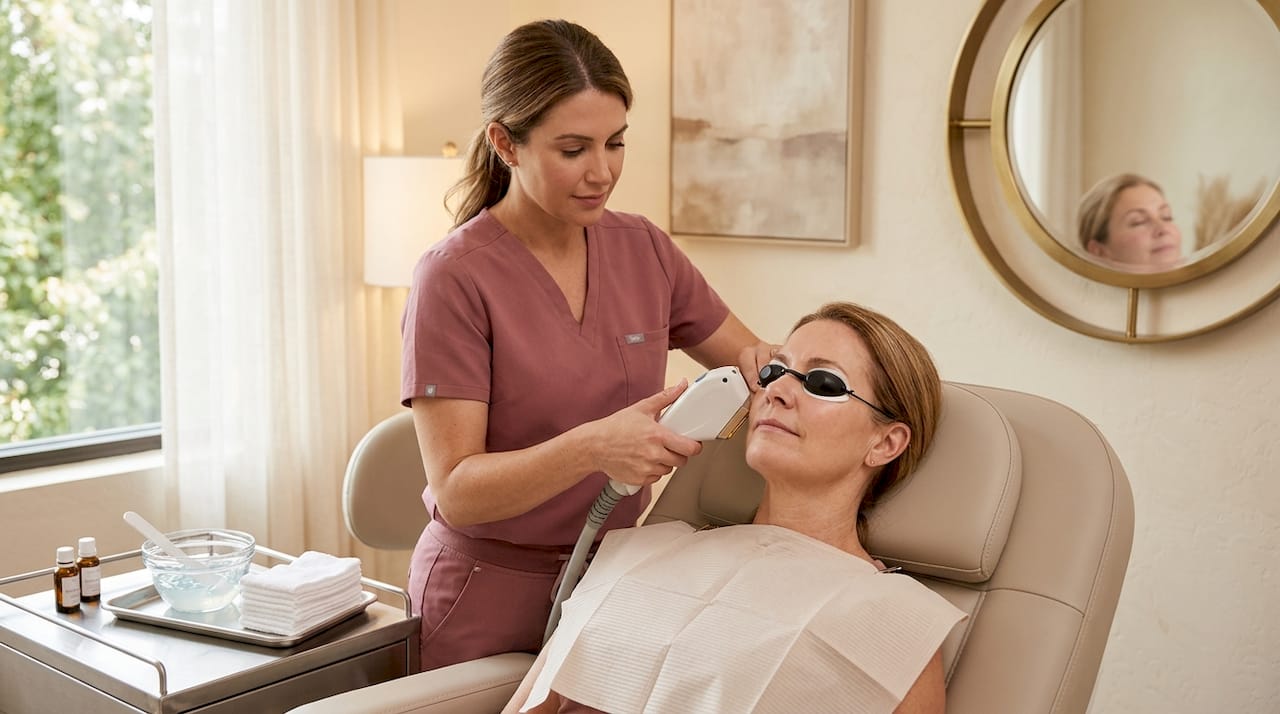
IPL is one of the most well-studied options for sun-damaged skin. IPL effectively reduces hyperpigmentation, lentigines (sun spots), fine lines, and uneven texture. The light energy is absorbed by melanin in pigmented lesions and oxyhemoglobin in vascular lesions, breaking them down without damaging surrounding tissue. Wavelength and pulse duration are tuned to the specific concern being treated.
RF microneedling for collagen and skin tightening
For aging concerns like skin laxity, deep lines, and loss of firmness, RF microneedling is one of the most effective non-surgical options available. The combination of micro-injury and heat energy drives significant collagen induction, with results that improve progressively over three to six months after treatment.
Here’s a quick comparison to help you see which modality fits which concern:
Concern | Recommended modality | Key benefit |
Sun spots and uneven tone | IPL | Targets melanin directly |
Skin laxity and fine lines | RF microneedling | Collagen induction and tightening |
Active acne | Blue/red LED | Destroys P.acne |
Dull texture and mild photoaging | LED red light therapy | Stimulates cellular repair |
Deep wrinkles and volume loss | RF or microcoring | Structural remodeling |
One safety note that cannot be overstated: post-inflammatory hyperpigmentation (PIH) is the most common adverse event in energy-based treatments for skin of color. Higher energy settings increase that risk significantly. This is why the same IPL session that works beautifully on fair skin can cause new pigmentation on a deeper skin tone if settings are not adjusted carefully.
What to expect during and after your sessions
Knowing what to expect from skin therapy before you walk in makes the whole experience less stressful and helps you get better results. Here’s a realistic picture of how a typical advanced device therapy session unfolds.
Pre-treatment consultation. Your clinician reviews your skin history, current medications, and concerns. Some treatments require you to avoid sun exposure, retinoids, or certain supplements for days beforehand.
Skin preparation. The treatment area is cleansed. For PDT, the photosensitizing agent is applied and left to absorb for a set period before light activation begins.
Device application. Depending on the modality, you may feel warmth (RF), brief stinging pulses (IPL), or mild pressure with pricking sensations (microneedling). Most sessions last between 20 and 60 minutes.
Immediate post-treatment. Redness, mild swelling, and warmth are normal and expected. Short-term inflammatory effects like these are tied directly to the biological mechanism of action. They signal that the treatment is working.
Days two through seven. Depending on the treatment intensity, you may experience crusting, peeling, or temporary darkening of pigmented spots before they shed. This is the skin clearing out what was targeted.
Aftercare. Gentle cleansing, broad-spectrum SPF every day, and avoiding active ingredients like acids or retinoids for the first week are standard. Your clinician will give you specific instructions.
Pro Tip: Do not skip SPF after any energy-based treatment. Your skin is more photosensitive post-treatment, and sun exposure after therapy can trigger the very pigmentation you were trying to clear.
Most people need a series of sessions, typically three to six, spaced several weeks apart, to achieve their target results. Single sessions can produce visible improvement, but the cumulative effect of a full course is where the real transformation happens.
Choosing the right therapy for your skin
This is where a lot of people go wrong. They research a treatment, decide it sounds right, and book it without understanding whether it suits their skin type, tone, or specific concern. The benefits of skin device therapy are real, but they depend entirely on the right match between device, settings, and the person in the chair.
A few factors that should guide the selection process:
Skin tone. Fitzpatrick skin types IV through VI carry a higher risk of PIH with aggressive energy settings. Conservative, customized protocols are not a compromise. They are the correct approach.
Active skin conditions. Active rosacea, eczema flares, or open lesions are contraindications for most energy-based treatments. Treating compromised skin can worsen inflammation.
Medications and supplements. Photosensitizing medications, blood thinners, and certain supplements affect treatment safety and outcomes.
Realistic timeline. If you need results in two weeks for an event, some modalities are not appropriate. RF microneedling results peak at three to six months.
Clinician credentials. Verify that your provider is a qualified Dermal Clinician or dermatologist with documented experience in the specific device they are recommending.
Skin tone | Best-suited modalities | Modalities requiring extra caution |
Fair (Fitzpatrick I-II) | IPL, PDT, RF microneedling, LED | Standard settings generally safe |
Medium (Fitzpatrick III) | LED, RF microneedling, conservative IPL | IPL settings must be carefully adjusted |
Olive to dark (Fitzpatrick IV-VI) | LED, microneedling, microcoring | IPL and aggressive laser carry higher PIH risk |
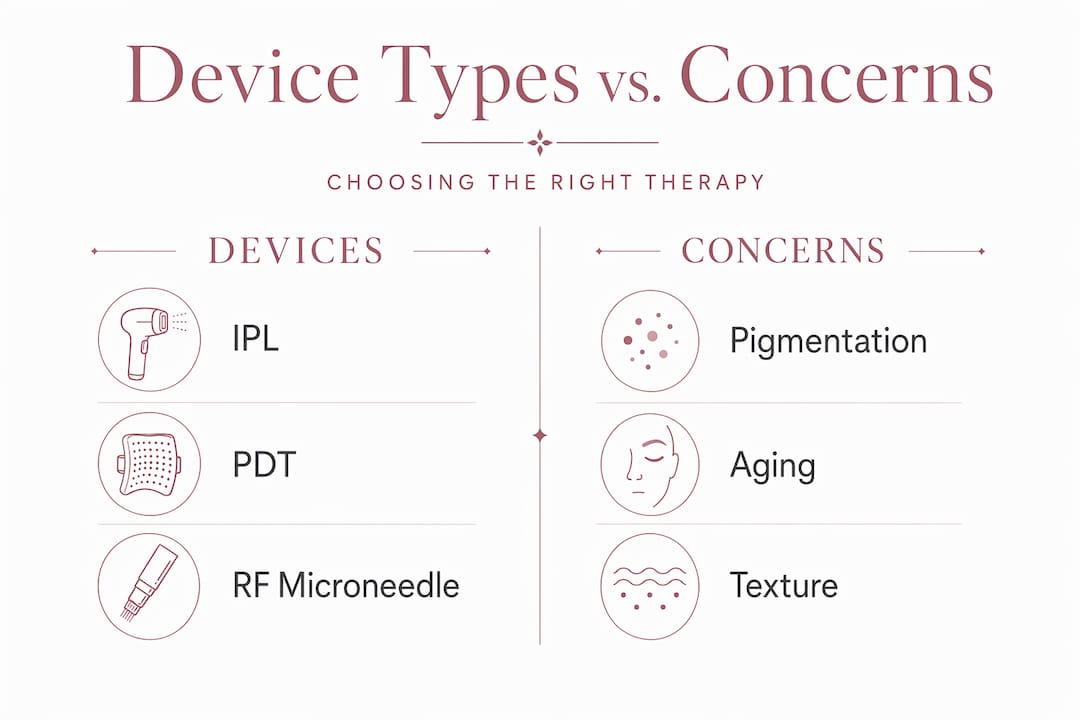
The research is clear: PIH risk is heavily influenced by fluence settings and skin type, not just the modality chosen. A skilled clinician does not just pick the right device. They dial in the right settings for your skin on that specific day.
My honest take after 15 years of clinical practice
I’ve seen clients come in after booking treatments elsewhere based on a social media trend, only to find their skin worse than when they started. That’s not a scare tactic. It’s something I’ve watched happen repeatedly, and it’s entirely preventable.
What I’ve learned is that the most dangerous assumption in this space is that newer or more aggressive equals better. In my experience, the clients who get the most meaningful, lasting results are the ones who commit to a personalized plan and trust the process. They’re not chasing the most intense treatment available. They’re choosing the right treatment for their skin, right now.
I’ve also noticed that people with pigmentation concerns often come in feeling defeated, like they’ve tried everything. What they’ve usually tried is a lot of the wrong things at the wrong settings. When we match the modality to the skin and take a conservative, consistent approach, the results genuinely surprise them. That moment of recognition, when someone looks in the mirror and sees their skin the way they want it to look, is why this work matters beyond aesthetics.
Managing expectations is part of the care. I always tell clients: this is a process, not a procedure. Your skin took years to develop these concerns. Give it the time and the right conditions to heal.
— chevonne
Ready to start your skin therapy journey?
At Fundamentalskin, every treatment plan starts with your skin, not a menu. Chevonne’s 15 years of clinical expertise means you get a personalized approach that accounts for your skin tone, concerns, and goals before any device is ever turned on. Whether you’re dealing with stubborn pigmentation, aging skin, or loss of firmness, there’s a targeted solution waiting for you.
Explore the Biomimetic Peel + LED Therapy for a results-driven combination treatment, or discover RF skin tightening for collagen induction and firming without downtime. You can also browse the full range of advanced skin treatments available at Fundamentalskin to find the right fit for where your skin is today.
BOOK YOUR CONSULTATION NOW and start loving the skin you’re in.
FAQ
What is advanced skin device therapy used for?
Advanced skin device therapy uses energy-based technology to treat concerns like pigmentation, aging skin, fine lines, redness, and uneven texture. Common modalities include IPL, LED, radiofrequency and microneedling.
How does skin device therapy work?
Each modality works through a different mechanism. IPL uses light energy absorbed by melanin and blood vessels, RF uses heat to stimulate collagen, and microneedling triggers the skin’s wound-healing response. The specific device settings determine how deep and how effectively the treatment works.
Is advanced skin device therapy safe for darker skin tones?
It can be, but it requires careful protocol adjustment. PIH is the most common adverse event in energy-based treatments for skin of color, and conservative settings with a qualified clinician significantly reduce that risk.
How many sessions will I need?
Most people need three to six sessions spaced several weeks apart for optimal results. Some modalities like RF microneedling show peak improvement three to six months after the final session.
What should I do to prepare for a skin device therapy session?
Avoid sun exposure, retinoids, and photosensitizing medications in the days before your appointment. Your clinician will give you specific pre-treatment instructions based on the modality being used.
Recommended
Comments