.png)
Enzyme Skin Peels Explained: Your Complete Guide
- chevonne stewart
- 4 minutes ago
- 10 min read

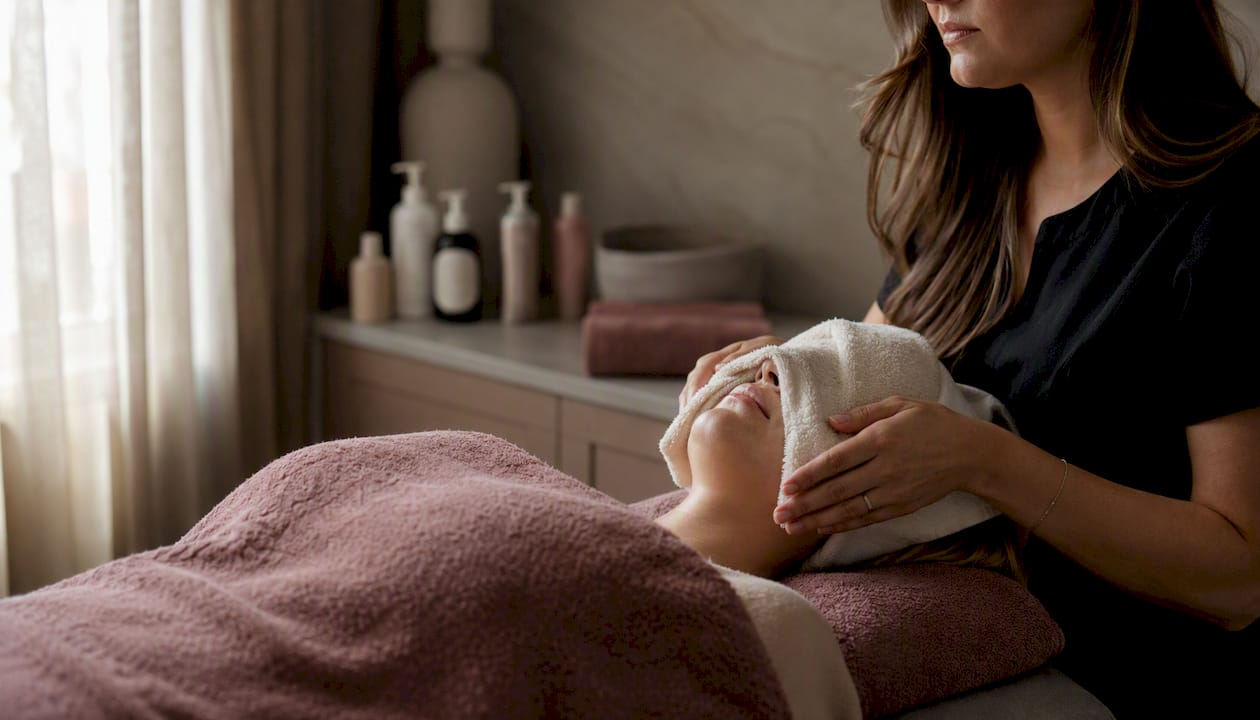
An enzyme skin peel is a topical exfoliant that uses proteolytic enzymes to digest dead skin cells sitting on the surface of your skin. Unlike stronger chemical peels that use acids to penetrate deeper layers, enzyme peels work at the surface level, making them one of the gentlest resurfacing options available. The bottom line: if you want brighter, smoother skin with little to no downtime, an enzyme peel is worth understanding.
Typical results: improved texture, a clearer complexion, and a subtle glow after even a single session
Best suited for: sensitive skin, first-time peel clients, and anyone managing dullness or mild congestion
Safety note: always patch test before use, especially if you have known fruit allergies, since many enzyme peels are derived from papaya, pineapple, or pumpkin
Key Takeaways
Enzyme peels are the most accessible entry point into professional exfoliation: effective at the surface, gentle on the barrier, and suitable for skin types that cannot tolerate stronger acids.
Point | Details |
Surface-level exfoliation | Proteolytic enzymes digest dead keratin cells without penetrating living skin layers. |
Gentler than acid peels | Enzyme peels cause minimal downtime and suit sensitive or first-time peel clients. |
Patch test is non-negotiable | Fruit-derived enzymes can sensitize skin; always test 24–48 hours before a full treatment. |
Results build over sessions | Immediate glow is typical; cumulative texture and tone improvements develop over a series of treatments. |
Fundamentalskin for personalized care | Chevonne’s clinician-led approach customizes enzyme peel treatments for your skin’s specific concerns and goals. |
Table of Contents
What exactly is an enzyme skin peel?
An enzyme peel is any topical treatment formulated with proteolytic enzymes, proteins that break down keratin, the structural protein found in dead skin cells. When applied to the skin, these enzymes essentially “digest” the bonds holding dead cells to the surface, encouraging them to shed more evenly. The result mimics your skin’s natural desquamation process, just faster and more consistently.
You’ll encounter enzyme peels in two main formats:
At-home masks and exfoliants: lower enzyme concentrations, shorter contact times, no activation devices. Gentler by design, and generally suitable for weekly or biweekly use.
Professional clinic treatments: higher concentrations, longer application windows, and often paired with steam or warm towels to boost enzyme activity. Results tend to be more noticeable.
Formulations also vary considerably. Single-enzyme products, those built around papain from papaya or bromelain from pineapple, are common and straightforward. Multi-enzyme blends combine two or more proteases for broader exfoliating action. Some formulas are buffered to maintain a stable pH, which affects how consistently the enzymes perform on different skin types. A higher concentration in a well-stabilized vehicle generally delivers more predictable results, though formulation choices and manufacturing controls strongly determine whether a product has clinically meaningful proteolytic action, and labels alone rarely reveal effective concentration.
How do enzyme peels work on your skin?
The mechanism is called proteolysis: enzymes cleave the peptide bonds in keratin proteins, breaking down the “glue” that keeps dead cells attached to the skin surface. Because this action targets only the outermost, already-dead layer, enzyme peels do not penetrate into living skin the way trichloroacetic acid (TCA) or high-strength alpha hydroxy acids (AHAs) do. That surface-level specificity is precisely what makes them gentler.
Proteolytic enzymes can function as exfoliants and mimic the skin’s natural desquamation process, though the peer-reviewed clinical evidence base remains small and further in-vivo studies are needed. What the existing science does confirm is that enzyme exfoliants act on protein bonds at the surface and tend to be gentler than strong acids because they are stable across a wider pH range, meaning they can work effectively without requiring the low-pH environment that AHAs depend on.
Environmental factors matter significantly. Enzyme activity increases with warmth and moisture, and slows in cold or dry conditions. Stabilizers in the formula help maintain potency during storage, but once the product is on your skin, temperature and hydration become the key variables.
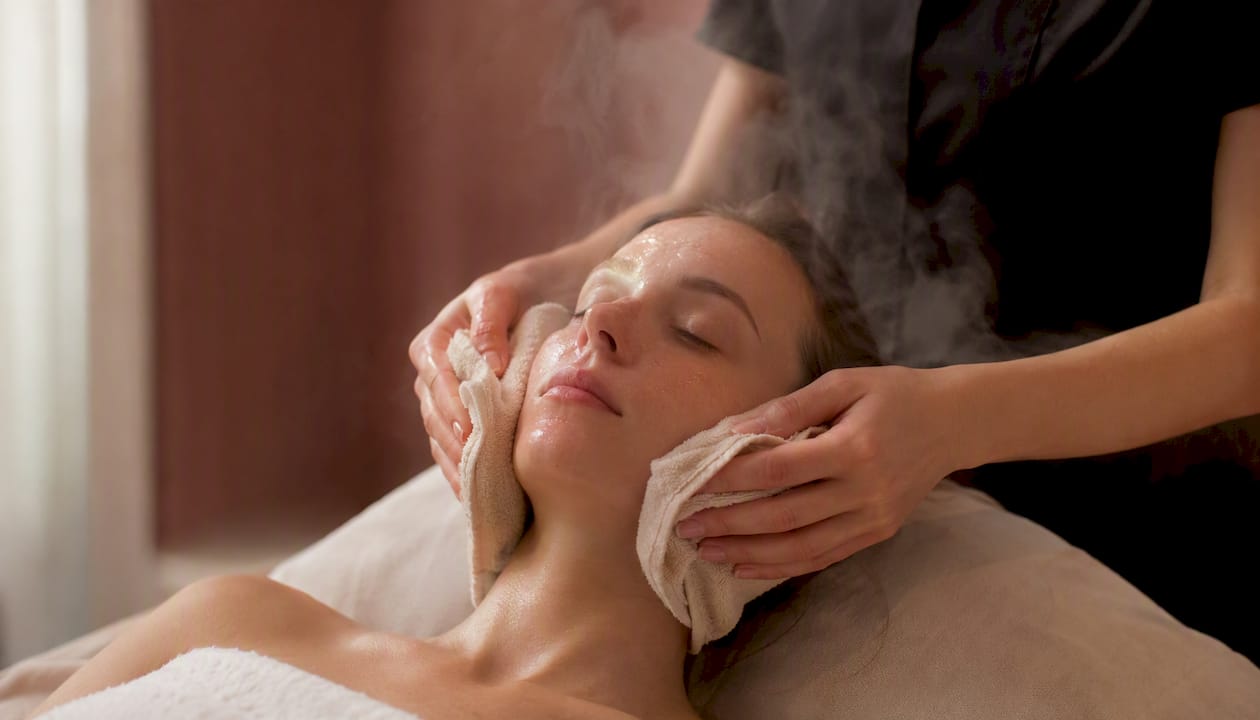
Pro Tip: In a professional setting, clinicians often apply a warm towel or use gentle steam after the enzyme peel is on the skin. This controlled warmth boosts proteolytic activity safely, which is one reason clinic results tend to outperform at-home versions where those activation tools aren’t available.
Which enzymes are commonly used and what do they do?
Knowing the ingredient names helps you read a label with confidence. The most widely used proteolytic enzymes in skin peels include:
Papain (from papaya, INCI: Carica Papaya Fruit Extract or Papain): one of the most common, with broad keratolytic action. Can be sensitizing for some people, particularly those with latex sensitivity.
Bromelain (from pineapple, INCI: Bromelain): documented proteolytic activity in medical contexts, and often noted for a mild anti-inflammatory profile alongside its exfoliating action.
Ficin (from fig, INCI: Ficin): less common but effective; similar surface-level keratin digestion.
Pumpkin enzymes (INCI: Cucurbita Pepo Fruit Enzyme): often found in seasonal or “natural” product lines; typically milder than papain.
Microbial proteases (e.g., subtilisin from Bacillus subtilis): lab-derived, more stable in formulation, and increasingly used in professional-grade products.
Bromelain tends to be the gentler choice for reactive skin. Papain delivers reliable exfoliation but warrants caution if you have a history of fruit enzyme sensitivity. When scanning a label, look for the INCI name in the ingredients list; “enzyme” or “protease” in the product name does not guarantee a meaningful concentration.
What benefits can you realistically expect?
After a single enzyme peel treatment, most people notice smoother texture and a brighter, more even tone within 24–48 hours. That immediate surface glow comes from the removal of the dull, uneven layer of dead cells that scatters light unevenly.
Cumulative benefits build over a series of sessions:
Texture refinement: pores appear less congested, skin feels softer
Radiance: consistent exfoliation allows light to reflect more evenly
Mild improvement in fine lines and pigmentation: gradual, not dramatic, and dependent on formulation strength
Minimal downtime: most clients experience little to no redness or flaking, though individual variability exists
One small study referenced in enzyme exfoliant research suggested a 15% enzyme product produced dermal improvements over several months, though concentration requirements for consistent effects remain unclear. The practical takeaway: stronger professional formulations tend to show faster, more visible changes than at-home products.
Enzyme peels also pair well with other treatments. LED light therapy, for example, can complement a peel session by supporting skin recovery and collagen activity. Learn more about how LED light therapy works on your skin if you’re considering a combined approach.
Enzyme peel vs chemical peel: what’s the real difference?
The choice between an enzyme peel and a chemical peel comes down to your skin’s current condition, your tolerance for downtime, and your treatment goals.
Feature | Enzyme Peel | Chemical Peel (AHA/BHA/TCA) |
How it works | Proteolytic digestion of dead keratin at the surface | Acid-driven chemical exfoliation penetrating to varying depths |
Depth of exfoliation | Surface only | Surface to mid-dermis depending on acid type and strength |
Typical downtime | Minimal to none | Mild (AHA) to 7–14 days (TCA/phenol) |
Best for | Sensitive skin, first-time peel clients, maintenance, dullness | Pigmentation, acne scarring, deeper resurfacing, anti-aging |
Risks/side effects | Low; possible sensitization with fruit enzymes | Redness, peeling, post-inflammatory hyperpigmentation, scarring (higher-strength) |
Recommended frequency | Every 2–4 weeks (professional); weekly (at-home) | Every 4 weeks depending on strength |
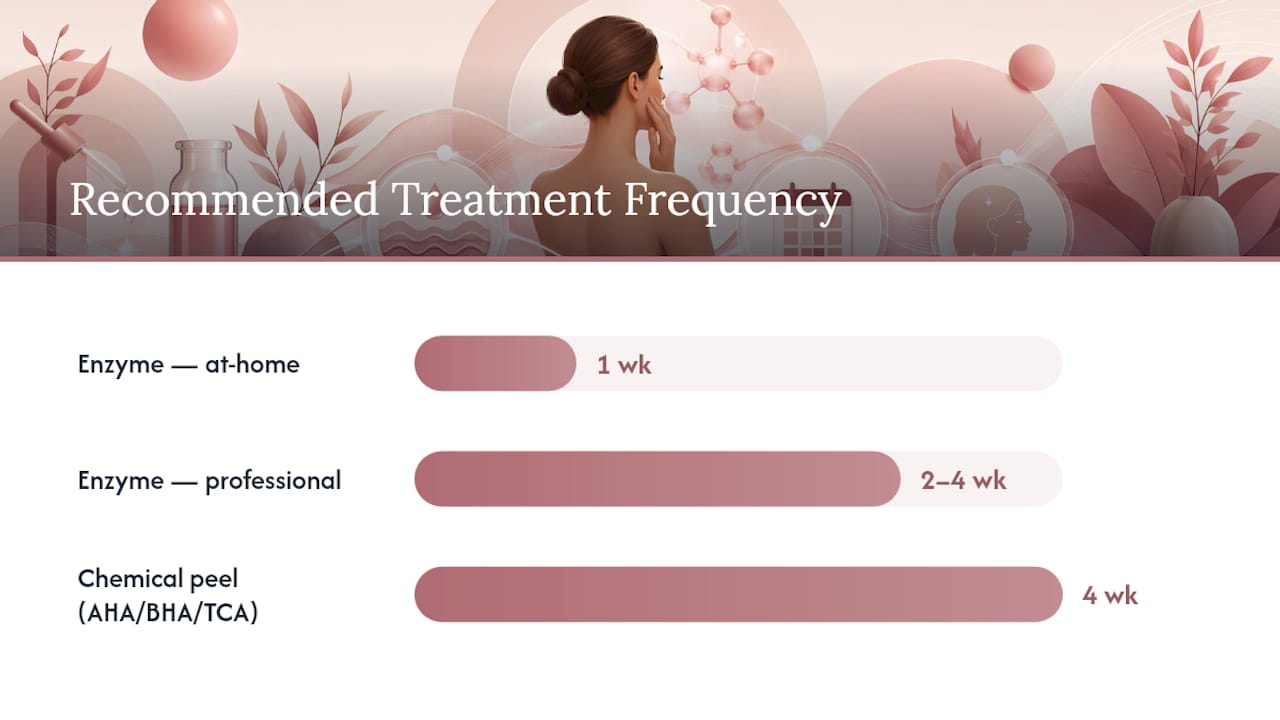
The trade-off is straightforward. Enzyme peels offer gentleness and a low-risk profile, but they cannot match the resurfacing depth of a medium or deep chemical peel. For someone managing active pigmentation or acne scarring, a clinician may recommend a chemical peel or a layered approach. For someone new to peels, dealing with redness-prone skin, or looking for a regular maintenance treatment, an enzyme peel is often the smarter starting point.
For a broader look at how these options sit among other facial treatments, the facial renewal treatment options guide offers a useful comparison.
Enzyme peels suit maintenance and sensitive skin.
Chemical peels suit targeted correction
Downtime is the clearest differentiator: enzyme peels rarely cause visible peeling
Both can be part of a planned treatment series when sequenced correctly
Who is a good candidate, and who should avoid enzyme peels?
Enzyme peels are well-suited to a wide range of skin types, but they’re not right for everyone.
Good candidates include:
Those with dull texture, mild congestion, or uneven tone
Sensitive or reactive skin types who cannot tolerate acids
First-time peel clients building toward stronger treatments
Anyone wanting a regular, low-downtime maintenance treatment
Use caution or avoid if you have:
Active open lesions, cold sores, or broken skin
A known allergy to papaya, pineapple, fig, or latex (cross-reactivity is possible)
Severe rosacea or an active eczema flare
Recently completed isotretinoin (Accutane); follow your clinician’s recommended waiting period before any peel
Uncontrolled skin conditions that compromise the barrier
Clinical and brand guidance consistently recommends patch testing before a first enzyme peel, particularly for fruit-derived formulas. Apply a small amount to the inner arm 24–48 hours before treatment and monitor for redness, itching, or swelling.
AAD resources provide authoritative guidance on skin-condition prevalence and safety considerations that are useful when assessing whether a resurfacing treatment is appropriate for your skin’s current state.
Pro Tip: If you have a history of reactive skin or you’re unsure whether an enzyme peel is appropriate, book a consultation with a dermal clinician before purchasing any product. A professional assessment takes 15 minutes and can save you weeks of managing an avoidable reaction.
What to expect during a treatment and how to care for your skin after
A typical professional enzyme peel session
Consultation: your clinician reviews your skin history, current products, and any contraindications
Double cleanse: removes makeup, sunscreen, and surface oils so the enzyme can contact the skin directly
Enzyme application: the peel is applied evenly; contact time ranges from 5–20 minutes depending on formulation strength
Optional steam or warm towel: used to enhance enzyme activity in a controlled way
Removal and neutralization: the peel is removed with cool water or a gentle neutralizing solution
Post-treatment soothing: a calming serum, barrier-support moisturizer, and SPF are applied before you leave
At-home enzyme masks follow a simpler version of this process: shorter contact times (typically 5–10 minutes), no steam activation, and lower concentrations. Results are subtler, but the process is safe for regular use when you follow the product’s instructions.
Aftercare: what not to do
Practitioner aftercare guidance advises avoiding active ingredients and excessive heat or sweat, and not picking or rubbing peeling skin for 10–14 days after a peel. Specifically:
Avoid retinoids, AHAs, BHAs, and vitamin C for at least 5–7 days post-treatment (longer after stronger peels)
Avoid saunas, steam rooms, intense exercise, and direct heat for 48–72 hours
Do not pick, rub, or exfoliate peeling skin; let it shed naturally
Apply SPF 30 or higher every morning without exception; freshly exfoliated skin is more UV-sensitive
Use gentle, fragrance-free cleansers and a supportive moisturizer for the first week
If you notice significant swelling, blistering, or prolonged redness beyond 48 hours, contact your clinician. Mild pinkness and slight tightness in the first 24 hours are normal.
For guidance on how your skin typically responds after new treatments, this clear guide on skin responses to new products is a helpful reference.
How often should you get an enzyme peel?
Frequency depends on whether you’re doing a professional course, a maintenance program, or using an at-home product.
Professional course: every 2–4 weeks for a series of 4–6 treatments is a common starting point for visible improvement in texture and tone
Maintenance phase: once every 4–8 weeks, adjusted based on your skin’s response and any concurrent treatments
At-home enzyme masks: once or twice weekly is generally safe for most skin types, given the lower concentrations involved
Combination therapy: if you’re pairing enzyme peels with LED therapy or topical retinoids, space treatments carefully; your clinician should guide the sequencing to avoid over-exfoliation
Skin sensitivity, barrier health, and your overall treatment goals all influence the right schedule. A well-planned skin treatment series accounts for all of these factors rather than applying a one-size-fits-all timetable.
What practitioners know that most clients don’t
The “no sting” myth
One of the most common misunderstandings about enzyme peels is that a lack of tingling or stinging means the treatment isn’t working. Practitioners consistently observe this confusion. Enzymatic digestion is a biochemical process that does not require inflammation to be effective. Practitioners note that clients often misread the absence of a stinging sensation as the treatment not working; enzymatic digestion can be effective without causing the inflammatory sensations typical of deeper chemical peels. A comfortable treatment is not a weak one.
A common clinical observation: clients who switch from acid peels to enzyme peels sometimes assume the gentler sensation means less is happening. In practice, the surface exfoliation is real and measurable, even when you feel almost nothing during the treatment. The absence of discomfort is a feature, not a flaw.
“Natural” does not mean risk-free
Enzyme peels are often marketed as the “natural” alternative to chemical peels, and while they are derived from fruit and plant sources, that framing can create a false sense of safety. Papain, in particular, can sensitize some people over repeated use, and those with latex allergies face a documented cross-reactivity risk with papaya-derived products. A natural skincare approach can absolutely include enzyme exfoliation, but “plant-derived” is not a substitute for a patch test.
Pro Tip: Ask your clinician which enzyme source is in the formula before your first treatment. If you have any fruit allergies or latex sensitivity, a microbial protease-based formula may be a safer starting point.
A clinician’s perspective on enzyme peels
At Fundamentalskin, enzyme peels are not a one-size-fits-all treatment. When a client comes in with concerns about dull texture, mild pigmentation, or reactive skin that hasn’t responded well to acid-based exfoliants, an enzyme peel is often where we start. The selection process involves reviewing the client’s full skin history, current product use, and any active conditions before choosing a formulation and contact time.
What I find most valuable about enzyme peels in a clinical setting is how well they integrate with other treatments. Pairing an enzyme peel with LED therapy, for example, allows us to exfoliate the surface and then support the skin’s recovery and collagen response in the same session. That combination tends to produce results that neither treatment achieves as efficiently on its own.
For clients with pigmentation concerns, enzyme peels can serve as a preparatory step, clearing the surface layer so that targeted actives and light-based treatments can work more effectively. You can read more about adjusting your skincare for pigmentation-prone skin to understand how peels fit into a broader management plan.
With 15 years of experience as a Dermal Clinician, I’ve seen what happens when clients skip the consultation and go straight to a stronger treatment. Starting with an enzyme peel, assessing the skin’s response, and building from there is not the cautious route. It’s the smart one.
Personalized enzyme peel treatments at Fundamentalskin
If you’re ready to move from understanding enzyme peels to experiencing one, Fundamentalskin offers clinician-led peel treatments tailored to your specific skin concerns. The Biomimetic Peel + LED Therapy combines advanced surface exfoliation with LED light support for a treatment that addresses texture, tone, and recovery in a single session. Every treatment is assessed and customized by Chevonne, with before-and-after care built into the process.

For a full overview of in-clinic peel options, visit the Larimedical peels page to find the right treatment for your skin and book a consultation.
Sources
Recommended
Comments