.png)
What to Expect After a Facial Peel: Recovery Guide
- chevonne stewart
- 2 hours ago
- 10 min read

Right after a chemical peel, most people notice redness, warmth, and a tight, sunburned feeling across the treated skin. That’s completely normal. The intensity and duration of those sensations depend on peel depth, but the immediate course is predictable: your skin is in active repair mode, and your job in the first few hours is simple.
Immediate self-care steps:
Apply a thin layer of petrolatum-based ointment (like Vaseline) or whatever your clinician prescribed, starting right after treatment.
Use a cool, damp compress for 10–15 minutes if stinging is uncomfortable.
Stay out of direct sunlight and cover treated skin if you need to go outside.
Cleanse only as instructed, typically with lukewarm water and a fragrance-free, non-foaming cleanser.
Skip makeup, active serums, and anything with fragrance until your clinician clears you.
Stay hydrated and rest with your head slightly elevated the first night to reduce swelling.
Call your provider immediately if you experience spreading redness beyond the treated area, increasing pain after the first 24 hours, pus or discharge, fever, or any sign of blistering you weren’t told to expect.
Pro Tip: Keep your aftercare supplies on the bathroom counter before your appointment so you’re not hunting for them when your skin is tender and your eyes are watering.
Key Takeaways
Consistent aftercare, including ointment, gentle cleansing, and daily SPF, is the single most important factor in how well and how quickly your skin heals after a chemical peel.
Point | Details |
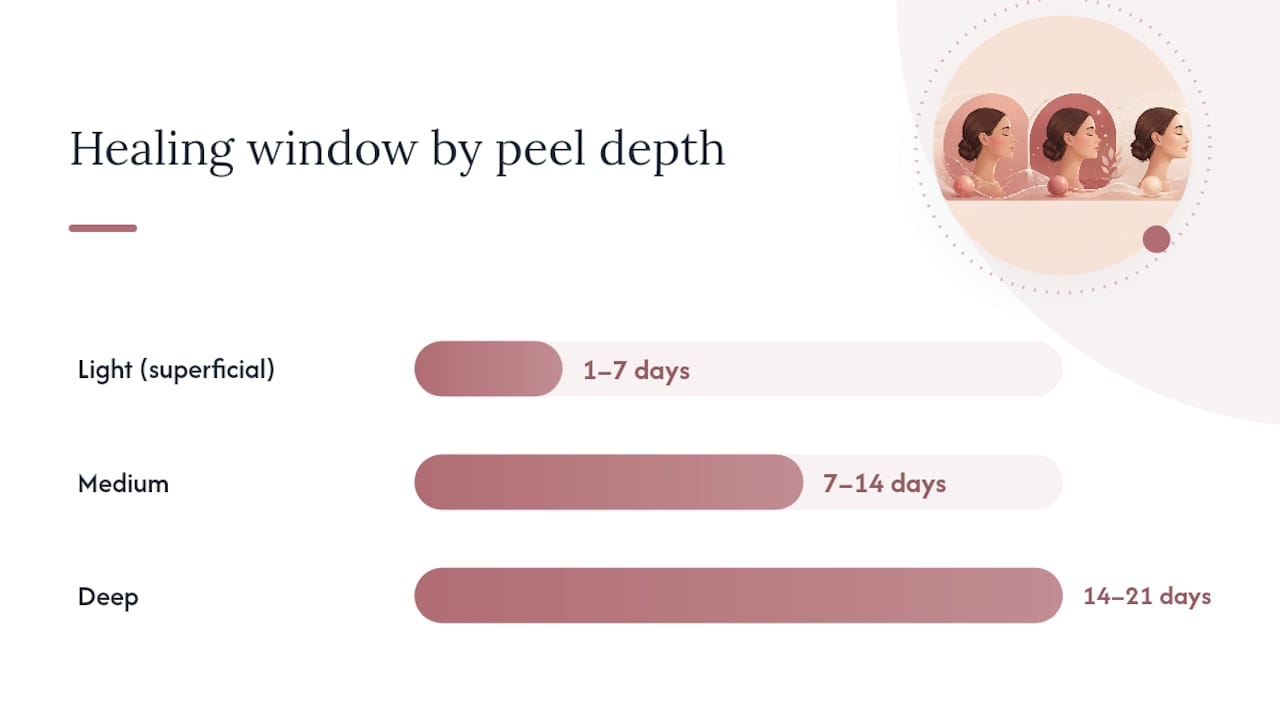
Recovery time scales with depth | Light peels heal in 1–7 days; medium peels take 7–14 days; deep peels need 14–21 days. |
Peak peeling hits Days 3–5 | Do not pick or pull skin during this phase — it is the leading cause of post-peel scarring. |
SPF is non-negotiable | Apply broad-spectrum SPF 30–50 every morning, including indoors, until your clinician clears you. |
Red flags need same-day contact | Spreading redness, pus, fever, or worsening pain after 48 hours require immediate provider contact. |
Fundamentalskin’s Biomimetic Peel | Delivers clinical results with minimal downtime, led by Chevonne, a Dermal Clinician with 15 years of experience. |
Table of Contents
How does recovery differ by peel depth?
Understanding what to expect after a facial peel starts with knowing which depth you had. Light, medium, and deep peels produce very different healing experiences, and confusing them is one of the most common reasons people panic unnecessarily or, worse, underestimate real warning signs.
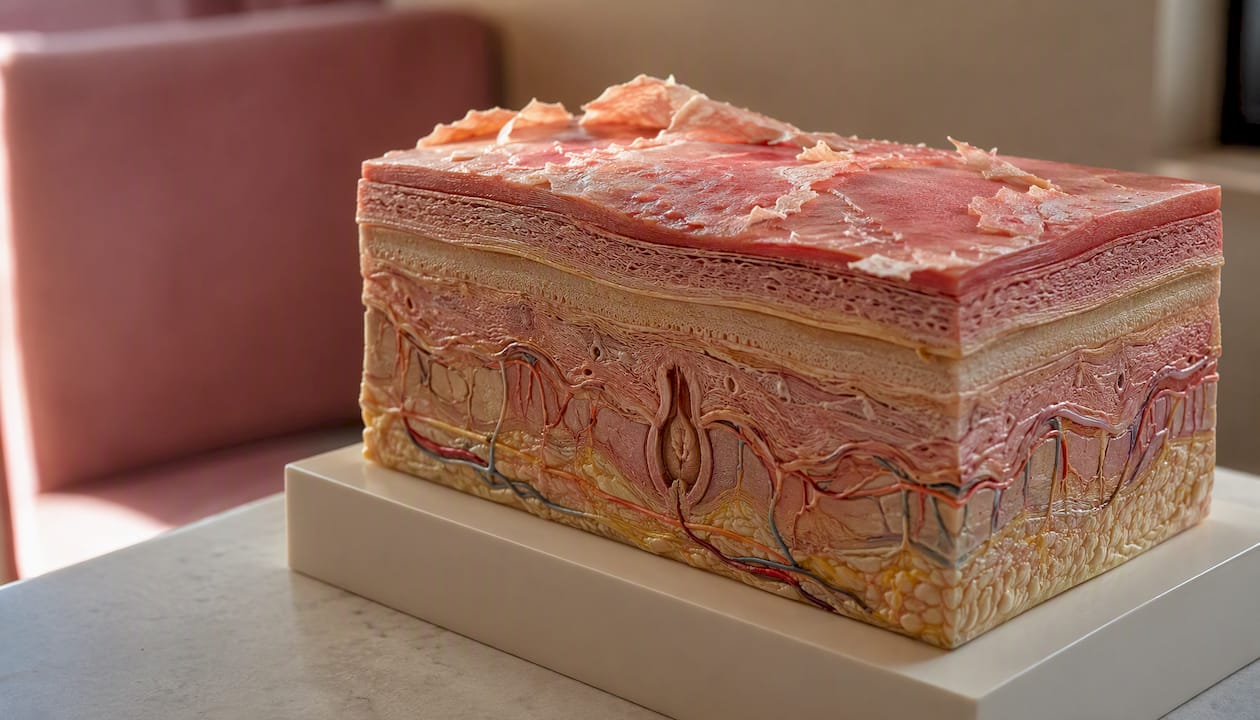
According to the Mayo Clinic, medium peels typically cause redness, swelling, and crusting that take about 7–14 days to heal, while deep peels require dressings and more intensive wound care, with healing often taking 14–21 days.
Depth | Healing window | Typical signs | Makeup return | Follow-up needs |
Light (superficial) | 1–7 days | Mild redness, dryness, light flaking | 24–48 hours (if tolerated) | Optional; self-managed |
Medium | 7–14 days | Redness, swelling, crusting, possible blistering | After crusting resolves (7–10 days) | Clinician check at 1 week |
Deep | 14–21 days | Significant swelling, crusting, oozing, raw skin | After full re-epithelialization | Multiple follow-up visits |
The Cleveland Clinic confirms that common side effects across all depths include redness, tightness, and dryness, while medium and deep peels add swelling, stinging, crusting, and potential blistering to the picture.
Key differences in at-home care by depth:
Light peels: Gentle moisturizer twice daily, SPF every morning, no picking at flakes. Most people return to normal activity the next day.
Medium peels: The AAD’s patient guidance recommends daily soaks and frequent ointment application, with strict sun avoidance until healing is complete.
Deep peels: Multiple daily soaks (often saline or dilute vinegar as prescribed), thick ointment reapplication, antiviral medication if your provider prescribed it, and no sun exposure for several months.
Visible redness after a light peel fades within days. After a medium peel, pink or red skin can persist for several weeks. Deep peels can leave a pink flush for a few months.
What happens day by day in the first two weeks?
Here’s a practical map of the facial peel healing process so you know what’s normal and when to relax:
Day 0 (treatment day): Redness, warmth, tightness. Apply ointment as directed. Sleep with your head elevated.
Day 1: Skin feels tight and looks red or pink. Some swelling is normal, especially around the eyes after medium/deep peels. Continue ointment and gentle cleansing.
Day 2: Tightness increases. Skin may start to look darker or bronzed before it peels. Do not apply makeup or actives.
Days 3–5: Peak peeling phase for most light and medium peels. Skin flakes, lifts, and sheds. This is the stage where the urge to pick is strongest. Resist it completely.
Days 5–7: Peeling slows. New, pink skin underneath becomes visible. Sensitivity remains high.
Days 7–10: For light peels, most visible peeling is done. Medium peel skin is still fragile and pink. Crusting should be resolving.
Days 10–14: New skin is present but delicate. Redness fades gradually. SPF is non-negotiable at this stage.
Week 2 onward: Skin looks smoother and more even. Improvements continue over several weeks as collagen remodeling begins.
Timing varies based on your skin type, how well your skin was preconditioned before the peel, and the specific acid concentration used. Fitzpatrick skin types IV–VI tend to experience a longer sensitivity window and carry a higher risk of post-inflammatory hyperpigmentation, which is why sun protection matters even more for deeper complexions.
The worst peeling day is often Day 3–5 for medium peels. Knowing that in advance makes it far easier to stay calm and stay hands-off.
What are normal side effects vs. warning signs?
Most post-peel symptoms are expected and self-resolving. Knowing the difference between normal healing and a genuine complication protects your skin and your peace of mind.
Common expected side effects:
Redness and pinkness (all depths)
Tightness and dryness (all depths)
Mild to moderate flaking and peeling (Days 3–7)
Swelling, especially around the eyes (medium and deep peels)
Temporary darkening of the skin before it sheds
Mild stinging or itching as new skin forms
These are signs your skin is doing exactly what it should. The Cleveland Clinic notes that blistering is more likely with medium and deep peels and is not automatically a complication if your provider told you to expect it.
Red flags that require contacting your provider:
Pain that increases after the first 24–48 hours rather than improving
Redness that spreads beyond the treated area
Pus, cloudy discharge, or an unpleasant odor from the skin
Fever or chills
Unexpected blistering or skin that looks necrotic (dark, leathery, or black)
Redness or rash that persists well beyond the expected healing window
For guidance on protecting skin prone to pigmentation changes after treatment, the post-pigmentation treatment protocol at Fundamentalskin covers the specifics in detail.
What should you do (and avoid) after a peel?
Good post facial peel care is less about finding the perfect product and more about protecting a compromised skin barrier until it fully heals.
Do:
Cleanse twice daily with a gentle, fragrance-free, non-foaming cleanser and lukewarm water.
Apply a bland, petrolatum-based ointment or a fragrance-free moisturizer as often as needed to prevent dryness.
Use a broad-spectrum SPF 30–50 every single morning, even indoors near windows.
Drink plenty of water throughout the day to support skin recovery from the inside.
Sleep on a clean pillowcase with your head slightly elevated for the first few nights.
Don’t:
Pick, peel, or rub flaking skin. Pulling skin off before it’s ready causes scarring and uneven pigmentation.
Apply retinoids, AHAs, BHAs, vitamin C serums, or any active ingredient until your clinician clears you (typically 7–14 days, per the Fundamentalskin post-treatment protocol).
Use hot showers, steam rooms, or saunas. Heat increases inflammation and swelling.
Exercise vigorously for the first 48–72 hours. Sweating introduces bacteria to open skin and raises skin temperature.
Apply makeup over unhealed or crusting skin.
Supplies to have at home before your appointment:
Petrolatum ointment (plain Vaseline or a clinician-recommended equivalent)
Fragrance-free, gentle cleanser (CeraVe Hydrating Cleanser or equivalent)
Broad-spectrum SPF 30–50 mineral sunscreen
Cool gel packs or a clean damp cloth for comfort
Fragrance-free, bland moisturizer for the later healing days
Following clinic-level aftercare consistently, including gentle cleansing, regular moisturization, and SPF, significantly reduces the risk of complications like hyperpigmentation and infection.
Pro Tip: Reintroduce active ingredients one at a time, not all at once. Start with a gentle AHA at the lowest available concentration, wait a full week to assess tolerance, then layer in other actives. Rushing this step is the single most common reason people experience post-peel breakouts or irritation.
For a clear guide on skincare routine sequencing after healing, Fundamentalskin’s step-by-step breakdown takes the guesswork out of what goes on first.
How do you manage pain and itching safely?
Mild discomfort and itching are part of normal healing. Managing them correctly keeps you comfortable without interfering with the repair process.
Safe options for pain and stinging:
Acetaminophen (Tylenol) is the first-choice OTC option for general discomfort after a peel.
NSAIDs like ibuprofen can help with swelling and pain, but check with your provider if you have any contraindications.
Cool, damp compresses applied for 10–15 minutes provide immediate relief for stinging and heat.
Frequent application of a bland, fragrance-free ointment soothes tight, itchy skin without introducing irritants.
When itching is normal vs. a problem:
Itching during Days 3–7 is typical and signals active skin regeneration. It usually resolves as peeling completes. Itching that intensifies after Day 7, spreads beyond the treated area, or comes with a rash or hives suggests an allergic reaction or early infection and warrants a call to your provider.
What to avoid for symptom control:
Do not apply over-the-counter hydrocortisone or other steroid creams unless your clinician specifically prescribed them. Unsupervised steroid use can thin healing skin and increase infection risk.
Avoid topical anesthetics (benzocaine-based products) without clinical guidance.
If you have a history of cold sores (HSV-1), ask your provider before your peel about antiviral prophylaxis. Medium and deep peels can trigger a herpes outbreak in susceptible individuals, and prescription antivirals started before the procedure significantly reduce that risk.
For a simplified approach to sensitive skin routines during recovery, low-ingredient protocols work best when your barrier is compromised.
When will you see results, and how many treatments do you need?
The visible payoff from a chemical peel unfolds in stages, and patience is genuinely part of the process.
Days 7–14: Skin looks fresher and more even as the old surface sheds. Pores appear smaller and texture improves noticeably.
1 month: Tone and brightness improvements are clear. Fine lines look softer.
3–6 months: Collagen remodeling delivers the deeper structural benefits, including reduced fine lines and improved firmness.
How many sessions you need depends on your concern and peel depth. Light peels for general brightening or mild acne scarring typically require a series of 3–6 treatments spaced 2–4 weeks apart. A single medium peel can address moderate sun damage, uneven pigmentation, or deeper texture issues. Deep peels are usually a one-time treatment for significant photoaging or scarring, with results that can last years.
Follow-up timing matters. For medium and deep peels, a clinician check at the end of Week 1 is standard. A routine follow-up at 4–6 weeks lets your provider assess healing, address any pigmentation concerns, and plan next steps. For light peel series, your provider will schedule the next session based on how your skin responded.
Clinician tips to get the best outcome
Preparation before your peel shapes recovery just as much as what you do afterward. Chevonne, Fundamentalskin’s Dermal Clinician with 15 years of experience, recommends the following approach.
Before your peel:
Use SPF consistently for at least 2–4 weeks before treatment. Sun-damaged or recently tanned skin heals less predictably.
If your provider recommends a retinoid or vitamin C preconditioning protocol, follow it. Preconditioned skin typically peels more evenly.
Disclose any history of cold sores so your provider can prescribe antivirals if needed.
Avoid waxing, threading, or laser treatments on the same area for at least 2 weeks prior.
Common mistakes and how to fix them:
Picking scabs or peeling skin early. This is the leading cause of post-peel scarring. If skin is lifting, apply more ointment and leave it alone.
Restarting actives too soon. Many people feel their skin looks great by Day 7 and immediately reach for their retinol. Wait for clinician clearance, and follow the professional skincare sequencing guide to layer products back in safely.
Skipping sunscreen indoors. UV exposure through windows is enough to trigger post-inflammatory hyperpigmentation on freshly peeled skin. SPF every morning, no exceptions.
For readers managing pigmentation-prone skin, Fundamentalskin’s guide on adjusting skincare for pigmentation-prone skin offers targeted product and timing advice that applies directly to post-peel care.
Pro Tip: At your consultation, ask your clinician to walk you through exactly what Day 3–5 will look like for your specific peel. Seeing a realistic photo of the expected peeling stage removes the anxiety of wondering whether what you’re seeing is normal.
The Larimedical Biomimetic Peel at Fundamentalskin is designed specifically to deliver clinical results with minimal downtime, making it a strong option for those who want visible improvement without the extended recovery of a medium or deep peel.
What this process actually asks of you
Recovery after a chemical peel is not complicated. It asks for consistency, patience, and the willingness to leave your skin alone when every instinct says to do more. The clients who get the best results are not the ones with the most elaborate aftercare routines. They’re the ones who follow the basics without exception: ointment, gentle cleansing, sunscreen, and hands off.
Skin heals on its own timeline. Trust the process, protect the barrier, and let the results come to you.
Fundamentalskin’s approach to peel recovery
If you’re looking for a peel that delivers real, visible results without the extended downtime of a medium or deep chemical peel, the Biomimetic Peel + LED Therapy at Fundamentalskin is worth a closer look. At $249, it combines the Larimedical Biomimetic Peel with LED light therapy to address pigmentation, fine lines, redness, and dull texture in a single session, with no wound-care protocol and no days off work.

Chevonne brings 15 years of clinical expertise to every treatment, tailoring each session to your skin’s specific needs rather than applying a one-size approach. The clinic uses organic, carefully selected ingredients, and every treatment is backed by before-and-after results. This is the kind of peel designed for women who want clinical-grade improvement on their own schedule.
Ready to see what your skin is capable of? Book your Biomimetic Peel session at Fundamentalskin today.
Sources
This article is general information, not a substitute for advice from a qualified doctor. Consult a qualified healthcare professional about your own circumstances before acting on anything here.
Recommended
Comments