.png)
Why Non-Invasive Treatments Carry Fewer Risks Than Surgery

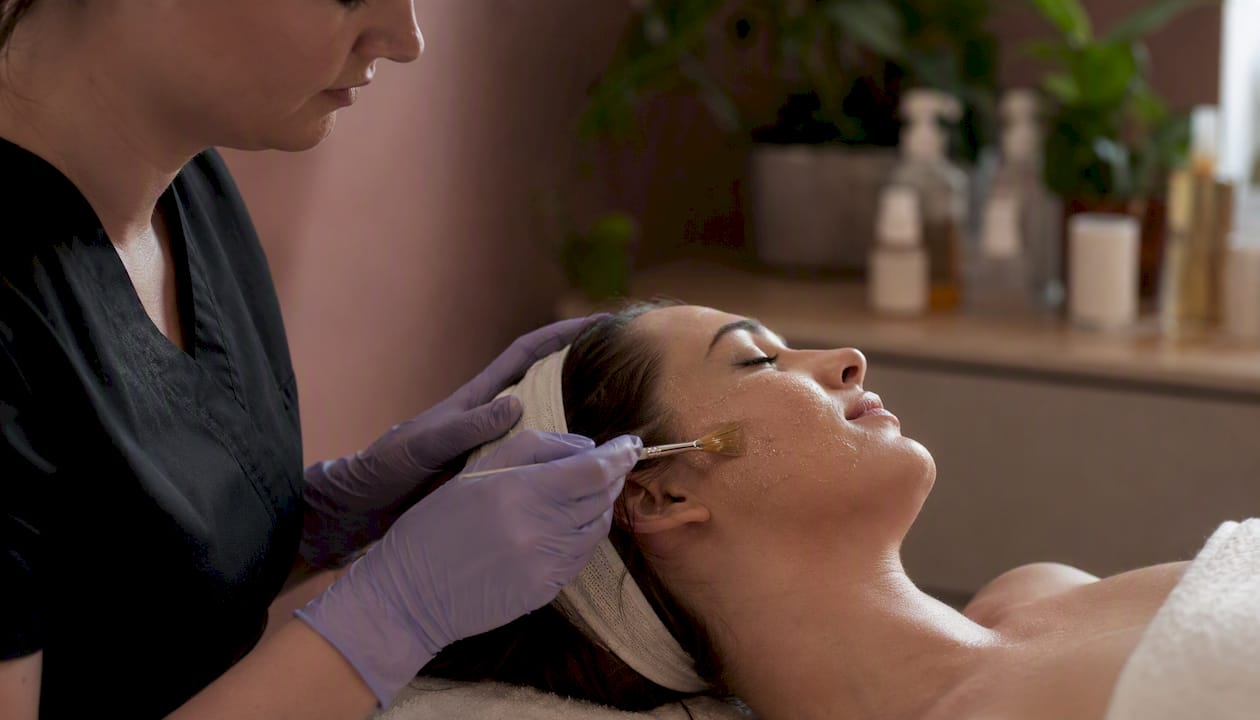
Non-invasive in-clinic treatments carry fewer and less severe risks than surgery mainly because they skip general anesthesia, large incisions, and major tissue disruption. That single difference changes everything downstream: no anesthesia-related complications, minimal bleeding, no surgical wound to get infected, and a recovery measured in hours rather than weeks.
A clinical review of non-invasive plastic surgery techniques found that most side effects are mild and self-limiting, with overall patient satisfaction around 74.5%. Redness, mild swelling, and light bruising account for the bulk of what patients experience, and those symptoms typically fade within days. At Fundamentalskin, treatments like the Larimedical Biomimetic Peel are built around that same principle: real clinical results, delivered by a Dermal Clinician (Chevonne has 15 years in the field) without downtime that disrupts your week.
Three things drive the lower risk profile:
No general anesthesia means no risk of the systemic complications that come with putting a patient fully under.
Less tissue trauma means less bleeding, less scarring, and a far lower infection risk than an open surgical wound.
Shorter recovery means fewer days where the skin is vulnerable, and fewer opportunities for something to go wrong.
Pro Tip: Ask any clinician how many years they’ve practiced and what credentials they hold before booking. Skill, not just the device, is what keeps a “low-risk” treatment actually low-risk.
Key Takeaways
Non-invasive in-clinic treatments carry fewer risks than surgery because they avoid general anesthesia, large incisions, and major systemic stress on the body.
Point | Details |
Lower systemic risk | No general anesthesia and minimal tissue trauma mean fewer serious complications overall. |
Most side effects are mild | Redness, swelling, and bruising typically resolve within days to two weeks. |
Clinician skill is decisive | Formal training, vascular mapping, and documented protocols reduce rare but serious risks. |
Non-invasive has limits | Significant skin excess or structural descent usually needs surgery, not repeated treatments. |
Fundamentalskin’s approach | Chevonne’s 15 years of experience and the Larimedical Biomimetic Peel offer a documented, low-downtime option for pigmentation and texture. |
Table of Contents
What Counts as Non-Invasive in a Clinic Setting?
“Non-invasive” has a specific meaning in this context: no incisions, no general anesthesia, and downtime you can count in hours rather than weeks. That’s the definition we’re working with throughout this guide, and it’s worth being precise about it, because the term gets used loosely.
Here’s what typically falls under that umbrella in a professional clinic:
Professional peels, such as the Larimedical Biomimetic Peel, which uses controlled exfoliation to target pigmentation and rough texture.
Non-ablative lasers and IPL (Intense Pulsed Light), which work beneath the surface without breaking the skin.
LED and red-light therapy, used for both facial rejuvenation and muscle recovery.
Radiofrequency and ultrasound skin tightening, which heat deeper tissue layers to encourage collagen remodeling.
Microneedling, which uses fine needles but involves no surgical cutting or general anesthesia.
Topical clinical-grade peels and enzyme treatments, gentler alternatives for sensitive or reactive skin.
Cryolipolysis and other non-surgical body-contouring devices, for readers exploring body treatments alongside facial concerns.
What this article does not cover: minimally invasive surgery, non-invasive diagnostic imaging, or other clinical medical procedures. Those are legitimate topics, just not this one. If you’re comparing types of non-invasive skin treatments available in a clinic, this list is your starting map.
Pro Tip: If a device claims to “melt fat instantly” or promises surgical-level results with zero sessions, that’s a red flag. Genuine non-invasive treatments work progressively, not instantly.
Why Do Non-Invasive Options Have Fewer Risks?
Avoiding general anesthesia and large incisions is the single biggest reason non-invasive treatments carry fewer, milder complications. Surgery introduces risk at every stage: the anesthesia itself, the incision, the blood loss, the open wound that needs to heal, and the systemic stress the body absorbs during recovery. Non-invasive treatments remove most of those stages entirely.
Break it down by mechanism and the pattern is consistent:
Anesthesia risk. General anesthesia carries its own list of possible complications, from cardiovascular strain to allergic reactions. Most non-invasive treatments need no anesthesia at all, or use a topical numbing cream at most.
Tissue trauma and blood loss. Minimally invasive dermatosurgical procedures already show reduced scarring and pain compared to open surgery. Fully non-invasive treatments push that advantage further, since they don’t cut tissue in the first place.
Infection exposure. No open wound means a dramatically smaller window for bacteria to get in.
Systemic complications. Surgery stresses the whole body. A peel or laser session stresses a localized area of skin.
Recovery stress. Shorter downtime means fewer days where your immune system and skin barrier are compromised.
Factor | Surgery | Non-Invasive Treatment |
Anesthesia | General anesthesia common | Topical or none |
Incisions | Yes, requires closure | None |
Systemic risk | Higher (cardiovascular, anesthesia-related) | Lower, localized |
Typical downtime | Weeks | Hours to a few days |
Recovery focus | Wound healing | Skin settling |
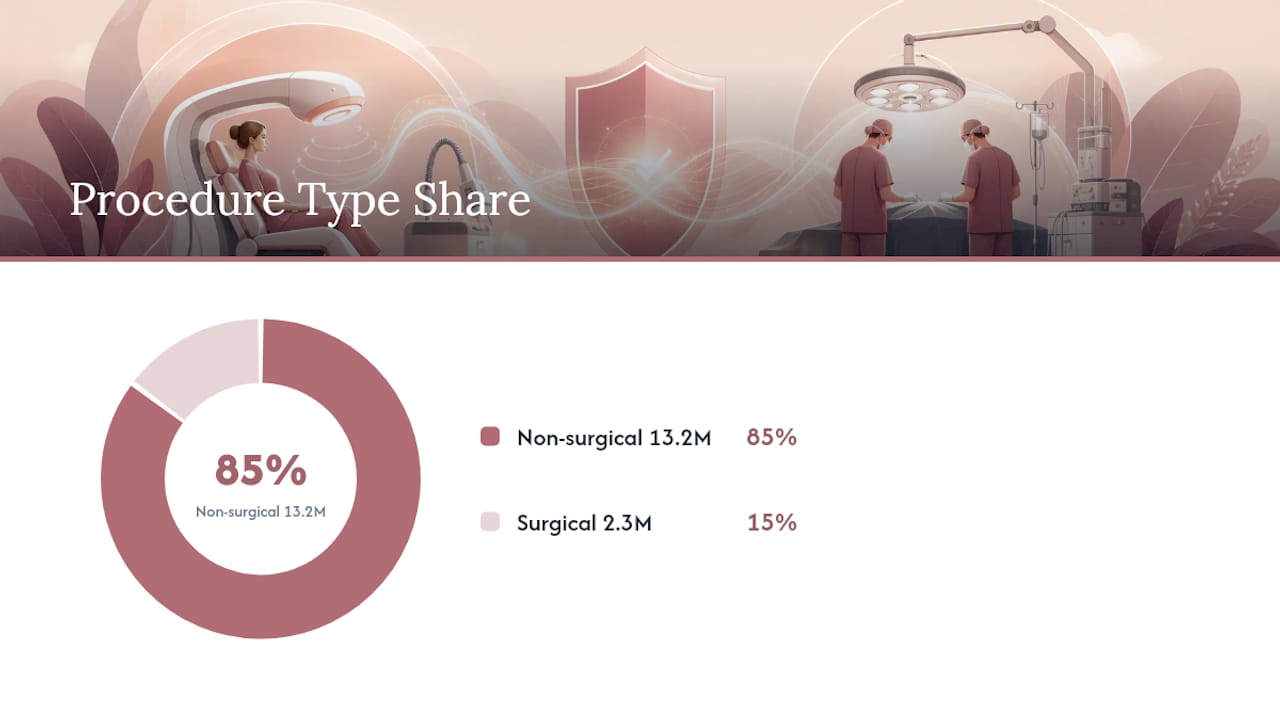
Consider pigmentation and texture concerns specifically. A surgical facelift addresses sagging and structural volume loss, but it does nothing special for pigment or surface texture, and it comes with weeks of recovery. A chemical peel like the Larimedical Biomimetic Peel targets exactly that concern (pigment, tone, texture) with a fraction of the risk and no need to take time off. Non-surgical procedures also outnumber surgical ones by a wide margin: roughly 13.2 million nonsurgical procedures versus 2.3 million surgical ones in 2020, largely because patients are choosing lower risk and lower cost when the goal fits.
What Side Effects Are Common, and What’s Rare but Serious?
Most reactions after a non-invasive treatment are mild, temporary, and resolve on their own. That’s not optimism, it’s what the data on patient outcomes actually shows, with satisfaction sitting around 74.5% and complications skewing overwhelmingly toward the minor end.
Here’s the realistic timeline for common reactions:
Redness and warmth: hours to a few days, usually calms with cool compresses.
Swelling or bruising: a few days up to two weeks, more common after microneedling or deeper laser work.
Temporary pigment changes: can last a few weeks, especially in deeper skin tones treated with the wrong laser settings.
Mild flaking or dryness: days to a couple of weeks, typical after peels as the skin renews itself.
Rare but serious complications do exist, and you should know them before you book: burns from incorrectly calibrated devices, prolonged or worsened pigment changes, infection, and, with injectables specifically, vascular occlusion, which can lead to tissue damage if not caught fast. A review of filler and toxin complications confirms these events are infrequent, but that severe outcomes like vascular occlusion, necrosis, and even visual impairment have been documented. If you notice unusual pain, blanching of the skin, or vision changes after any injectable, treat it as an emergency and seek care immediately.
Warning: Rare complications are real, but they’re rare precisely because clinician skill and proper device settings are the deciding factor, not luck.
How Much Does Clinician Skill Actually Matter?
Practitioner expertise is the single biggest lever for keeping non-invasive treatments low-risk. The device matters, the product matters, but the hands operating them matter more. A literature review comparing invasive and non-invasive aesthetic procedures points to informed consent and expectation management as central to safe outcomes, and that starts with who’s holding the device.
Before you commit, verify these:
Formal training credentials specific to the treatment being offered.
Documented emergency protocols for rare but serious reactions.
A real consent process, not a rushed signature at the front desk.
A pre-treatment skin and health assessment, not a one-size-fits-all approach.
Vascular mapping for injectable treatments, where ultrasound guidance can catch a problem before it becomes serious.
Antisepsis practices and up-to-date device maintenance logs.
At your consultation, run through this short checklist:
Ask to see the clinician’s credentials and years of experience directly.
Ask how they manage a rare complication if one occurs.
Confirm the exact products and device models being used on your skin.
Ask to see before-and-after photos from patients with a similar concern to yours.
Pro Tip: A clinician who’s comfortable answering every one of these questions without hesitation is usually one who’s genuinely equipped to handle a rare complication, not just the routine cases.
When Is Non-Invasive Not Enough?
Non-invasive treatments excel at skin quality, tone, texture, and early volume loss. They’re not built to fix significant tissue descent, large-volume loss, or excess skin, and pretending otherwise wastes your money and your time.
Four scenarios where surgery is the more honest answer:
Significant excess skin after major weight loss.
Advanced facial descent where gravity has genuinely moved tissue, not just thinned it.
Heavy upper eyelids that are affecting vision, not just appearance.
Large structural changes that need physical repositioning, not stimulation.
The trade-off comes down to pacing. Non-invasive treatments work progressively: gradual collagen stimulation, maintenance sessions, incremental improvement. Surgery delivers a more immediate, longer-lasting structural change, but at a much higher risk cost. If you’re weighing longevity against risk, our facial renewal treatment options guide breaks down what to expect from each path over time.
What Should You Ask Before Booking a Treatment?
Good screening before you book prevents most of the surprises that turn into complaints later. This is the checklist to bring to a consultation, organized by category:
Clinician credentials: How many years of experience, and in this specific treatment?
Treatment details: What does the session actually involve, step by step?
Alternatives: Is there a treatment better suited to my specific concern?
Device and product specifics: What brand or model, and is it appropriate for my skin type?
Safety protocols: What’s the plan if something unexpected happens?
Cost and maintenance: What’s the full price, and how often will I need to return?
Pre-treatment instructions: Any medications or sun exposure to avoid beforehand?
Consent documentation: Will I receive a written consent form and aftercare sheet?
Downtime expectations: How many hours or days before I look presentable?
Realistic outcome: What result can I actually expect for my skin tone and concern?
The Larimedical Biomimetic Peel, for example, is designed around minimal downtime while still targeting pigmentation and texture meaningfully, which is the kind of detail a good consultation should walk you through clearly.
Pro Tip: Ask specifically for before-and-after photos of someone with a similar skin tone and concern to yours. Results vary meaningfully across skin types, and generic photos don’t tell you much.
How Do You Take Care of Your Skin Afterward?
Following proper aftercare shortens recovery and lowers your chance of an adverse reaction. It’s the part of the process most people rush through, and it’s exactly where avoidable complications tend to creep in.
In the first 48 to 72 hours:
Cool the area if there’s redness or swelling.
Skip strenuous exercise, since sweat and heat can aggravate freshly treated skin.
Hold off on active ingredients (retinoids, acids) unless your clinician says otherwise.
Wear sun protection every day, without exception.
Cleanse gently, no scrubbing.
Over the following two weeks:
Keep skin hydrated to support the healing process.
Avoid exfoliating until fully healed.
Reintroduce active ingredients gradually, following your clinician’s timeline.
Report anything that feels off, delayed swelling, unusual pain, rather than waiting it out.
Collagen-stimulating treatments like radiofrequency and non-ablative laser work progressively. Regenerative treatments rely on standardized monitoring with photography and follow-up assessment to actually track improvement over months, not days, so patience during aftercare directly supports the results you’re paying for. For managing redness specifically, our guide on why redness after treatment occurs covers this in more depth.
A Clinician’s View on Safety and Expectations
What matters most when a client sits down for a consultation isn’t the device on the tray, it’s whether her expectations match reality and whether her history has been properly assessed. Patient selection, documented consent, and a clear plan for follow-up are the foundation everything else is built on.
Chevonne, Dermal Clinician with 15 years’ experience, leads treatment planning at Fundamentalskin with that philosophy at the center. Every plan is built around the individual’s skin, not a generic protocol, and results are tracked with before-and-after documentation so progress is visible, not assumed. The clinic also sources organic, Australia-based skincare ingredients for aftercare and maintenance, on the principle that what supports the skin between sessions matters as much as the treatment itself.
Book a Safe, In-Clinic Non-Invasive Treatment
Fundamentalskin’s approach to pigmentation, redness, and texture concerns is built around a simple idea: real clinical results without the recovery time surgery demands, supported by advanced facial esthetics treatments that enhance your smile confidently. Chevonne brings 15 years of dermal clinician experience to every consultation, and treatments like the Larimedical Biomimetic Peel are designed to address pigment and rough texture with minimal downtime, backed by documented before-and-after results rather than vague promises.

The Biomimetic Peel plus LED therapy session runs at a transparent $249, so you know exactly what you’re committing to before you book. If pigmentation or dull texture is your main concern, start with a consultation to get a plan built around your specific skin, not a generic package. Book a Larimedical peel consultation or view the Biomimetic Peel and LED therapy details to see what a low-downtime path to clearer, more even skin actually looks like.
Sources
For readers who want to go deeper into the clinical evidence behind non-invasive safety, these sources informed this guide:
Reading the full clinical reviews linked above will give you a clearer picture of what the evidence actually supports before you book anything.
This article is general information, not a substitute for advice from a qualified doctor. Consult a qualified healthcare professional about your own circumstances before acting on anything here.
Recommended
Comments