.png)
Why Non-Invasive Skin Treatments Suit Busy Women
- chevonne stewart
- 5 hours ago
- 8 min read

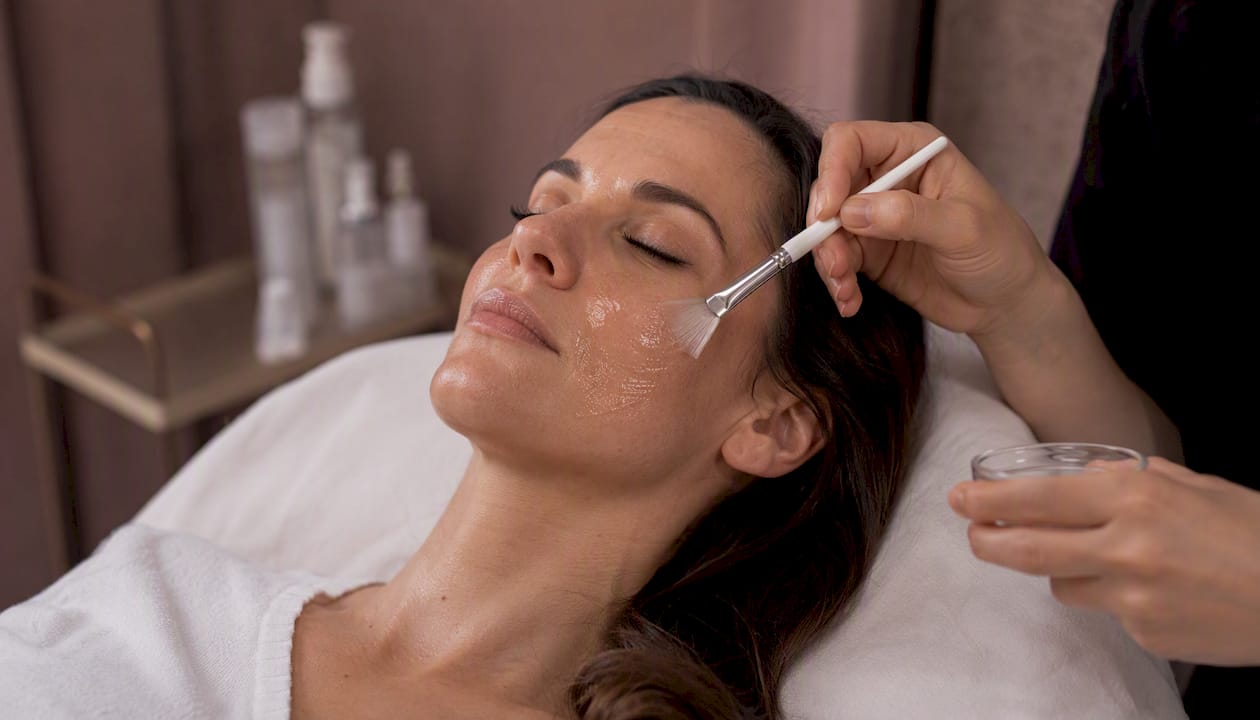
Yes, clinic-administered non-invasive treatments are a strong fit for busy women. Short sessions, minimal social downtime, and predictable maintenance plans mean you can address pigmentation, fine lines, redness, laxity, and dull texture without clearing your calendar. FDA-cleared devices like Ultherapy and Thermage, along with options such as the Larimedical Biomimetic Peel, deliver real, cumulative results that build quietly in the background of a full life.
Here is what fits a busy schedule:
Ultrasound (Ultherapy): one session, 30–90 minutes, targets mild-moderate laxity on the brow, chin, and neck
Radiofrequency (Thermage, Profound RF, Morpheus8): collagen stimulation for texture, fine lines, and laxity; 30–90 minutes per session
RF microneedling: combined mechanical and RF energy for texture, tone, and scarring; 1–3 days of minimal downtime
IPL and picosecond (Pico) lasers: pigmentation, redness, and vascular concerns; non-ablative options allow quick return to activities
Larimedical Biomimetic Peel + LED therapy: zero-to-minimal downtime, immediate glow, ideal for event prep
HydraFacial: 20–30 minutes, no downtime, same-day results
A qualified provider matters. Look for clinician supervision and FDA-cleared devices for your specific concern before booking.
Key Takeaways
Non-invasive clinic treatments suit busy women because they deliver real skin improvement in short sessions, with minimal social downtime and predictable maintenance plans that fit a full professional schedule.
Point | Details |
Short sessions, real results | Most non-invasive treatments complete in less than two hours and allow same-day return to activities, making non-surgical aesthetic treatments an ideal choice for busy individuals. |
Match modality to concern | Ultherapy and RF target laxity; IPL and Pico address pigmentation; HydraFacial and Biomimetic Peel deliver immediate glow. |
Plan around your calendar | Book zero-downtime treatments 48–72 hours before an event; start collagen-building series 3–4 months ahead. |
Verify provider credentials | Confirm FDA clearance, clinician qualifications, and before-and-after documentation before committing. |
Fundamentalskin’s approach | Chevonne builds personalized, low-downtime protocols including the Biomimetic Peel + LED Therapy for busy women. |
Table of Contents
Why non-invasive treatments work so well for a busy schedule
What are the main clinic treatment options and their downtime?
What happens on treatment day, and when will you see results?
What the maintenance-first approach actually means for your skin
Fundamentalskin offers a low-downtime clinic program built for your schedule
Why non-invasive treatments work so well for a busy schedule
The core appeal is simple: you get meaningful skin improvement without blocking out recovery days. Many quick in-office procedures finish in under an hour and allow a same-day return to work, though mild redness or swelling can appear temporarily.

The downtime spectrum matters here. True no-downtime options like HydraFacial and LED therapy let you walk straight back into a meeting. Minimal-downtime options, such as non-ablative lasers and light peels, may leave skin slightly flushed for a short time. RF microneedling typically involves a few days of visible redness. Knowing where your chosen treatment lands on that spectrum lets you plan around presentations, travel, or events.
Gradual, natural-looking improvement is another genuine advantage. Maintenance-first, low-visibility treatments are now a mainstream long-term strategy for professionals who want to look consistently well rather than dramatically different overnight. Collagen-building modalities like RF and ultrasound work quietly over weeks and months, so colleagues notice you look refreshed, not “done.”
Medical risk is also lower than surgery, with no general anesthesia, no incisions, and no extended healing period. Many non-invasive options for women are suitable across a broad range of skin types when performed by an experienced clinician.
Pro Tip: Schedule collagen-building treatments like RF or Ultherapy at least 2–3 months before a major event. For a same-week glow, book a HydraFacial or Biomimetic Peel 48–72 hours ahead.
What are the main clinic treatment options and their downtime?
Non-ablative and fractional lasers need multiple sessions with shorter recovery, while traditional ablative resurfacing can require weeks to heal. For most busy women, the non-ablative and energy-based categories below are the practical starting point.
Treatment | Best for | Session length | Downtime | Sessions needed | Discomfort | Results timeline | Typical U.S. cost |
Ultherapy (ultrasound) | Mild-moderate laxity, brow, chin, neck | 30–90 min | None to minimal | 1–2 | Moderate | 3–6 months | $1,500–$4,500 |
Thermage (RF) | Skin tightening, fine lines | 45–90 min | None to minimal | 1 | Moderate | 2–6 months | $1,000–$4,000 |
Profound RF | Deeper laxity, texture | 30–90 min | 3–7 days | 1–2 | Moderate-high | 3–6 months | $2,000–$5,000 |
Morpheus8 (RF microneedling) | Texture, laxity, tone | 30–90 min | 1–3 days | 3–4 | Moderate | 1–3 months | $800–$2,500/session |
VelaShape / Venus Versa (RF body) | Body contouring, texture | 30–45 min | None | 4–6 | Low-moderate | 4–8 weeks | $300–$600/session |
IPL / Pico laser | Pigmentation, redness, vascular | 20–45 min | Hours to 2 days | 3–5 | Low-moderate | 4–8 weeks | $300–$600/session |
HydraFacial | Dullness, hydration, mild texture | 20–30 min | None | Monthly | None | Immediate | $150–$300 |
Larimedical Biomimetic Peel + LED | Pigmentation, dullness, fine lines | 30–90 min | None to minimal | 4–6 | None | Immediate + cumulative | Varies by clinic |
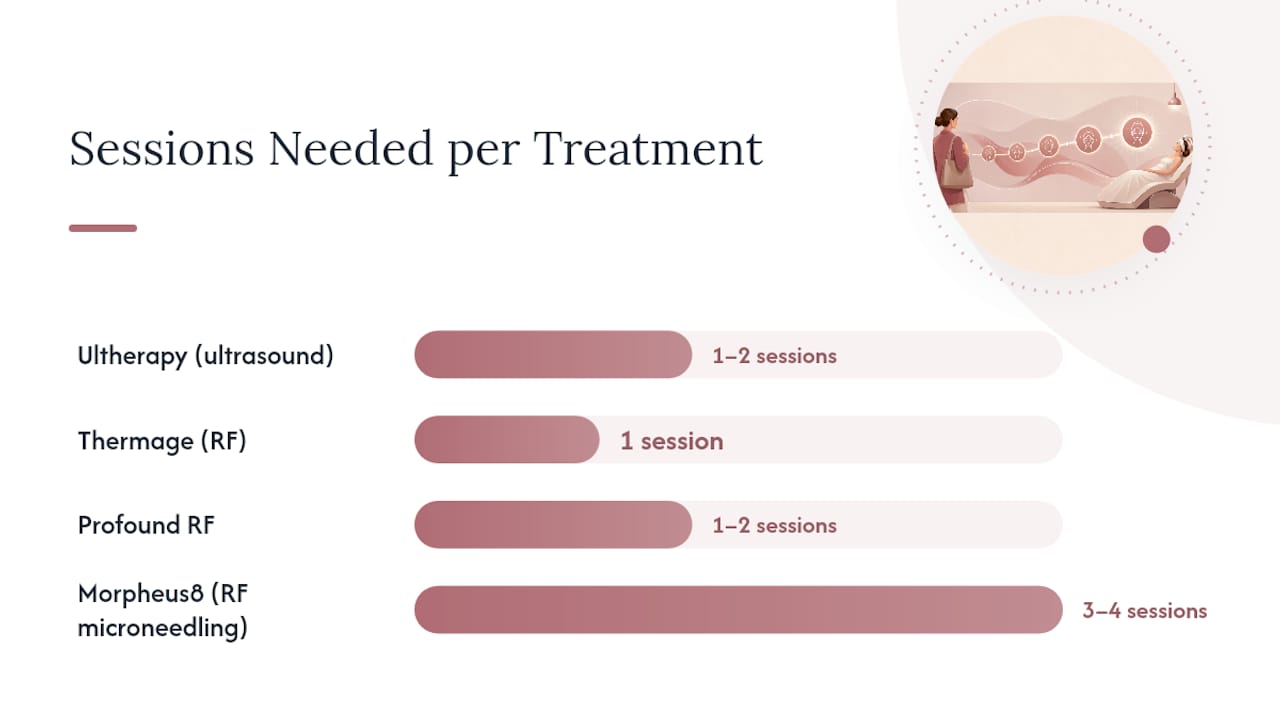
Combination approaches, such as IPL paired with RF or Pico with LED adjuncts, can address pigment, texture, and laxity in a single session, which suits women who want broader improvement per visit. Non-ablative and RF-based modalities typically require a planned series for best outcomes, so build that into your calendar from the start.
Who is a good candidate, and who should wait?
The ideal candidate is a woman with mild-to-moderate laxity, early lines, uneven tone, pigmentation, or dull texture who needs limited downtime and wants gradual, natural-looking improvement. Most healthy adults qualify for at least one modality in this category.
Surgery becomes the more appropriate choice when there is significant skin excess, dramatic structural change needed, or when a single-session result is the priority. A qualified clinician will tell you honestly if a non-invasive approach will not deliver what you are looking for.
Clear contraindications to discuss with your provider:
Pregnancy (most energy devices are contraindicated)
Active isotretinoin use (typically wait 6–12 months post-course for ablative treatments)
Active skin infection, open wounds, or cold sores in the treatment area
Recent significant sun exposure or active tan for laser and IPL treatments
Certain implanted devices (pacemakers) for RF-based treatments
Darker skin tones require device-specific planning, particularly for lasers and IPL. Non-thermal and non-ablative advances including pico lasers and LED adjuncts expand safe options for deeper skin tones when chosen and operated by experienced clinicians. Always bring your full medication list, recent treatment history, and your event calendar to your consult.
What happens on treatment day, and when will you see results?
A typical clinic visit follows a straightforward sequence: consultation and skin assessment, pre-treatment prep (topical numbing cream where needed, usually applied 20–45 minutes before), the treatment itself, and immediate aftercare instructions before you leave.
Downtime by modality:
None: HydraFacial, LED therapy, light Biomimetic Peel
Hours: Non-ablative IPL, Pico laser, light RF
1–3 days: RF microneedling (Morpheus8), moderate peels
3–7 days: Profound RF, deeper fractional treatments
HydraFacial delivers immediate glow with essentially no recovery, making it a reliable option for event prep. Collagen-building modalities like Ultherapy and Thermage produce results that develop over 3–6 months as new collagen forms. Pigmentation from IPL or Pico lasers typically fades progressively across a series of 3–5 sessions spaced 4–6 weeks apart.
Session snapshot: Most non-invasive clinic treatments complete in 20–90 minutes. Collagen-building results from RF and ultrasound devices typically become visible within 3–6 months of treatment.
For event planning: book zero-downtime treatments 48–72 hours ahead for a fresh glow. For collagen-building results, start your series 3–4 months before the event you are preparing for.
How do you choose a safe, qualified provider?
Safety in this category comes down to three things: the provider’s training, the device’s regulatory status, and the clinic’s protocols. FDA-cleared skin tightening treatments performed by qualified providers carry low risk of serious side effects, but the word “qualified” does real work in that sentence.
Questions to ask at your consultation:
What are your credentials, and who provides medical oversight?
What is the specific device brand and model, and is it FDA-cleared for this indication?
What downtime and aftercare should I expect?
Can you show me before-and-after photos for clients with my skin tone and concern?
What is your protocol if I experience a complication?
Red flags to walk away from:
Pressure to add multiple treatments in one visit without a clear rationale
No written treatment plan or aftercare instructions
Unable to show recent clinic photos for comparable skin types
Vague or missing training credentials
Pro Tip: Ask the clinic to show you the device’s FDA clearance number. Legitimate clinics keep this on file and will share it without hesitation. You can verify it at the FDA’s 510(k) database in under two minutes.
A dermal clinician evaluation at your first appointment should include a full skin assessment, not just a treatment recommendation. That assessment is what separates a personalized protocol from a one-size-fits-all menu.
What do these treatments typically cost in the U.S.?
Aesthetic and maintenance treatments are almost always out-of-pocket. Insurance does not cover cosmetic procedures, so budget planning matters.
Rough U.S. cost bands by category:
HydraFacial: $150–$300 per session; monthly maintenance is common
IPL / Pico laser: $300–$600 per session; plan for 3–5 sessions
RF microneedling (Morpheus8): $800–$2,500 per session; typically 3–4 sessions
Thermage: $1,000–$4,000 per session; often one session per year
Ultherapy: $1,500–$4,500 depending on treatment area
Profound RF: $2,000–$5,000 per session
Many clinics offer package pricing that reduces per-session cost when you commit to a full course. Ask about financing options if a multi-session plan is outside your immediate budget. Pre-booking your full series at the start also locks in scheduling slots, which matters when your calendar fills quickly.
For aftercare, budget for broad-spectrum SPF 30+ sunscreen (non-negotiable post-treatment), a gentle cleanser, and a barrier-supporting moisturizer. Avoid retinoids and exfoliating acids for the number of days your provider specifies, which varies by modality.
What the maintenance-first approach actually means for your skin
The conventional wisdom around non-invasive treatments tends to oversell the single-session result. The honest picture is more nuanced, and actually more useful.
Most women see the best outcomes when they treat non-invasive care as an ongoing maintenance strategy rather than a one-time fix. A single Ultherapy session produces real collagen remodeling, but the women who look consistently healthy and refreshed over years are the ones who return for maintenance every 12–18 months and pair clinic treatments with solid at-home care. The cumulative effect of regular, low-intensity professional care outperforms the occasional dramatic intervention.
There is also a psychological dimension worth naming. Subtle, gradual improvement preserves your professional appearance without signaling that you have “had something done.” That discretion matters to many busy women, and it is one of the clearest reasons why the maintenance-first model has become the mainstream approach among professionals in major urban markets.
What I see consistently in clinic is that women who come in with realistic expectations and a planned series get far better results than those chasing a single dramatic outcome. The skin responds to consistency, not intensity.
Fundamentalskin offers a low-downtime clinic program built for your schedule
If you are ready to move from research to results, Fundamentalskin makes it straightforward. Led by Chevonne, a Dermal Clinician with 15 years of experience, the clinic offers personalized protocols for pigmentation, aging skin, redness, fine lines, and dull texture, with treatments chosen specifically for your skin and your schedule.

The Biomimetic Peel + LED Therapy package is one of the most popular options for busy women: zero downtime, an immediate glow, and cumulative pigmentation and texture improvement across a planned series. For women managing laxity or deeper texture concerns, Chevonne builds a targeted protocol using Larimedical clinic peels and complementary modalities, with before-and-after documentation at every stage. Organic, Australia-sourced ingredients support gentle, effective treatment at every appointment.
Book a consultation at Fundamentalskin to get a personalized skin assessment and a treatment plan that fits your calendar.
Sources
Use these to verify claims, compare device options, and prepare questions for your consultation. Print or screenshot the device-specific pages before your first appointment.
This article is general information, not a substitute for advice from a qualified doctor. Consult a qualified healthcare professional about your own circumstances before acting on anything here.
Recommended
Comments