.png)
Why Personalised Skincare Outperforms Generic Products

Personalized skincare is defined as a treatment approach tailored to your unique skin biometry, skin type, active concerns, and lifestyle factors. It outperforms generic skincare because it delivers the right ingredients at the right concentrations for your specific skin, rather than a broad formula designed to suit millions of different people. Clinical evidence confirms this advantage: skin hydration can increase from 0.60% to approximately 24.60% within just 28 days of using a bespoke cosmetic regimen. That kind of measurable result is simply not achievable with a mass-market moisturizer. Understanding why personalised skincare outperforms generic options is the first step toward making a real difference in your skin health.
Why personalised skincare outperforms generic: the science of formulation
Generic skincare products are built for the widest possible audience. That means manufacturers use lower-strength actives, add fillers and fragrances to improve sensory appeal, and avoid ingredients that might irritate even a small percentage of buyers. The result is a product that does a little for a lot of people, but rarely does enough for any one person.
Personalized skincare starts from the opposite direction. Biometric skin assessments and data-driven ingredient selection identify your precise skin needs before a single product is formulated. That process considers factors like sebum production, transepidermal water loss, pigmentation patterns, and sensitivity thresholds. The outcome is a formula built around your skin, not around a market segment.
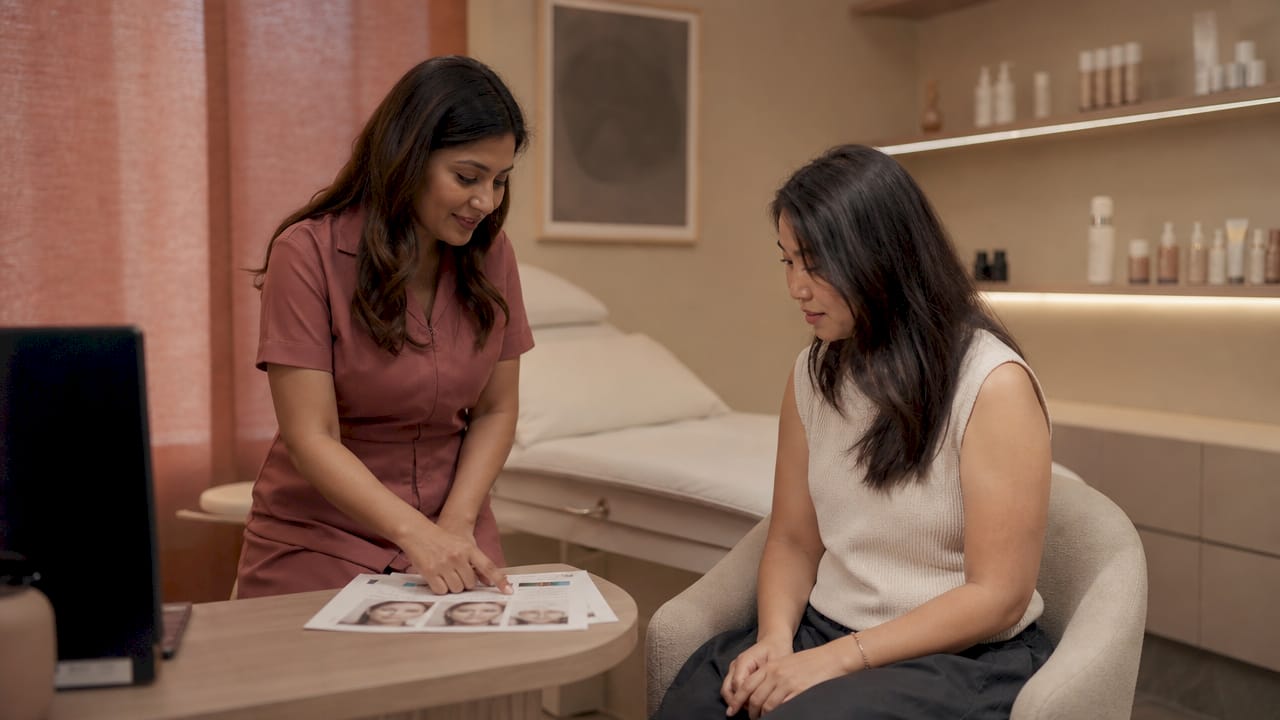
The role of clinical expertise in this process is significant. Dermatologist-formulated skincare prioritizes treating the underlying cause of a concern rather than masking its surface appearance. A personalized plan for hyperpigmentation, for example, targets melanin production at the cellular level using clinically tested concentrations of ingredients like niacinamide or azelaic acid. A generic brightening cream uses the same ingredients at a fraction of the effective dose.
Here is what a professional assessment typically examines before building your personalized regimen:
Skin type and hydration levels measured through clinical tools, not self-reporting
Active concerns such as pigmentation, fine lines, redness, or barrier disruption
Sensitivity profile to identify ingredients you should avoid entirely
Lifestyle factors including sun exposure, diet, and stress levels that affect skin behavior
Treatment history to understand what has and has not worked before
Pro Tip: Ask your clinician to explain the concentration of each active ingredient in your personalized formula. Knowing why each ingredient is included helps you understand what to expect and builds confidence in your routine.
How does personalized skincare compare to generic in efficacy and safety?
The performance gap between tailored and generic skincare shows up clearly in clinical data. Personalized routines reduce irritation by avoiding unnecessary actives and guiding safe usage, which minimizes redness, sensitivity, and barrier disruption. Generic products carry the opposite risk: mass-market formulas may degrade the skin microbiome through untested ingredient combinations, fragrances, and low-grade preservatives.
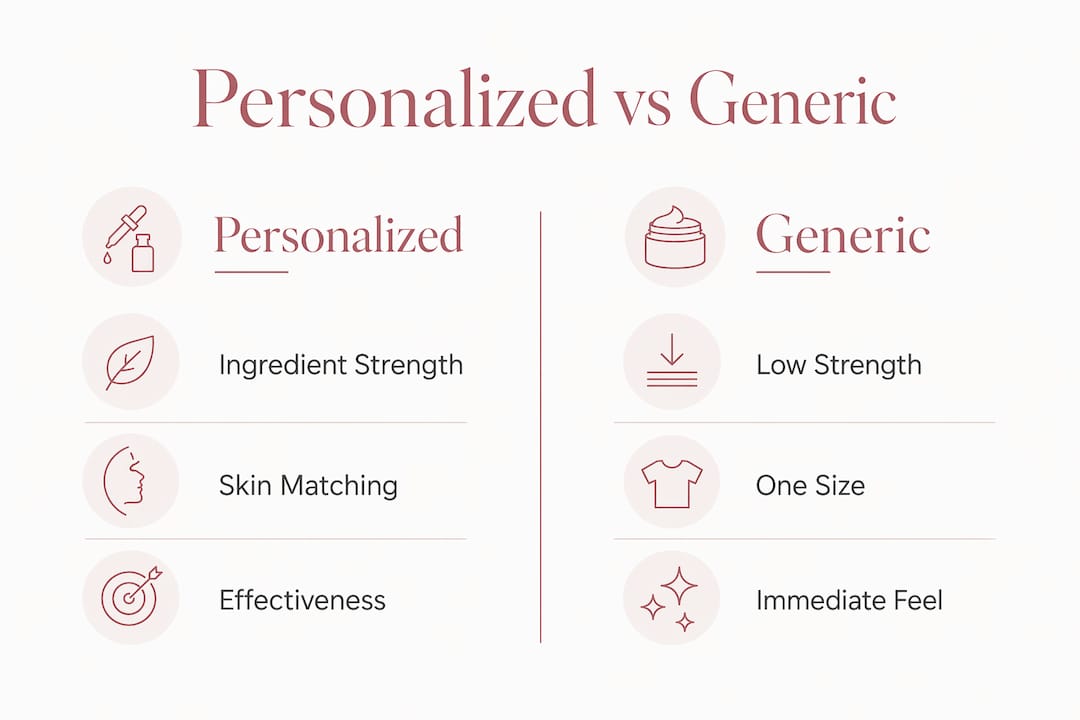
The table below compares the two approaches across key performance factors.
Factor | Personalized skincare | Generic skincare |
Ingredient concentration | Clinically tested, targeted dose | Low-strength, broad-appeal formula |
Irritation risk | Minimized through sensitivity screening | Higher due to fillers and fragrances |
Barrier repair | Actively supported with lipid-replenishing actives | Inconsistent; depends on product tier |
Long-term skin health | Supports epidermal homeostasis | Focused on immediate sensory appeal |
Trial-and-error waste | Eliminated through professional assessment | Common and costly |
Generic skincare also tends to prioritize how a product feels over what it does. While generic products emphasize immediate sensory appeal like fragrance or texture, personalized skincare prioritizes long-term epidermal homeostasis and barrier repair using clinically tested ingredient concentrations. That distinction matters because a product that smells wonderful but disrupts your barrier is actively working against your skin health.
Personalized care also limits the trial-and-error cycle that damages skin over time. Switching between incompatible products, layering actives without guidance, or using formulas with the wrong pH for your skin type all create cumulative stress on the epidermal barrier. A tailored plan removes that risk entirely.
Pro Tip: If your skin feels tight, dry, or reactive after using a new product, that is a barrier disruption signal. A personalized assessment can identify exactly which ingredient is causing the reaction and replace it with a compatible alternative.
Is personalized skincare worth the cost?
The upfront cost of personalized skincare is higher than buying a generic moisturizer off the shelf. The total cost over time, however, tells a different story. Personalized skincare eliminates the wasted spending that comes from months-long cycles of buying, testing, and discarding products that do not work. Most people who have struggled with skin concerns have a cabinet full of half-used products that failed to deliver results. That accumulated spending often exceeds the cost of a single professional assessment and tailored regimen.
Adherence is the other financial argument for personalized care. Users report higher satisfaction and more consistent use with personalized formulas compared to generic products. Consistency is what drives results in skincare. A well-formulated product you use every day outperforms a theoretically superior product you abandon after two weeks because it irritates your skin or feels wrong on your face.
The benefits of a personalized approach extend beyond the financial:
Clarity and confidence in knowing exactly what your skin needs and why
Reduced frustration from seeing real, measurable progress rather than guessing
Prevention of future damage by addressing concerns before they worsen
Long-term protection against premature aging, sun damage, and environmental stressors through customized protective plans
Better skin literacy because a clinician explains your skin to you in terms you can act on
The psychological value of that clarity should not be underestimated. Knowing your routine is built specifically for your skin removes the anxiety of wondering whether you are doing more harm than good. That confidence supports consistency, and consistency drives results.
How to choose and maintain an effective personalized skincare routine
Building a personalized routine that actually works requires more than buying products labeled “for sensitive skin” or “anti-aging.” Genuine personalization starts with a professional assessment. Here is how to approach it:
Seek a biometric or clinical skin assessment. A qualified Dermal Clinician or dermatologist uses tools like corneometers and skin analyzers to measure your skin objectively. Self-assessment questionnaires are a starting point, not a substitute. Learning how professionals build skincare routines gives you a clear picture of what a rigorous process looks like.
Understand your key active ingredients. Know what each ingredient in your routine does and why it is included. Retinoids support cell turnover. Peptides signal collagen production. Niacinamide reduces inflammation and pigmentation. Understanding the purpose of each ingredient helps you use products correctly and recognize when something is not working.
Follow the recommended application order. Layering products in the wrong sequence reduces their effectiveness. A clear skincare routine order ensures actives penetrate properly and do not neutralize each other.
Avoid mixing incompatible actives without guidance. Vitamin C and retinol, for example, can destabilize each other when used together incorrectly. A clinician will map out a schedule that prevents these conflicts.
Schedule regular reassessments. Long-term skin health improvements require consistent use of products tailored to your skin’s current state, which changes with seasons, hormones, and age. A routine that worked perfectly at 35 may need adjustment at 40.
The broader beauty industry recognizes this shift toward individualization. Personalizing the user experience in beauty and skincare is now a defining factor in brand success, reflecting how strongly clients respond to treatments built around their specific needs.
Key Takeaways
Personalized skincare outperforms generic products because it delivers clinically tested ingredients at effective concentrations for your specific skin, producing measurable results that mass-market formulas cannot match.
Point | Details |
Clinical efficacy | Personalized regimens can increase skin hydration from 0.60% to 24.60% within 28 days. |
Safety advantage | Tailored routines minimize irritation by screening out incompatible ingredients before use. |
Cost efficiency | Eliminating trial-and-error product cycles makes personalized care more affordable long-term. |
Adherence and results | Clients use personalized formulas more consistently, which is the primary driver of lasting results. |
Professional assessment | A biometric skin assessment is the foundation of any effective personalized skincare program. |
What 15 years in clinic taught me about personalized skincare
I have worked with hundreds of clients who arrived carrying bags of products they had tried and abandoned. The frustration in those conversations is real. They had spent significant money, followed advice from beauty counters and social media, and still could not get their skin to behave. The common thread was always the same: they were using products built for someone else.
What I have seen consistently is that the moment a client understands their own skin, their results change. Not because we introduced some miracle ingredient, but because we stopped asking their skin to respond to things it was never suited for. A client with a compromised barrier does not need more actives. She needs barrier repair first, and then we build from there. Generic products cannot make that call. They do not know her skin.
The misconception I push back on most often is that personalized skincare is a luxury. It is not. It is the most direct path to results. The trial-and-error approach is actually the expensive one, in both money and time. Professional skincare plans provide clarity, structure, and medical oversight that removes the frustration and inconsistency most people experience on their own.
My advice is simple. Invest in one good assessment before you invest in another product. Know your skin first. Everything else follows from that.
— chevonne
Fundamentalskin’s personalized treatments for your skin
At Fundamentalskin, every treatment begins with a thorough professional skin assessment led by Chevonne, a Dermal Clinician with 15 years of clinical experience. That assessment drives every decision, from ingredient selection to treatment sequencing, so your skin receives exactly what it needs and nothing it does not.

The Biomimetic Peel and LED Therapy combines a Larimedical Biomimetic Peel with targeted LED therapy, addressing pigmentation, fine lines, redness, and dull texture without downtime. Every treatment is adapted to your individual skin profile using Australia-sourced, organic ingredients. If you are ready to stop guessing and start seeing real results, this is where that begins. Book your consultation with Fundamentalskin and experience what skincare built specifically for you actually feels like.
FAQ
What makes personalized skincare more effective than generic?
Personalized skincare uses clinically tested ingredient concentrations matched to your specific skin type and concerns. Generic products use lower-strength actives designed to suit a broad audience, which limits their effectiveness for any individual.
How quickly can personalized skincare show results?
Clinical studies show personalized regimens can increase skin hydration from 0.60% to approximately 24.60% within 28 days. Results vary by concern, but measurable improvements in barrier function and hydration appear within the first month.
Is personalized skincare actually cost-effective?
Yes. Personalized skincare eliminates the repeated cost of buying and discarding ineffective products. The upfront investment in a professional assessment and tailored regimen is typically lower than the accumulated cost of months of trial-and-error buying.
Can personalized skincare reduce skin sensitivity and irritation?
Tailored routines minimize irritation by identifying and removing incompatible ingredients before they reach your skin. This approach actively protects your barrier rather than risking disruption through untested generic formulas.
How do I know if a personalized skincare program is legitimate?
A legitimate program starts with a professional or biometric skin assessment, not a brief online quiz. Look for clinical oversight, named active ingredients with explained purposes, and a clinician who adjusts your regimen as your skin changes.
Recommended
Comments