.png)
Why Skin Treatment Results Vary From One Client to the Next

Updated: Sep 11
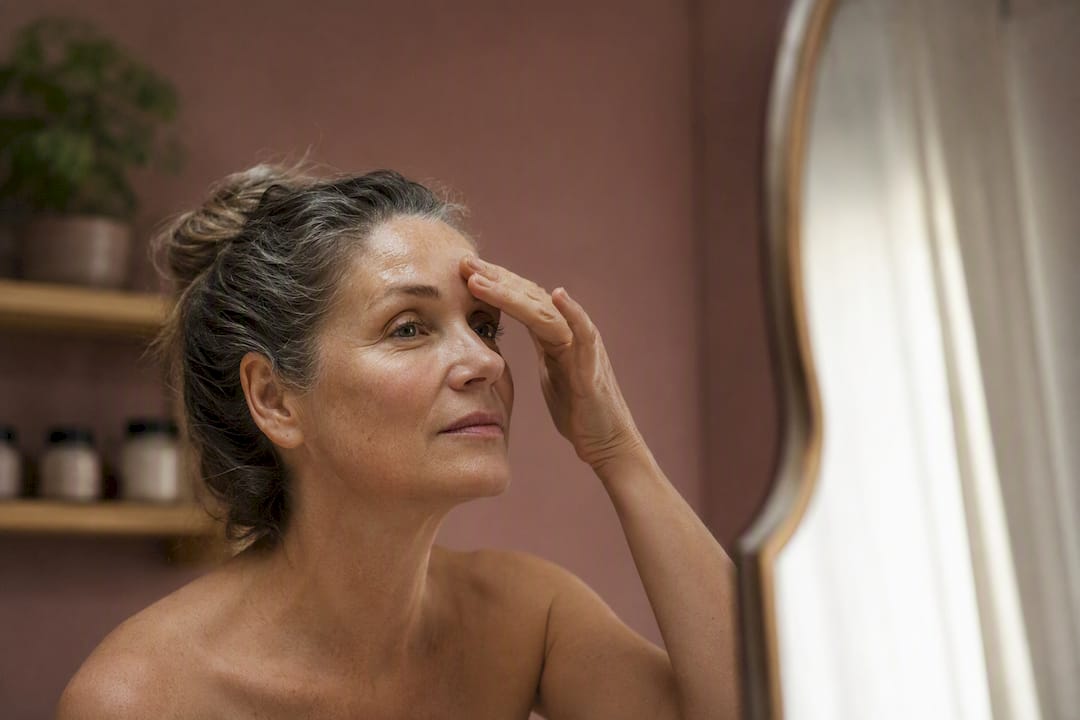
Two clients get the same peel, the same settings, the same aftercare instructions, and walk out with visibly different results. The reason isn’t luck. It comes down to three overlapping factors: your biology and health history, the exact treatment variables the clinic chooses, and how closely you follow the homecare plan afterward. A 2024 study of 512 patients found smoking was the single strongest negative predictor of treatment success, while dermatology adherence research from 2025 shows people often abandon topical regimens long before results appear.
What you can actually influence:
Lifestyle: smoking, alcohol, sleep, and diet all affect how your skin heals.
Protocol details: ask what settings, dosing, and session count are planned for you specifically.
Homecare simplicity: a routine you’ll actually follow beats a “perfect” one you abandon in week two.
Pro Tip: At your consultation, ask exactly what result percentage is realistic for your skin type and how many sessions that estimate assumes.
Key Takeaways
Results differ between clients because biology, treatment-specific variables, and homecare adherence each independently shape the outcome, and no single factor works in isolation.
Point | Details |
Biology sets the ceiling | Age, genetics, and skin history determine how far any treatment can realistically go. |
Smoking undermines results | A 2024 study of 512 patients found smoking was the top negative predictor of treatment success. |
Same treatment, different execution | Device settings, dilution, and dosing vary by clinic even under an identical treatment name. |
Adherence drives outcomes | Topical regimen adherence is significantly lower than systemic therapy adherence, often due to complexity. |
Fundamentalskin’s approach | Personalized protocols like the Larimedical Biomimetic Peel and LED Therapy pair with documented photo tracking to reduce guesswork. |
Table of Contents
Why Do Results Vary Between Clients? The Biology Behind It
Biology sets the ceiling on what any treatment can achieve. Two clients can receive an identical peel or laser pass, but their skin’s own repair machinery decides how far that stimulus travels. Age-related cellular turnover slows over time, genetic variants like MC1R (which governs pigment production) and collagen-related genes shape how skin scars, thickens, or browns in response to injury, and chronic low-grade inflammation can blunt the healing response before it even starts.
Smoking is the clearest example of a lifestyle factor overriding a good protocol. In the Shanghai-based study of 512 patients, tobacco use emerged as the single most important negative predictor of treatment efficacy, ranking above nearly every other variable researchers tracked. Non-smokers had a meaningfully higher chance of a successful outcome under otherwise similar conditions.
Smoking isn’t the only systemic factor at play. A few others show up consistently in clinical practice:
Alcohol dehydrates tissue and can slow the inflammatory phase of healing.
Obesity and chronic inflammation create a system-wide environment that mutes the skin’s response to treatment.
Poor sleep interferes with the growth hormone release that drives overnight repair.
Nutrient gaps, particularly in protein, vitamin C, and zinc, limit collagen synthesis.
Certain medications and hormonal shifts (perimenopause, thyroid conditions) change how skin responds to stimulation.
Skin history matters just as much as current health. Years of cumulative UV exposure, previous procedures, old scarring, and chronic inflammatory conditions like rosacea or eczema all create a different starting baseline, even between two clients who look similar on the surface. Genetic and nutritional research increasingly points to gene variants affecting barrier function and photoaging, though this science is still developing and isn’t yet a routine clinical tool.
The practical upshot: younger, less photo-damaged skin often remodels faster and needs fewer sessions. Skin with decades of sun exposure or reduced elasticity from aging typically needs a longer runway, combined modalities, and more patience before the improvement becomes obvious.
How Do Clinic Choices Change the Same Treatment’s Outcome?
Here’s something most clients never consider: the same treatment name can mean very different things depending on who’s delivering it. A “chemical peel” performed with a shallow dilution and one layer produces a different result than the same peel applied in three layers with precise neutralization timing. Device-based treatments carry the same problem.
Laser settings: fluence and pulse width determine how deep the effect reaches; conservative settings feel safer but often underdose the tissue.
Peel technique: dilution strength, number of layers, and neutralization timing all shift outcome intensity.
PRP concentration: platelet concentration and delivery method vary between clinics using the “same” treatment.
Practitioner skill and patient selection matter enormously here. A clinician who plays it safe with conservative settings to avoid complications may deliver a technically correct but underwhelming result. This isn’t negligence. It’s often a deliberate, cautious choice that trades speed for safety, which is exactly why the settings conversation belongs at your consultation, not after treatment one.
Measurement adds another layer of variability that has nothing to do with your skin at all. Photo angle, lighting, hydration status at the time of the photo, and even which staff member is grading progress can all shift how a “result” looks on paper. Reviews of topical and device-based interventions point to inconsistent imaging and subjective grading as real limits on how comparable clinical results actually are.
Pro Tip: Ask whether your clinic uses standardized lighting, camera distance, and timing for before-and-after photos. Inconsistent photo conditions can make a genuine improvement look flat, or exaggerate one that hasn’t fully settled.
Before you book, ask about session count, specific settings for your skin type, and how the clinic documents progress. Those answers tell you more than the treatment’s name ever will.
Why Does Aftercare Change Your Results So Much?
Homecare is the quiet variable that decides whether an in-clinic treatment actually pays off. Adherence research found that people stick to topical regimens significantly less than to systemic treatments, with regimen complexity, cost, and unclear instructions cited as the main reasons people fall off track.
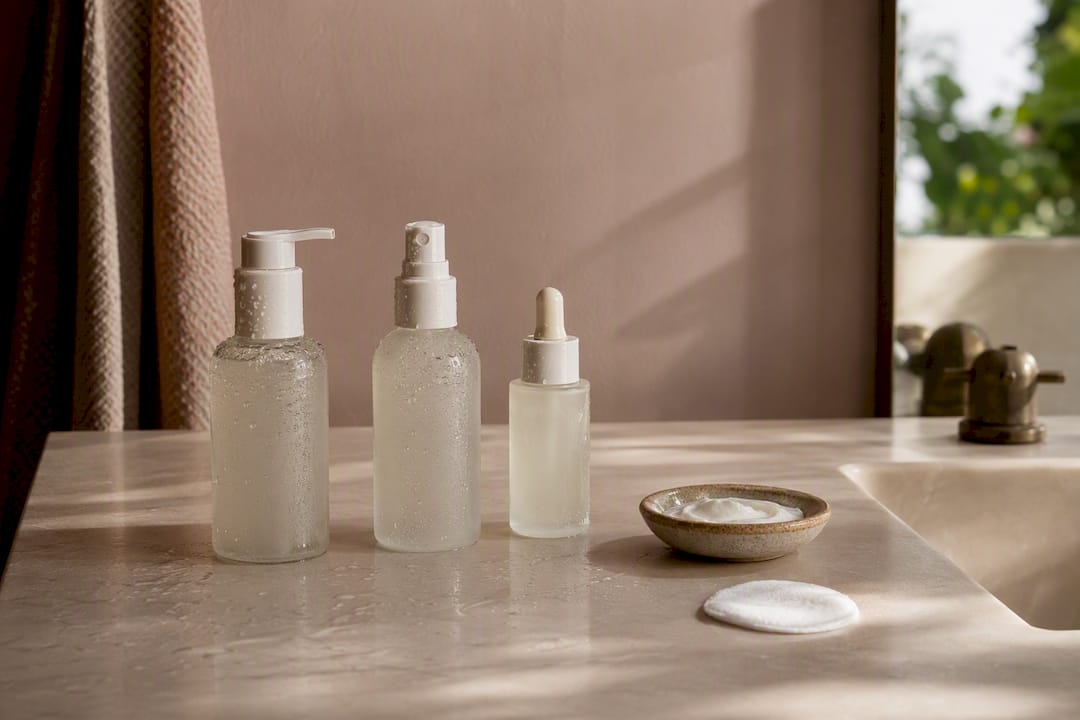
The barriers are predictable once you see the pattern: too many products, confusing steps, fear of side effects (sometimes called corticophobia), forgetfulness, and conflicting advice from different sources. Broader adherence research also links education level and social support to how consistently people follow through, which means non-adherence is rarely just a willpower problem.
A simple fix works better than a perfect routine nobody follows; for helpful guidance on simplifying your skincare routine, see the Natural Skincare Tips & Guides. Swapping four separate creams for one combined product, for instance, tends to raise adherence and, with it, results. This mirrors what an overloaded skincare routine usually does to consistency: more steps invite more skipped days.
Pro Tip: Clinics that ask you to repeat instructions back (teach-back), provide a printed supply calendar, or default to single combination products see better follow-through than clinics that hand over a long list and wish you luck.
How Long Does It Take to See Results, and Does Cost Matter?
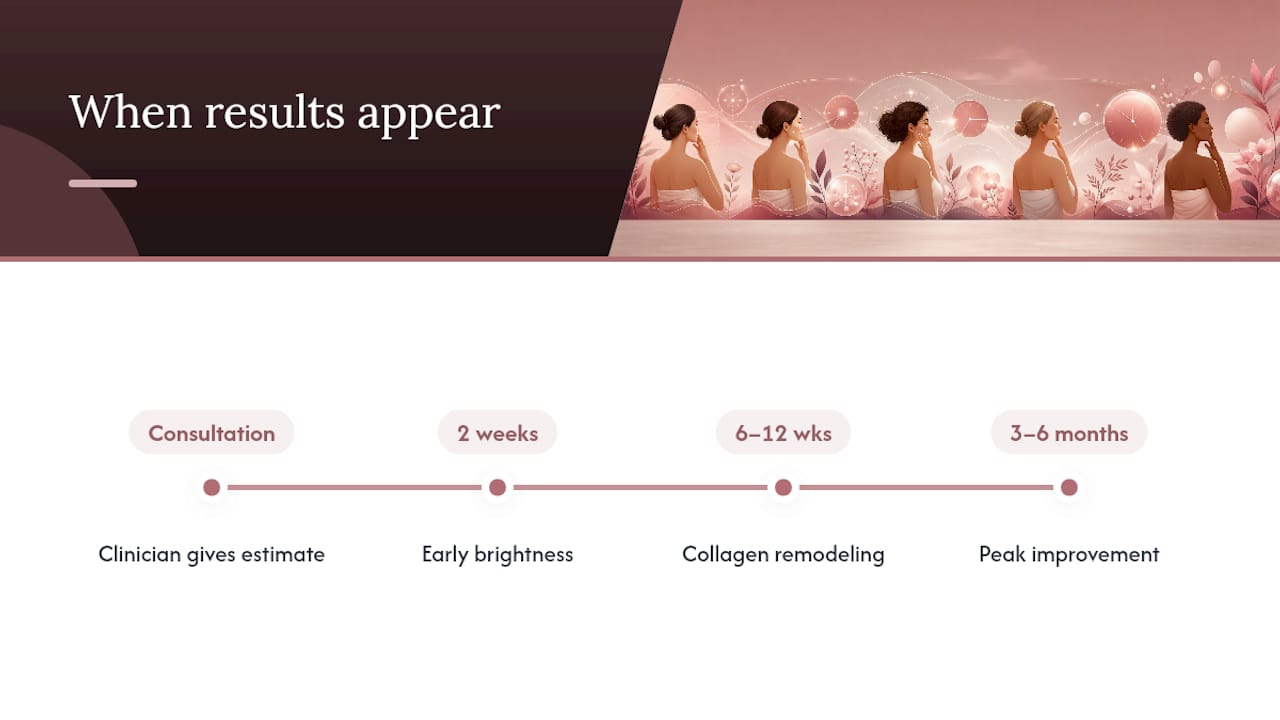
Visible remodeling takes weeks, not days, and full results build over months. Here’s the general arc clients experience across most non-invasive treatments:
Days to 2 weeks: swelling settles, mild brightness appears.
6 to 12 weeks: collagen remodeling begins in earnest.
3 to 6+ months: cumulative improvement peaks.
Cost differences often reflect real variables that shape outcomes: session count, device maintenance and calibration, clinical-grade versus retail-strength product formulations, and the practitioner’s time for assessment and follow-up. Paying for more sessions or a personalized protocol tends to matter more than paying for a single “premium” treatment name.
What Does a Trustworthy Clinic Do to Reduce Result Variability?
Predictable outcomes don’t happen by accident. They come from personalized assessment, evidence-informed protocols, consistent measurement, and real follow-up support once you’ve left the treatment room.
When evaluating a clinic, look for:
A qualified clinician with documented training and experience, such as Chevonne, a Dermal Clinician with 15 years in the field.
Multi-parameter assessment that combines imaging with hands-on clinical grading, not a glance and a guess.
A written plan naming expected session count and a realistic improvement range.
A personalized consultation process, not a one-size protocol handed to every client.
A documented before-and-after photo policy, so progress is tracked consistently over time.
A typical process flow looks like this: consultation and goal-setting, triage to confirm the treatment fits your skin, a personalized protocol (often a Larimedical Biomimetic Peel paired with LED Therapy), documented settings and photos at each visit, then structured follow-up to keep homecare on track.
Pro Tip: If a clinic can’t tell you how many sessions similar clients typically need, or how progress will be photographed and tracked, that’s worth asking about directly before you book.
A Note From Chevonne
Treatments give your skin a stimulus. Your body does the actual repair work, which is why results are never identical between clients. That variability is normal, and it’s manageable with the right plan. If you want an honest, evidence-based read on your timeline, a personalized consultation is where that conversation starts.
Ready to Understand Your Own Skin’s Response?
Generic protocols are exactly why results feel unpredictable elsewhere. Fundamentalskin builds every plan around your specific biology, from the initial assessment through the settings chosen for your Larimedical Biomimetic Peel, so you’re not guessing whether your results should match someone else’s.

A personalized consultation includes a multi-parameter skin assessment, a written protocol with realistic timelines, and documented before-and-after photography so progress is tracked consistently, not eyeballed. Two starting points worth knowing:
The Larimedical Peels protocol, tailored to your skin’s tolerance and goals.
The Biomimetic Peel + LED Therapy package, combining peel resurfacing with light-based recovery support.
Outcomes still depend on your biology and follow-through at home, and Fundamentalskin’s consultation process is built to support both. Book a personalized consultation to find out what a realistic plan looks like for your skin.
Frequently Asked Questions
Why do two people get different results from the exact same treatment? Your biology, health habits, and how closely you follow aftercare instructions all shape the outcome independently. A treatment that produces dramatic results for one person may need several extra sessions for another simply because of differences in skin thickness, inflammation levels, or smoking status.
How many sessions should I expect before seeing visible change? Most clients notice early brightness within two weeks, but real collagen remodeling builds over 6 to 12 weeks, with peak improvement often appearing between three and six months. Your clinician should give you a session estimate specific to your skin type at consultation.
Does my lifestyle really affect how well a treatment works? Yes. Smoking has been shown to be one of the strongest negative predictors of treatment success in clinical research, and factors like poor sleep, alcohol use, and nutrient gaps also slow healing and blunt results.
What should I ask a clinic before booking a treatment? Ask about the specific settings or protocol planned for your skin type, how many sessions are typically needed for someone with your concerns, and how the clinic documents before-and-after progress.
Why did my skin improve in one area but not another? This usually means the treatment addressed one mechanism, like pigment, without addressing an underlying issue such as barrier damage. A layered plan that treats multiple factors together tends to produce more even results.
This article is general information, not a substitute for advice from a qualified doctor. Consult a qualified healthcare professional about your own circumstances before acting on anything here.
Sources
Recommended
Comments